The technologies powering
the clean-energy transition, from electric vehicles to artificial intelligence
data centers, all rely on lithium-ion batteries.
But those batteries do not
last forever.
Experts say the rapid growth
of those technologies is creating a new challenge: What happens when millions
of batteries reach the end of their life?
“It’s huge,” said David
Klanecky, president and CEO of battery recycling company Cirba Solutions. “If
you fast forward five years from now, it’s probably in the billion pounds of
batteries that will need to be recycled.”
Cirba Solutions,
headquartered in Charlotte, processes tens of millions of pounds of batteries
each year. Klanecky said the company currently recycles between 50 million and
60 million pounds annually, a number he expects to grow dramatically.
“We process today anywhere
from 50 to 60 million pounds,” Klanecky said. “If you look at projections
around 2029 to 2030, it’s around a billion pounds of batteries.”
Why batteries cannot go
in the trash
Lithium-ion batteries power
everything from phones and laptops to electric vehicles, power tools and large
energy storage systems.
They also contain valuable
metals such as lithium, nickel and cobalt that can be recovered and reused.
Sending them to landfills
poses environmental risks, Klanecky said.
“They have valuable metals
in them that can be recovered,” Klanecky said. “But there’s also a hazardous
aspect to them. You don’t want to just put those in your trash and have them
end up in a landfill.”
Inside the battery is an
electrolyte solvent and other chemicals that could pose environmental risks if
improperly disposed.
“You don’t really want that
in a landfill that could potentially leach out into a drinking water source,”
Klanecky said.
Fire officials in North
Carolina have also warned about the dangers of lithium-ion batteries in trash
or recycling streams. In Durham, firefighters have responded to waste truck
fires caused by batteries that were thrown away instead of recycled.
Inside the recycling
process
Recycling lithium batteries
involves a complex process that starts long before the batteries reach a
recycling plant.
Companies collect batteries
from electronics, electric vehicles and manufacturers, then transport them
safely to specialized facilities.
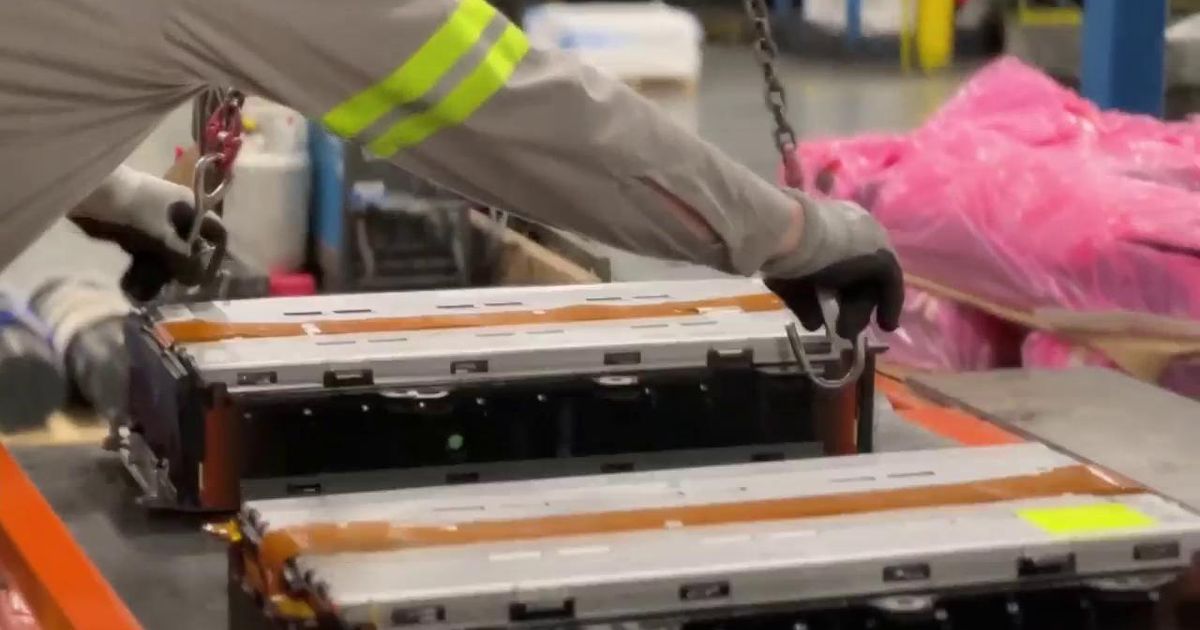
At the plant, batteries may
first be dismantled.
An electric vehicle battery
pack, for example, must be opened and broken down into smaller modules and
individual battery cells before processing.
Those components are then
shredded and separated so valuable materials can be recovered.
“The valuable metals that
are in that battery are the anode and the cathode material,” Klanecky said.
“That’s where the lithium, nickel and cobalt reside.”
Recycling facilities recover
those metals along with materials such as copper, aluminum and plastic so they
can be reused.
Batteries reaching end of
life
Most electric vehicle
batteries last about eight to ten years, depending on how they are used.
That means the first
generation of modern EV batteries is just now beginning to reach the end of its
life.
“You’re seeing now some of
the vehicles from around 2010 to 2015 starting to come off the road,” Klanecky
said.
At the same time, demand for
batteries is expanding rapidly beyond electric cars.
Energy storage projects
paired with solar and wind farms use large battery systems, and data centers
powering artificial intelligence rely on batteries to store energy and manage
electricity demand.
“One solution data centers
use is battery systems so they can store a lot of energy on site,” Klanecky
said. “They can charge those batteries at night and use them during the day.”
A potential second life
for batteries
Before recycling, some
batteries may be reused for other purposes.
Electric vehicle batteries
often still have significant capacity remaining when they are removed from a
car.
“There’s a lot of work being
done on taking EV batteries and using them as a second use to store energy,”
Klanecky said.
That stored energy could
come from renewable sources like solar or wind.
However, the economics and
technical challenges of repurposing batteries can make second-life applications
difficult.
Building a closed-loop
supply chain
Experts say battery
recycling could become an increasingly important part of the clean-energy
supply chain.
Recovered metals can be used
to manufacture new batteries, reducing the need for mining and helping create a
domestic source of critical minerals.
“If we can close the loop of
these critical minerals for batteries, the cost is going to be lower for
consumers,” Klanecky said.
As battery demand continues
to grow, recycling companies say building that circular supply chain will be
essential to powering the next phase of the clean-energy transition.