Kaleigh Harrison
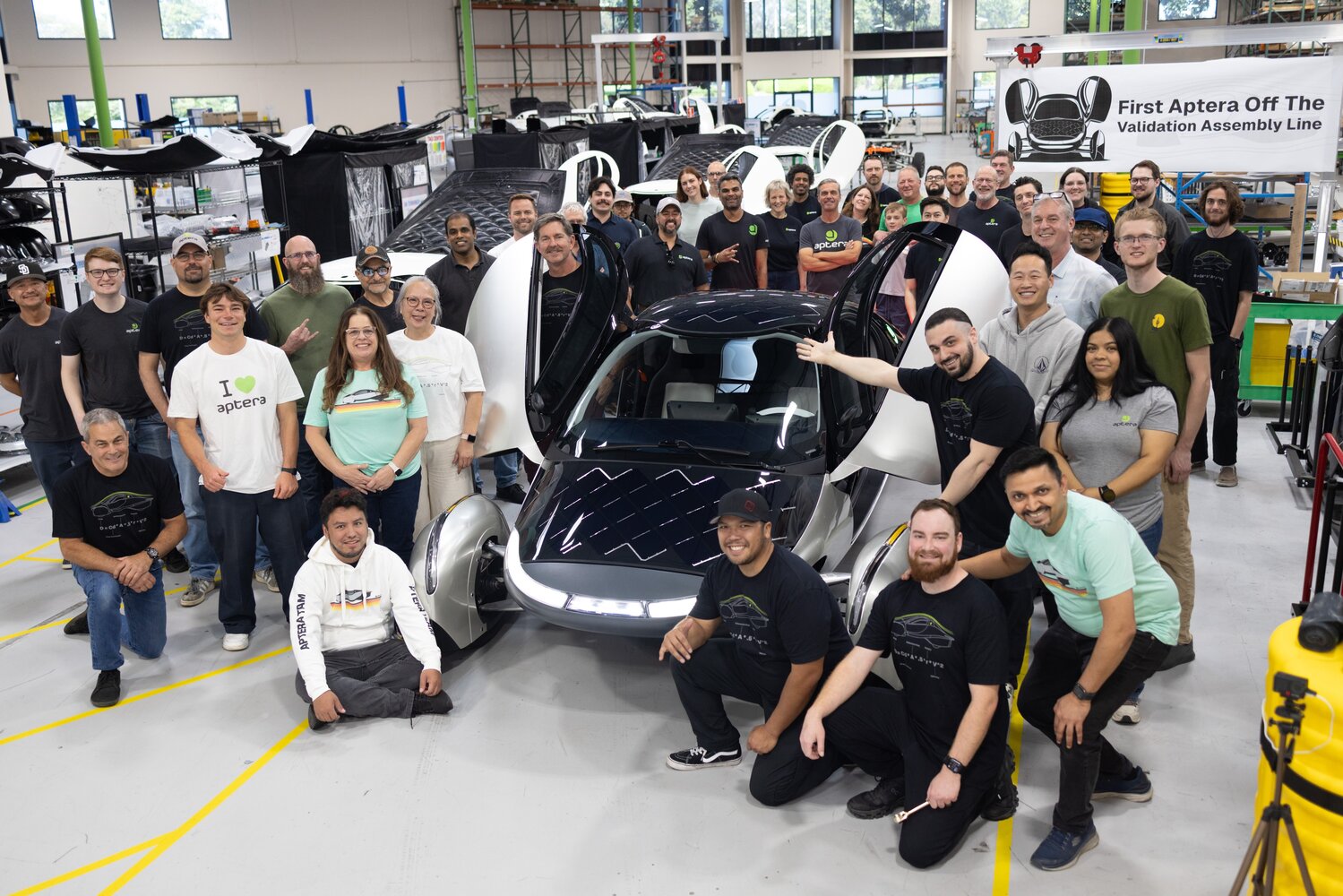
Aptera Motors has reached a new stage in its effort to bring a solar-assisted electric vehicle to market, completing the first build on its low-volume validation assembly line. The milestone marks a shift from prototype-focused development toward a more structured manufacturing process designed to support certification testing and production preparation.
The company says the move is part of a broader push to transition from engineering development to operational readiness. With roughly 50,000 reservations reportedly representing more than $2 billion in potential sales, Aptera faces growing expectations to convert its technology concept into a repeatable manufacturing process.
Transitioning From Prototype Builds to Structured Assembly
The validation assembly line introduces a more systematic production environment than the earlier hand-built vehicles used during development. Aptera has established 14 dedicated stations along the line, staffed by vehicle technicians responsible for specific installation steps.
Rather than targeting customer deliveries, the line is intended to verify assembly procedures and production workflows. Vehicles move through a defined sequence so engineers can evaluate whether tools, station layouts, and installation processes operate consistently.
Get E+E Leader in Your Inbox
Twice-weekly insights on sustainability, energy management, and business policy — for corporate decision-makers.
No spam. Unsubscribe anytime.
This phase allows the company to test how components and systems are integrated under conditions that more closely resemble scaled manufacturing. By observing each stage of assembly, teams can identify inefficiencies, refine build procedures, and adjust station configurations before production volumes increase.
Testing, Certification, and Operational Readiness
Vehicles produced on the validation line will primarily support testing programs required before commercial sales begin. These include destructive testing, braking validation, and thermal performance assessments intended to confirm the vehicle’s durability and safety under a range of operating conditions.
The validation fleet will also contribute to regulatory and environmental approvals. Testing from these vehicles is expected to support both EPA certification and the regulatory self-certification process required for vehicles sold in the United States.
Being used as a training and optimization platform, the production line sees engineers and technicians analyzing installation procedures across multiple systems with the goal of improving assembly sequencing and reducing complexity.
The shift toward manufacturing has also reshaped Aptera’s internal organization. Assembly and vehicle integration roles have expanded significantly, becoming the company’s largest operational team as it prepares for higher production volumes.
Aptera’s three-wheeled solar electric vehicle has drawn attention for its focus on efficiency. The design combines lightweight composite structures, aerodynamic bodywork, and integrated solar panels that can contribute to the vehicle’s driving range.
Moving from an experimental design to scalable production, however, presents its own challenges. The validation assembly line represents an intermediate step between engineering development and full manufacturing, giving the company a controlled environment to evaluate both the vehicle and the processes required to build it.
Aptera plans to continue producing vehicles on the line in the coming weeks as it builds out its testing fleet and progresses through certification requirements. If those steps proceed as expected, the company aims to move closer to delivering its first customer vehicles later this year.