Tesla’s Grünheide factory will remain the only automotive factory in Germany without a collective bargaining agreement. By Stewart Burnett
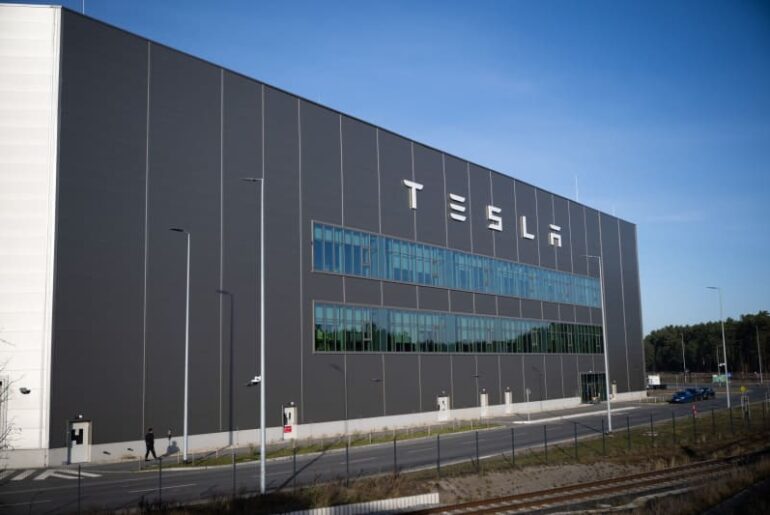
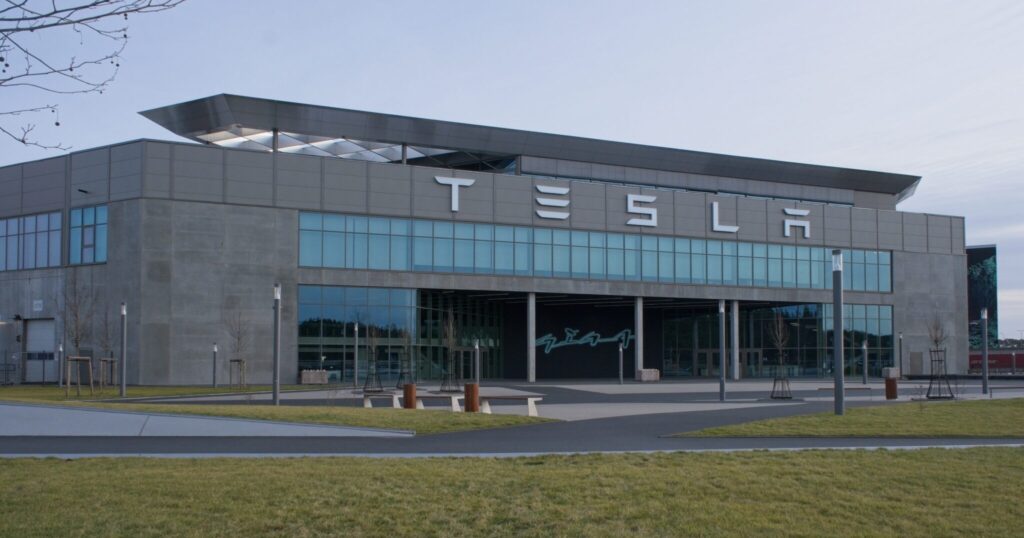
IG Metall has suffered a major setback in the works council elections at Tesla’s Grünheide plant, securing just 13 of 37 seats—down from 16 of 39 in 2024. Amid a backdrop of deeply contentious relations between the union and plant management, the former’s share fell from 39.4% to 31.1%, while the management-aligned Giga United list won out with 40.4% of the vote.
The result leaves Grünheide as the only automotive factory in Germany without a collective bargaining agreement, a distinction that Tesla has maintained and aggressively sought to preserve since the plant first opened in 2022. IG Metall needed a majority to pursue its core demands, including the 35-hour working week that is standard at every other German car plant. Lead candidate Laura Arndt said in a statement that the union would “continue to do our utmost in the new works council to bring about change”. [Translation according to Reuters]
Tensions between the union and management bordered on outlandish in the weeks leading up to the vote. In February, the automaker called police to a works council meeting and accused an IG Metall representative of illegally recording the session on his laptop. Police seized the device as part of their investigation. IG Metall dismissed the allegation as “a brazen and calculated lie”, and filed a defamation complaint against plant director André Thierig. The union also secured a court injunction barring him from repeating the claim. A criminal investigation into the recording allegation remains open.
Tesla’s pre-election tactics extended far beyond police involvement. The automaker held an anti-union concert for employees, distributed buttons reading “Giga JA—Gewerkschaft NEIN”, and introduced a 4% pay increase timed to circumvent the works council process. However, the most significant intervention came from Musk himself, who sent a pre-recorded video to all 10,700 workers effectively threatening that the expansion plans he had formerly hinted towards—including potential Cybercab and Semi production—would be scrapped if IG Metall gained influence. “We will not close the factory, but realistically we will also not expand,” Musk said.
It should, of course, be noted that Musk’s threats are situated against a backdrop of 1,700 job losses in the past year and a plant reportedly running at around 40% of its intended capacity. Workers arguably had concrete reasons to take his warnings seriously, making the message more potent than it might have otherwise been were the plant operating at full strength—or the automaker selling even remotely close to its 2023 European volumes.
According to IG Metall, its broader complaints against Tesla management are extensively documented. The union maintains that, for years, the automaker has unfairly scrutinised sick notes, demanded that employees disclose diagnoses, and conducted unannounced home visits to absent workers. In some cases, it alleged, Tesla withheld wages on claims of overpayment—with the resulting ‘debt’ then used to pressure workers into signing termination agreements. The union said its members at Grünheide require legal protection approximately 21 times more often than the IG Metall average across Germany.
Tesla’s reputation in Europe is already skating on thin ice. A recent study by Reputation and Trust Analytics, which tracks a variety of metrics including work environments, found that the automaker came in dead last behind Deutsche Bahn, Temu, Shein, Meta, and even Nestlé. European sales fell 28% in 2025, with German registrations down 48% over the year and further steep declines recorded in January 2026.
It is hard to imagine that IG Metall losing ground will do much to quell discontent. A plant running well below capacity, a workforce that has already shrunk by 14%, and a management posture that the union describes as one of “unprecedented aggression”—cumulatively these define conditions unlikely to produce stable labour relations, regardless of the council’s composition.