
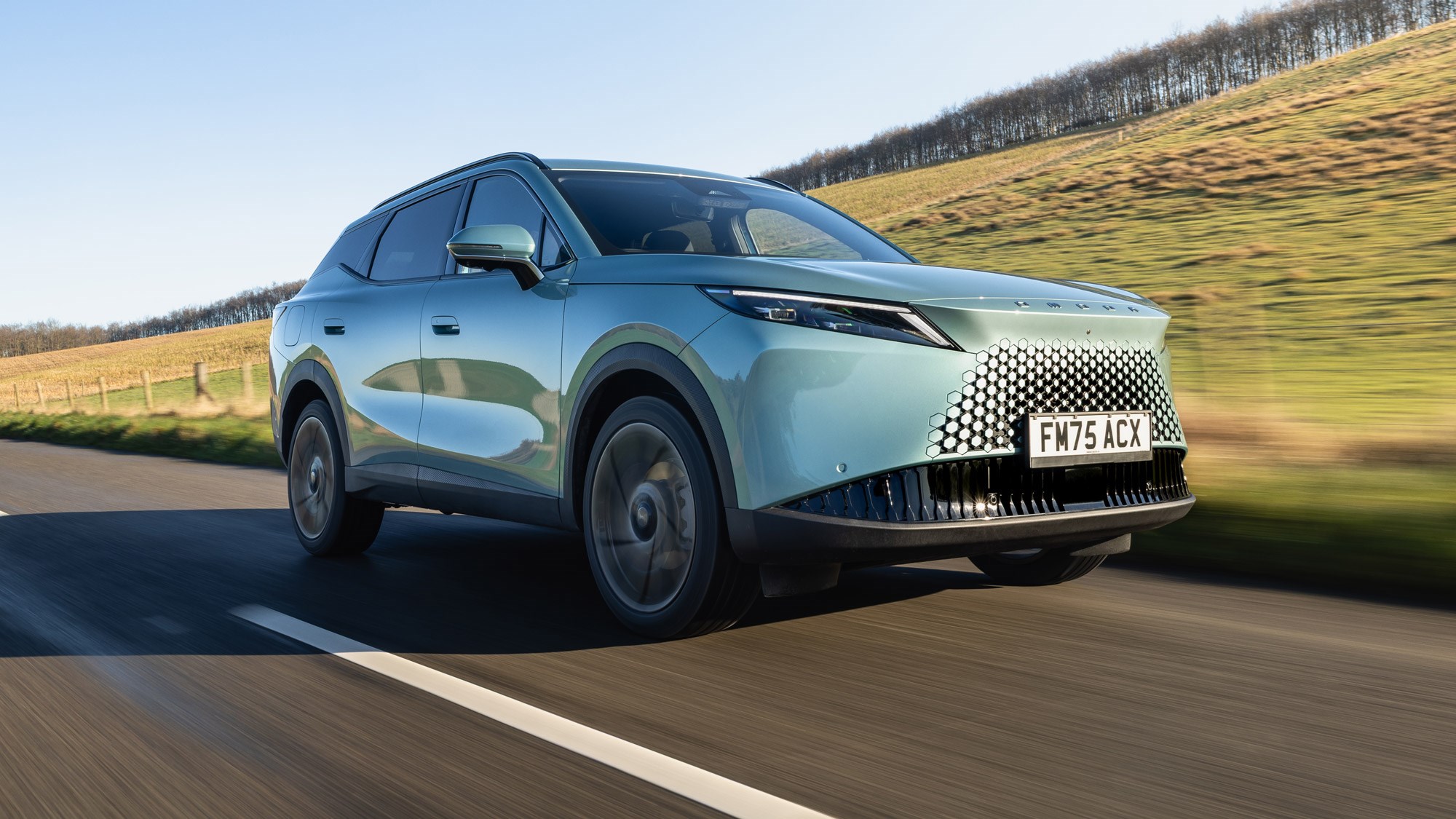
► Omoda’s third model launches in UK
► Rivals the Kia Sportage and MG HS
► Launches as a PHEV, petrol will follow
The Chery Group has really found its audience in the UK. First came Omoda, then Jaecoo, then Chery itself and now there’s another brand we didn’t think we needed on the way later in 2026: Lepas.
But before then Omoda is on a mission to conquest even more SUV sales from established players, and next up in its model offensive is the Omoda 7. Slotting between the 5 and 9, it’s closest rival is the best-selling Jaecoo 7 made from the same bits and pieces, though this Omoda is both larger and also cheaper. We haven’t been especially impressed with all the Omodas we’ve tried so far, but can this new Omoda 7 change that?
Should you buy an Omoda 7? This is the first Omoda we’d recommend. It’s still not a driver’s choice, but has more finesse to it than the brand’s other models. The hybrid powertrain is good and considering how much cheaper it is than its other (non-Chinese) plug-in hybrid rivals, it’s hard to ignore.
At a glance
Pros: Impressive hybrid system, spacious rear seats, great value for money
Cons: Unsettled ride quality, minimalist interior could do with some more buttons, overly high driving position
What’s new?
The Omoda 7 sits in the popular C-segment family crossover space that now accounts for the majority of new car sales. Think Kia Sportage and Volkswagen Tiguan and you get the idea.
It’s got everything it needs to compete in this category, too. Big on space. Tick. Choice of plug-in hybrid. Lots of standard equipment. Tick.
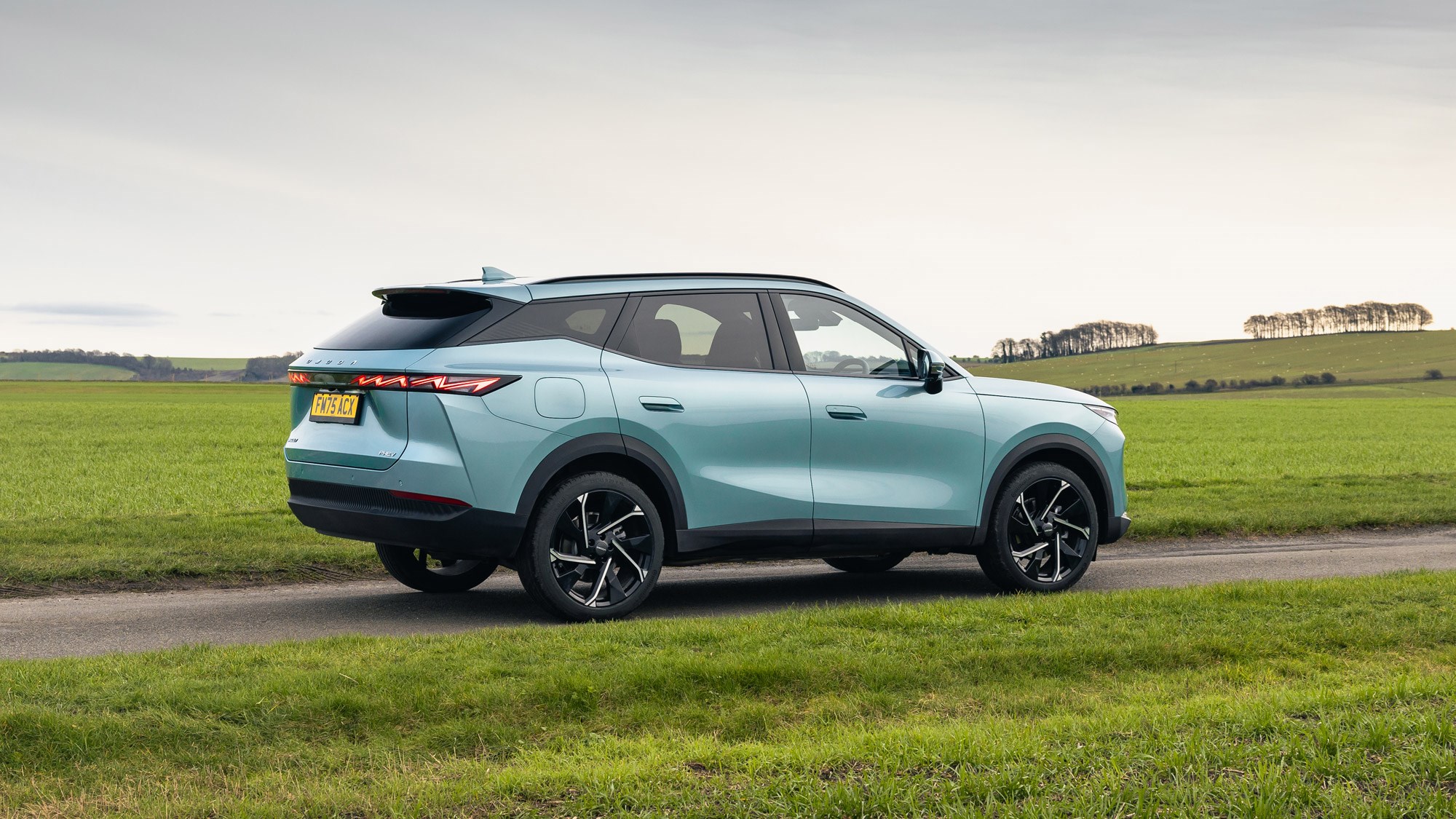
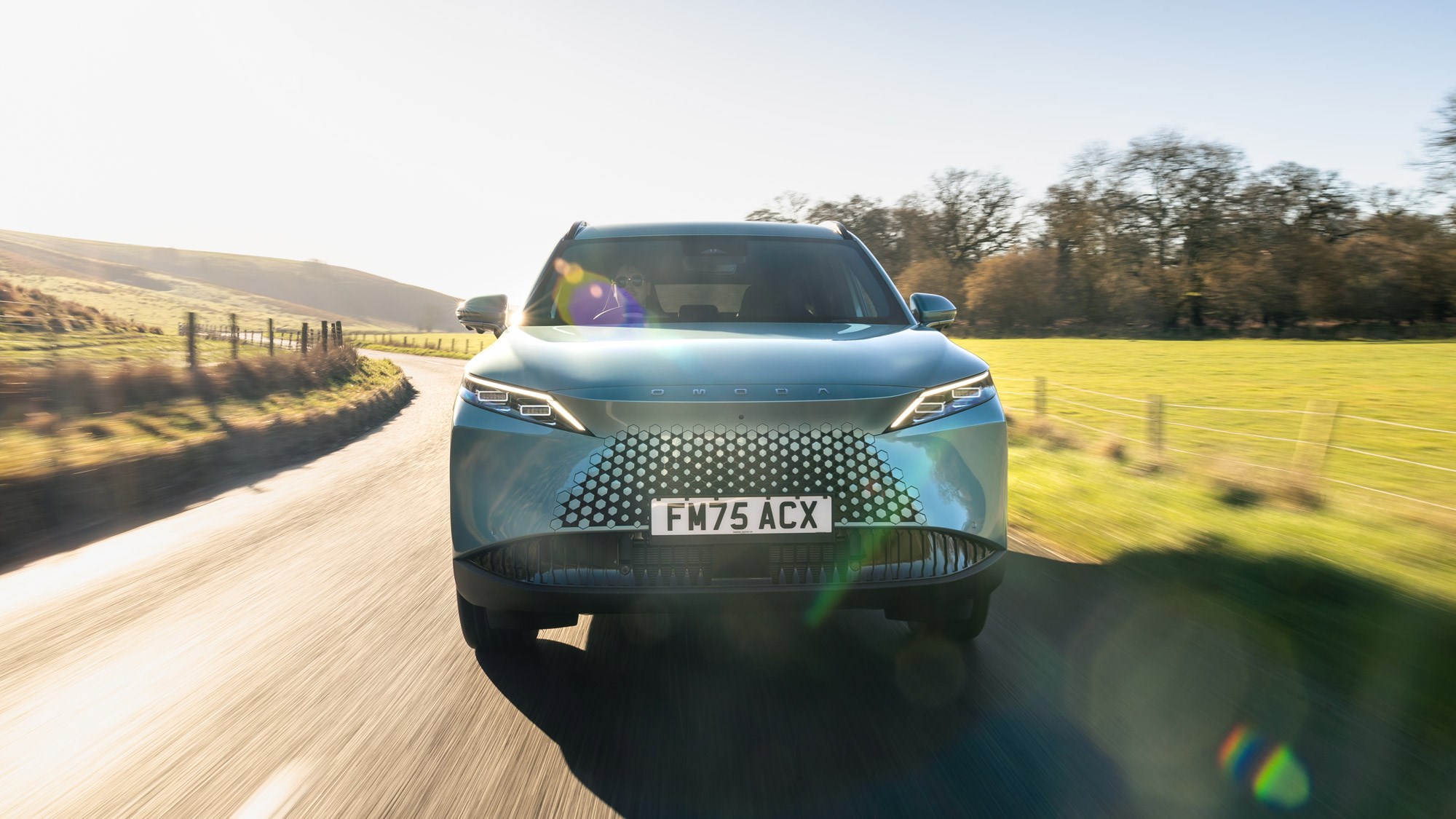
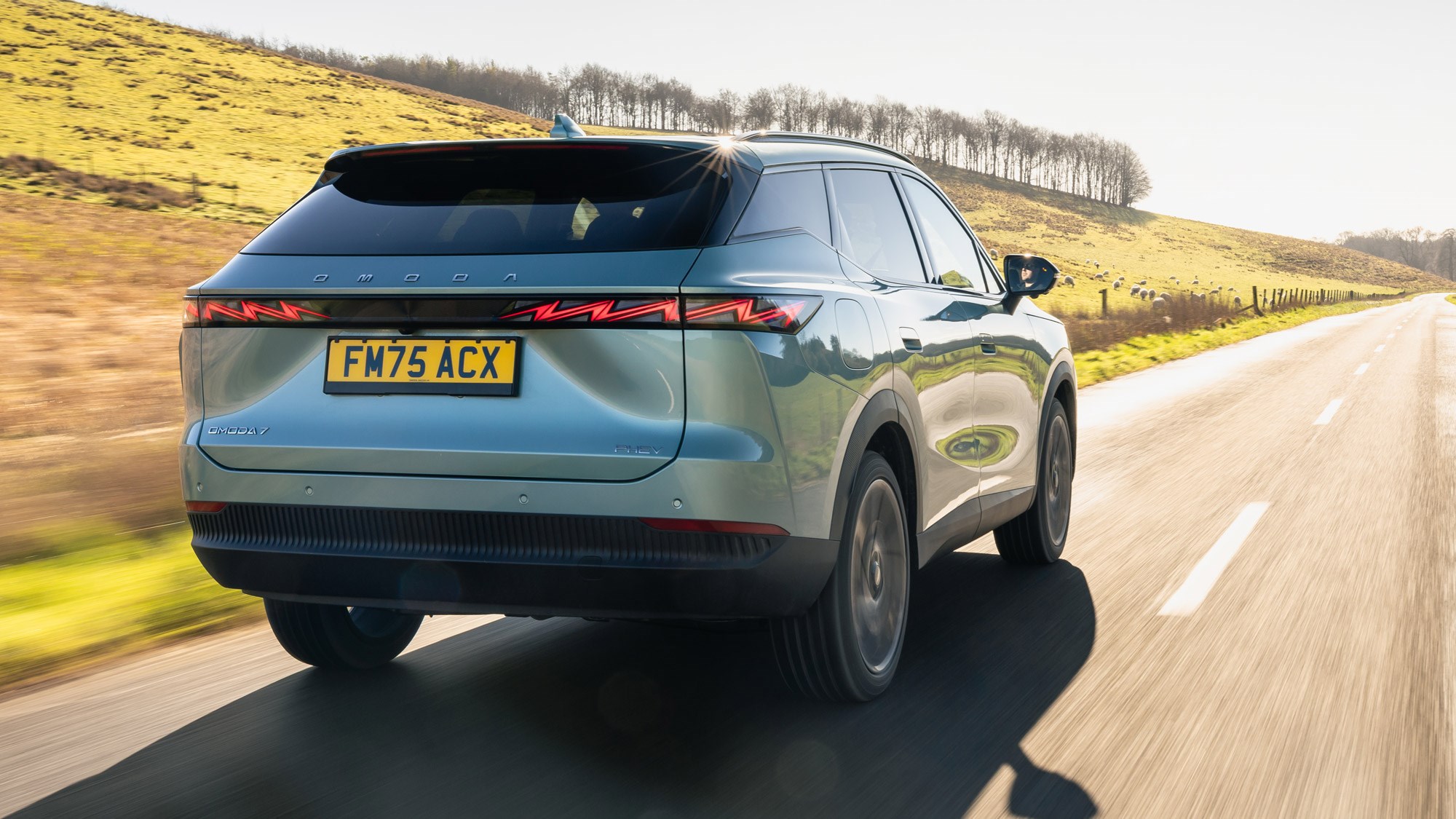
The Omoda 7 uses lots of bits and pieces borrowed from other Jaecoo and Chery models, though Omoda’s managed to put its own stamp on things, and it’s certainly distinctive. The borderless grille is made up of dozens of little hexagons, and you won’t find any fancy light bars here. Omoda’s senior interior designer tells us they ‘adopted a restraint use of lights’ and didn’t want it to look like a ‘Las Vegas lights show’. Tell that to the Omoda 7’s OTT zig-zag rear lights…
What are the specs?
Though a regular petrol version of the Omoda 7 will join the line-up later in 2026, for now it’s only available as a plug-in hybrid called a ‘Super Hybrid System’ or SHS. Pairing a 1.5-litre turbocharged petrol engine with two e-motors (one drives the front wheels, the other is used for regenerative braking) , the combined output is 201bhp and 269lb ft of torque.
Accelerating from 0-62mph takes 8.4 seconds (although engineers openly admit its testing figures are somewhat downplayed) and onto a limited top speed of 112mph. The Omoda 7 also packs a 18.3kWh battery giving it a claimed electric range of 56 miles – more than a Kia Sportage Plug-in, but quite a bit behind the Volkswagen Tiguan eHybrid’s 77-mile EV range.
Omoda claims 403mpg and 23g/km CO2 emissions, but as with any plug-in hybrid, take those figures with a massive pinch of salt. It is equipped with 40kW DC rapid charging, though, and even if this is a costly way of charging a hybrid, charging the battery fully in around half an hour could prove useful.
The basic petrol engine option joining the line-up later in 2026 is the same as in the smaller Omoda 5. It’s a 145bhp 1.6-litre turbocharged petrol paired to a seven-speed dual-clutch auto. We haven’t driven it in the Omoda 7 yet, but expect respectable performance offset by a rather thirsty petrol engine that’s not a patch on its European rivals. Electrification is definitely the way to go within the Chery group.
How does it drive?
Let’s start with the hybrid system, which is among the best of any plug-in hybrid. The engine largely serves as a generator, meaning for the most part it manages to feel like you’re driving an electric car. Though we’ve only spent an hour behind the wheel of it so far, based on other Chery Group models we’ve driven with the same system, the battery always maintains a charge of around 20 per cent, ensuring that, whatever the state of the battery, it feels consistent with its power delivery and smoothness.
There are three levels of regenerative braking, and though we’d prefer to have paddles to change the severity of it, rather than having to change it via the touchscreen, the response is always predictable, and the brakes have none of the vagueness that often plagues plug-in hybrids.
The overall dynamics feel more polished than any other Omoda, Jaecoo or Chery we’ve driven to date, too, with more feel to the steering being the biggest difference. It’s still not as good to drive as something like a Tiguan, but it no longer has the truly lifeless steering, sometimes alarmingly so, that has been a staple of every Chery model we’ve tried so far. If you push it into a corner it still has a tendency to run wide but in the confines of what this car will generally be used for, it’s a welcome improvement.
The same goes for the ADAS driver assistance. When Omoda first launched in the UK the relentless bings and bongs were enough to drive anyone insane, but China has clearly listened and revised them. On my hour-long test drive, I didn’t once feel the need to turn any of them off. That’s progress.
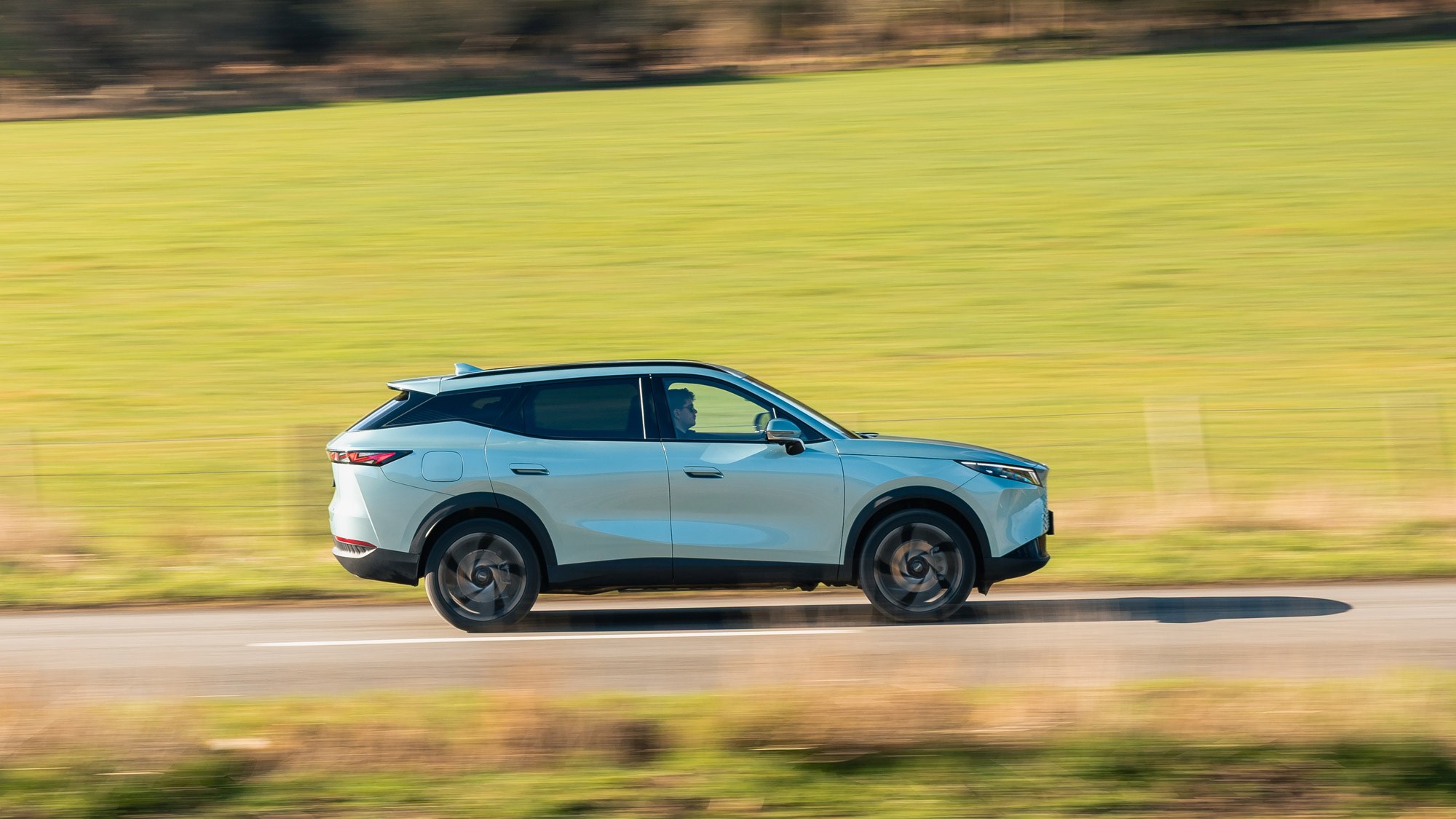
What’s not progressed is the ride quality, which manages to fluctuate between being a bit too soft and floaty and then also somehow quite firm, depending on the road surface and speed. Granted the test route seemed to take in what must be Buckinghamshire’s worst roads for potholes, but nevertheless the damping needs some work – and 20-inch alloy wheels with fairly limited tyre walls do it absolutely no favours.
What about the interior?
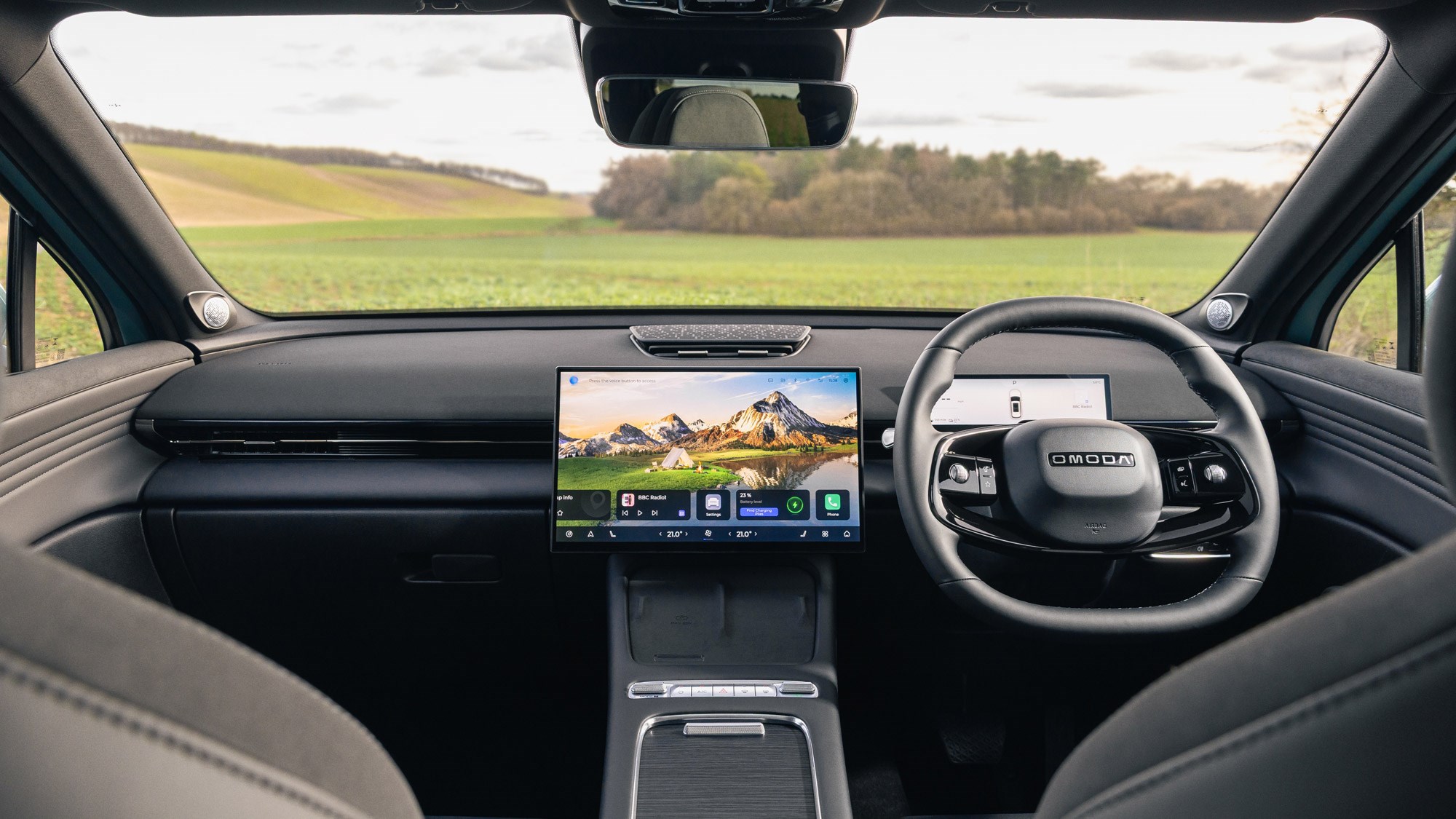
It’s the most modern interior we’ve seen in Omoda yet, shunning the look of the Omoda 5 and Omoda 9, which both merge a digital instrument cluster with the touchscreen. In this new car, instead you get a huge 15.6-inch touchscreen dominating the cabin – much the same as the one in the Chery Tiggo 8. The screen works pretty well, but the lack of physical switchgear proved more annoying here than in other similar cars we’ve tried. No car should have an electric mirror adjustment on the screen and I will continue banging this drum.
It’s a similar story with the rather nondescript steering wheel buttons. It’s all a bit too minimalist and the all-black interior also makes it look a bit anonymous. The quality is fairly good, at least at first, with lots of soft-touch materials, nice metal for the (very few) buttons and excellent seats. There are some exceptions, though, where some particularly nasty hard-plastic has been used – the glovebox and areas around the internal door release feel needlessly cheap in comparison to the rest of it. I also find the driving position too high up, with the seat rails not going lower enough – I feel like I’m sitting on the car rather than being a part of it, and other tall drivers will struggle.
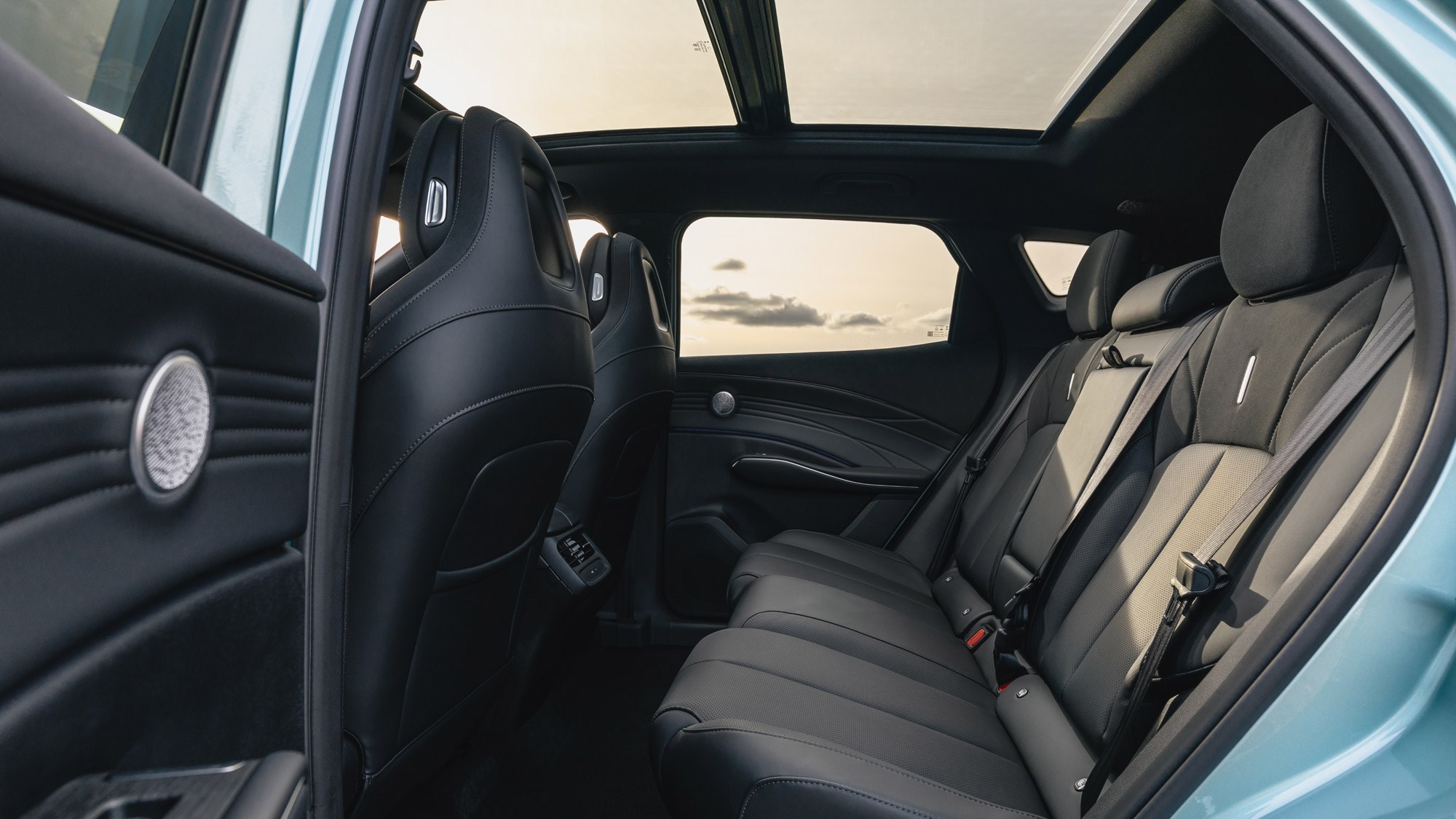
Where the Omoda 7 can’t be faulted is for its interior space. It’s a slightly longer car than most of its rivals, and that space has been put to good use. Rear legroom far eclipses that of a Tiguan and Sportage, and the 639-litre boot is larger than plenty of cars from the class above. It lacks flexible touches such as sliding rear seats, though, which are common on plenty of rivals.
Before you buy
Though the Omoda 7’s starting price will drop to under £30,000 when the petrol version is introduced later in the year, for now the line-up kicks off from £32,000 for the plug-in hybrid in Knight trim and £35,000 for the top-spec Noble.
It’s around £3,000 cheaper than the Jaecoo 7 and cheaper than most of its petrol crossover rivals, such as the Hyundai Tucson and Ford Kuga. It’s only the impressive MG HS PHEV that runs it close, costing only a few hundred pounds more.
Standard equipment is comprehensive, too, with entry-level cars getting keyless entry, wireless smartphone charging, 19-inch alloy wheels and a big 15.6-inch touchscreen. The Noble model then adds 20-inch alloys, a panoramic sunroof, electric, heated and ventilated front seats and an electric boot. It leaves you wanting for very little.
Omoda already has an established dealer network, too, which is driving its success. There are more than 100 showrooms set up in the UK, and the cars also come with a seven-year, 100,000-mile warranty.
Verdict
The Omoda 7 is possibly the best car from Omoda yet, and in fact the wider Chery Group. There’s more polish to its driving manners that have been missing from its other models to date, and it’s certainly closing the gap on its European competition. Yet it’s still being offered at a price that can undercut rivals by a significant margin, and with a more comprehensive equipment list.
Omoda’s initial cars were a bit rubbish, but we knew that the Chinese automotive industry’s fast pace meant that it wouldn’t take long for that to change. The Omoda 7 feels like the turning point. Is it perfect? Absolutely not. We need longer with it to establish if the ride quality is poor, or if it was just the state of Buckinghamshire’s roads, and the overly minimalist interior won’t suit everyone, but it’s the first Omoda I’ve tried so far that I could recommend to someone.