Riding your bike can be a great way to experience Zion National Park. Here are some things to keep in mind if you decide to ride in the park:
General Rules
Bicycling is only permitted on the Pa’rus Trail and park roadways (with the exception of the Zion-Mt. Carmel Tunnel). All other trails and off-trail routes are closed to bikes.
The speed limit on the Pa’rus Trail is 15 mph.
When a shuttle bus is behind a cyclist, the cyclist must pull over to the side of the road and come to a complete stop. Allow the bus to safely pass before riding.
Bicycles must ride single file on the right side of park roads and the Pa’rus Trail.
Cyclists are limited to groups of 6 bikes or less. Please split up larger groups.
Cyclists must obey all traffic signs, including stop signs.
Cyclists should wear their helmet at all times. Each year, the park sees serious injuries from bike crashes.
Getting Around
The bicycle entrance to Zion National Park is in Springdale, next to the Zion Outfitter and the Zion Brew Pub. Here, you will cross a small bridge to the Pedestrian Entrance fee station. This path connects to the Pa’rus Trail. Please walk your bike through the Visitor Center Plaza.
Regular bicycles are allowed on the park shuttle buses, though you will need to be able to lift the bikes on and off the racks yourself. E-bikes are not allowed on park shuttle buses.
The bike repair stations in Zion National Park are located at Canyon Junction (shuttle stop #3) and The Grotto (shuttle stop #6). The repair stations are free and include an air pump, a screwdriver, wrenches, and a hands-free bike mount.
E-Bikes
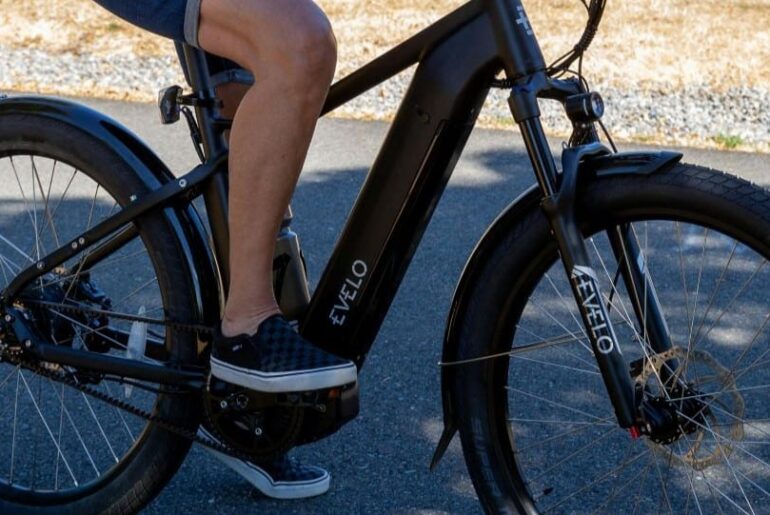
Only Class 1 pedal-assist E-bikes are allowed in Zion National Park. These bikes can visit the same locations as regular bicycles and must follow the same rules. A Class 1 E-bike is defined as an electric bicycle equipped with a motor that provides assistance only when the rider is pedaling and that ceases to provide assistance when the bike reaches the speed of 20 miles per hour.
Download our Bicycling Handout (PDF 0.7 MB) to find out more about places to bike in Zion and find a scannable QR code to learn more about our Frequently Asked Questions about Bicycling in Zion.
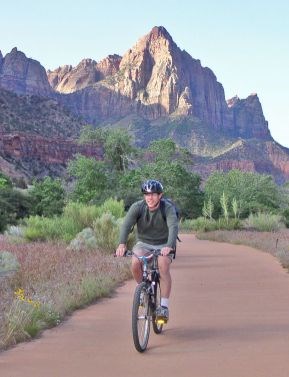
Bicycling on the Pa’rus Trail is a popular activity throughout the year.
NPS Photo
Where to Go
Bicycles are allowed in specific areas of Zion National Park. Read below to learn more about specific areas where you can cycle and what to expect if you do.
Pa’rus Trail
The Pa’rus Trail is a multi-use path with foot and bike traffic, so slow down and please be considerate of other visitors. The Pa’rus Trail begins at the Zion Canyon Visitor Center and can take you to the Zion Canyon Scenic Drive without the need to ride on UT-9 (the Zion-Mt. Carmel Highway).
The speed limit on the Pa’rus trail is 15 mph. This is for the safety of both bikers and pedestrians.
There are lots of turns, bridges, blind corners, and wildlife along the trail. Cyclists must warn pedestrians before passing, either verbally or with a horn or bell.
Pedestrians have the right of way. Bikes must stop if the path is not clear.
Be careful when passing wildlife and pets. The speed and sound of a bicycle can startle animals.
The side trail to the Human History Museum is not open to bicycles.
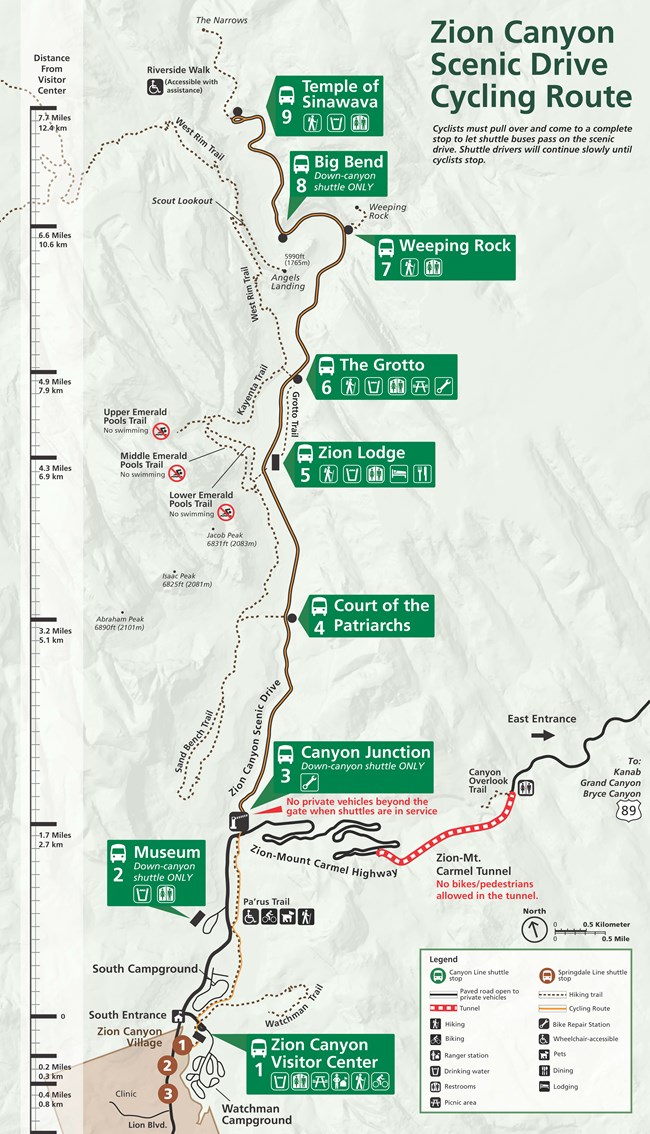
Zion Canyon Scenic Drive
The Zion Canyon Scenic Drive is a well trafficked road for shuttles, NPS staff, and lodge visitors. Bikes must yield to oncoming traffic.
Cyclists must pull over to the side of the road and come to a complete stop so shuttles can safely pass them. There is not enough room for them to safely pass otherwise.
There are bike racks located at major shuttle stops and trailheads for your convenience.
Bikes on the Zion Canyon Scenic Drive must ride single file on the side of the road. Groups are limited to 6 or less – please split up larger groups.
Use caution when biking through the Canyon Junction and Weeping Rock areas due to limited sight corridors and narrow lanes.
All Other Park Roads
Other park roads (Zion-Mt. Carmel Highway, Kolob Canyons Scenic Drive, and Kolob Terrace Road) all have steep grades, sharp curves, and narrow sections with little-to-no shoulder. Use caution when riding.
Cyclists attempting to travel through the Zion-Mount Carmel Tunnel must obtain a ride on a vehicle, which is often possible by hitchhiking. Bikes cannot ride through the tunnel on their own.
Rangers are not allowed to transport cyclists through the tunnel, nor can rangers arrange for transport.
The bicycle entrance to Zion National Park is in Springdale, next to the Zion Outfitter and the Zion Brew Pub. Here, you will cross a small bridge to the Pedestrian Entrance fee station. This path connects to the Pa’rus Trail. Please walk your bike through the Visitor Center Plaza.
Cyclists entering the park at the pedestrian entrance will pay the regular per-person fee. A valid America the Beautiful pass will also allow entry. Visit our Fees & Passes page for current pricing information.
Class 1 pedal-assist e-bikes are allowed in the same locations as regular bicycles and must follow all of the same rules. The term “pedal-assist e-bike” means a bicycle that contains an electric motor that provides supplemental power to move the bicycle. In order to be considered a pedal-assist e-bike, the electric motor must supply less than 50% of the power and must not be operable unless the rider is pedaling.
Class 1 e-bikes cease to provide assistance when the bicycle reaches the speed of 20 miles per hour. Bikes that exceed this limit are not allowed in the park.
E-bikes will not fit on the shuttle’s bike racks, so plan to ride the Zion Canyon Scenic Drive both ways.
Bikes are allowed on the Pa’rus Trail, Zion Canyon Scenic Drive, Kolob Terrace Road, and Kolob Canyons Scenic Drive. Bikes are also allowed on the Zion-Mt. Carmel Highway, though they cannot ride through the tunnel.
Bicycles are not allowed on trails other than the Pa’rus.
The Pa’rus Trail begins at the Zion Canyon Visitor Center. To find it, head north from the shuttle stop and go across the bridge. After crossing the bridge, there will be a path on the right. That path is the Pa’rus Trail.
From there, the trail meanders along the Virgin River up to Canyon Junction. This is a paved trail shared with pedestrians and leashed pets – always be careful when passing people and dogs.
The Pa’rus Trail is 1.75 miles from Zion Canyon Visitor Center to Canyon Junction.
Please do not bike fast. There are lots of turns, bridges, blind corners, and wildlife on the trail. Pedestrians have the right-of-way on this trail. Cyclists must warn pedestrians before passing, either verbally (“passing on your left”) or with a bell or horn. If pedestrians do not move out of the way, then please stop until you can safely pass them.
When the weather is damp, the four bridges on the Pa’rus Trail may be slippery. Also be careful of patches of sand on turns.
Riding your bicycle on Zion Canyon Scenic Drive is an enjoyable option that allows you to skip the shuttle and have a more intimate experience with the canyon. However, there are a few things to keep in mind:
When a shuttle bus approaches, find a safe place to pull over and allow the bus to pass. Shuttle buses cannot pass moving bicycles safely.
Never pass a moving bus.
Always ride in single file on the right side of the road. Break up groups of more than 6 bikers.
Always wear your helmet. Children under 18 years of age are required to wear helmets.
Always keep a close eye on children.
Be especially careful when biking through the Canyon Junction and Weeping Rock shuttle stops. Both areas have limited sight and narrow lanes.
Each shuttle has a rack for two bicycles. E-bikes cannot be carried by the bus.
The first 2 miles of the Zion Canyon Scenic Drive are steep, so take your time and pull off the road completely to stop if you need to. After Court of the Patriarchs, the road becomes more level.
Consider riding in early morning or the evening when the shuttles are running less frequently. This will also help you avoid the hottest part of the day.
If you put your bike on the shuttle bike rack and ride the shuttle to the Temple of Sinawava you can ride downhill most of the way back down the canyon. There is a significant southbound uphill grade between Weeping Rock and the Grotto.
Yes, bicycles are allowed on all paved roads where visitors normally have access. Service roads are not open to visitors on bicycles. Otherwise, keep in mind that other roads in the park have more vehicle traffic.
The Zion-Mount Carmel Tunnel was completed in 1930 with narrow lanes and no shoulder for cyclists. There are no lights within the historic 1.1-mile-long tunnel, and several areas are completely dark. Numerous accidents and collisions have occurred within the tunnel due to the narrow and dark conditions. For these reasons, bicycles cannot ride through the tunnel.
Please plan ahead to have a vehicle transport you and your bicycle through the tunnel.
Bicyclists should slow down and be careful when pulling off the road. Steep, rocky ditches can cause fast-moving cyclists to fall. Likewise, thorny plants can cause flat tires or injuries.
If you are riding on roads other than the Zion Canyon Scenic Drive, consider carrying a flat kit with you, consisting of a spare tube, bike lever, and the tools necessary to remove your bicycles wheel. These tools can help you out in a pinch, especially when help may be miles away!