 Image source: Tesla
Investors have long disagreed about what is the right valuation for Tesla (NASDAQ: TSLA). Despite inconsistent business results, Tesla stock has done well over the past year.
It stands 42% higher now than 12 months ago. But that means that it sells for a dizzying 375 times earnings.
That makes it look far costlier even than pricey tech shares like Palantir (selling for 229 times earnings) or Nvidia (37 times earnings), let alone a car company like General Motors (24 times earnings).
So what is propelling the stock – and can it last?
As well as cars, Tesla has a power generation and storage business that has been performing strongly.
It put in a record revenue performance last year, growing 27% to $13bn. It also benefits from substantial ongoing growth opportunities and I think that could be the case for years to come.
When discussing whether Tesla’s valuation might be justified, investors sometimes point out that it is more than just a car company – and the power business is well-established proof of that.
Still, at around 13% of the company’s total revenue, it is a relatively small part of the operation for now and I do not think it is central to maintaining the Tesla stock price.
What might be maintaining the stock price despite its apparently hefty overvaluation compared to peers? Or even explain its rise over the past year despite falling car sales volumes last year overall?
Perhaps it is the perception of Tesla as a “physical AI company”.
Who has that perception of Tesla?
Tesla does. I have borrowed its own language in describing what is sees itself as becoming. Tesla reckons it is in transition from being a hardware-centric business.
As I see it, this investment pitch can help explain the current stock price – and may even propel it higher.
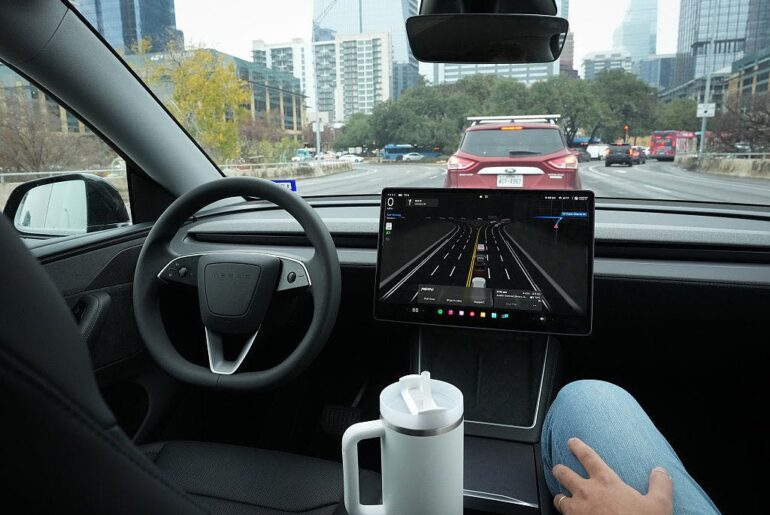
With its Optimus robot ambitions and production lines being installed for self-driving taxis, Tesla’s pitch about using its proven software capabilities to meld AI and physical products like vehicles benefits from credibility many newer AI rivals may lack.
That, along with a history of rapid growth despite significant challenges from entrenched competitors, may help explain why the price has continued to do well.
The problem as I see it though, is that an investment case can only carry a share for so long. Sooner or later, investors want to see results. With a $1.3trn market capitalisation, Tesla is priced for action not just talk.
It remains to be seen whether that will materialise.
Optimus is still on the drawing board. Self-driving taxis are not yet in commercial production and even when they start, does Tesla have a sustainable competitive advantage?