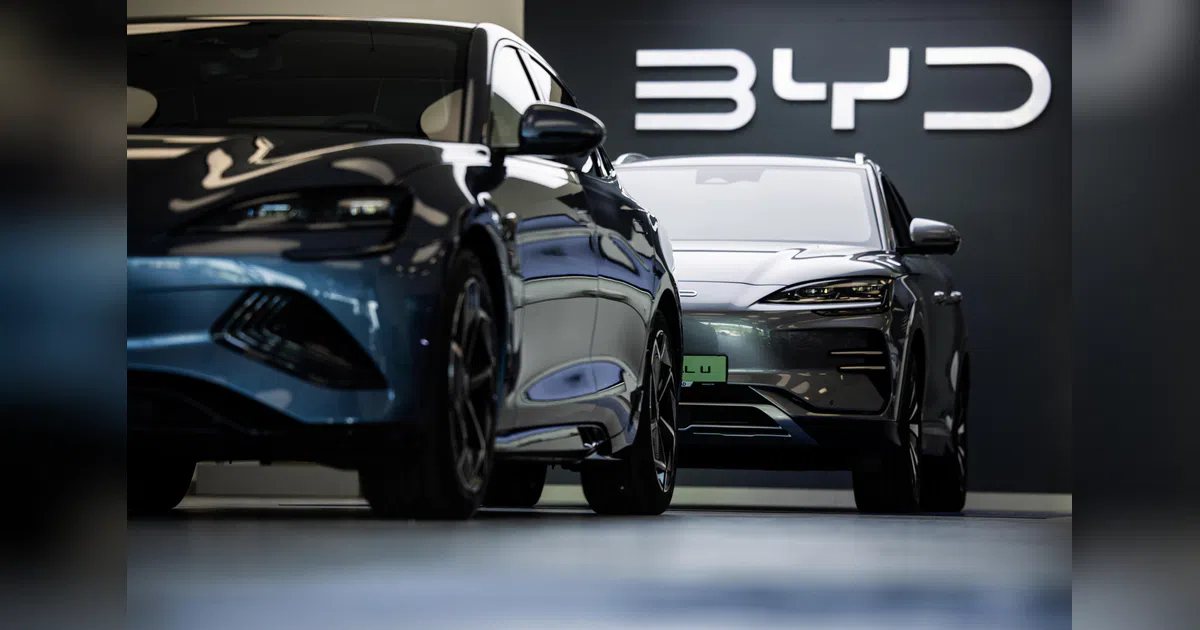
Chinese electric vehicle (EV) maker BYD is rapidly reshaping the global auto market. Once seen mainly as a strong domestic player, the company has now moved ahead of Tesla in more than 20 countries and regions over the past five years, Nikkei Asia reported.
As sales growth slows in China, BYD is focusing on expanding overseas to maintain its momentum.
A major breakthrough came last year in the UK, where its annual sales surpassed those of Tesla for the first time. That year, during a visit to a dealership in west London, founder Wang Chuanfu met a customer who had just bought the Atto 3 electric SUV — BYD’s first exported passenger car in 2021. The name “Atto” refers to an attosecond, a tiny unit of time, showing the company’s focus on speed and innovation.
Wang has long stressed that moving fast is vital, especially as global car giants shift to electric vehicles. Since 2021, BYD has entered 113 countries and regions.
How BYD won new markets
Data compiled by S&P Global Mobility and reviewed by Nikkei shows that BYD overtook Tesla in 22 markets between 2020 and 2025. Apart from the UK, the Chinese company pulled ahead in countries such as Spain and Italy. It also gained ground in Hong Kong and Singapore, markets known for strong demand for premium cars. Last year, BYD also became the world’s top EV seller, pushing Tesla to second place, the news report said.
One reason behind BYD’s rapid rise is its pricing. In China, its passenger vehicles sold at an average price of 114,000 yuan (about $16,600) last year. The company keeps costs low by manufacturing its own batteries and major components. This vertical integration allows it to sell competitively priced vehicles globally.
Strategic moves in South America
BYD has slowly expanded into smaller markets as well. In Uruguay, a country with only 3.4 million people, the company first tested electric buses over ten years ago. It later supplied buses and taxis, building good relationships with local officials and dealers before launching its passenger cars, the news report said.
In Peru, Chinese-made vehicles now arrive at the new Chancay port, built under China’s Belt and Road plan. This has reduced shipping time to about 25 days, around 10 days faster than earlier routes.
However, growth has faced hurdles. Plans for a Mexico plant were dropped after criticism from US President Donald Trump, the news report said. The European Union has also tightened rules, creating standards that favour smaller electric vehicles and making it harder for Chinese brands to compete freely.
Slowing growth at home
While BYD’s global reach is growing, its domestic performance has weakened. The company sold about 3.5 million passenger vehicles in China last year, roughly 10 per cent fewer than in 2024. Quarterly revenue fell for the first time in more than five years, and free cash flow dropped sharply into negative territory, the news report stated.
Lower cash reserves could limit overseas investment. To reduce trade tensions and avoid tariffs, BYD is shifting towards local manufacturing. It plans to open a plant in Hungary this year, after launching factories in Thailand in 2024 and Brazil in 2025.
Other Chinese automakers are following similar strategies. Great Wall Motor has taken over a former Mercedes-Benz site in Brazil, while Chery Automobile is acquiring factories in South Africa from Nissan Motor.
China overtook Japan in 2023 as the world’s largest car exporter. Although Japanese automakers still produce millions of vehicles overseas, Chinese companies are closing the gap quickly — and BYD is leading that charge.