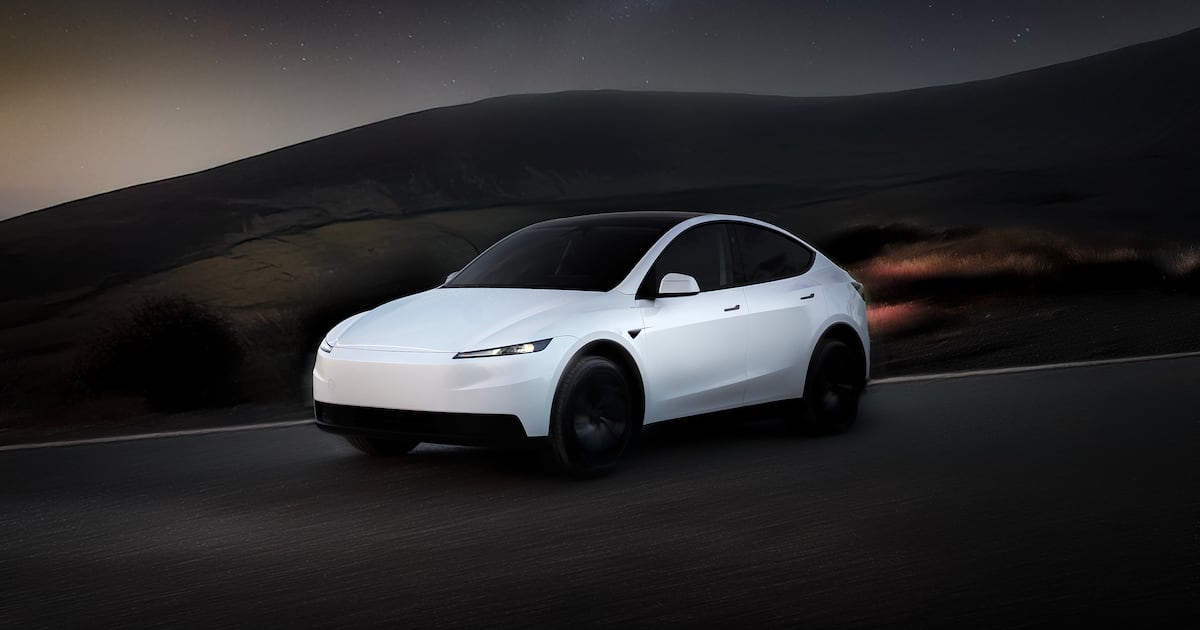
Tesla Model Y
Year: 2026
Fuel: Electric
Verdict: Spacious family car with decent range, now at a competitive price
Tesla’s biggest problem today isn’t range anxiety. It’s angry early adopters.
There was a time when Tesla was the pioneer, leading the charge in the new frontier of electric cars. It upended a staid car market, forcing old-school brands to embrace electric. It also lowered the barrier for consumer acceptance of new brands, opening the way for an influx of Chinese makes.
The first Teslas were flawed but futuristic and ahead of the pack. No longer. Where once Tesla’s range towered over rivals, boasting 500km or more as competitors struggled to match half that in real-world driving, it has now been caught and overtaken.
The likes of the award-winning Mercedes-Benz CLA – Europe’s car of the year – boast nearly 800km on official WLTP ratings. BMW and Volvo are ready to roll out models with a similar range this year.
They make the Model Y’s 505km range look old hat.
To keep competitive, Tesla has turned to lowering prices. It was inevitable, but no less painful for those early evangelists whose residuals have taken a nosedive as a result.
And we are not talking about folks who embraced Tesla 10 years ago. Back in those sepia days of Covid lockdowns and face masks, when Model Y landed on these shores, it started at €69,800 for the long-range AWD version. That was proper premium pricing.
Fast forward to today, and you can pick up that same version – with the latest upgrades – for €50,972. You don’t even need to go that far. The new entry price for the range is now €42,990. If you include a trade-in as well, then you qualify for a €3,500 bonus (on top of the value of the used car), which brings the list price down to €39,490.
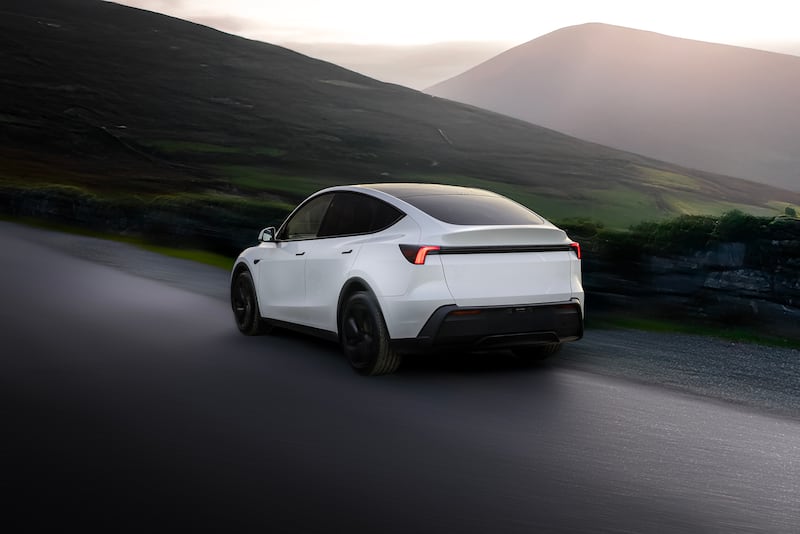 Tesla Model Y: 19-inch wheels give the car a gentler, quieter ride quality
It’s wonderful to write about better value in the current market, given the outlandish price rises of the past five years. Sure, there has been new tech added to cars, but you can’t help feeling that current buyers are digging deep to subsidise car makers’ EV transition.
Tesla can cut prices because its cost base was designed for EVs from day one. Meanwhile, rivals still carry the cost of transition, with legacy factories to convert or hundreds of thousands of staff to retrain.
Tesla has also surely amortised the cost of tooling up the production lines for both Model 3 and Model Y years ago. So the price drops aren’t signs of desperation, but a competitive move. It’s why in the past the firm has been nonplussed about talk of cutting EV subsidies.
While pitying the early adopters, spare a thought for the Tesla marketing planners. No sooner had this entry-level model been christened the Standard version – along with the entry-level Model 3 – than the Standard moniker was binned, and we are back to just Model Y Rear Wheel Drive. That seems to be the erratic way they roll at the US car brand.
When it comes to Tesla, there’s an Elon-sized elephant in the back seat. Musk is a divisive figure, to put it politely.
From the dentist chair to the Croke Park terrace, during our time with the car, any mention of Tesla immediately moved on to Musk. Sales certainly fell over the past two years amid the Tesla boss’s turbulent bromance with Donald Trump. Was that the reason behind the Irish sale dip of 13 per cent in 2024 and 5 per cent last year? Or was there more of a local angle on this?
[ Tesla loses crown as world’s biggest maker of EVs to China’s BYDOpens in new window ]
The firm’s Irish market lead, Kieran Campbell, points to finance issues and the wrong sales programme. “We were selling well on low-rate finance, but when rates rose to 5.9 per cent, it slowed immediately.” Irish buyers respond to finance, he insists. The history of the Irish new car market would suggest he’s got a point.
So if the price is now right on the new entry-level Model Y, what do you sacrifice on this version over the rest? Well, first off, there are the full-width lightbars front and rear. That’s not really a major omission.
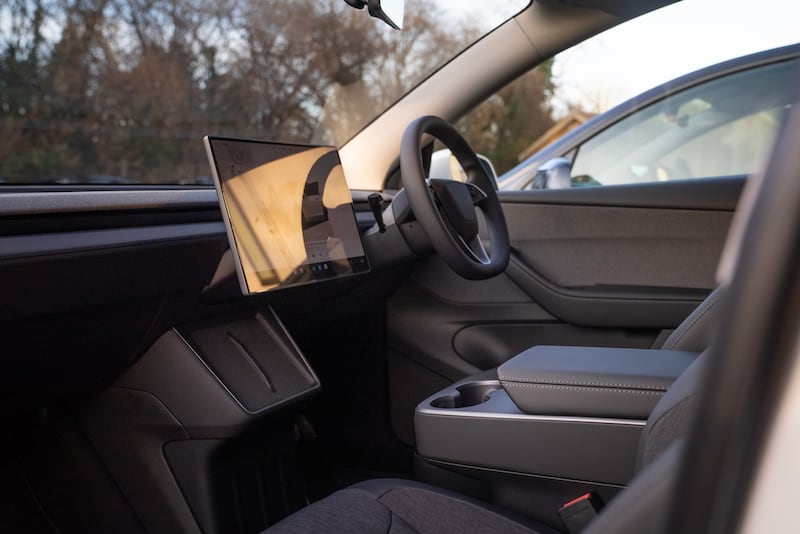 Tesla Model Y: Seats are adjusted via the central touchscreen
Then, inside, you get fabric seats and a manually adjustable steering wheel. Neither are deal breakers, and the finish on the synthetic “vegan leather” was never especially plush anyway.
In general, Tesla cabins were never opulent, so a sparse interior is in keeping with what we’re used to from the American brand.
On the upside, you still get the dual wireless charging pads, the electric tailgate and front heated seats and a heated steering wheel. So, aside from sacrificing roughly 100km of range, are you really missing anything by opting for entry-level?
Some critics continue to complain about the lack of a driver’s binnacle, but personally, I don’t have a problem with the positioning of the speedometer at the top right of the screen. It catches your eye, and with so many beeps and alerts these days, you can easily police your speed without regularly staring at the numbers.
Yet irksome issues remain. Apple CarPlay and Android Auto are still missing. Neither operates as standard on Tesla, which still forces you to engage with its proprietary infotainment system. Once you get used to it things work fine, but it’s an odd anomaly that will annoy many customers.
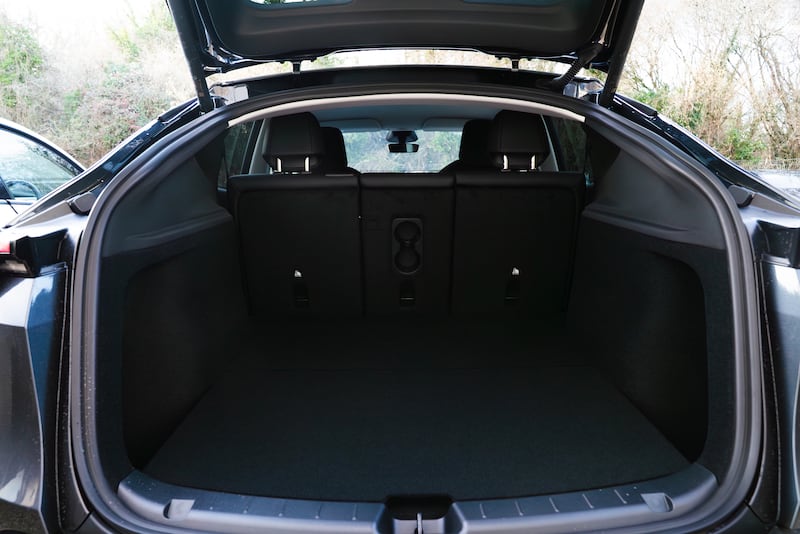 Tesla Model Y: A spacious family car with a big boot and decent range
The key card is as fiddly as always, and tapping it on the B-pillar definitely leaves its mark over time. Far better to engage with the phone app, which lets you do the usual opening and closing, plus pre-conditioning, a useful feature on cold days when you can arrive in the chilly car park to find the car nice and toasty.
Moving the wiper and headlights on to the steering wheel introduces too many unnecessary idiosyncrasies to the car.
And now a new gripe arises with this entry version. In a notable cost-saving move on the new entry-level variant, Tesla has removed the physical seat-adjustment switches from the side of the front seats. While the seats remain electrically operated, adjustment is now routed through the central touchscreen.
Having to use a touchscreen and fiddle with menus to adjust the seat is silly. That sort of carry-on may be fine for technophiles, but Tesla is clearly eager to chase a wider audience, given its lower pricing, and the general motoring public doesn’t have patience for this nonsense.
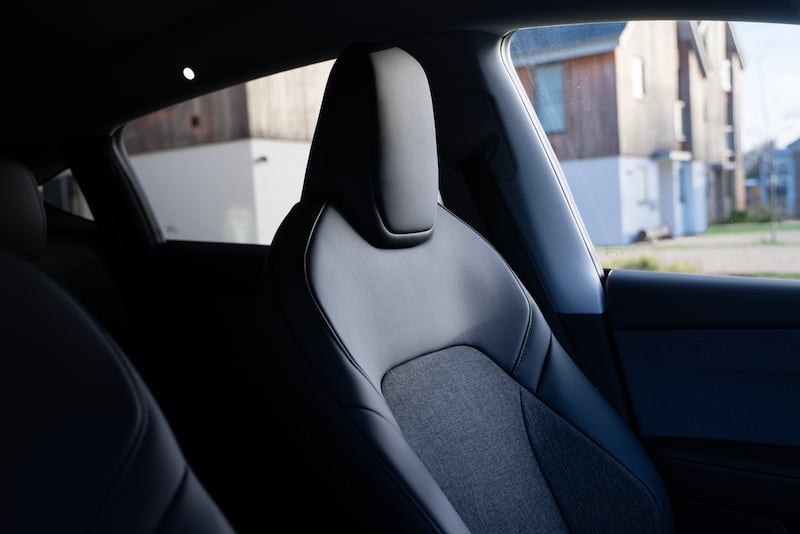 Tesla Model Y: Inside, you get fabric seats and a manually adjustable steering wheel
Tesla’s steering systems and ride quality have certainly taken better account of European roads and driving styles than it did when the brand first landed on this side of the Atlantic.
The ride is helped by the entry-level being shod with 19-inch wheels, giving the car a gentler and quieter ride quality, plus steering that’s a match for many rivals – and better than many Chinese rivals.
Yet ultimately, for the money, you are getting a spacious family car with a big boot and decent range.
[ Two in five Irish people planning to buy an electric vehicle in next two yearsOpens in new window ]
The range is ample for getting about, and you can expect to regularly get consumption figures below 18kWh/100km in this car, so you can reasonably expect it to close in on 400km during everyday driving.
Power is delivered through the 295hp electric motor on the rear axle, which is more than most of its similarly priced competitors, which is why it feels punchier than most entry-level rivals.
Yet the real punch of the Model Y rear-wheel-drive entry version – don’t call it a Standard – is its price.
Entry pricing for mid-size electric crossovers in the Republic now starts from just €34,850 for Volkswagen’s ID.4 (albeit with a smaller 52kWh battery). To match Tesla’s battery range, you need the 77kWh version, which starts at €41,015.
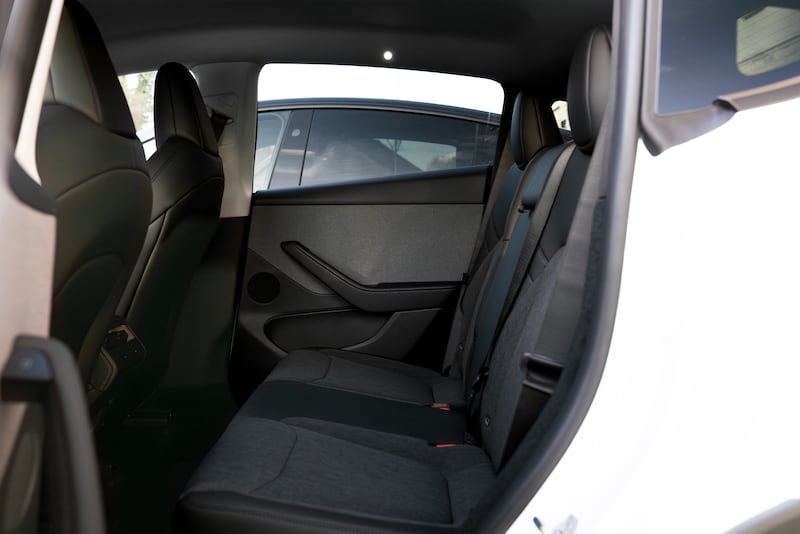 Tesla Model Y: When it comes to Tesla, there’s an Elon-sized elephant in the back seat
This updated Model Y rear-wheel-drive starts from €41,832 – placing it squarely alongside rivals such as the Hyundai Ioniq 5 and Skoda Enyaq, and several thousand euro below the likes of Kia EV6 and BYD Sealion 7.
It isn’t perfect, and it’s not class-leading or cutting-edge any more. However, it was easy to spend a few days with this car, and it’s certainly better to drive than when it first landed back in 2021 at a significantly higher price. Tesla is also a talking point – for good or ill – in a way the others aren’t. At this price, the entry-level Model Y makes a lot of sense for many family buyers and can go wheel-to-wheel with any of its similarly priced rivals.
It may annoy early adopters, but it makes sense for the brand and for new EV buyers.
Lowdown: Model Y Rear Wheel Drive
Power: The entry-level rear-wheel-drive Model Y uses a single rear-mounted electric motor producing around 295hp (220kW) and roughly 420Nm of torque.
0-100km/h: 7.2 seconds
Official consumption: 13.9kWh/100km
Official range: 505km
Price: €42,990 (€3,500 bonus available if you trade in a car)
![[News] Delay at Samsung’s Taylor Reportedly Slips Mass Production to 2027, Raising Concerns for Tesla](https://www.evshift.com/wp-content/uploads/2026/03/1772514292_Samsung-Taylor-624x419.png "[News] Delay at Samsung’s Taylor Reportedly Slips Mass Production to 2027, Raising Concerns for Tesla")