What were the major developments in the new energy vehicle market this week?
Is a Xiaomi Supercar on the Way?
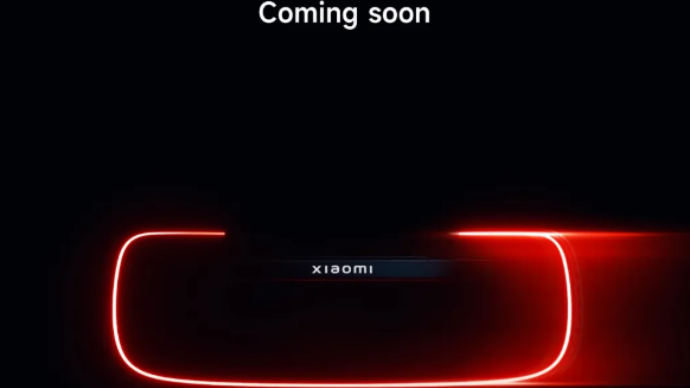
On February 28, Xiaomi EV’s official Weibo account teased a “surprise” for fans. Founder, Chairman, and CEO Lei Jun reposted the message with a simple caption: “See you tomorrow.”
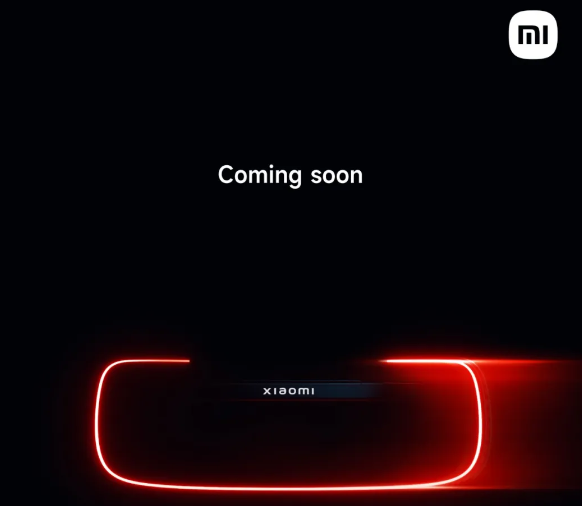
Image source: Xiaomi EV
Interestingly, a photo recently circulated online appears to show an unreleased Xiaomi supercar, reportedly snapped on the streets of Barcelona, Spain. According to foreign media reports, the mystery vehicle features a low-slung stance and smooth, flowing contours, with “xiaomi” clearly printed on the wheel covers.
Sources suggest the vehicle is likely a Vision Gran Turismo (VGT) concept supercar developed in collaboration with Gran Turismo. Designed as a flagship showcase for Xiaomi EV’s top-tier electric performance technology, it is set to be unveiled at MWC 2026.
Addressing the rumors, Xiaomi EV Senior Advisor Hu Zhengnan dismissed them in a Weibo comment: “That’s fan art! Don’t take it seriously. The real car is much cooler—beyond what people can imagine. Just wait; good things take time.”
Separately, Xiaomi Group Partner and President Lu Weibing—who also heads the mobile division and oversees the Xiaomi brand—announced his arrival in Barcelona on the evening of February 27. He teased that the upcoming event would bring new surprises across phones, cars, and AI. He added that at MWC 2026 on March 2, Xiaomi will showcase its “AI-empowered human-car-home full ecosystem” innovation, promising plenty of highlights.
Gasgoo Take: Xiaomi EV has a knack for keeping the industry guessing. Whether this “surprise” is indeed a sports car remains to be seen.
CATL and BMW Sign Agreement to Jointly Promote Battery Passport Pilot
On February 25, BMW Group Chairman Oliver Zipse, accompanying German Chancellor Merz on a visit to China, officially signed a memorandum of understanding with CATL. The two parties will focus on collaborative decarbonization across the power battery supply chain, systematically reducing the carbon footprint of electric vehicles, and elevating their sustainable development partnership to a new level.
Image source: CATL
Under the MOU, the companies will explore scenario-based applications for battery passports to enhance digital management and data exchange within the global power battery supply chain, strengthening their ability to navigate global regulations. Additionally, they aim to build a compliant and seamless power battery data chain, achieving decarbonization through full supply chain collaboration and promoting low-carbon product development. They will also work together to demonstrate and implement global standards for battery information and data.
Strategic cooperation between CATL and BMW Group dates back to 2012. Over the years, the two have built a solid foundation through continuous collaboration in battery production, joint R&D, and technological innovation. This latest agreement expands that existing framework, extending their partnership into the digital and green management of the entire power battery lifecycle.
Digital tracing and carbon footprint management for power batteries have become critical directions for the new energy vehicle industry. As a key tool for ensuring battery traceability and calculating carbon emissions, the battery passport is emerging as a major focus of industry exploration.
Looking ahead, CATL and BMW Group will continue to implement these initiatives, leveraging technological innovation and supply chain synergy to drive the green and digital transformation of the power battery industry and support the sustainable development of the global automotive sector.
Gasgoo Take: This partnership will drive collaborative exploration between CATL and BMW in sustainable development across the power battery supply chain.
Tesla, Fighting Another Sales Battle
On February 26, Tesla China announced a new round of financial incentives: customers ordering by March 31 qualify for seven-year ultra-low-interest loans across the entire lineup. For the three core models—Model 3, Model Y, and Model Y L—an additional five-year 0% interest option is available, meaning buyers pay zero interest on their loans.
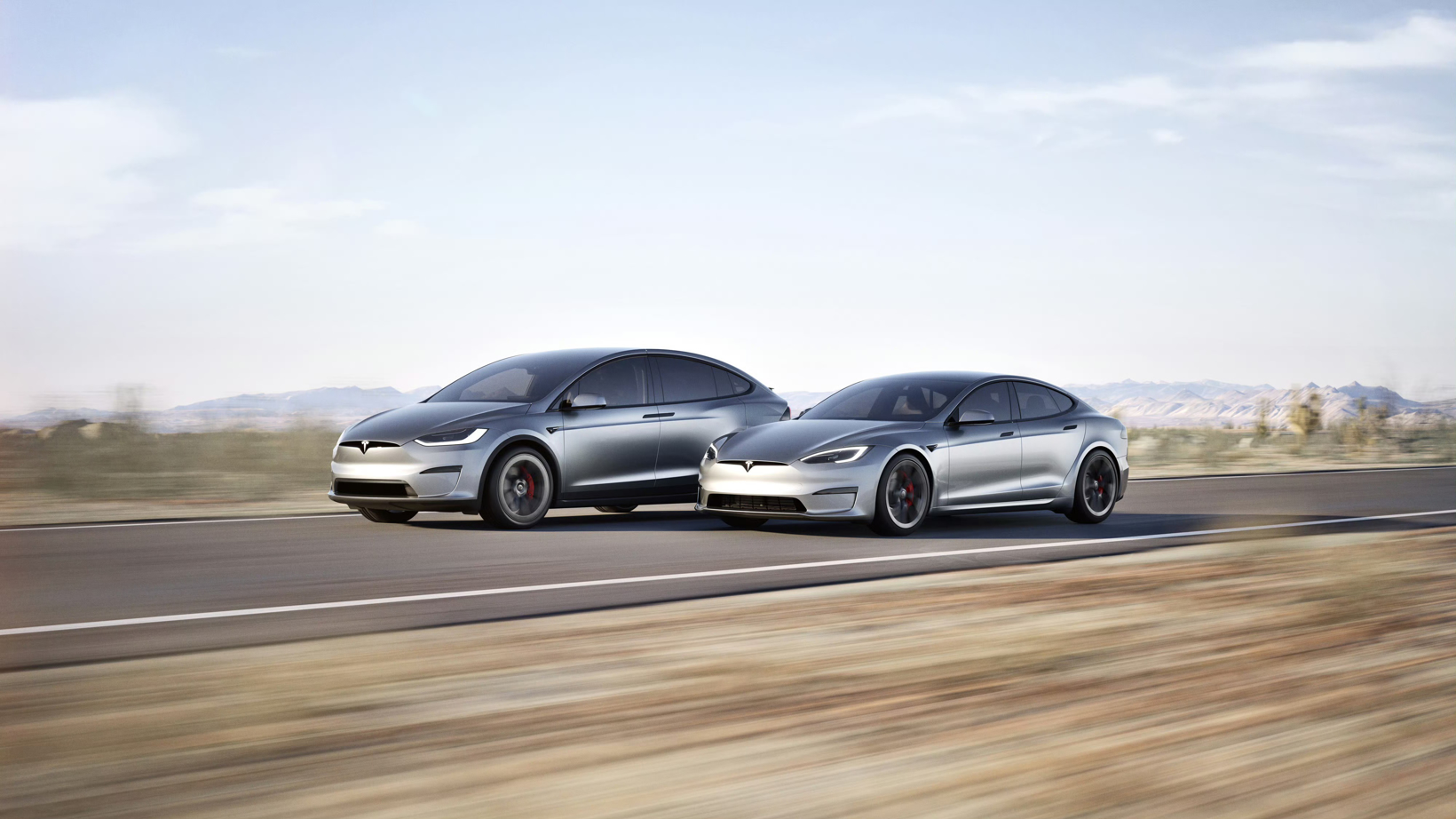
Image source: Tesla
Specifically, the Model 3 starts with a down payment of 79,900 yuan and a first-month monthly payment as low as 1,759 yuan; customers who order and take delivery by a specified date also receive an 8,000 yuan limited-time insurance subsidy. The Model Y requires a down payment of 79,900 yuan with a first-month payment of 2,188 yuan, while the Model Y L starts at 99,900 yuan down and 2,849 yuan monthly.
This marks the second time this year that Tesla China has rolled out a similar promotion. In January, the company offered a seven-year ultra-low-interest financing plan that ran through the end of the month.
The new five-year 0% interest policy will undoubtedly lower the barrier to ownership. For the Model 3, a down payment of 79,900 yuan combined with a 1,759 yuan monthly payment significantly eases access for younger consumers. Compared to January’s offer, the monthly payment has dropped from 1,918 yuan to 1,759 yuan, and the addition of an 8,000 yuan insurance subsidy sweetens the deal further.
Rolling out major financial incentives in quick succession over just two months is widely interpreted by the industry as another round of “disguised price cuts” aimed at boosting end-market sales.
Data shows Tesla delivered 1.636 million vehicles globally in 2025, a decline of roughly 8.6% year-on-year, marking the second consecutive year of falling deliveries. It also marks the first time Tesla has been surpassed in annual electric vehicle sales by BYD, which saw its pure-electric vehicle sales jump 27.86% from a year earlier to 2.2567 million units.
Financially, Tesla reported approximately $94.8 billion in total revenue for 2025, down 3% from the previous year, while net profit plummeted 46% year on year to $3.794 billion. It was the first annual revenue decline in the company’s history.
Gasgoo Take: The aggressive financial policies rolled out for two straight months highlight the significant competitive pressure Tesla is facing.
AITO Officially Responds to Vehicle Fire in Huizhou, Guangdong
On February 24, AITO released an official statement regarding a vehicle fire in Huizhou, Guangdong Province.
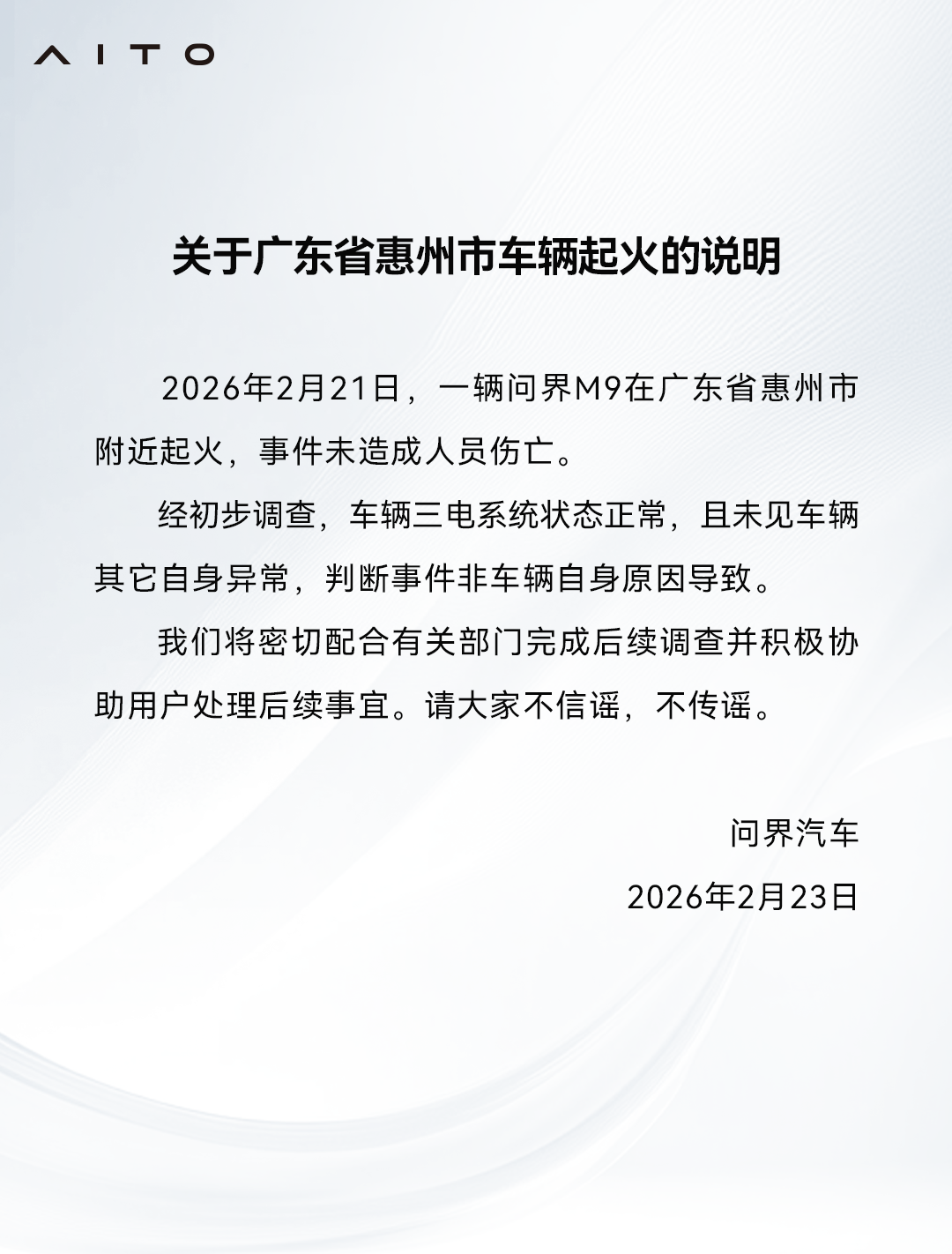
Image source: AITO
AITO stated that on February 21, 2026, an AITO M9 caught fire near Huizhou, resulting in no casualties. A preliminary investigation found the vehicle’s battery, motor, and electronic control systems were functioning normally, with no other internal abnormalities detected. The company concluded the fire was not caused by the vehicle itself and pledged to cooperate fully with authorities in the follow-up investigation while assisting the user. It urged the public not to spread rumors.
Public information shows the AITO M9 was jointly developed by Seres and Huawei and hit the market on December 26, 2023. A refreshed version, the 2025 AITO M9, going on sale on March 20, 2025, with a starting price of 469,800 yuan. As of January 13, 2026, official data from Harmony lntelligent Mobility Alliance indicates cumulative deliveries of the M9 series have surpassed 270,000 units.
Gasgoo Take: AITO’s swift clarification that the vehicle had no faults demonstrates a responsible attitude, yet the industry must continue to take public concern over new energy vehicle safety seriously.
Li Auto Joins China Chamber of Commerce to the EU
On February 24, 2026, Li Auto officially joined the China Chamber of Commerce to the EU as a member and became part of its automotive working group. Unanimously approved by the chamber’s board, this move marks a further deepening of Li Auto’s European strategy.
For a long time, Li Auto approached the European market with caution, even hesitation. In 2023, the company restructured its overseas plans; while it internally clarified the long-term goal of “serving overseas markets,” debates over the specific path persisted.
Li Auto Chairman and CEO Li Xiang has admitted that one of the company’s “biggest mistakes” was failing to go all-in on overseas expansion sooner. Liu Jie, President of Li Auto’s Product Line, also stated that as a Chinese technology company, Li Auto’s goal is to serve the global market, not just domestic consumers.
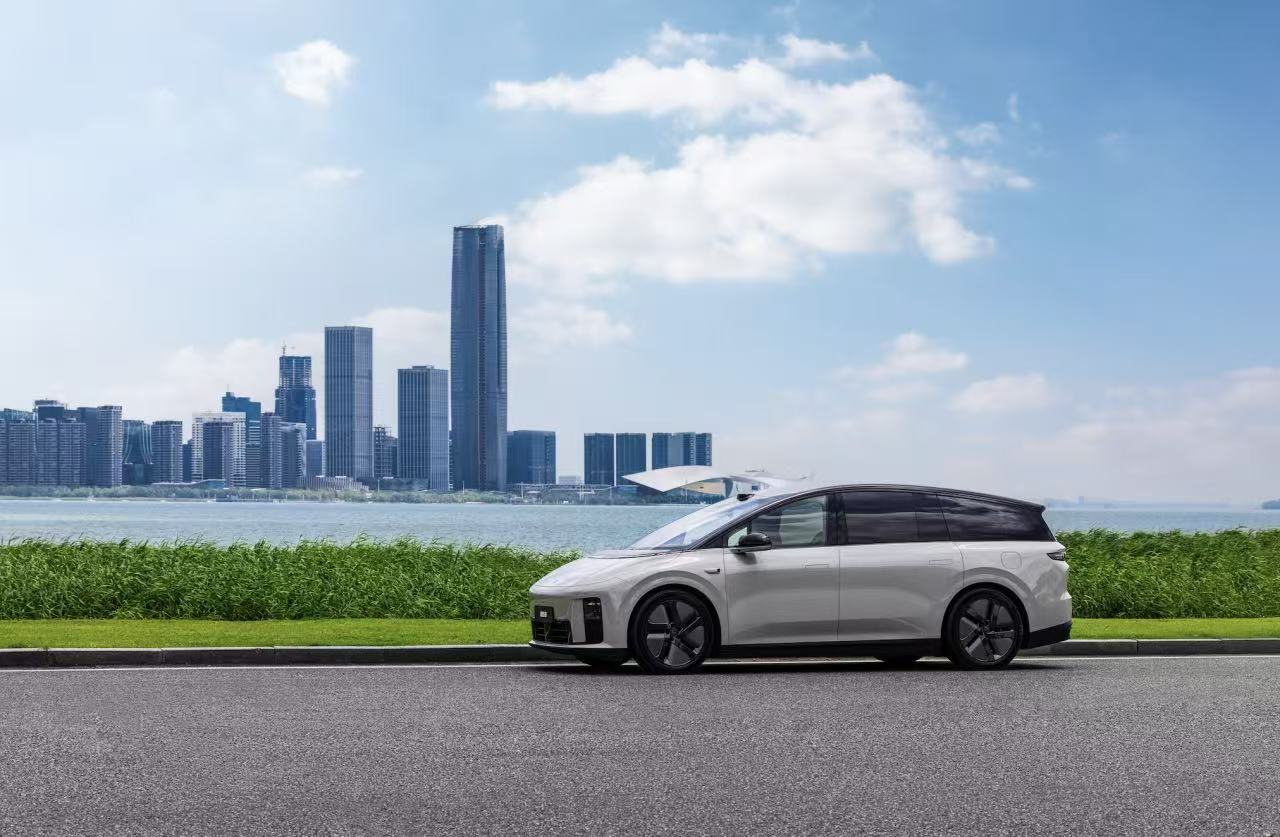
Image source: Li Auto
Li Auto designated 2025 as the “first year of official overseas market expansion,” mobilizing comprehensively at the organizational level. The company established an independent overseas expansion department and reassigned key internal personnel to focus exclusively on international business.
In April 2024, it registered its first overseas R&D entity in Munich, Germany, followed by the establishment of a German R&D center in 2025. The center has already assembled a professional team covering key areas such as styling design, power semiconductors, chassis systems, electric drive, and regulatory certification. The aim is to build development and testing capabilities based on European regulations, laying a solid foundation for adapting future products to local needs.
Meanwhile, Li Auto has gained experience in markets like Central Asia and the Middle East. It has already set up direct sales and after-sales service centers in Kazakhstan, Dubai, and Uzbekistan.
Gasgoo Take: Joining a representative industry association will not only help Li Auto better understand local policies and market conditions but also provides a potential platform for localized R&D and collaboration.
![[TwoBitDaVinci] Donut Lab's Test 2 - I Didn't Expect This!](https://www.evshift.com/wp-content/uploads/2026/03/JCKdAUJ-6RyrEiPgOAFzs79lROP76G64Tsext0Si-4.jpeg "[TwoBitDaVinci] Donut Lab’s Test 2 – I Didn’t Expect This!")