
Plug-in hybrids usually get framed as the sensible middle ground. They are quiet in town, efficient on short trips, and rarely the kind of powertrain that makes enthusiasts lean in. But after three years and about 93,000 miles behind the wheel of a company-issued Mercedes A Class 250 e, I wanted my next daily to be both rational and genuinely satisfying to drive.
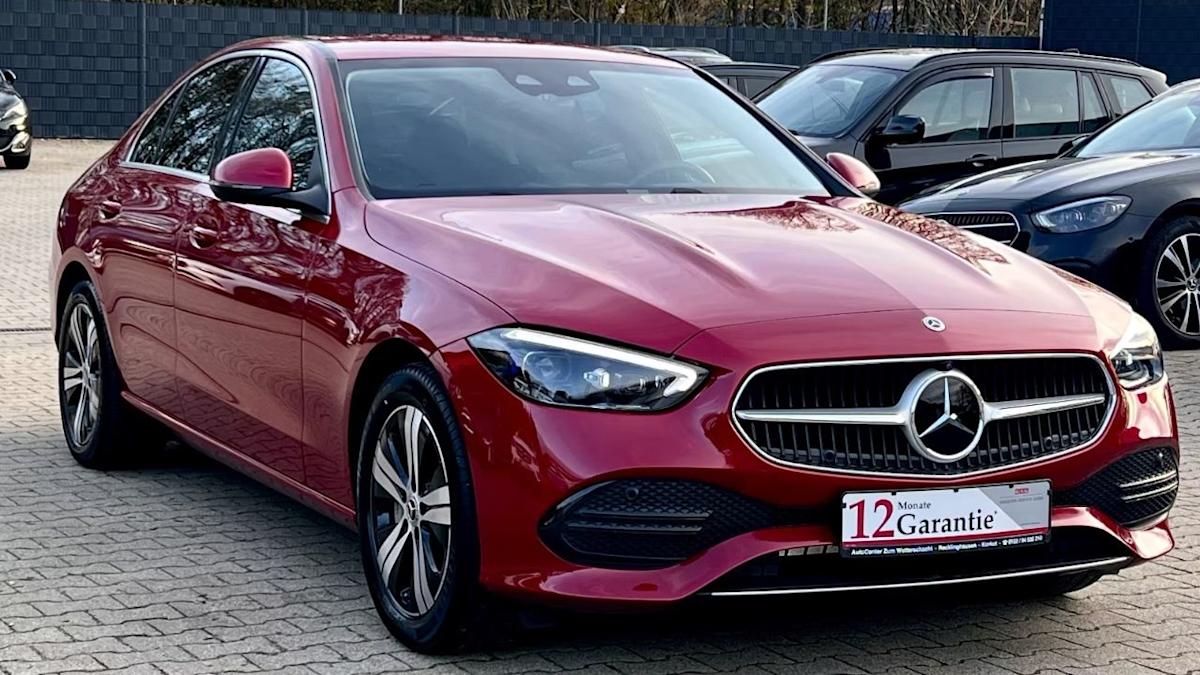
That search led me to a Mercedes C 300 e Avantgarde found in Germany, first registered in June 2024 with about 7,700 miles. It came heavily optioned and still fit the budget, even if the paint was a metallic red that I would not have chosen first.
Why C 300 e Instead of the C 300 de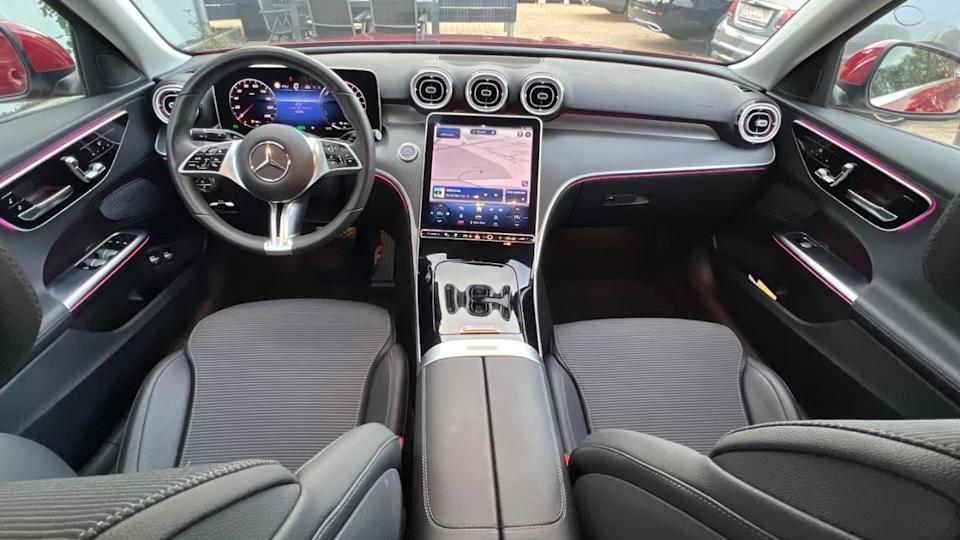
Photo Courtesy: Autorepublika.
The decision came down to two practical points. The gasoline plug-in model is typically about $3,500 to $4,700 cheaper than the diesel plug-in equivalent, and it also carries a higher top speed. In factory form, it is 152 mph versus 143 mph for the diesel. In real highway use, the fuel economy gap is modest, and in city driving I spend most of my time on electric power anyway.
A Parallel Hybrid That Still Feels Like A “Normal” Mercedes
What makes the C 300 e interesting is its architecture. It is a parallel plug-in hybrid, meaning the gas engine, the electric motor, and the transmission are mechanically integrated as one system. In EV mode, the electric motor can drive the rear wheels through the automatic transmission, so speed builds in familiar steps rather than with the single-speed feel many battery electrics deliver.
Power comes from a turbocharged 4-cylinder gasoline engine with about 122 cubic inches of displacement, paired with an electric motor integrated with the 9-speed 9G TRONIC automatic. Total system output is 313 hp and 406 lb-ft of torque.
Performance Numbers That Matter On U.S. Roads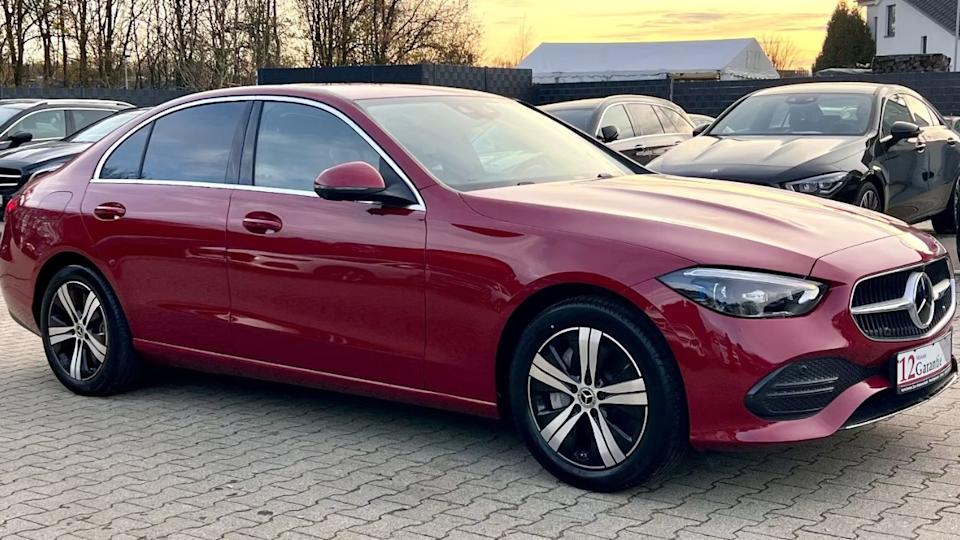
Photo Courtesy: Autorepublika.
Mercedes quotes 0 to 62 mph in 6.1 seconds, which translates to roughly about 0 to 60 mph in around six seconds depending on conditions and timing method. Top speed is 152 mph (electronically limited). In EV mode, the car can run up to 87 mph.
The bigger story is how the power arrives. At higher speeds, the combined torque and the stepped gearing give the car a confident, premium feel that remains stable and composed, not frantic.
Autobahn Reality Check
On a long Autobahn stretch from Düsseldorf toward Regensburg, I held a steady 112 mph when traffic allowed. A BMW 330i closed quickly and initially felt sharper up to around 93 mph, likely helped by lower mass. But as speeds rose, the Mercedes’ hybrid system torque and total output pulled harder and continued building speed convincingly up to the limiter.
Over sustained high-speed driving, you can also see the physics of a plug-in hybrid. Continuous electric assist gradually draws the battery down even when the gas engine is doing most of the work.
Real-World Fuel Economy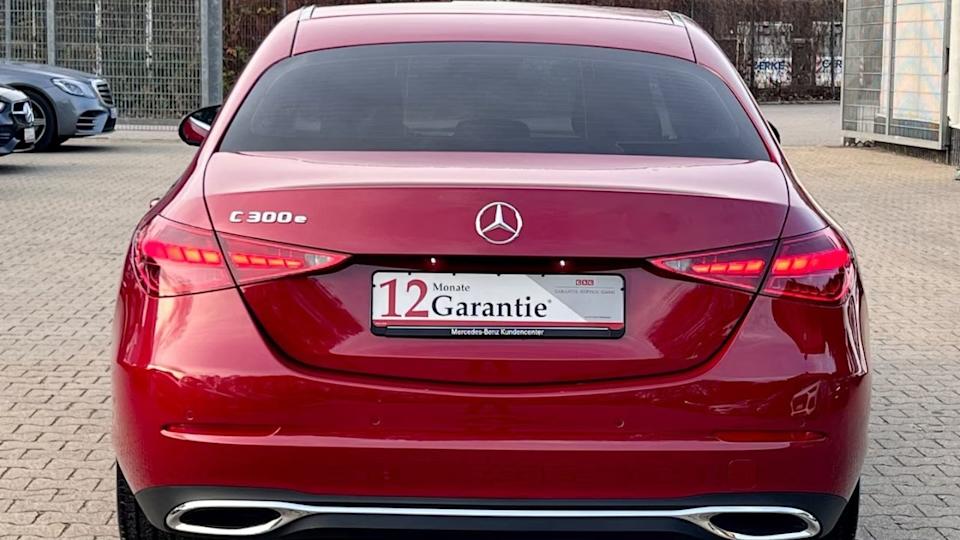
Photo Courtesy: Autorepublika.
At a very fast pace on the Düsseldorf to Regensburg leg, the car reported 9.5 L per 100 km, which is about 25 mpg, over roughly 443 miles. On the Regensburg to Zagreb leg at more typical high-speed cruising, it dropped to 6.4 L per 100 km, about 37 mpg, over roughly 289 miles, with a small but meaningful electric contribution.
Cabin, Comfort, And The Quiet You Actually Notice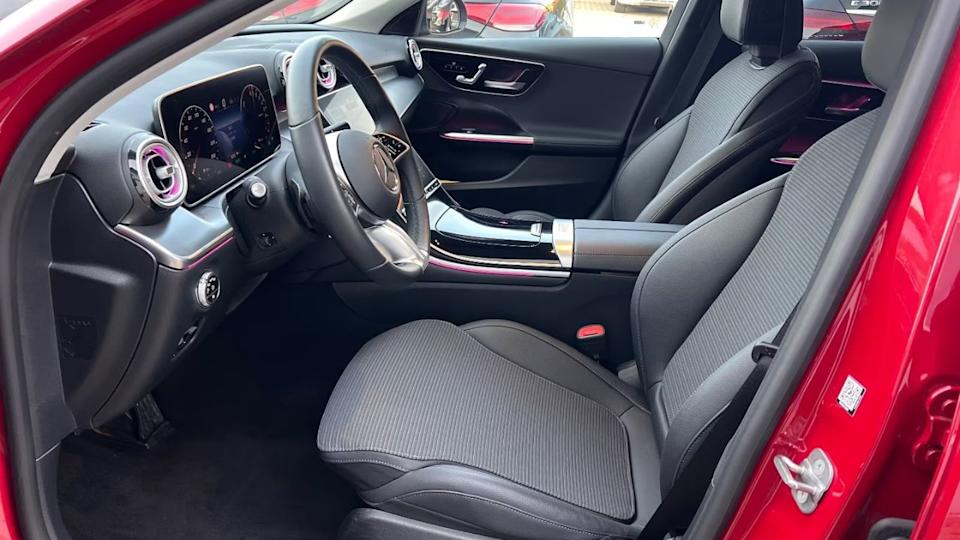
Photo Courtesy: Autorepublika.
The W206 C Class cabin earns its “mini S Class” reputation with a clean, vertical center display and a calm interface. With the acoustic glass package, road noise is heavily filtered, so you get the sense of speed without the fatigue.
I also appreciate that this car still communicates mechanically. The engine sound under load is muted but real, and it delivers enough feedback to match what your right foot is asking for, without resorting to artificial sound design.
Key Specs At A Glance
Powertrain and output
Gas engine about 122 cubic inches, turbo 4-cylinder
Rear-wheel drive with 9-speed automatic
Battery and charging
Battery: 25.7 kWh gross, 19.5 kWh net
DC fast charging not standard
Practicality
Trunk: 315 liters (about 11.1 cu ft)
Fuel tank: 50 liters (about 13.2 gallons)
Bottom Line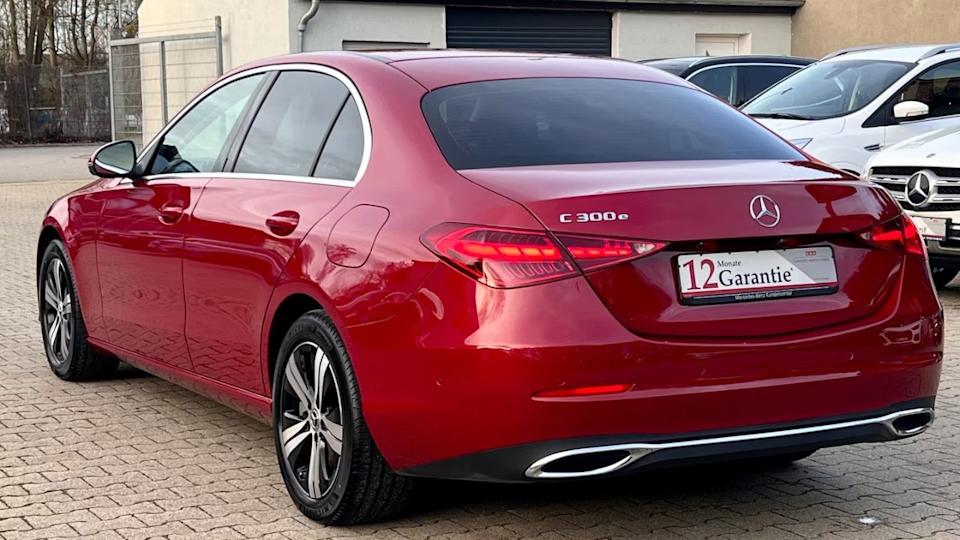
Photo Courtesy: Autorepublika.
The C 300 e is not trying to be the most theoretically efficient hybrid. It is trying to feel like a proper premium sedan in every mode, including full electric driving. If your routine includes quiet electric city miles but you still want stable high-speed capability and traditional Mercedes refinement, the C 300 e is one of the most convincing plug-in hybrids in this segment.
This article originally appeared on Autorepublika.com and has been republished with permission by Guessing Headlights. AI-assisted translation was used, followed by human editing and review.
Read More
12 Pickup Trucks That Are Totally Worth the Money
SUVs That Will Last at Least 15 Years (No Problem!)