Tesla (TSLA 0.92%) is now one of the most valuable companies in the world, with a market capitalization well above $1 trillion. Rivian Automotive (RIVN 1.96%), meanwhile, is stuck with a market cap below $20 billion — less than 2% the size of Tesla.
Tesla has many things that Rivian still lacks. Most obvious is Rivian’s lack of scale. Tesla is consistently the No. 1 or No. 2 producer of electric vehicles globally. Rivian, meanwhile, is a relative drop in the bucket. But that all should start to change in 2026. And combined with two other catalysts, Rivian could soon become the ultimate growth stock.
Rivian’s sales should explode in 2026 and 2027
Rivian’s sales growth has sputtered in recent years. In turn, the market has significantly reduced the valuation it is willing to pay for shares. In 2023, investors were willing to pay upwards of 10 times sales for the stock. Today, that price-to-sales multiple is down to just 3.4 — a two-thirds reduction.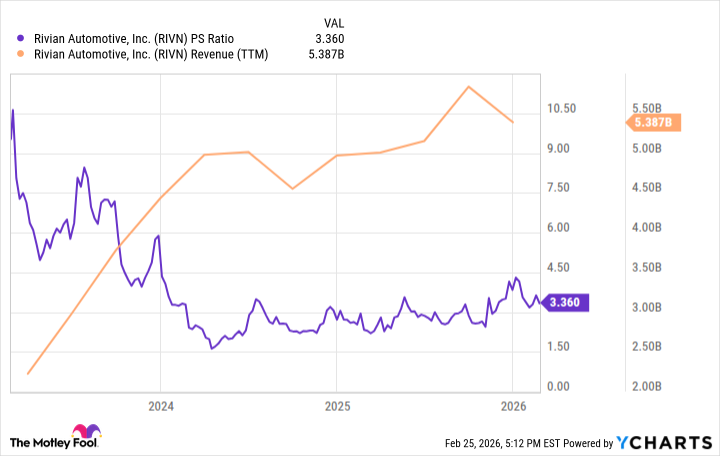
RIVN PS Ratio data by YCharts
What has caused this sales growth stagnation? There are two obvious culprits. First, EV sales sectorwide have slowed down. In 2025, EV volumes in the U.S. fell by around 2%. That drop was fueled by changes in federal subsidies that effectively made purchasing an EV more expensive. Those former subsidies aren’t expected to return anytime soon. The second factor that has slowed Rivian’s sales growth has been a lack of new model introduction. The company hasn’t released a new model in years, last refreshing its lineup in mid-2024.
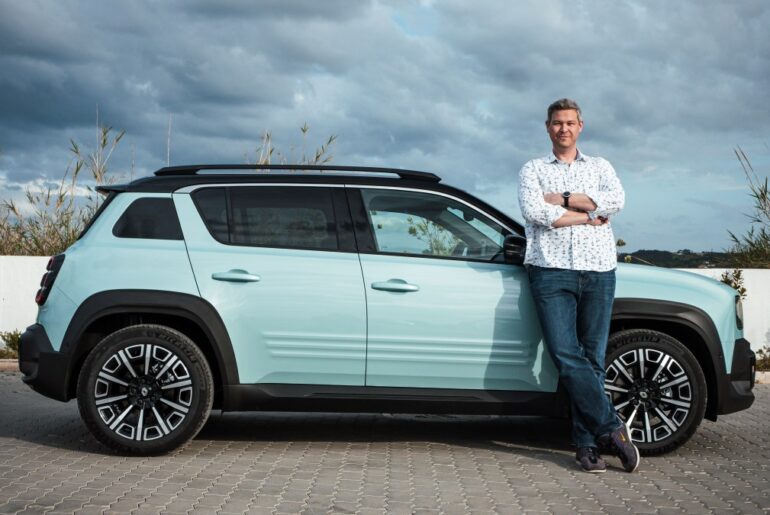
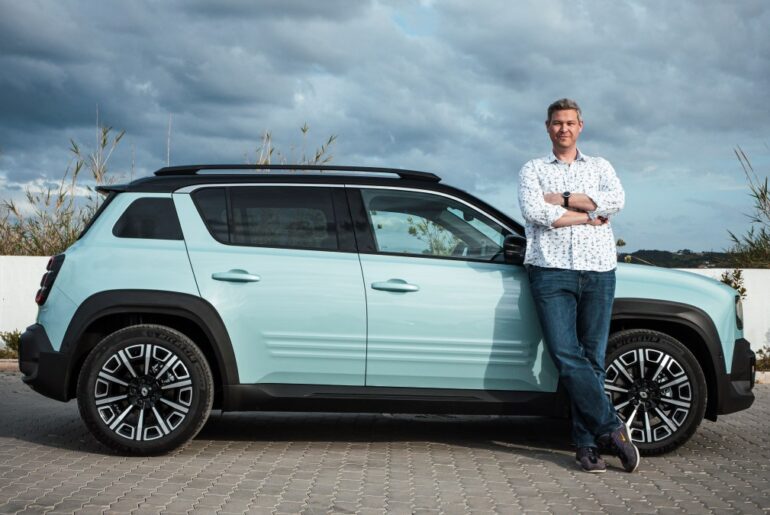
While industry pressures aren’t likely to abate soon, the second factor hindering Rivian’s growth — its stale product lineup — should be resolved fairly soon with the release of its R2 model. This smaller SUV is expected to cost less than $50,000, at least for the base price model. With nearly 70% of consumers looking to spend less than $50,000 on their next vehicle purchase, Rivian finally has an affordable model that can ramp volumes by the millions. Its two existing models — the R1T and R1S — can easily cost $100,000 or more out the door.
When Tesla released its Model Y and Model S vehicles, it entered one of its most impressive multi-year sales growth periods in its history. While Rivian’s relative success is yet to be determined, I’m very confident that the next few years of sales growth will exceed the last couple of years. Wall Street analysts agree. Sales growth for 2026 is expected to reach 30%, with another 66% growth expected for 2027.
But there’s one other growth catalyst I’m also keeping my eye on.
Image source: Rivian.
Just like Tesla, Rivian could soon be considered an AI stock
A big reason why Tesla is valued at more than $1 trillion is its newfound position as an AI stock. The company has long been known for its self-driving technology efforts. But its multibillion-dollar investments into AI could help it capture a huge share of the fledgling robotaxi market, a niche that some experts believe will be worth $5 trillion to $10 trillion globally.
While it is arguably very far behind Tesla in terms of overall investment and innovation, Rivian is moving aggressively into AI. The company’s first annual “AI day” last December outlined a few ambitious goals. Most notably, the company will be pursing the development of a proprietary AI chip, as well as the launch of “Universal Hands-Free” driving. Put simply, Rivian knows that AI is the future of both self-driving cars and EVs, and it’s investing with a long-term focus of competing in those categories.

Today’s Change
(-1.96%) $-0.30
Current Price
$15.03
Key Data Points
Market Cap
$19B
Day’s Range
$14.71 – $15.06
52wk Range
$10.36 – $22.69
Volume
202K
Avg Vol
36M
Gross Margin
-276.59%
To be sure, Rivian’s AI vision is more speculative than its near-term sales ramp that will be driven by conventional vehicle manufacturing. But the company seems to be investing seriously to compete in all three areas: EVs, AI, and autonomy. With a market cap that is still a tiny fraction of Tesla’s, Rivian looks like a very promising growth stock for patient investors looking for maximum long-term upside potential.