
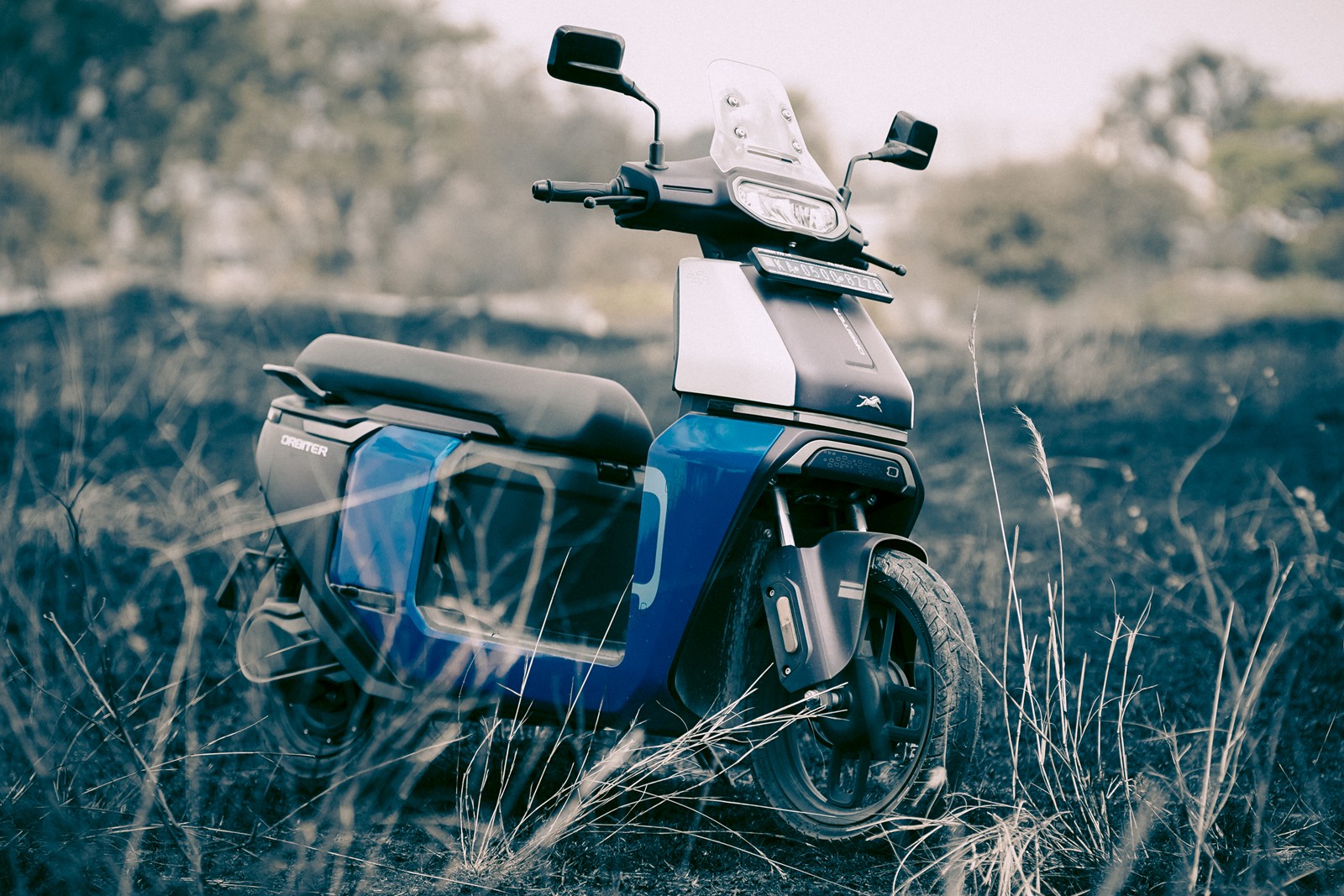
The Indian electric two-wheeler market is evolving rapidly. With rising fuel prices, tighter emission norms, and stronger EV adoption incentives, electric scooters are becoming mainstream urban mobility tools rather than niche alternatives. As the options in the EV market grows, we are seeing further segmentation and niches within it. Each scooter now has a target audience and specific use case. So where does the TVS Orbiter stand, who is it for and is it worth buying? Lets find out.
The TVS Orbiter enters this space positioned as a practical, feature-loaded, value-focused electric scooter for everyday commuting. But does it genuinely deliver? And more importantly — is it worth your money?
In this detailed breakdown, we find out:
What makes the TVS Orbiter worth buying
Its real-world drawbacks
Who should (and shouldn’t) consider it
Let’s dive in.
Design & Road Presence
The TVS Orbiter adopts a clean, modern, urban design language. It avoids extreme futuristic styling and instead leans toward familiarity — something many Indian buyers prefer.
What Works:
Sharp LED lighting setup
Balanced proportions
Clean side panels
Practical stance
It looks contemporary without being polarizing. For urban buyers who want something subtle yet modern, this is a plus.
The large seat and the 34-litre under-seat storage is a standout feature. It can comfortably accommodate daily essentials and even larger helmets depending on size.
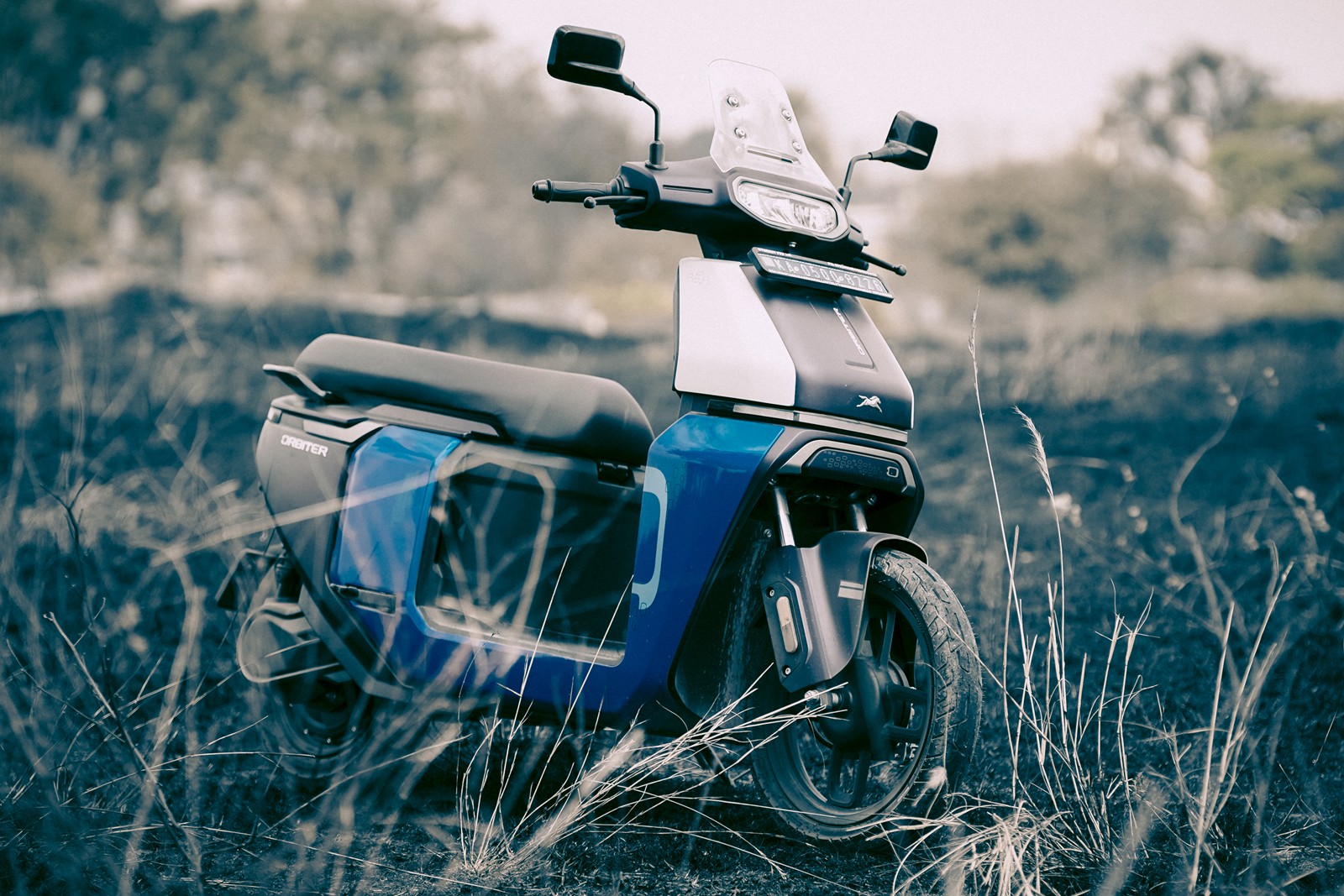 TVS Orbiter – Is it worth buying – Who is it for
Performance & Riding Experience
The Positives
The Orbiter is powered by a 2.5 kW motor tuned primarily for urban efficiency rather than aggressive performance.
Smooth throttle response
Predictable power delivery
Suitable for city speeds
Multiple riding modes (Eco & Power)
For daily commuting within city limits — office runs, grocery trips, school drops — the scooter feels composed and easy to manage.
Top speed is 46 kmph in ECO mode and 68 kmph in Normal mode, which is adequate for urban environments.
The Drawbacks
Performance drops with pillion on inclines
Suspension could have been more softer
If you are upgrading from a 125cc petrol scooter expecting similar punch, the Orbiter may feel underwhelming.
This is not a performance-oriented EV — it is engineered for efficiency and stability.
Battery, Range & Charging
One of the strongest selling points of the TVS Orbiter is its battery setup.
Claimed Specs:
3.1 kWh battery
Claimed IDC range: ~158 km
IP67-rated battery pack
Real-World Range
In practical mixed riding conditions, most users can expect:
100–120 km per charge (depending on riding style and load), we got 113 kms on a full charge on ECO mode.
For most urban commuters covering 20–40 km per day, this means charging twice a week — which is highly practical.
Regenerative Braking
The scooter uses regenerative braking to improve efficiency. While the increase in range is incremental, it contributes to better long-term energy optimization.
The Charging Truths
Here’s the limitation:
0–80% charge can take around 3.5+ hours
If you forget to charge overnight, quick top-ups during the day aren’t possible due lack of fast charging. For apartment dwellers without easy charging access, this can be a consideration.
Braking & Safety
Setup:
Drum brakes (front and rear)
Pros:
Adequate for city speeds
Progressive braking feel
Felt adequate for the speeds it can do and city use
Cons:
Given the price positioning, the drum setup keeps costs down — but some competitors offer disc brake variants at similar price points.
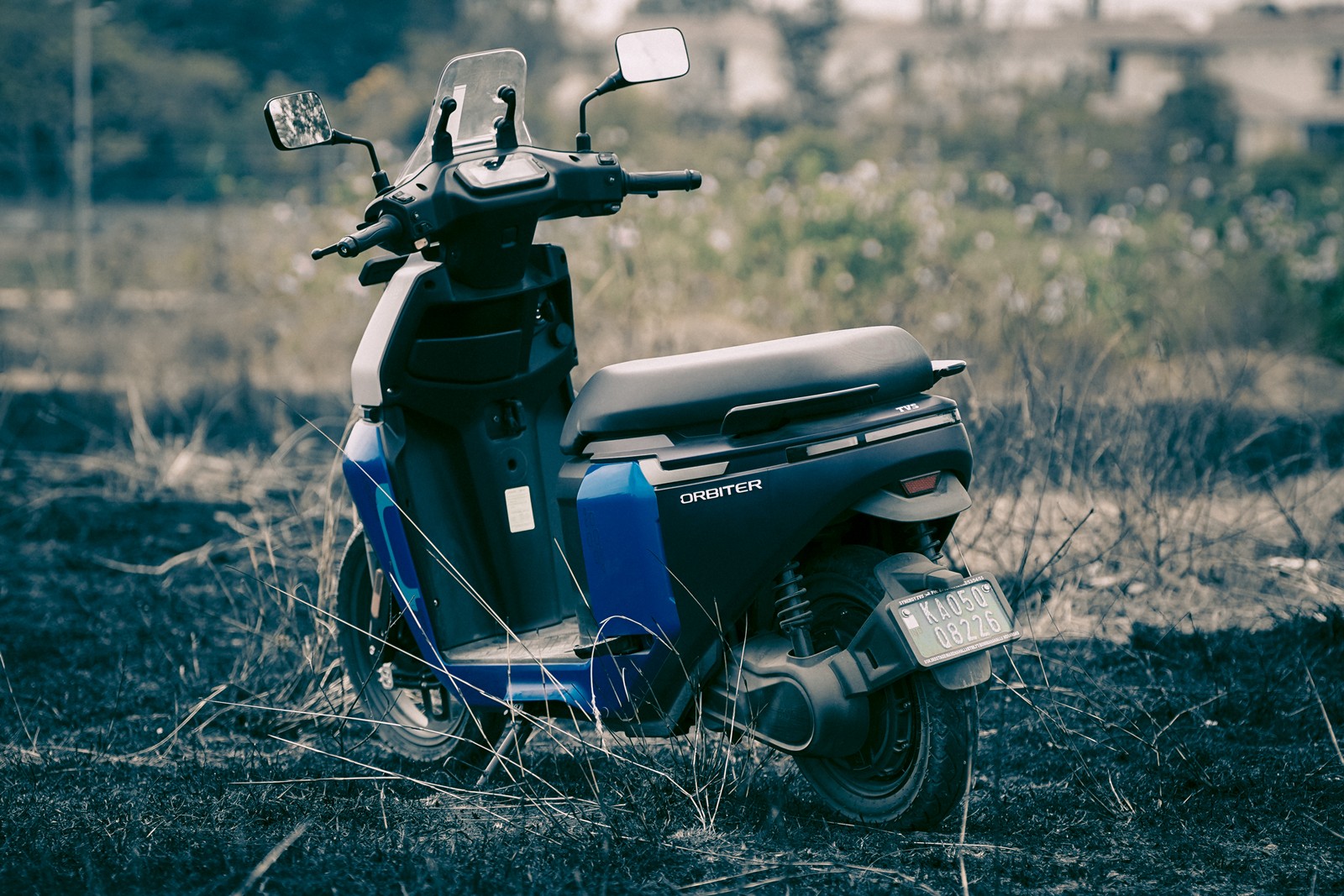 TVS Orbiter – Who is it for
Comfort & Ergonomics
Rider Comfort
Upright riding posture
Wide seat
Flat floorboard
14-inch front wheel for better stability and overall better front feel
The larger front wheel improves ride confidence over potholes — a practical advantage for Indian road conditions.
Pillion Comfort
Rear seat has enough space
Suspension can feel stiff
If you frequently ride with a pillion, test comfort before purchase as these are also dependant on rider and pillion weight and height.
Features & Technology
For its price bracket, the TVS Orbiter is surprisingly feature-loaded.
Highlights:
LCD display
Smartphone connectivity
Call & SMS alerts
Navigation assist
Reverse and Forward parking assist
Cruise control
Hill hold function
USB charging
Cruise control and hill hold are rare at this price point and genuinely useful in urban stop-go traffic.
Build Quality & Fit-Finish
Overall at this price point, the build quality and finish of the TVS Orbiter is quite good.
Solid chassis
Good structural integrity
Durable battery casing
Plastic quality looks and feels good
Running Cost & Ownership Economics
This is where the Orbiter makes a compelling case.
Compared to Petrol Scooters:
Extremely low running cost per km (less than 40 paisa per kilometre)
Reduced maintenance (no oil, clutch, filters)
Fewer mechanical wear components
For riders covering high monthly distances within city limits, long-term savings can be significant.
Electricity cost per full charge is dramatically lower than filling petrol for equivalent range.
Who Should Buy the TVS Orbiter?
The Orbiter makes sense if:
You primarily ride within the city
Your daily commute is under 50 km
You want low running costs
You prefer a practical, comfortable scooter
You value storage and features over extreme performance
Who Should Avoid It?
Consider alternatives if:
You frequently ride on highways
You want aggressive acceleration
You need fast charging flexibility
You regularly ride with heavy pillion load
Balanced Verdict
The TVS Orbiter is not trying to be a performance EV. It is designed as a rational urban mobility solution.
Strengths:
Strong real-world range
Practical storage
Competitive pricing
Useful urban features
Low ownership cost
Weaknesses:
Modest acceleration
No fast charging
If your expectations align with what it is engineered to deliver — efficiency, practicality, and value — the Orbiter can be a smart buy.
If you expect sporty performance or premium hardware at this price point, you may need to explore higher-segment EV options.
Final Thought
The Indian EV market is moving from hype to maturity. Buyers are no longer impressed by just futuristic dashboards or bold claims — they want real-world usability. The TVS Orbiter succeeds most where it matters: daily practicality and affordability.
The key question is simple:
Does it fit your commuting pattern?
If yes — it is absolutely worth serious consideration.