Repealing the endangerment finding hands carmakers a short-term reprieve. But creates strategic and financial uncertainties
The White House repeal of federal greenhouse gas emissions standards earlier this month contrasted sharply with their 2009 launch. While former President Barack Obama was flanked by leaders from the 10 largest carmakers — who hailed the historic agreement as a new start for the industry — President Donald Trump stood only with Environmental Protection Agency administrator Lee Zeldin.
Their visual isolation, coupled with the tempered industry response that saw Ford and Stellantis issue brief statements on consumer choice, while General Motors and Honda declined to comment, underscored the fragile nature of this victory for Detroit.
By rescinding the 2009 endangerment finding, which served as the legal bedrock for vehicle emissions limits, the administration may save carmakers billions in near-term compliance costs.
However, the move simultaneously devalues billions in regulatory currency. That includes the GHG credits banked by companies such as GM, Ford and Tesla, plus the fresh uncertainty injected into a sector that previously lobbied for a single national emissions standard to ensure capital stability.
A bumpy road for EVs
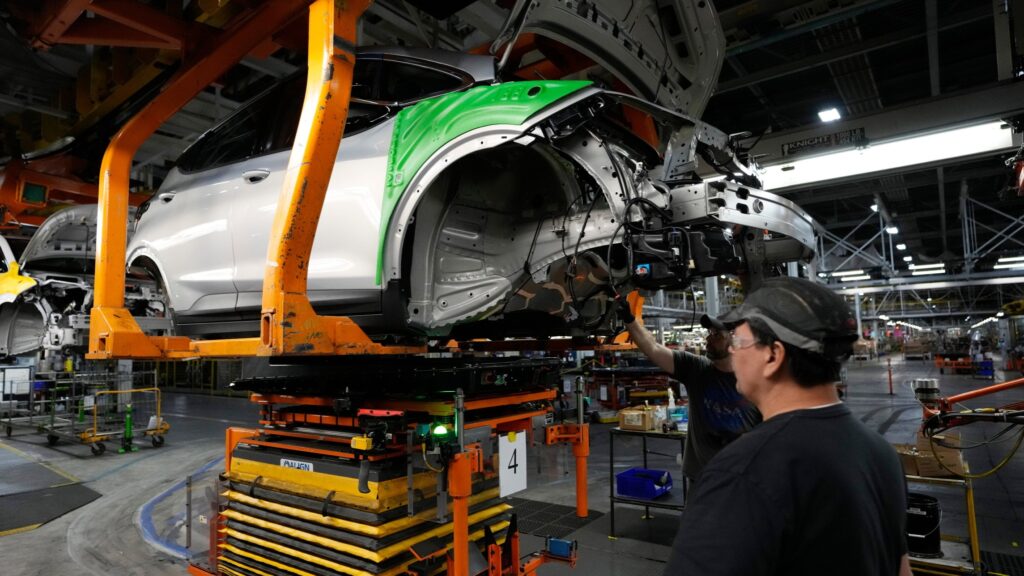
The reprieve also arrives amid a difficult financial pivot for domestic electric vehicles. The Big Three carmakers, GM, Ford and Stellantis, are navigating a wave of massive writedowns, led by a $19.5bn charge for Ford’s EV division and a more than $26bn strategy reset at Stellantis.
As the results of this federal deregulation further take hold, US carmakers risk being caught between immediate cost relief and the long-term threat of global EV rivals that continue to scale.
Auto industry groups had cautioned in their responses to the EPA in September 2025 that a total repeal of emissions standards would invite “long-term regulatory instability” and impair their ability to make investments. However some later endorsed the administration’s narrative of “correcting unachievable [EV] mandates” in their statements about the repeal.
“I worry [US carmakers] have imperilled their long-term future in efforts to cater to the short-term whims of the Trump administration,” says Richard Revesz, an NYU law professor and former administrator of the White House Office of Information and Regulatory Affairs.
EVs are here to stay — growth is just going to take a lot longer
Few expect US carmakers to turn away from EVs completely in the coming months, or even more fuel-efficient vehicles — despite Trump’s other rollback in December of those standards.
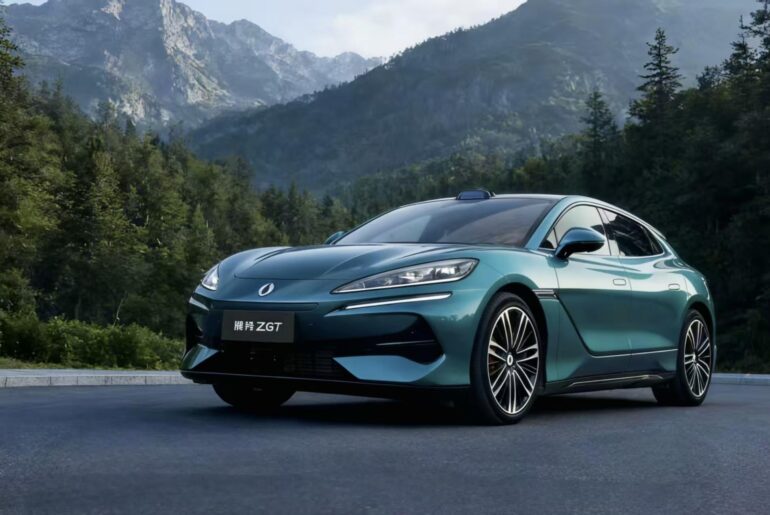
Optimists point to Ford chief Jim Farley’s commitment to the company’s low-cost platform the “universal electric vehicle”, which is designed to compete with the affordability and high-tech integration mastered by Chinese manufacturers such as BYD.
“EVs are here to stay — growth is just going to take a lot longer,” says Sam Fiorani, vice-president of global vehicle forecasting at AutoForecast Solutions.
Carmakers have cited cooling demand to justify their strategic pivots, despite critics arguing this volatility is largely a result of policy shifts.
American EV sales reached a record 10.5 per cent market share in late 2025, driven by consumers rushing to purchase vehicles before federal tax credits expired in October. Their subsequent drop to below 6 per cent in the fourth quarter could represent market recalibration following the removal of those incentives.
Analysts also say that despite President Trump’s assertions that car prices would subsequently “tumble”, it is unclear how much the policy changes would have on consumer vehicle prices as the administration battles a cost of living crisis.
“Historically, changes to fuel economy or emissions rules do not translate into meaningful sticker price relief for consumers,” said a statement from Cox Automotive.
“Automakers invest years in engineering, supplier contracts and tooling to meet regulatory standards, and those costs don’t disappear overnight with the stroke of a political pen,” it continued.
“Even when compliance requirements ease, any savings tend to be incremental and are often absorbed elsewhere — whether through margin recovery, technology reallocation, or offsetting other rising costs such as labour and materials.”
The risk of falling behind
Some are proposing a “strategic pause” on EV manufacturing in the US, arguing that carmakers could use this time to grow their profits from internal combustion engine and hybrid offerings, and use them to bridge the EV gap with global rivals. They point to the strong recent profits of companies such as GM, which has once again been prioritising higher-margin gas-powered vehicles.
But this also presents risks. “GM, Ford, Chrysler have been losing market share for decades,” says Daniel Sperling, director of the Institute of Transportation Studies at the University of California, Davis. “US automakers are hoping and thinking this is a short-term hedge to stay in the game, but they are already quite behind.”
With the pace of technological change today, any industry deciding to scale back on technological innovation really risks getting left in the dust
It is “hard to see how the path US automakers are on will lead to success”, which is concerning because the industry is important for national security, adds Sperling.
“With the pace of technological change today, any industry deciding to scale back on technological innovation really risks getting left in the dust,” says University of Pennsylvania law and political science professor Cary Coglianese.
However, some say state-level politics could incentivise US carmakers to continue with their EV development — even though the administration has removed waivers that allow for more rigorous state rules.
Some legal experts argue the repeal of the endangerment finding could, ironically, remove the authority of the federal government to govern emissions standards in states such as California and New York.
“This has opened up a potential legal avenue, and states shouldn’t ignore that,” Ann Carlson, UCLA law professor and former acting administrator of the National Highway Traffic Safety Administration, tells Sustainable Views. “States are not without leadership and tools.”
A patchwork of rules
Inconsistent and uneven rules are also bad for business. A broad coalition of environmental and health groups have already sued.
Several states, too, have already vowed to challenge the repeal in court, led by California and New York, which also intend to enforce their own stricter standards regardless of federal rollbacks.
These states belong to a coalition of 17 jurisdictions — representing roughly 40 per cent of the US car market — that have adopted California’s more stringent rules under Section 177 of the Clean Air Act.
By moving forward independently, this bloc threatens to fragment the US market, resurrecting the costly regulatory “patchwork” that carmakers have previously lobbied the federal government to avoid.
“For those who actually read [the rationale for the repeal], they are astonished by the frivolous nature of the argument,” says Revesz. “Any intelligent observer knows this might not stick.”