
Tesla’s final quarterly report and annual financial results for 2025 shocked the outside world. The company experienced its first performance decline since its establishment, with revenue data showing a 3% drop compared to 2024. Its attributable net profit suffered a significant decline, nearly halving to just $3.794 billion, representing a 46% decrease compared to 2024. Tesla’s attributable net profit in the fourth quarter of 2025 declined even more sharply year-on-year, reaching as high as 61%. In the domestic market, Tesla has even found it difficult to reverse falling sales despite price cuts, sliding from its previously dominant position to fifth place in sales.
Tesla’s stock performance in 2026 has also been lackluster. As of the close of trading on February 26, Tesla’s stock price was $408.58, with a decline of approximately 11% year-to-date, resulting in a market value loss of about $184.4 billion. Calculated at the latest exchange rate of 6.8554, Tesla’s market value loss since entering 2026 amounts to 1.3 trillion yuan.
What caused this situation? The financial report provides some explanations, primarily attributing it to fewer vehicle deliveries last year, coupled with increased R&D investments and operational expenditures, further squeezing profit margins. Is this really the main reason?
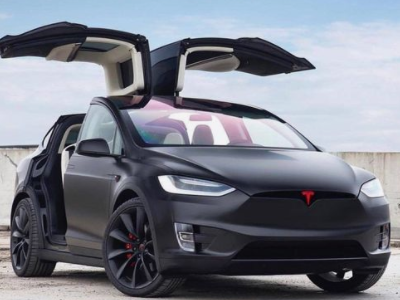
 Recently, Tesla held its Q4 2025 earnings call, during which Tesla founder and CEO Elon Musk announced with great fanfare that Tesla would officially cease production of two high-end models—Model S and Model X—by the end of Q2 2026. Musk’s statement stunned the global automotive industry, as he believes the missions of Model S and Model X have been accomplished, allowing them to retire honorably. This decision marks the formal end of Tesla’s luxury car era.
At the same time, Tesla’s Fremont factory in California will undergo a complete transformation. The original Model S/X production lines will be converted into a mass production base for Optimus humanoid robots, targeting an annual output of one million units. Thus begins Tesla’s official transition from an ‘electric vehicle manufacturer’ to an ‘AI + robotics company’.
Musk believes Tesla’s strategy should not be limited to vehicle manufacturing. To ensure users’ electricity needs, the company is expanding its business into energy production and management: through energy storage products and solar power systems, completing the closed loop of ‘power generation–energy storage–power consumption’; on the other hand, Tesla is transferring control and algorithm capabilities accumulated in the autonomous driving field to new scenarios such as humanoid robots, achieving deeper expansion of core technologies. More surprisingly, Musk has also entered the real estate sector, with Tesla officially launching smart homes centered around energy, AI, and vehicle-home connectivity, creating a truly futuristic home.
Although approximately 80% of Tesla’s revenue still comes from its automotive business, Musk has repeatedly painted a picture of the ultimate scenario of the auto industry moving toward intelligence and networking in recent earnings calls. Has Musk truly lost interest in car manufacturing?
Is Musk planning a strategic transformation?
Tesla was once Musk’s “beloved project,” where he slept on the factory office floor for years, working over 120 hours per week, averaging more than 17 hours per day, almost devoting all his energy to Tesla. Over the years, Musk honed his time management skills while at Tesla, dedicating the first 10 hours of each day without fail to Tesla, focusing on engineering details and production line optimization; after 6 PM, he would switch to other businesses, often holding one-on-one meetings late into the night, from 11 PM to 1 AM. At that time, Tesla was Musk’s top priority.
Musk frankly stated, ‘I sleep on the factory floor because I want my situation to be worse than anyone else’s; when employees are in pain, I feel it more.’ He also acknowledged, ‘No one should work this hard—it’s harmful to both the brain and heart,’ but aside from being with his children, Musk has always maintained a seven-day-a-week sleeping-in-the-office work mode.
In Tesla’s globalization process, Elon Musk’s presence is inevitable wherever there is a Tesla factory. Especially at critical junctures, Musk has been on-site to lead operations. For example, when the Berlin factory faced a fire in 2022, Musk flew to the scene immediately to stabilize the team, closely monitored the 4680 battery cell and body manufacturing processes, overcame local environmental resistance, and scaled production to over 370,000 units annually. When Panasonic’s battery supply was delayed, he dispatched engineers to stay at the Osaka factory; when a driveshaft supplier exited, he led a team to set up a temporary production line in the parking lot, ensuring deliveries through a ‘human-powered supply chain.’
At that time, Musk devoted nearly all his energy to Tesla. Tesla indeed justified Musk’s efforts as, according to mainstream billionaire rankings, Musk has topped the global rich list four times thanks to Tesla, all between 2021 and 2025. About 70%-80% of his wealth comes from Tesla stock, with each ascent driven primarily by a surge in Tesla’s stock price. For instance, in November 2021, Musk became the first person with a net worth exceeding $300 billion, driven mainly by Tesla’s market capitalization surpassing $1 trillion.
In recent years, Musk’s wealth has surged again, but Tesla’s contribution to his wealth has noticeably declined. Following SpaceX’s merger with artificial intelligence company xAI, Musk’s personal fortune surpassed $800 billion for the first time, making him the world’s first billionaire to cross that threshold and solidifying his position as the richest person globally. This wealth surge was primarily driven by SpaceX and artificial intelligence, which might be one reason for Musk’s ‘shifted focus.’
Musk stated during a conference call: ‘It is time for the Model S and Model X to retire with honor… Tesla will convert the Model S/X production space at the Fremont factory into a humanoid robot Optimus factory. The only vehicle we plan to launch will be an autonomous car.’
The discussion revolved around the dreams of Robotaxi, Cybertruck, AI, chips, and humanoid robots. Musk also explicitly mentioned that ‘in the long term, Cybercab will become Tesla’s sales pillar, with annual sales several times higher than other models.’ However, upon closer inspection of this model, it features a two-seat layout, eliminating traditional driving controls—no steering wheel, no pedals, and no conventional control interfaces, retaining only a central control screen.
How soon such an advanced intelligent vehicle can penetrate the market remains to be verified over time.
Tesla’s ‘rollercoaster’ performance?
According to financial reports, Tesla’s global sales in 2025 reached 1.63 million units, an 8.6% year-on-year decline. Meanwhile, BYD, Tesla’s long-time rival, sold 4.6024 million units in 2025, marking a 7.73% year-on-year increase. BYD’s sales were 2.82 times that of Tesla, leading by nearly 3 million units.
Looking at quarterly sales, Tesla’s figures fluctuated like a rollercoaster, with Q1 at 336,000 units, Q2 at 384,000 units, Q3 at 497,000 units, and Q4 at 418,000 units. Q1 started low, Q2 showed signs of recovery, Q3 peaked, and Q4 saw an unexpected sharp decline, forcing Tesla into a price war it had hoped to avoid.
Tesla faced challenges in the Chinese market, with full-year 2025 sales reaching 851,700 units, a 7.08% year-on-year decline. In January 2026, the Model Y was surpassed by Xiaomi’s YU7, losing its monthly sales crown. Globally, Tesla’s pure electric vehicle sales were overtaken by BYD, with BYD selling 2.2567 million pure electric vehicles compared to Tesla’s 1.636 million in 2025.
Tesla’s sales have declined for three consecutive years, with 1.808 million units sold in 2023 and a drop to 1.789 million units in 2024, marking a total decline of 178,000 units over the three years. Interestingly, 2023, the year Tesla set a sales record, was also the year it implemented its largest price cuts: the rear-wheel-drive Model 3 dropped from USD 39,967 to USD 34,485, a reduction of USD 5,482; the rear-wheel-drive Model Y decreased from USD 43,039 to USD 38,985, a cut of USD 4,054, with reductions across all models ranging between USD 4,363 and USD 7,204—a record-breaking price drop.
To reverse the trend of consecutive sales declines, Tesla introduced various price cuts and incentives. In January this year, the company launched a series of latest sales policies, including ‘seven-year ultra-low interest rates’ and ‘limited-time insurance subsidies,’ aiming to provide potential customers with maximum sincerity and benefits without altering the terminal pricing system.
Data from the China Passenger Car Association shows that in January, wholesale sales at Tesla’s Shanghai factory reached 69,129 units, representing a year-on-year increase of 9%. This marked the third consecutive month of positive growth in wholesale sales within China. However, despite the seemingly impressive figures, they were insufficient to challenge the dominance of the top two competitors: BYD ranked first with 205,518 units in wholesale sales during the same period, while Geely followed closely with 124,252 units. Tesla’s wholesale sales were nearly only one-third of BYD’s.
Not long ago, Tesla released its Q4 2025 earnings report. Such results would be explosive news for any domestic automaker. Tesla’s total revenue in Q4 was USD 24.901 billion, representing a year-on-year decrease of 3.14% and a quarter-on-quarter drop of 11.37%. Specifically, revenue from the automotive segment amounted to USD 16.750 billion, marking a year-on-year decline of 10.23% and a quarter-on-quarter fall of 17.73%.
In 2025, Tesla’s revenue totaled USD 94.83 billion, reflecting a year-on-year decline of 2.9%, with net profit dropping to USD 3.794 billion, a year-on-year decrease of 46.5%. The net profit almost halved. Notably, Tesla’s revenue growth has slowed significantly: the annual growth rates for 2021 to 2024 were 70.67%, 51.35%, 18.8%, and 0.95%, respectively, before declining by 2.9% in 2025. Net profit followed a similar trend: in 2021, the net profit growth rate surged to 665.46%, and remained high at 127.5% in 2022, but plummeted to 19.44% in 2023 due to intense price competition. Subsequently, net profit plunged by 52.72% in 2024, resulting in a continuous halving of profits for two years, reducing Tesla’s net profit from USD 15 billion in 2023 to USD 3.794 billion.
BYD’s net profit in 2024 has already approached Tesla’s. For the first three quarters of 2025, BYD reported a net profit of CNY 23.3 billion, matching Tesla’s performance. Based on average quarterly calculations, BYD’s net profit is expected to surpass Tesla’s comprehensively for the first time.
It is worth noting that Tesla’s energy business and other revenue streams have reached new highs, indirectly proving the initial success of its business model transformation. As a result, the company’s overall gross margin closed at 20.12% in Q4, representing a year-on-year increase of 3.86% and a quarter-on-quarter rise of 2.13%. This may explain why Elon Musk remains calm and composed despite such disappointing financial results.
Even though Tesla faces significant challenges with a net profit plunge of 46.5%, capital markets have reacted with tolerance and composure. Investors appear to understand Tesla’s transitional pains.
Why is Elon Musk aligning with trends in China?
Elon Musk has always been renowned for his exceptional intuition. Amid the intensifying wave of AI sweeping through the entire automotive industry, Musk has keenly identified the key factors determining Tesla’s upper limit. While Tesla once served as the cornerstone propelling him to become the world’s richest person, it certainly won’t be the future driver. His clear statement during the conference call highlights that his primary focus in 2026 will no longer be centered on selling cars.
Elon Musk’s remarks once again clarified Tesla’s business core: providing transportation services has become the latest focus, replacing the previous ‘selling cars.’ Musk disclosed in his speech that the unmanned taxi CyberCab is scheduled for mass production in April this year, and a platform similar to Airbnb will be launched, allowing millions of car owners to add their vehicles to the autonomous fleet to earn income. Musk’s statement directly updated the company’s mission, placing ‘extreme prosperity’ at the center, aiming to achieve a ‘high-income-for-all’ future through AI and robotics. Notably, the trend Musk is targeting is also a hot topic in China’s technology sector.
To mitigate supply chain risks, Musk announced plans for a ‘gigafactory’ encompassing logic chips, memory chips, and packaging processes. He officially stated that Tesla will produce its own chips. As is well known, self-production of chips is extremely costly, and Tesla’s net profits may not look good in the coming years. However, since Musk has decided to pivot, Tesla is no longer the same company it once was; now, it carries significant artificial intelligence missions entrusted by Musk.
The mass production of Robotaxi and Optimus robots constitutes the first step in Musk’s plan. Tesla will release the third-generation version of Optimus in the first quarter of this year, marking the first design scheme aimed at mass production. Preparations for the first production line are underway, with a high likelihood of repurposing the production lines of two discontinued Tesla models. Production is planned to commence before the end of this year, with an ultimate capacity target of one million robots annually.
Musk regards China’s artificial intelligence technology as a formidable competitor, stating, ‘So far, the biggest competitors for Tesla’s humanoid robots come from China. China excels at scaling up manufacturing and is adept at applying artificial intelligence technologies, continuously progressing. Therefore, it is absolutely Tesla’s strongest rival. We have not seen any strong competitors from outside China, and competing with China will undoubtedly be a tough battle. No one should underestimate China—it is a highly promising and advanced-level competitor.’
The Chinese artificial intelligence industry that has caught Musk’s attention accounts for nearly 80% of the global humanoid robot market share. By 2025, Tesla Optimus shipments are projected to reach only about 150 units, holding less than 3% of the market. Meanwhile, China boasts a complete supply chain, rapid iteration, and cost optimization, enabling swift large-scale production. Electricity is critical to the development of computational power, and by 2025, China’s electricity generation will be 2.4 times that of the United States, with projections indicating it could triple by 2026, sufficient to support massive AI applications. China’s computing power will lead globally, and Musk explicitly stated in a podcast, ‘China will lead the world in artificial intelligence computing capabilities, primarily due to its robust electricity supply. China will generate more electricity than any other country and likely possess more chips… Based on current trends, China will surpass the rest of the world significantly in AI computing.’
BYD, XPeng, and Li Auto are all formidable competitors that Musk cannot ignore. Recently, He Xiaopeng discussed gait control for robots at a product launch, while Li Xiang is secretly developing the ‘brain’ for embodied intelligence. The market capitalizations of these companies have nearly halved from their peak levels, and their automotive businesses can no longer sustain high valuations. However, there is immense potential in the field of AI-driven robotics.
Today, Musk has replaced his dream of building cars with an even grander vision. Musk consistently emphasizes that Tesla has no choice but to heavily invest in Robotaxi and humanoid robots. However, Tesla currently lacks any commercial validation in these areas. Will this erode market patience or shake investor confidence?
As a dream chaser, Musk may forever remain on the journey.
Author | Meng Xiao
This article is an original piece by BT Finance. Unauthorized use, copying, dissemination, or adaptation of this article is prohibited, and any infringement will result in legal liability.