NIO (NYSE:NIO) has received its first major external funding for its intelligent driving chip unit GeniTech (Shenji) from Chinese investors. The company has created a new subsidiary focused on battery technology. NIO has also entered into a new cooperation with Bosch around smart electric vehicle technologies.
NIO, listed on the NYSE under the ticker NIO, is known for its premium smart electric vehicles and in-house technology efforts. The fresh capital for GeniTech, together with the new battery-focused subsidiary, points to a broader effort to build out key components of the EV stack internally. At the same time, deepening work with Bosch keeps NIO connected to global supply chains and established auto technology expertise.
For you as an investor, these moves highlight how NIO is working to develop technology that can potentially be sold and licensed, not just used in its own cars. The outcome of this approach will depend on execution in chips, batteries, and software, as well as how partnerships such as the one with Bosch develop into products and services that customers are willing to pay for.
Stay updated on the most important news stories for NIO by adding it to your watchlist or portfolio. Alternatively, explore our Community to discover new perspectives on NIO.
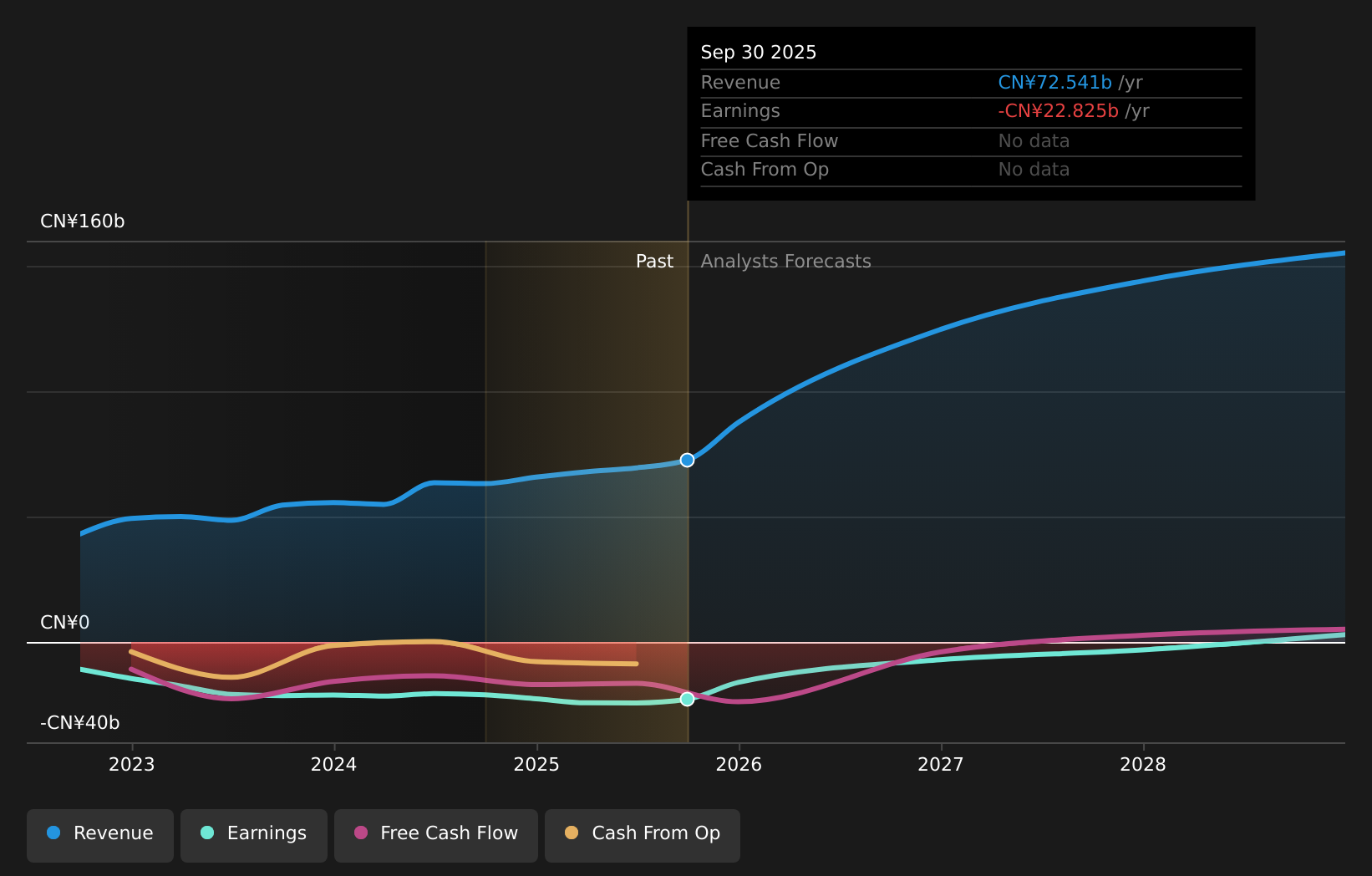 NYSE:NIO Earnings & Revenue Growth as at Feb 2026
2 things going right for NIO that this headline doesn’t cover.
For NIO, the combination of fresh capital for GeniTech, a new battery-focused subsidiary, and a renewed tie up with Bosch points to a more modular business model built around core EV technologies. The RMB2.257b investment into GeniTech, while leaving NIO with a 62.7% stake, brings in external validation and funding for intelligent-driving chips without NIO shouldering all the capital burden. The new Shanghai battery unit, with registered capital of CN¥100m, lines up with NIO’s push on battery swapping and deeper cooperation with CATL. This matters if you think about total cost of ownership and charging convenience as key differentiators versus Tesla, BYD, or XPeng. The Bosch agreement, building on their 2018 cooperation, keeps NIO plugged into a global Tier 1 supplier that already provides driver assistance and powertrain components. This may help on integration quality and time to market for new features.
How This Fits Into The NIO Narrative The external funding for GeniTech supports the existing narrative that NIO can use proprietary chips and a broader tech stack to support revenue from both vehicles and licensing. The need to balance heavy R&D spending on chips, batteries, and multi-brand expansion with profitability targets could challenge the narrative’s assumption that operating leverage improves smoothly. The deeper Bosch cooperation and the new battery entity, including work around battery swapping, add detail on partnerships and infrastructure that are not fully captured in the earlier narrative focus on model launches and delivery volumes alone.
Knowing what a company is worth starts with understanding its story.
Check out one of the top narratives in the Simply Wall St Community for NIO to help decide what it’s worth to you.
The Risks and Rewards Investors Should Consider ⚠️ NIO is committing capital and management attention to chip development, battery technology, and a multi-brand vehicle line up, which increases execution risk if any of these areas underperform. ⚠️ Analysts have flagged at least one key risk around shareholders being diluted over the past year, so further funding needs at subsidiary or group level could be a concern for existing holders. 🎁 GeniTech’s funding round and early chip licensing efforts may create a separate revenue stream that is less tied to NIO’s own vehicle deliveries. 🎁 The focus on battery swapping, a new battery subsidiary, and cooperation with Bosch may support product differentiation versus other EV makers and strengthen NIO’s position in smart electric vehicles. What To Watch Going Forward
From here, you may want to watch how quickly GeniTech converts its RMB2.257b funding into commercially deployed chips and third party licensing deals, as that will show whether the unit can stand more on its own. Progress on the new battery subsidiary, including any disclosures on products, customers, or tie ins with NIO’s target to add 1,000 battery swap stations in China, will also be important. Finally, keep an eye on concrete outcomes from the Bosch partnership, such as new driver assistance or powertrain features in upcoming NIO, ONVO, or FIREFLY models, and how these show up in customer adoption and upcoming earnings commentary.
To ensure you’re always in the loop on how the latest news impacts the investment narrative for NIO, head to the
community page for NIO to never miss an update on the top community narratives.
This article by Simply Wall St is general in nature. We provide commentary based on historical data
and analyst forecasts only using an unbiased methodology and our articles are not intended to be financial advice. It does not constitute a recommendation to buy or sell any stock, and does not take account of your objectives, or your
financial situation. We aim to bring you long-term focused analysis driven by fundamental data.
Note that our analysis may not factor in the latest price-sensitive company announcements or qualitative material.
Simply Wall St has no position in any stocks mentioned.
Valuation is complex, but we’re here to simplify it.
Discover if NIO might be undervalued or overvalued with our detailed analysis, featuring fair value estimates, potential risks, dividends, insider trades, and its financial condition.
Have feedback on this article? Concerned about the content? Get in touch with us directly. Alternatively, email editorial-team@simplywallst.com