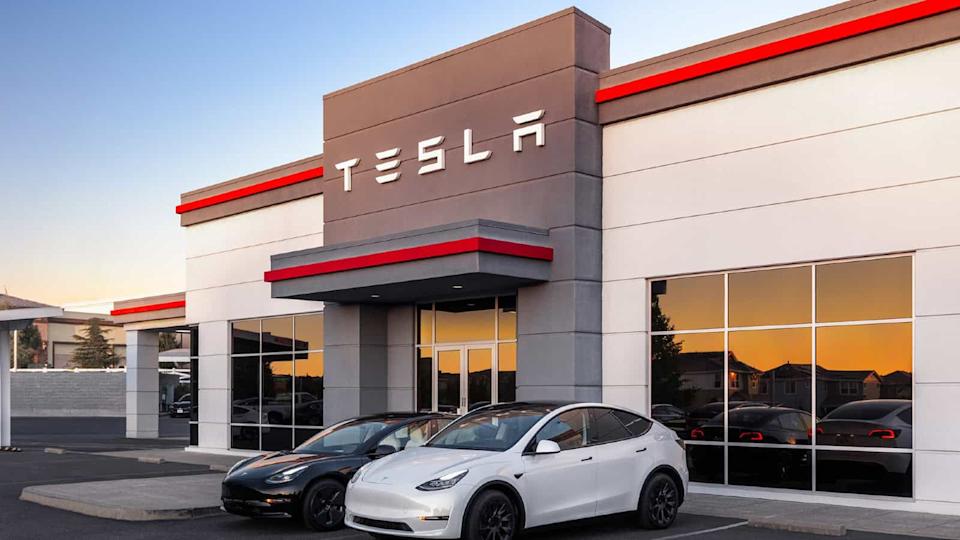
 Image source: Tesla
Scottish Mortgage manager Baillie Gifford first invested in Tesla stock all the way back in 2013. By 2021, the stake had become so massive that the investment firm had to sell a large chunk of it, netting a profit of $29bn (£21bn) while retaining shares worth $19.5bn.
In recent months, however, Baillie Gifford has been trimming Tesla and other highly successful picks like Amazon and Nvidia. And according to a recent regulatory 13F filing in the US, the company has been piling into a little-known growth stock dubbed a ‘mini-SpaceX’.
The company is Rocket Lab (NASDAQ:RKLB). In Q4, Baillie Gifford was a heavy buyer, adding around $400m worth of shares, a 47.2% increase to its portfolio.
So what does Rocket Lab do? Well, the name probably gives it away — it designs and launches rockets. However, as an end-to-end space company, it also makes satellites, various components, and lunar spacecraft.
In essence, it’s building the infrastructure of the new space economy. Today, Rocket Lab has a $37bn market cap. Hence why it has been dubbed a ‘mini Space-X’ (Elon Musk’s unlisted rocket firm is now valued at potentially more than $1trn).
The stock has surged in recent times. In fact, anyone who invested in Rocket Lab just two years ago at around $4 per share would now be sitting on gains of approximately 1,500%, excluding currency moves.
Rocket Lab is now the world’s second most active commercial launch company after SpaceX. In 2025, its small orbital-class rocket Electron flew a record 21 missions, with a 100% success rate.
This helped drive annual revenue 38% higher to $602m, with the company’s backlog surging 73% to $1.85bn. Key contracts signed included a record $816m deal from the Space Development Agency to design and manufacture 18 satellites for defence purposes.
And it successfully launched two spacecraft it built for NASA and the University of California Berkeley toward Mars for the ESCAPADE mission. So this is a firm with its fingers in a few lucrative pies, including commercial, defence, and the future Moon and Mars missions.
But is the stock still worth considering after such a strong run? I think it is, assuming an investor has a long enough timeframe (five years minimum), and is willing to build up their position over time, especially on dips.
I say this because it’s a higher-risk stock and is certainty not cheap. Based on the 2026 revenue forecast for $1.3bn, the forward price-to-sales ratio is about 42 (potentially falling to 29 by 2027).
There’s no price-to-earnings ratio because the rocket firm isn’t expected to turn profitable until at least 2027, adding risk to any investment.
Having said that, McKinsey & Co. estimates the global space economy could hit $1.8trn by 2035. So the long-term market opportunity here is extremely large, as Rocket Lab also makes satellites/spacecraft.
Plus, there’s a significant commercial opportunity with its larger reusable Neutron rocket. Due to be tested in Q4 2026, this will have a payload capacity of 13,000 kg, potentially enabling it to compete for much larger government and commercial launch contracts.
Unfortunately, this growth stock only seriously appeared on my radar around a year ago. But it’s one I’m wanting to buy sooner rather than later.
The post After making a fortune on Tesla, Scottish Mortgage manager Baillie Gifford is piling into this ‘mini-SpaceX’ growth stock appeared first on The Motley Fool UK.
More reading
Ben McPoland has positions in Nvidia. The Motley Fool UK has recommended Amazon, Nvidia, Rocket Lab, and Tesla. Views expressed on the companies mentioned in this article are those of the writer and therefore may differ from the official recommendations we make in our subscription services such as Share Advisor, Hidden Winners and Pro. Here at The Motley Fool we believe that considering a diverse range of insights makes us better investors.
Motley Fool UK 2026