
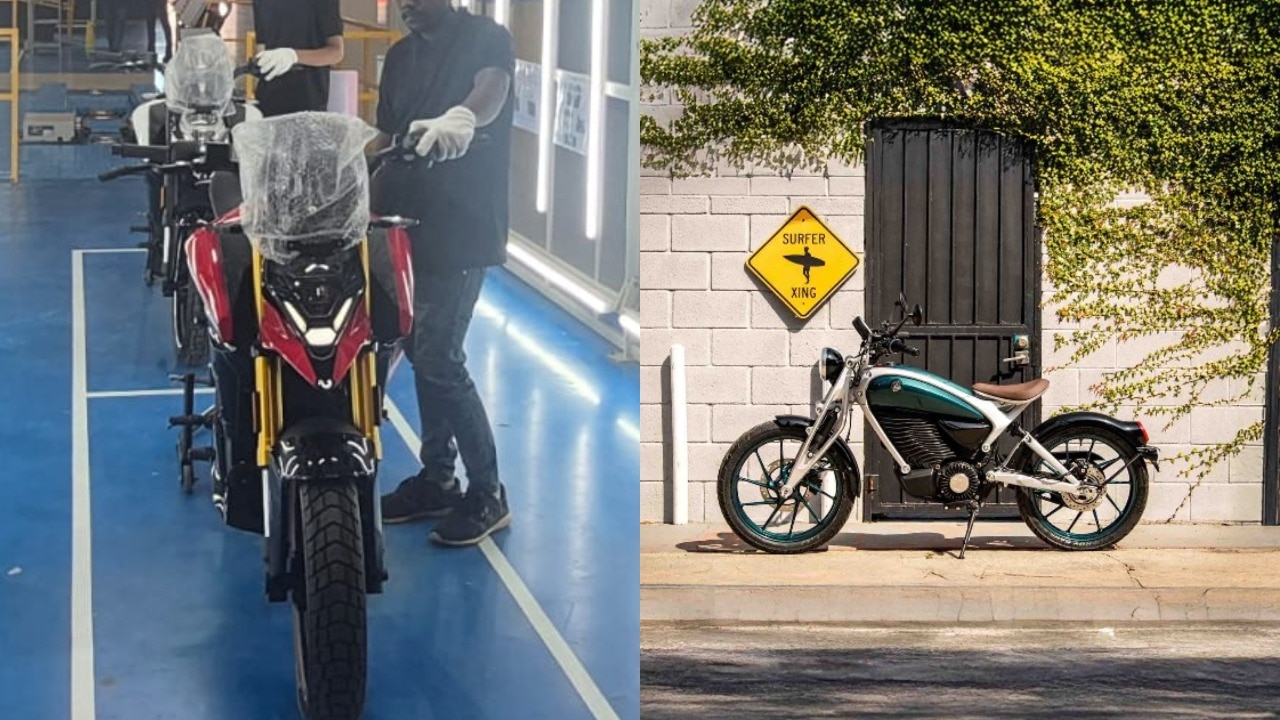
Electric scooters are everywhere on Indian roads today. From start-ups like Ola Electric and Ather Energy to legacy giants such as Hero MotoCorp, TVS Motor Company, Bajaj Auto and Honda Motorcycle and Scooter India, almost every major player now has an electric scooter in its portfolio. Yet, when it comes to electric motorcycles, the market remains sparse.
Apart from performance-focused brands like Ultraviolette Automotive with its F77 and the X47, and Royal Enfield’s electric sub-brand Flying Flea which will introduce the Flying Flea C6 followed by the S6 scrambler soon, concrete, mass-market electric motorcycle plans from legacy manufacturers are still limited.
This brings us to the larger question: why are electric scooters thriving, while electric bikes are lagging behind in India?
R&D complexity: A different engineering ball game
Electric motorcycles face a tougher road to mass adoption due to higher R&D complexity, cost pressures, technology limitations and cautious strategies by established OEMs.
The difference lies in performance expectations. Scooters are typically designed for city commuting, with modest top speeds and lower peak power demands. Motorcycles, on the other hand, are expected to deliver stronger acceleration, higher top speeds and sustained highway performance.
During a recent visit to the Ultraviolette factory, the scale of this challenge became evident. Speaking to Auto Today, Niraj Rajmohan, Co-Founder and CTO of Ultraviolette, highlighted the technical hurdles involved in developing high-performance electric motorcycles.
He explained that building battery packs capable of delivering 30kW to 50kW of peak power, while fitting within the strict size, weight and volume constraints of a motorcycle is “an incredibly hard challenge.”
Unlike scooters, where battery packaging is relatively straightforward due to under-seat storage space and floorboard layouts, motorcycles require tighter integration within a traditional frame architecture.
Ultraviolette spent nearly eight years developing its battery and powertrain platform before introducing it on the F77. The same scalable architecture now underpins its upcoming X47, with modular battery packs tailored to different performance levels. Solving the hardest engineering problems first, Rajmohan noted, is what enables scalability later.
Consumer expectations
Electric scooters have firmly established themselves as practical, everyday mobility solutions. By design, they are utilitarian, easy to ride, simple to maintain and perfectly suited for daily commutes. One of their biggest advantages is storage space, typically under the seat, which makes carrying groceries, office bags or small parcels effortless. Unlike many motorcycles, scooters are inherently family-friendly, offering a comfortable riding posture, spacious seats and convenience that appeals to riders across age groups.
Price sensitivity is another major factor. Electric scooters work because they directly replace petrol scooters used for daily commutes. Buyers prioritise savings on fuel, ease of charging at home and low running costs. Performance expectations are moderate.
Motorcycle buyers, however, often prioritise power, range and emotional appeal. To match a 150cc–300cc ICE motorcycle in real-world performance, an electric bike needs a significantly larger battery and a more powerful motor. This pushes up costs dramatically.
Batteries remain the most expensive component of an EV. For motorcycles, higher energy density and thermal management systems are essential to sustain performance without overheating adding further cost and engineering complexity.
As a result, many electric motorcycles either become too expensive for mass adoption or compromise heavily on range and performance, limiting their appeal.
Platform economics favour scooters
For legacy manufacturers, scooters offer a safer business case.
India’s urban commuting base is scooter-heavy, and electrification aligns perfectly with stop-go city riding patterns. Existing dealer networks, service setups and production lines can also be adapted more easily for electric scooters than for entirely new high-performance motorcycle platforms.
Motorcycles, particularly in the 150cc+ category, represent a more cost-conscious market. Electrifying this segment requires not just technology investment, but also brand repositioning, something legacy manufacturers are approaching cautiously.
Range anxiety
Scooters are seen as city vehicles, so a 100–150km real-world range is acceptable. Motorcycles, however, are aspirational machines often used for longer rides and occasional touring. Buyers expect flexibility, something current battery technology struggles to deliver without adding significant weight.
Heavier batteries also affect handling dynamics, critical for motorcycles where balance and agility define the riding experience.
A phased strategy from legacy players
Most legacy manufacturers appear to be taking a phased approach, start with scooters, learn the EV ecosystem, stabilise supply chains, reduce battery costs, and then move into motorcycles.
Royal Enfield’s Flying Flea brand indicates that motorcycle makers are preparing for the electric transition, but cautiously.
The road ahead
Electric motorcycles are not absent, they are simply more complex to build and harder to price right for India’s mass market. Start-ups like Ultraviolette are tackling the performance end first, while legacy players are strengthening their foothold in scooters.
As battery technology improves, costs fall and charging infrastructure expands, the equation could change. For now, however, the scooter remains the low-hanging fruit of India’s electric revolution.
Electric bikes will come. But unlike scooters, their journey demands more power, both technically and economically.
Subscribe to Auto Today Magazine
– Ends
Published On:
Feb 28, 2026 13:29 IST