Gasgoo Munich- For years, electrification has been viewed as the auto industry’s irreversible path forward.
Yet the global ultra-luxury market hasn’t delivered the anticipated electric boom. Instead, it finds itself mired in strategic contraction and retreat.
Recently, Aston Martin announced plans to cut roughly 20% of its workforce amid operational pressure and market uncertainty. Almost simultaneously, Porsche pivoted its K1 project—originally conceived as a pure electric flagship SUV—to a strategy combining internal combustion and hybrid power. Lamborghini, too, confirmed that the Lanzador will no longer launch as a full EV, switching instead to a plug-in hybrid format.
Broadening the timeline reveals further delays and course corrections: Bentley has pushed its target for full electrification back from 2030 to 2035, while McLaren has made it clear it won’t rush into pure electric supercars anytime soon. All signs suggest that in the ultra-luxury segment, the shift to full battery power isn’t proceeding as smoothly as expected—and may even be cooling off.
Why?
The decision by ultra-luxury brands to slow or even abandon their pure electric strategies is the result of a tug-of-war between market realities, emotional value, and business logic.
Ultra-luxury brands operate in a market structure vastly different from mainstream players. Their core clientele is limited in number but deeply sensitive to symbolism, emotional experience, and long-term value. For these consumers, a vehicle is more than a means of transport; it is an expression of identity and a component of asset allocation.
Traditional internal combustion models—particularly those with large-displacement, multi-cylinder engines—offer a symphony of sound, mechanical complexity, and driving feedback that is viewed as the core of brand DNA.
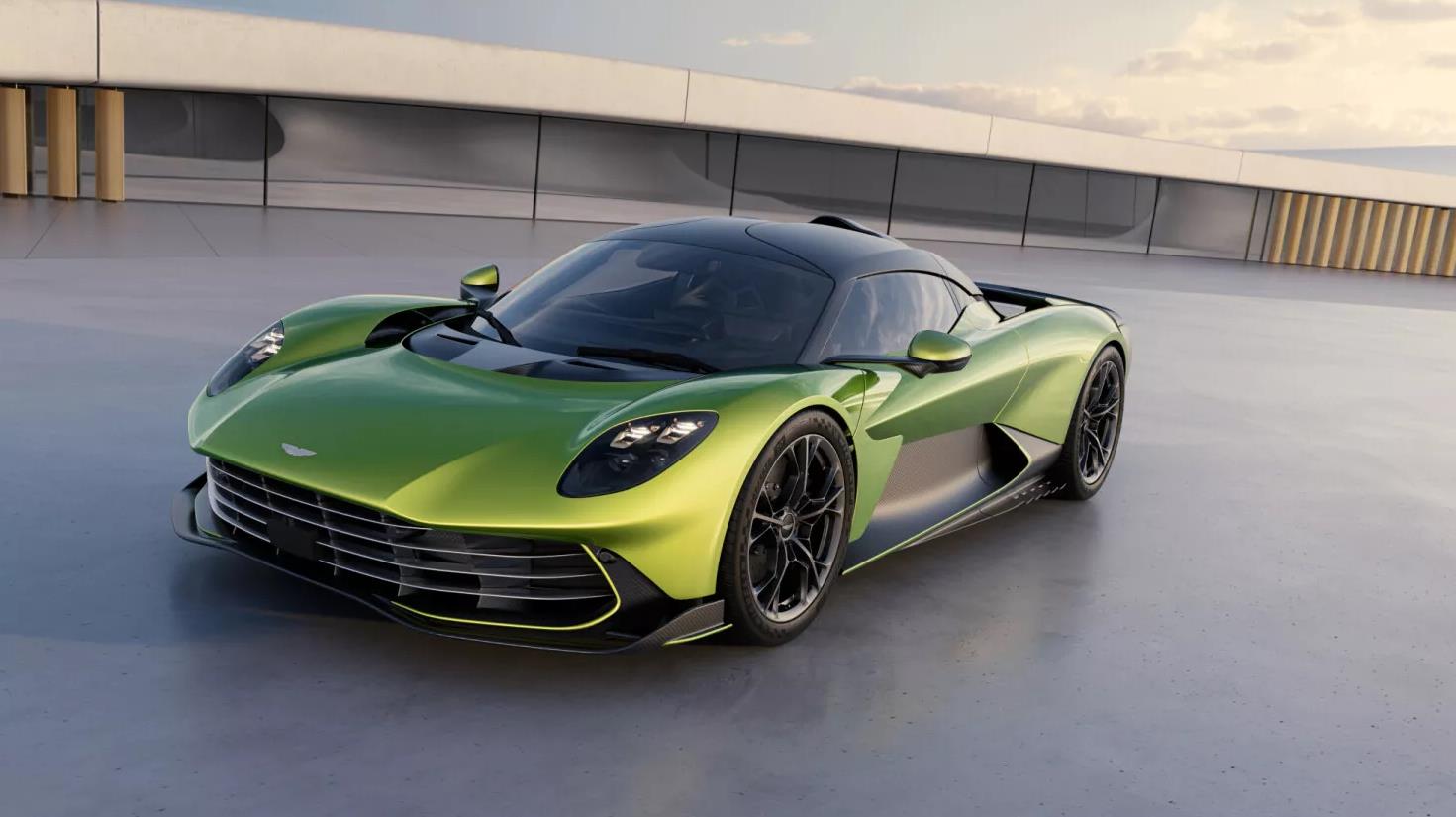
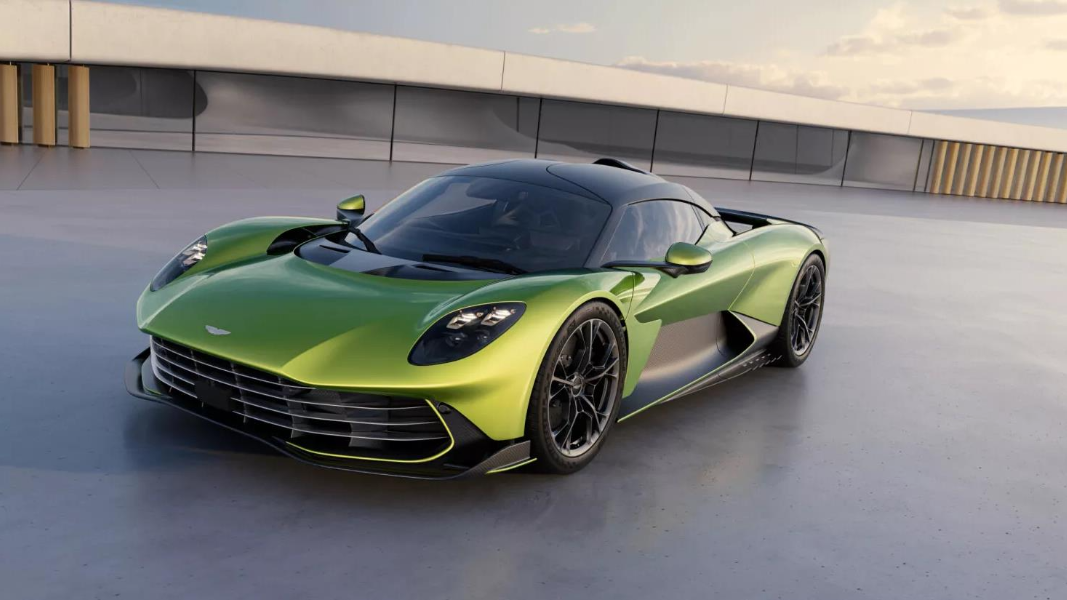
Image Source: Aston Martin
While electric vehicles hold a natural advantage in power response and acceleration, their inherent silence undermines the sensory experience ultra-luxury brands have cultivated over decades. This isn’t an abstract concern; it directly impacts purchasing logic. When a car carries a price tag in the millions, performance specs are no longer the deciding factor—unique mechanical characteristics and cultural symbols are what justify the premium.
Take Lamborghini. Management repeatedly cited “emotional connection” when explaining its strategic shift. The company’s CEO was blunt about the decision to scrap the pure electric Lanzador: after a year of market research and stakeholder dialogue, the conclusion was that acceptance of a fully electric Lamborghini in its target market is “close to zero.”
Bentley’s CEO echoed this sentiment, noting that while electric vehicles give everyone “instant torque,” the difference lies in sound. Bentley wants its cars to roar, he insisted—”silence will not be Bentley.” It is precisely this thinking that led Bentley to delay its full electrification target while launching the updated Bentayga Speed, powered by a 4.0-liter V8, and the Batur, featuring the final iteration of the W12 engine.
Then there is the “anxiety of obsolescence,” a phenomenon amplified by the rapid pace of technological iteration in the ultra-luxury sector. EV platforms typically have shorter update cycles than traditional internal combustion models, with frequent advancements in battery energy density, electronic architecture, and software systems.
This means a pure electric supercar can rapidly fall behind the technological curve within five to ten years. Ultra-luxury vehicles, by contrast, are defined by enduring value—classic models often appreciate with age. In this context, rapid technological depreciation clashes with the “timeless” value logic that underpins the ultra-luxury segment.
From an industry perspective, the transition to electrification faces practical constraints. Developing high-end EV platforms requires massive investment, and the maturity of software systems and high-voltage architectures directly dictates production timelines. Porsche has publicly acknowledged that it adjusted plans for certain electric projects due to software development delays.
For ultra-luxury brands with inherently limited sales volumes, weak demand significantly extends the payback period on initial investment, creating financial risks far higher than those faced by mass-market brands. Consequently, pivoting to plug-in hybrids has emerged as a compromise: it satisfies emissions regulations while preserving the core selling points of the internal combustion engine.
Do We Really Need Electric Supercars?
Does this imply that electric supercars lack inherent purpose? Answering that requires a multi-dimensional analysis of the market, technology, and motorsport.
The Rolls-Royce Spectre, launched in 2023, now accounts for a significant portion of deliveries and is considered an interim success story in the ultra-luxury EV space. The key lies in its positioning logic: rather than emphasizing extreme performance, it leverages electric propulsion to amplify the brand’s signature traits of serenity and smoothness.
This suggests that when electric technology serves existing brand DNA rather than attempting to replace it, customer acceptance comes more easily.
Yet this success is not easily replicated. Most supercar brands count high-revving engines and track heritage as core assets, with product narratives built around speed, sound, and handling limits. While electrification boosts acceleration, it alters power delivery and weight distribution. High-performance battery packs add significant mass, placing higher demands on chassis tuning and thermal management.
Image Source: Porsche
Without breakthroughs in lightweighting and sustained power release, electric supercars may not outperform their hybrid or internal combustion counterparts on the track.
Technological evolution in top-tier racing like Formula 1 offers a reference point for the future of electric supercars. The 2026 F1 regulations will increase the electric power unit share to nearly 50%, yet the internal combustion engine remains central. This indicates that even in the arena where speed limits are pursued most aggressively, pure electric power has not become the mainstream choice; its maturity and the balance between performance and range still require long-term validation.
Given this landscape, plug-in hybrids have emerged as the safest compromise. Reports indicate that Lamborghini’s next-generation Urus will debut in 2029 as a plug-in hybrid, joining the Temerario and Revuelto supercars which have already adopted the technology. Porsche’s K1 flagship SUV will also offer a range of hybrid options, while McLaren’s upcoming SUV will feature a hybrid system combining a V8 engine with an electric motor.
The advantages of the plug-in hybrid route are clear: they satisfy global emissions regulations while preserving the sound and passion of the internal combustion engine. This addresses the “emotional imperative” that ultra-luxury buyers are unwilling to surrender, all while avoiding the depreciation anxiety caused by the rapid obsolescence of pure electric technology.