Support CleanTechnica’s work through a Substack subscription or on Stripe.
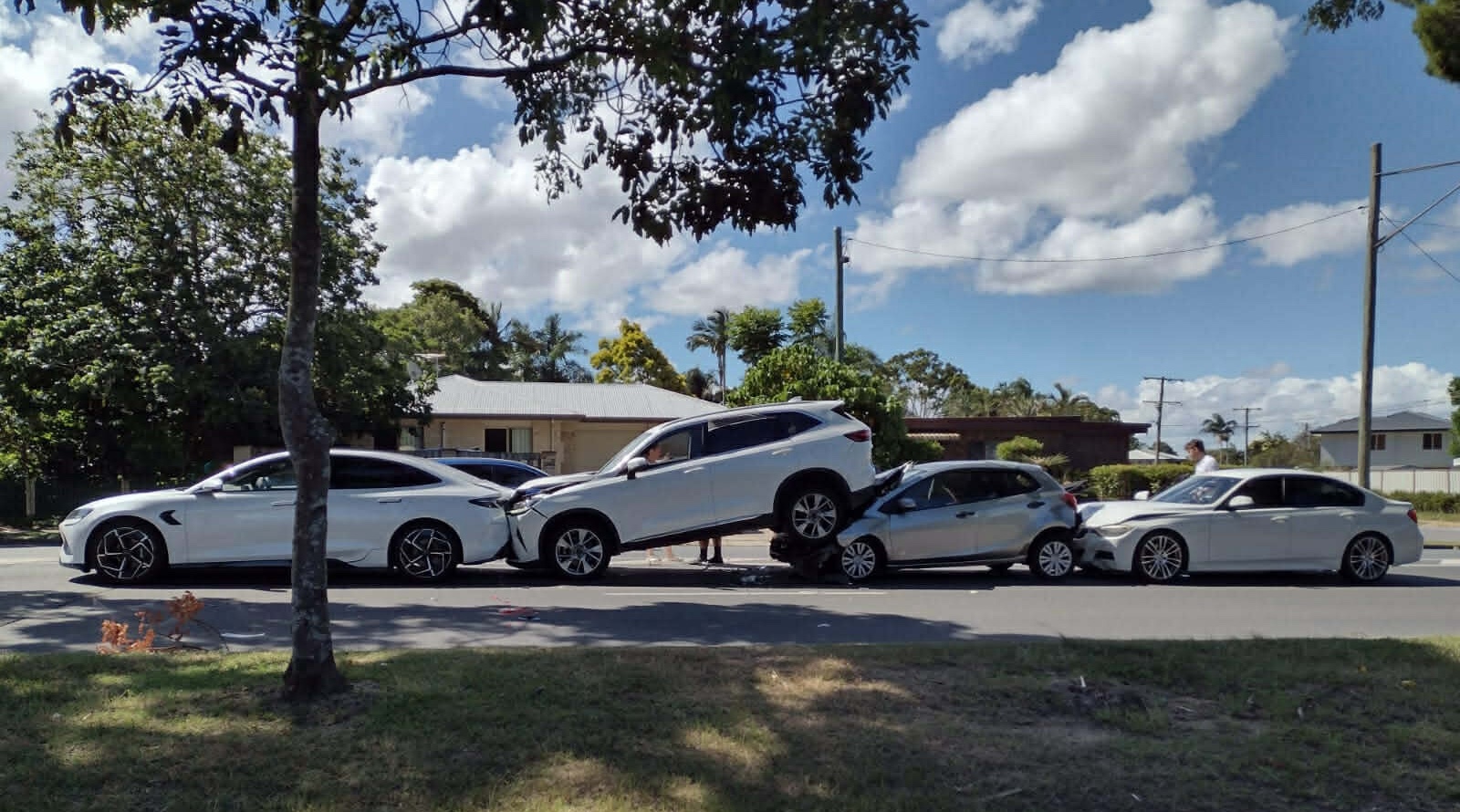
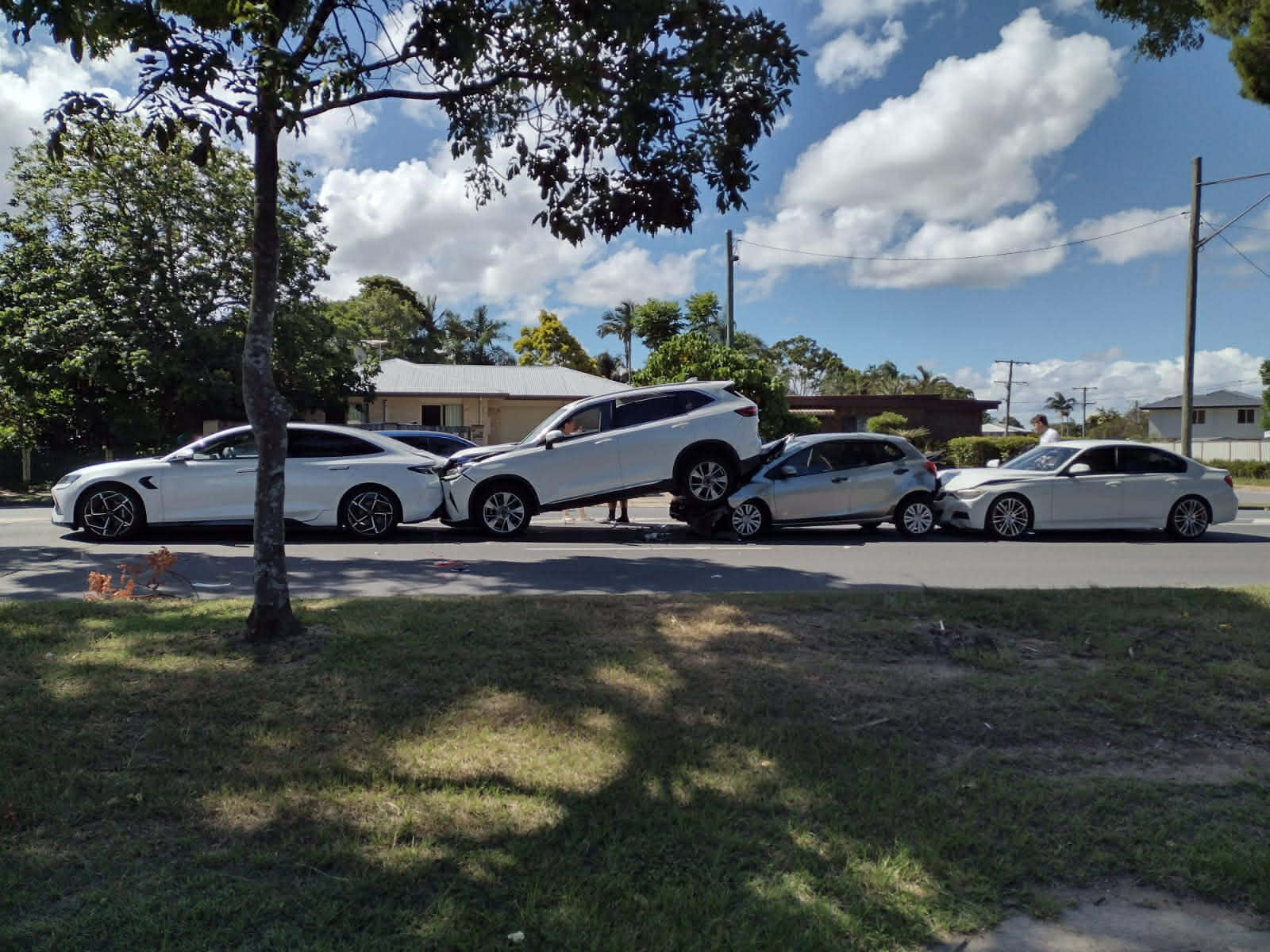
On the 8th January this year, Ron Male was involved in a spectacular car crash. A four-car pileup no less. His BYD Seal was the first in line, followed by three petrol cars — a Great Wall, a Mazda, and a BMW. Looks like the Mazda was the crumple zone! Ron tells me that the drivers gathered ’round and talked about their experience. He told them that his vehicle was a BEV. No one in the group seemed particularly bothered.
Two fire engines attended. Contrary to expectations, his BYD Seal AWD Performance did not burst into flames. But there was quite a conversation about how to isolate the battery. When the first responders reported that they had achieved that, Ron pointed out that the screen was still clearly ON. “Let me turn my car OFF,” he remonstrated. He tells me that “I simply turned it off, then popped the bonnet to isolate the 84 kW battery.”
 Four car pile up. Photo Courtesy Ron Male.
“I got a call from the repairer asking me how my rear seat was destroyed. The fire brigade had actually PEELED the seat lining off the frame INSTEAD of lifting the rear seat up to access the battery. I DO honestly believe the fire brigade require FURTHER training on ALL EVs.” My thoughts are that there could be a vast improvement if they received training in just BYD and Tesla, as they are the most common EVs on Australian roads.
It appears from the photos Ron supplied that as he was slowing down, a Great Wall Haval slowed down to match his speed, but the other two cars, a Mazda and a BMW, clearly did not. The BMW ran up the rear of the Mazda as it rammed into the back of the Haval. Ron’s BYD Seal was the only car not written off.
The insurance company has spent three weeks thoroughly checking all the wiring before sending the car off for repairs. Ron has nothing but praise for Suncorp Insurance. Though, the ICE loaner car has been driving him crazy. “I could never go back to an ICE vehicle again!” He shared the costs with us: “I’ve always insured my cars, including Holden Special Vehicles, Mercedes AMGs, and now BYD with Suncorp. They have been really excellent telling me what’s happening. Insurance costs AU$1,350 per year with a $700 excess. But I wasn’t at fault. So didn’t pay a cent, naturally.”
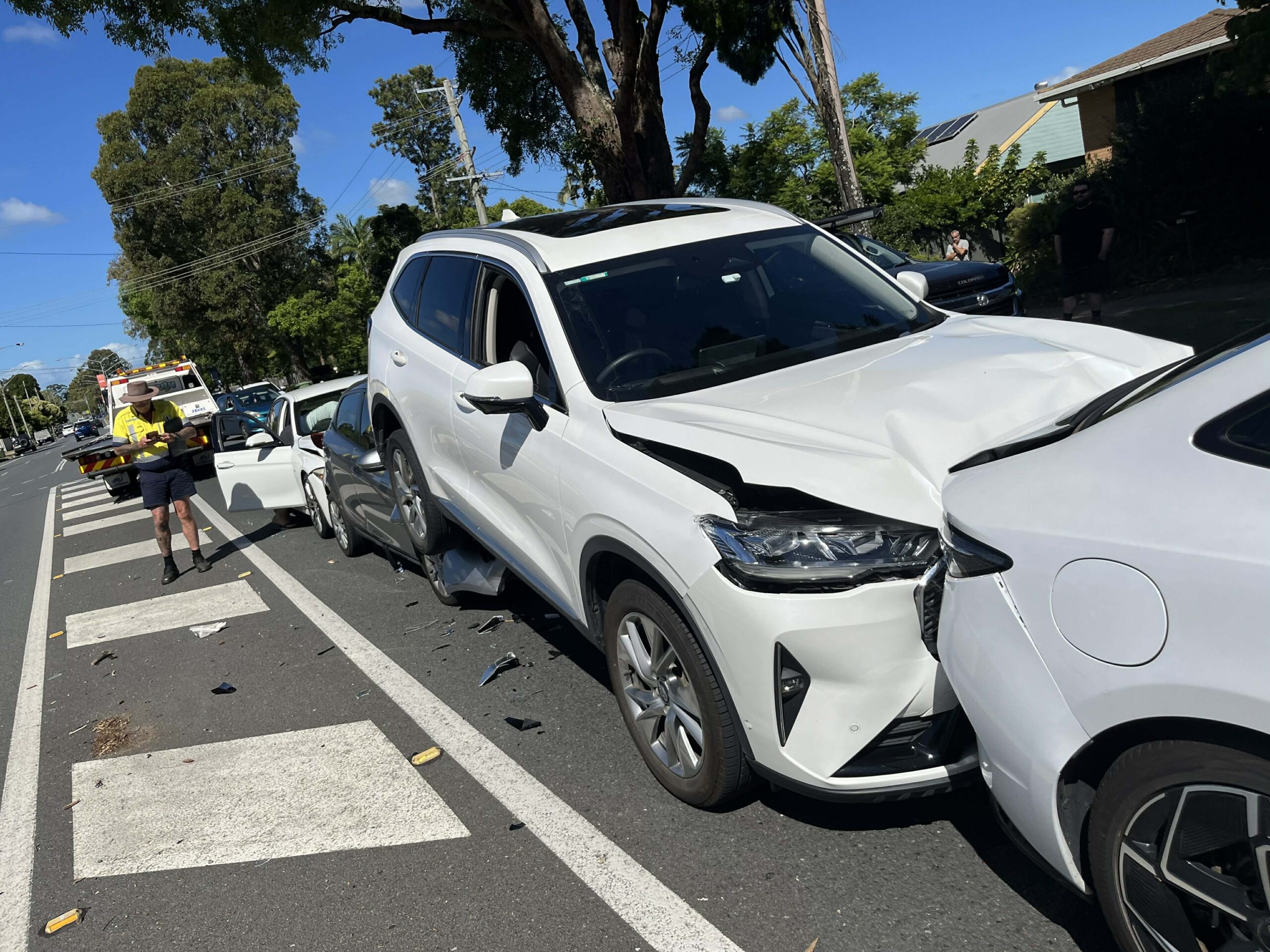 You are my crumple zone. Photo courtesy Ron Male
The fire brigade attends car accidents due to the possibility of a fire from combustible materials leaking from damaged engines (oil) and petrol tanks. It provokes the thought — what sort of powertrain is the most dangerous when a car is damaged? Petrol diesel, hybrid, or battery electric?
According to the Electric Vehicle Hub, every electric vehicle tested in the last five years has received a 5-star ANCAP (Australian New Car Assessment Program) safety rating. ANCAP is “the gold standard of car safety testing.” In fact, EVs are often safer than internal combustion engine cars. For example, they hold “the top three positions in the National Highway Traffic Safety Administration (NHTSA) rollover safety testing. The Tesla Model S came first, followed by the Tesla Model X and Chevrolet Volt joint second.”
With a lower centre of gravity, they have better, safer handling. No gearbox or engine will intrude into the cabin to damage the occupants. The liquid fuel in an ICE car is only covered in a few millimetres of plastic. An EV’s battery is surrounded by centimetres of metal.
EVs don’t explode in an accident, that’s what petrol cars do. “AutoInsuranceEZ* (US) looked at American-only data from the National Transport Safety Board, the Bureau of Transport Statistics & Vehicle Recalls from 2020 to conclude: ‘Hybrid vehicles actually come in number one with the most fires per 100K sales. Gas vehicles are second, and electric vehicles place third, with only 25 fires per 100K electric vehicle sales. Based on this data, electric vehicles don’t catch fire nearly as much as the news claims. Hybrid cars seem to be the most dangerous for fires, followed by gas vehicles,’” EVfiresafe writes.
Ron shared his story at our recent coffee, cake, and EVs morning and provoked quite a discussion about the need for electric vehicles to have an easily identifiable high-voltage battery isolator switch. And for first responders to be trained in locating and actioning such a switch.
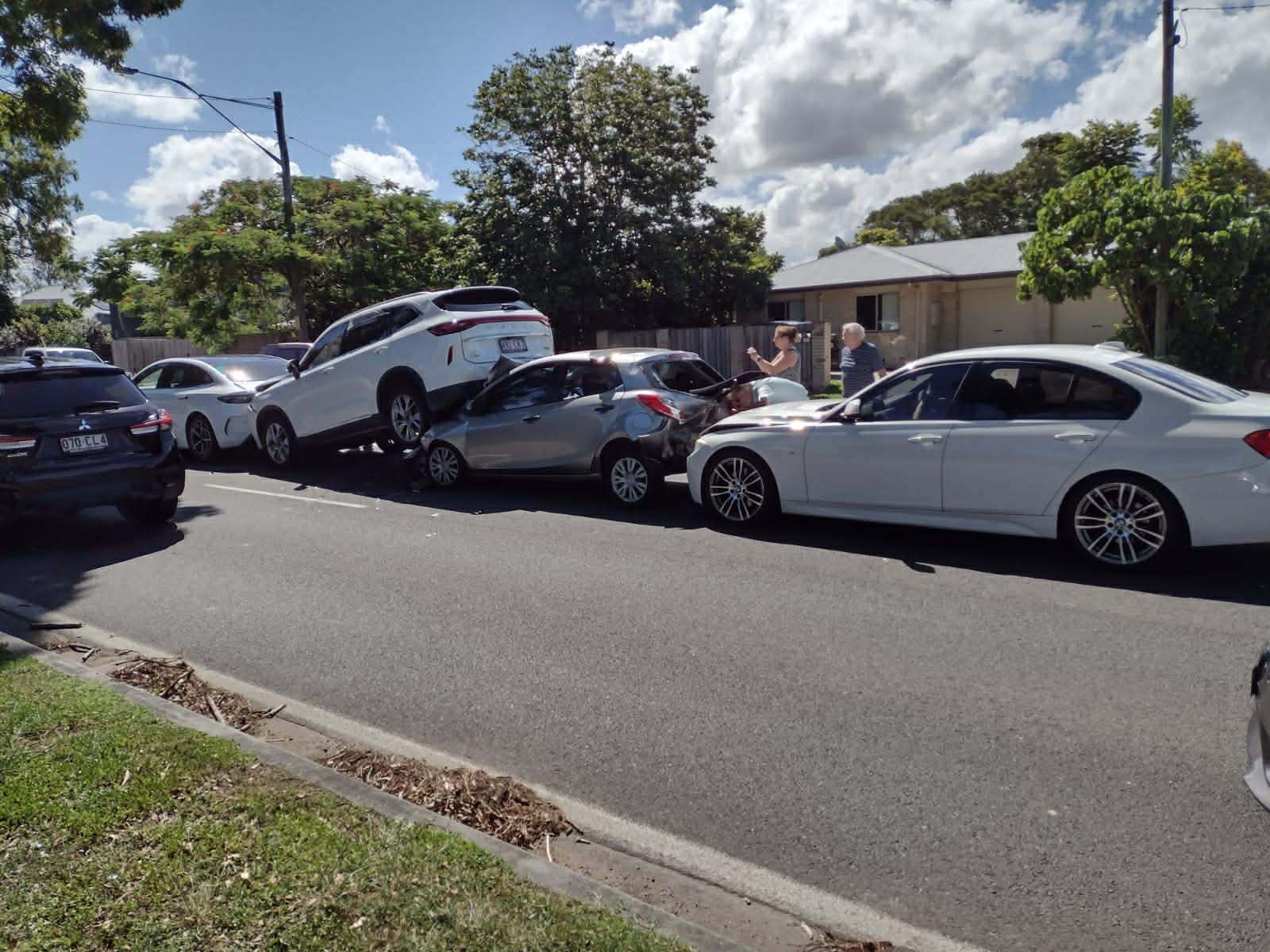 Photo courtesy Ron Male.
Ron has received word that he should get his BYD Seal AWD Performance back by the 18th March. It will have been in the shop for 2 months and 10 days. He’ll be meeting me for coffee again next week and we’ll see how he is coping with his ICE loaner. His future should be bright and electric.
Sign up for CleanTechnica’s Weekly Substack for Zach and Scott’s in-depth analyses and high level summaries, sign up for our daily newsletter, and follow us on Google News!
Advertisement
Have a tip for CleanTechnica? Want to advertise? Want to suggest a guest for our CleanTech Talk podcast? Contact us here.
Sign up for our daily newsletter for 15 new cleantech stories a day. Or sign up for our weekly one on top stories of the week if daily is too frequent.
CleanTechnica uses affiliate links. See our policy here.
CleanTechnica’s Comment Policy