British steel and titanium bike manufacturer Stanton Bikes has put to market a pair of CYC motor conversion systems that smash past road-legal usage metrics, one putting out as much as 5,000W of peak power and 280Nm of torque, yet advertised as ‘crucial for riding proper trails, not just fire roads’.
The pair of conversion kit mid drives, which are designed to mount at the bottom bracket, would easily place any bike they appear on into motorcycle power territory (though there is a 250W version of the lesser-powered CYC Photon Gen 2 conversion kit that would make the cut for road use).
Stanton writes of its lower-powered 250W and 750w kit that they are ‘Suitable for both road-legal pedal-assist builds and higher-performance off-road setups’, but there is no disclaimer that the latter would land customers in trouble if they were to use it on public land, be that a road, or in the countryside.
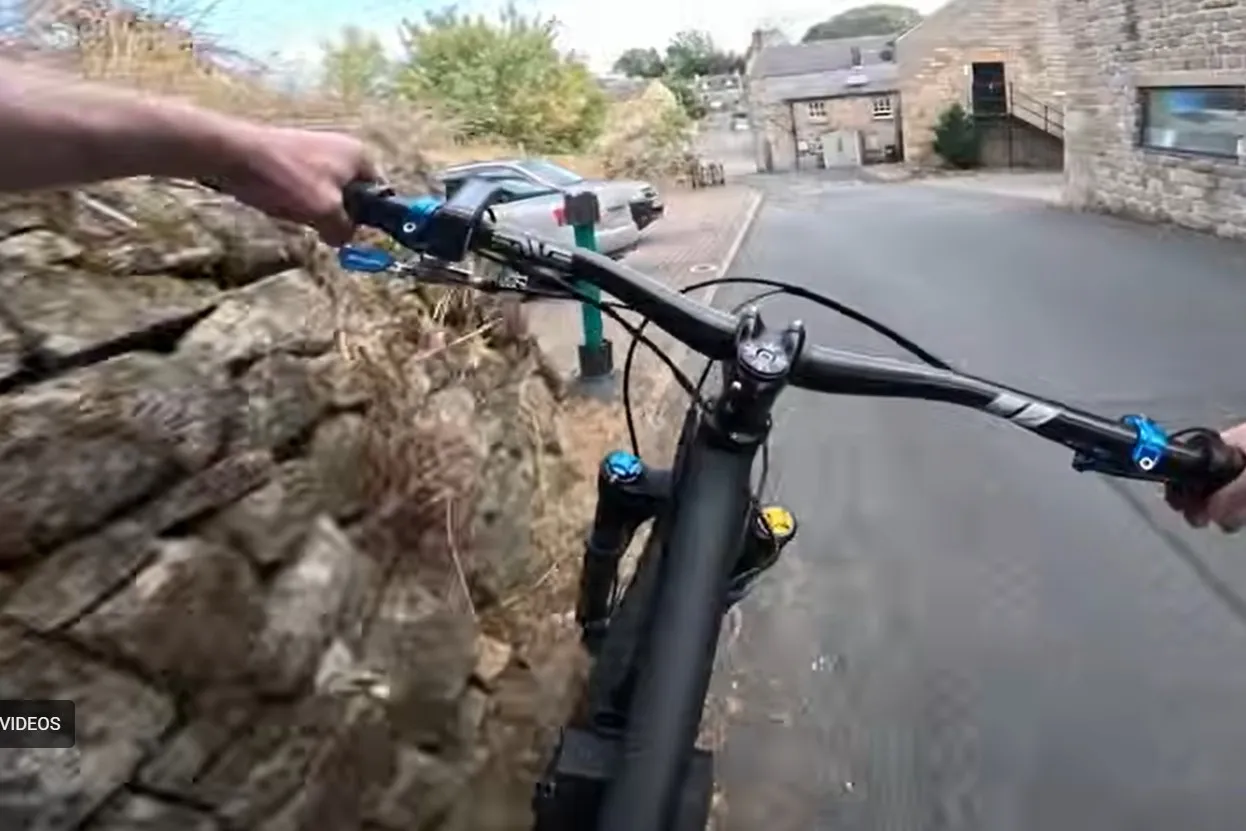
That didn’t stop Dan from Stanton Bikes riding its converted two-wheeler on throttle-only power, on what appear to be public roads, without any of the necessary motorcycle registrations, a helmet and even declaring to the camera that the brakes are ‘doing nothing’ while pulling the lever to the bar. Minutes later, Dan comes inches away from crashing into a wall at high speed, having hit the throttle on the top assist.
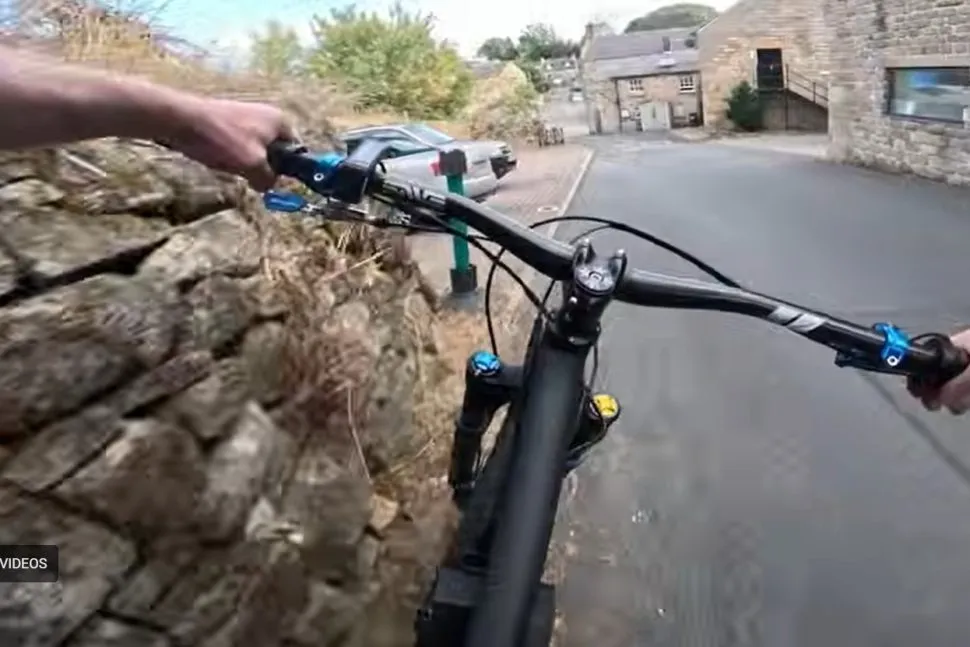 Inches from crashing into a wall at speed, without any prior pedal assist
Titled ‘We fitted a CYC X1 Pro motor to a hardtail’, the near 30 minute video posted alongside the product listing unfortunately does not come with any legal disclaimer for could be customers informing then that, if they were to buy the system and convert a bicycle, they would become the manufacturer and rider of a motorcycle and therefore take on all of the legal liability associated with riding a powered vehicle on the roads.
Ultimately this could result in fines, points on a driving licence, having the converted vehicle confiscated and crushed and, arguably worse still, total failure of the bike at speed. The levels of torque output claimed, paired with the additional weight of a motor and battery, would not only immediately invalidate any bike warranty, but more than likely pose a very real risk to the failure of many bike frames.
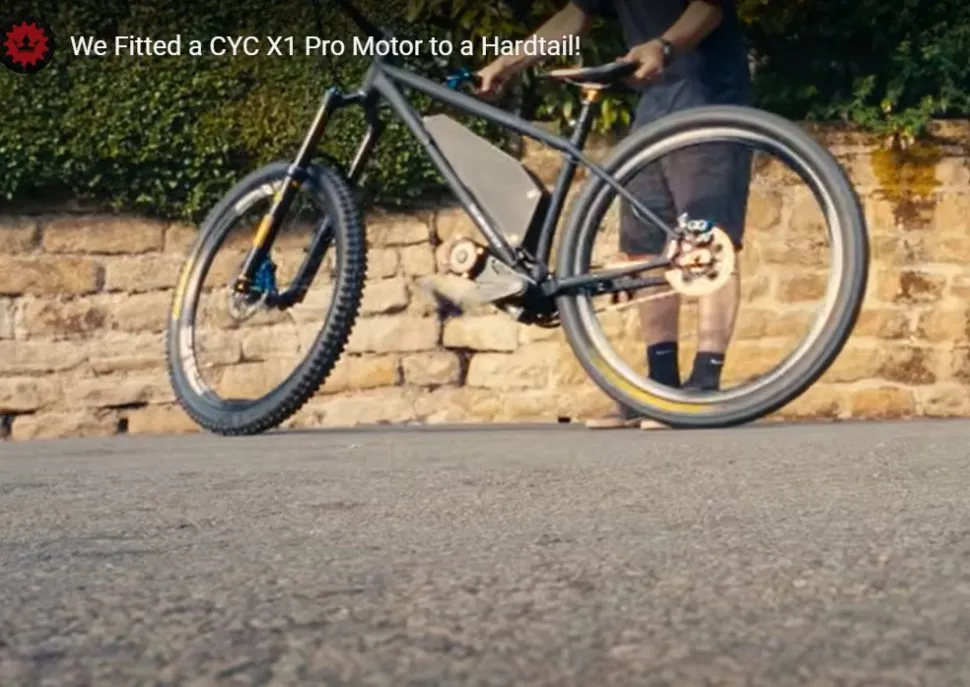 A demonstration of the throttle only power of the kit
If, as Stanton Bikes advertises, these kits are encouraged to be ridden on proper trails, the brand would seem to be encouraging users to ride motorbikes in the countryside, which legal concerns aside, has been a major discussion point for the electric mountain bike space in recent years.
There are severe concerns from trail advocacy and industry groups that even some road-legal systems are becoming too powerful at their peaks, thus causing greater trail damage. More than this, there have been countless videos that have emerged of chipped or derestricted e-MTBs riding on walking trails, some coming into close contact with walkers without attempting to give way. This behaviour, it is feared, will chip away at already dire land access rights. Stanton has its own video of countryside use on its CYC converted MTB.
Land access aside, it should be said that the levels of power delivery, in particular the 280Nm torque claim on the premium motor, would be easily enough to quickly make many used bikes very dangerous to ride. Whether it’s the likelihood of snapping chains, or putting far too much expectation on braking systems that are not designed for the speeds shown, not having any of this information listed alongside the sale of a high-powered conversion kit is cause for concern. Whoever fits the kit becomes the manufacturer, so from a liability point of view, that person or company will be responsible for any damages that later occur.
Astonishingly, the video commentary acknowledges that the level of power going through a premium Chris King hub is likely too much. These hubs can cost hundreds of pounds alone, more than the value of some bikes that this system may end up on. Again, there is no advisory on the potential dangers listed alongside the product.
One bike shop that we spoke to about the CYC systems advertised by Stanton Bikes said that it had already mailed the brand, stating ‘Supporting products such as this is harmful to the cycling industry and the public perception of both cyclists and legitimate e-bike users.’
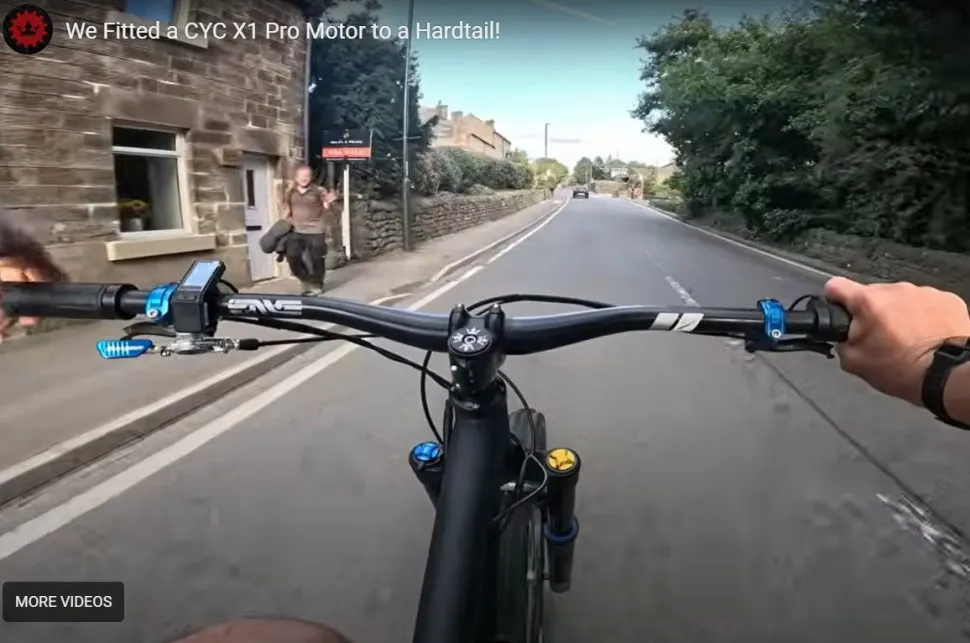 The high-powered throttle system was seemingly ridden illegally ridden on a public road
On account of a trend, especially in the gig economy, to equip overpowered motors to cycles, in essence converting them to throttle-based mopeds (L1 category vehicles), Parliament is now mulling over the content of a new Bill that may seek to ban non-compliant conversion kits entirely. Conflating these vehicles with electric bikes, as was done in Stanton’s recording, is technically speaking wrong, though some argue that it is now, unfortunately, a colloquial term.
The regulations surrounding pedal-assisted electric bikes are clear. In summary, without type approval a throttle-only power delivery, as seen on Stanton’s advertised system, is not permitted outside of a walk assist which will only reach around 4mph. Generally, type approval is granted in the case of special conversions to aid disabled riders, or for those who wish to convert a bike to a speed pedelec in a way that aligns with regulations around speed pedelecs and/or light mopeds.
In speed terms, a pedal assist can only lift a bike’s momentum to a 15.5mph threshold and you must be moving the cranks to unlock power delivery. Some bikes have a boost button that can quickly accelerate to this threshold, but you still must be rotating the cranks to unlock this. A continuous power output of 250W is the legal threshold, though peak power output can go far higher, though will be temporary to support high stress situations.
’26, I think that got to, in the space of not a lot’, confirms the audio on Stanton’s public road tests, seemingly confirming the illegality of the test.
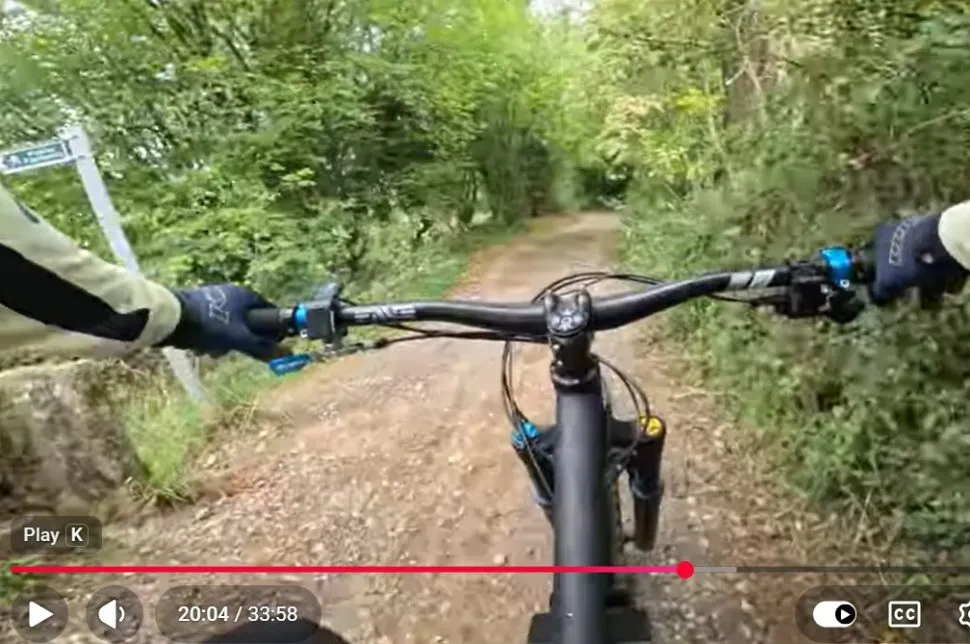 Other videos show public footpath and countryside trail use, all on the throttle.
It is possible to buy a road-legal e-bike conversion kit from suppliers like Skarper, Boost and ARCC. These systems do tend to be among the minority appearing on Google search results and it is very easy for consumers to inadvertently end up purchasing overpowered units without spotting often visible disclaimers about the legality of road usage. That said, even retailers as large as Very.co.uk and Argos have fallen foul of advertising non-road-legal products without proper advisory information for customers. It is so far unusual for a long-standing domestic bike maker who you would assume understands well trail access debates to fall foul of such things.
Related Articles
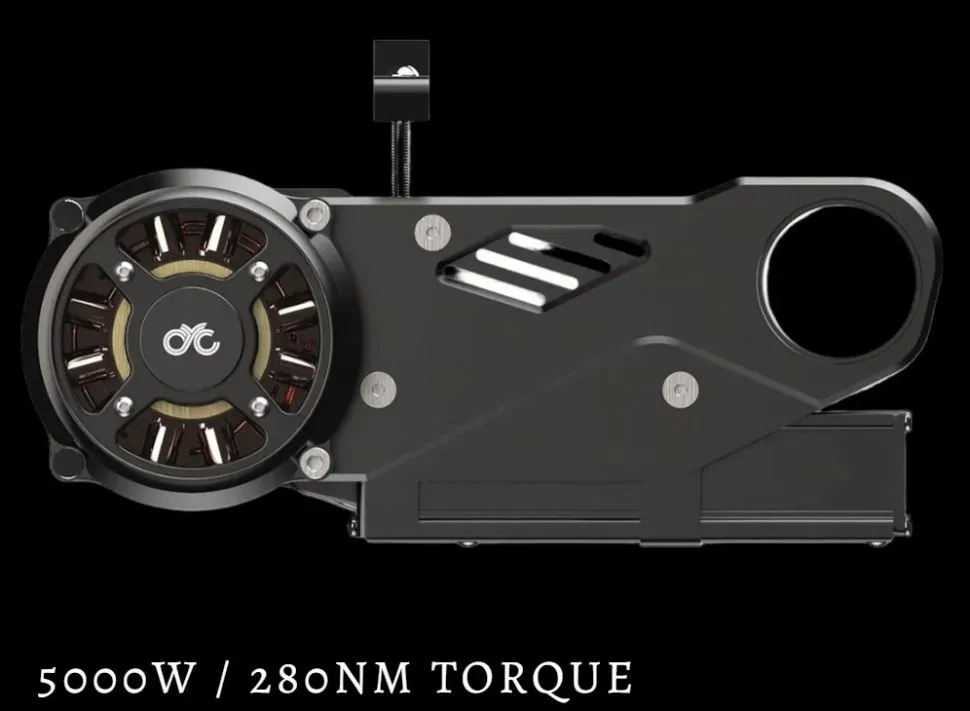 Stanton Bikes’ higher-powered conversion system
Though some of the content promoted by Stanton Bikes does fall foul of road laws, it is not illegal to sell these high-powered kits as it stands. It is strongly suggested that they are advertised as for use only on private land, so as to stay on the right side of land access laws.