It started about three years ago with a secret meeting of representatives from seven major automakers at an abandoned Honda property. The mission: create a fast charging network for electric vehicles in North America similar to what the Europeans created with Ionity.
The skunkworks operation was code-named the Ionna Project internally—for “ion” (as in electric) and “North America.” The idea was simple: the involved automakers recognized that having a solid and reliable charging network is crucial for selling people on electric vehicles.
ADVERTISEMENT – CONTINUE READING BELOW
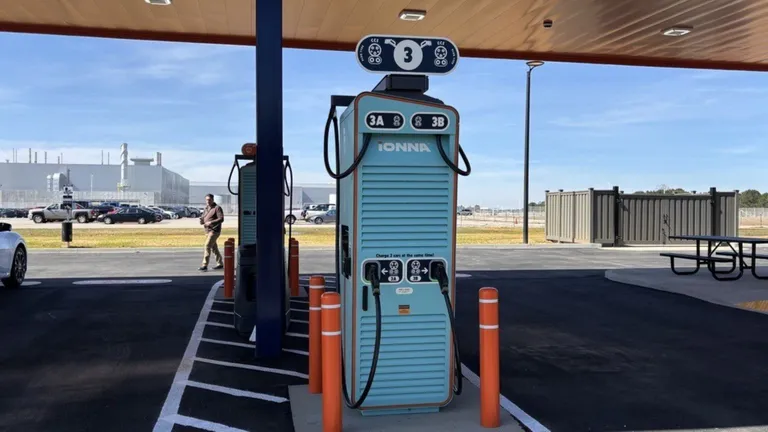
Fast chargers are 400-kW.
Ionna became a company two years ago and opened its first charging station in late 2024. It began with those seven automakers: Kia, Hyundai, GM, Stellantis, BMW, Mercedes-Benz, and Honda. Toyota joined later, becoming the eighth member and Ionna CEO Seth Cutler thinks that number is perfect.
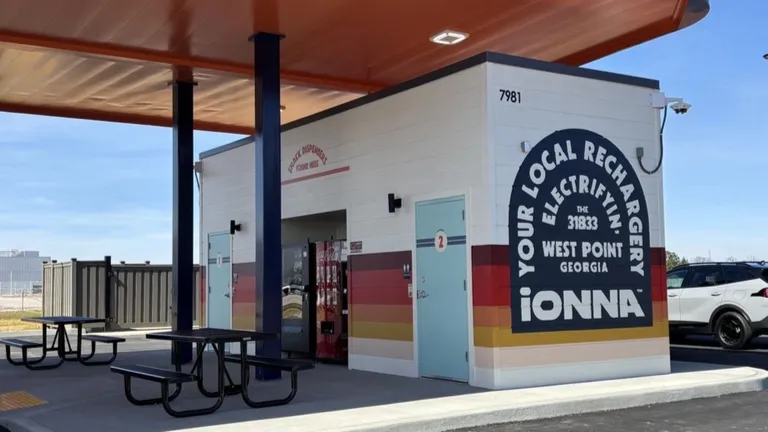
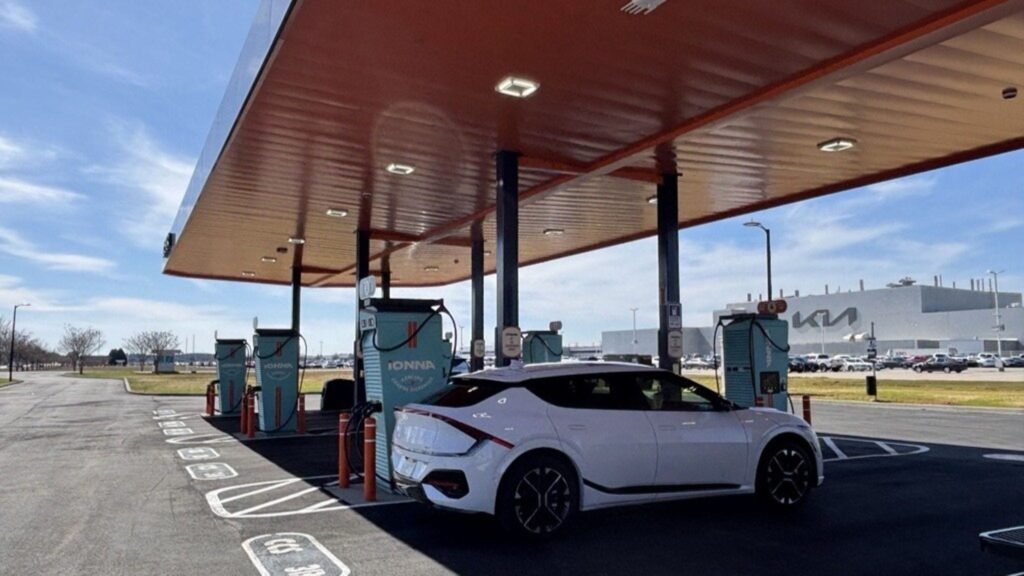
Retro modern look.
How Ionna Stations Got Their Look
An old gas station near Raleigh, North Carolina, was redone as an Ionna station, and the retro-modern design, harkening back to the landmark Gulf gas stations of the 1960s, inspired the look they would all adopt.
ADVERTISEMENT – CONTINUE READING BELOW
There are 97 live sites today, up from 44 last year, including one on-site at Kia’s West Point vehicle assembly plant in Georgia, about 80 miles from Atlanta. Another site is about to be activated. There are another 39 under construction that will go live in the coming months.
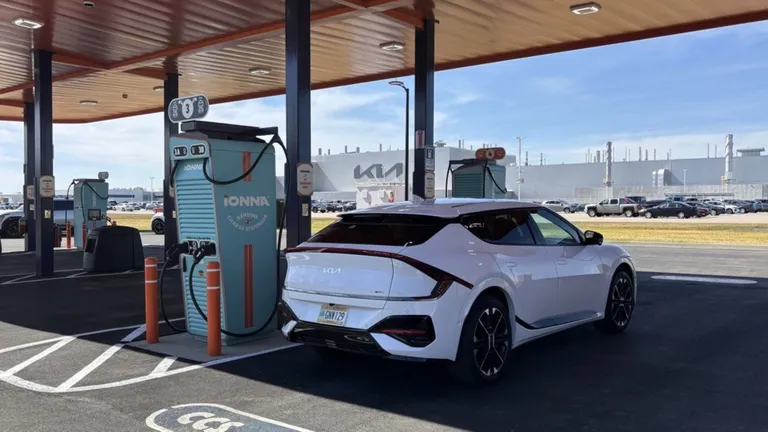
Stations have 11 bays on average.
There are 11 bays per site on average; the minimum is six bays on smaller pieces of property. The focus is on maintaining the quality of existing bays and growing the number of sites, Cutler said. The target is 30,000 bays by 2030. Plans call for eventually expanding into Canada, but not this year; Ionna wants to scale up in the U.S. and prove out its business model before it goes international. Most stations are in California so far, and there are no plans to hit every state—Alaska and Hawaii are not being considered. Others, like Montana, are not deemed a priority in these initial stages. Michigan will join in the second phase of development in late 2026.
ADVERTISEMENT – CONTINUE READING BELOW
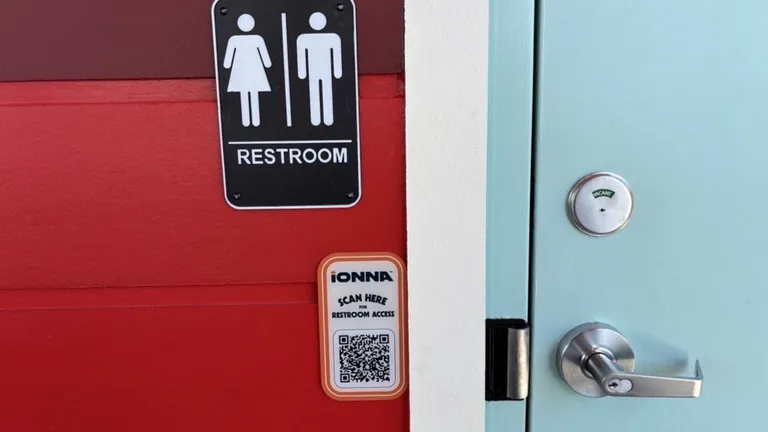
About 40 percent of the plugs are now NACS ones, and that can change if needed. They are 400-kW chargers; Ionna is monitoring the market to see if that needs to change. Good news for anyone who drives an EV and who has been frustrated by often finding public chargers that are out of service: The goal is for 99.5 percent of charge ports to be operational at all times.