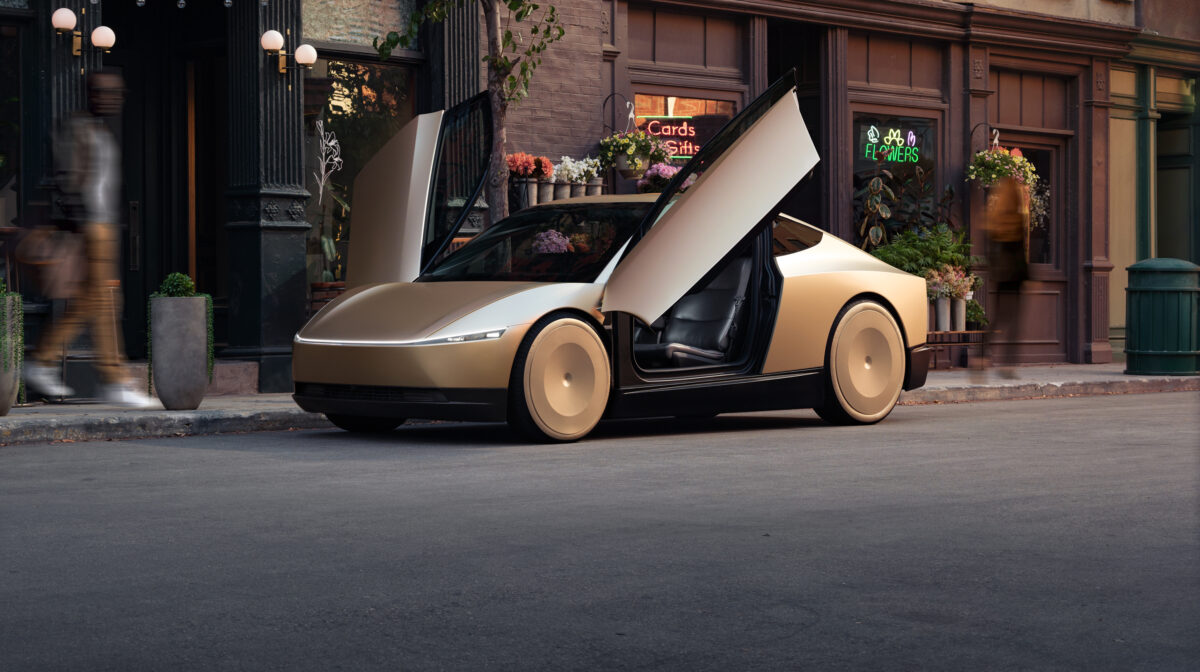
Victor Nechita led the Cybercab from concept to its first production unit, but now leaves Tesla without a programme lead before mass production.. By Stewart Burnett
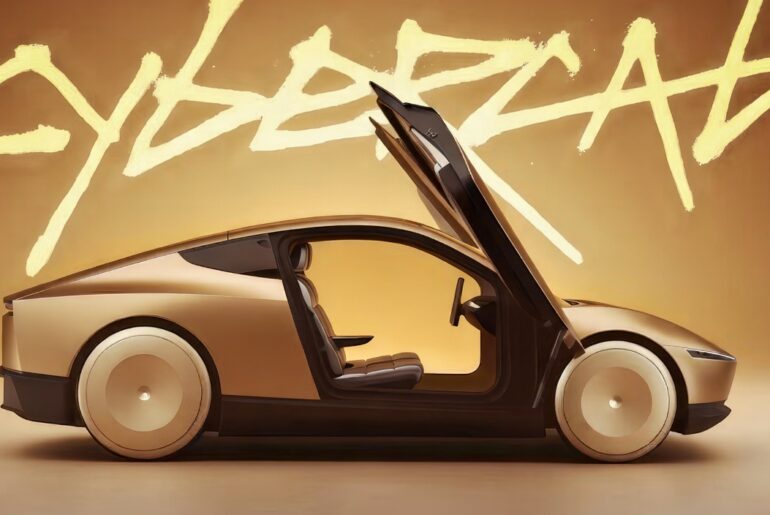
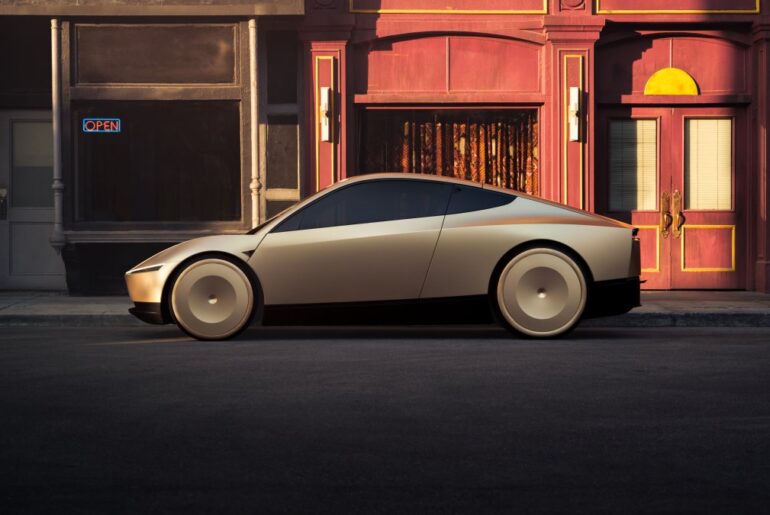
Victor Nechita, Tesla’s Vehicle Programme Manager for the upcoming Cybercab, has announced his departure from the company after nearly nine years. His exit came days after the first Cybercab production unit rolled off the assembly line at Gigafactory Texas, with volume production targeted for April.
Nechita joined Tesla in 2017 as a Model 3 production intern and rose through seating engineering and technical programme management roles before ultimately taking charge of the Cybercab programme. In a LinkedIn post, he described leading the team “through the development of Cybercab” as—strikingly—a “humbling experience”. He also underscored the work required to ensure the vehicle’s joint goals of “efficiency, safety, and affordability.
The timing of Nechita’s departure leaves Tesla in a somewhat awkward position: delivered the he programme to its first production milestone, but volume manufacturing is typically the phase that typically surfaces the most complex engineering and logistics challenges. This challenge will fall to his successor, and Tesla has yet to identify a replacement.
The Cybercab’s deeper problems, however, arguably go beyond managerial responsibilities. The vehicle has no steering wheel, no pedals, and no manual fallback, meaning it is currently illegal to operate on US roads without a specific NHTSA exemption that Tesla has not yet secured.
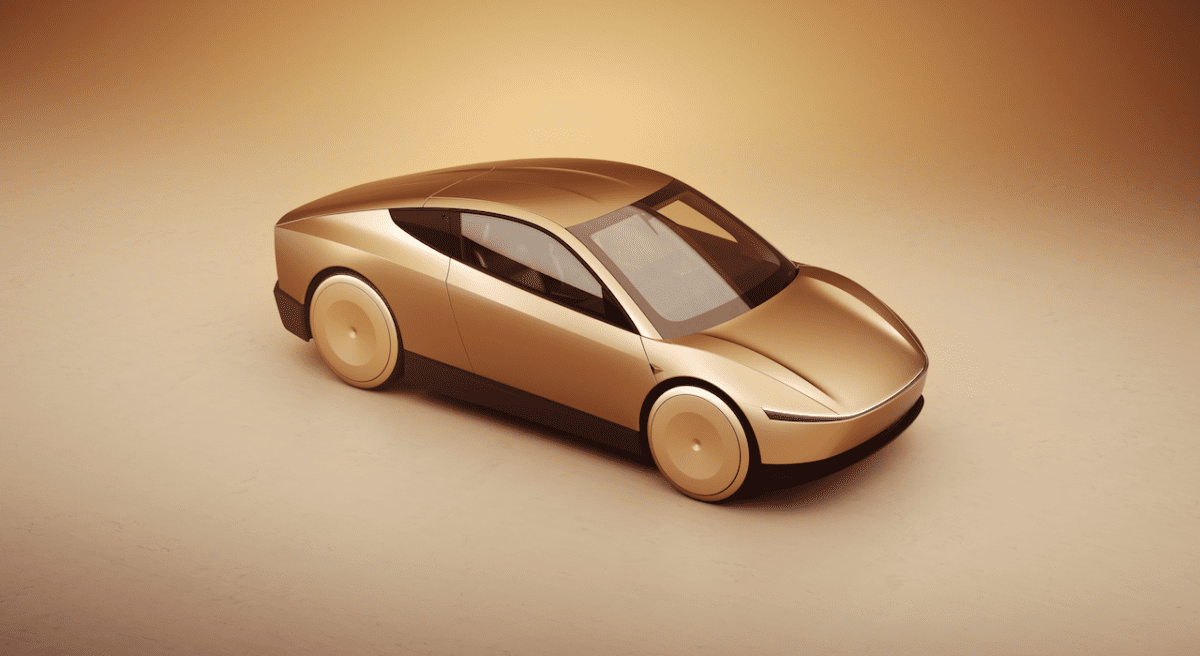 Tesla is targeting an April 2026 series production launch for the Cybercab
It is also entirely dependent on unsupervised autonomy that Tesla has not demonstrably achieved. In reality, the automaker dropped its promise of unsupervised full self-driving from its marketing altogether. Many buyers purchased the Full Self-Driving Beta expecting they were eventually going to benefit from full autonomous driving. Chief Executive Elon Musk has since conceded that its models—particularly older ones—are substantially underequipped for any such purpose.
The automaker briefly claimed to have launched unsupervised robotaxi rides in Austin in January, but the programme was pulled back within a week and remains confined to a limited geofenced zone with heavy reliance on teleoperation. The pilot’s safety has been estimated as potentially nine times worse than a human driver.
Hardware constraints compound the software shortfall. The next-generation AI5 chip, which Tesla has positioned as key to advancing its autonomous driving capabilities, is not expected until mid-2027. The Cybercab will instead launch on AI4 hardware—the same hardware that has thus far failed to deliver unsupervised autonomy across millions of existing Tesla vehicles already on the road.
Nechita’s departure is part of a broader haemorrhaging of senior talent that has left Tesla without an original programme manager for any of its production vehicles. The automaker’s North America Chief of Sales Raj Jegannathan departed earlier this month after less than a year on the job. Six months prior, another North America sales executive, Piero Landolfi, moved on from the company. In November 2025, Cybertruck Programme Manager Siddhant Awasthi and Model Y Programme Manager Emmanuel Lamacchia left on the same day.
Earlier departures include Omead Afshar, who oversaw sales and manufacturing for North America and Europe; Pete Bannon, Vice President of Hardware Engineering; Milan Kovac, who led the Optimus robotics programme; and David Lau, Vice President of Software Engineering, who left for OpenAI after 13 years. Tesla’s global deliveries fell 8.6% in 2025, its first annual decline on record, as the company navigates an ageing vehicle lineup, a contentious pivot toward AI and robotics, and consumer rejection of Musk’s far-right political activities.