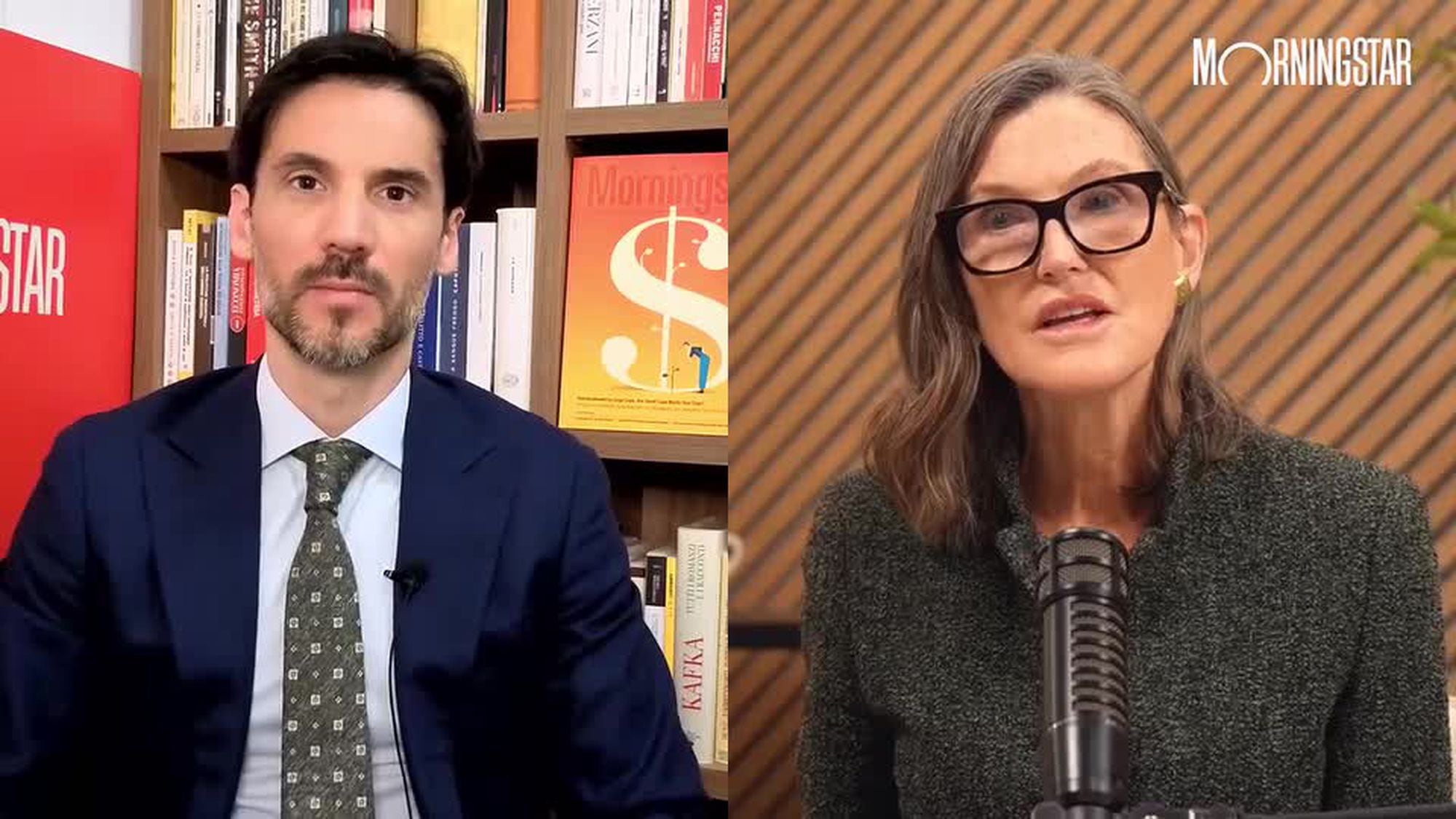
Valerio Baselli: Hello and welcome to Morningstar. Today, I’m joined by one of the most famous names when it comes to investing in disruptive innovation, the founder and CEO of ARK Invest, Cathie Wood.
Thank you for joining, Cathie. So, markets are under pressure, a growing number of investors wonder if the AI sector stands at a significant inflection point, today. There is a mounting concern that the near future might be defined by lower growth, higher competition, and greater capital intensity. In your view, are we witnessing bubble dynamics similar to the late 90s? I mean, is this just another volatility cycle investors must deal with, or a fundamental regime shift?
AI Bubble or Durable Bull Market?
Cathie Wood: Well, I can talk with some experience. I was in the bubble, investing portfolio manager during the bubble. And what we witnessed back then were investors throwing money at any company with dotcom or internet in its description. Today couldn’t be more different. We are climbing a wall of worry. Investors are very hesitant to continue fueling the AI boom because they’re worried that we are in a hype cycle. As a portfolio manager, I would much prefer to invest in that kind of market. Why? Because walls of worry, climbing walls of worry, those are the most durable bull markets. And I remember, as way back in the 80s and 90s, those were the kinds of bull markets we were in. In the late 90s that was an irrational out of control end to a massive 20-year cycle.
Baselli: Both the dotcom boom and today’s AI surge were built on a new, revolutionary technology, but also on belief in American economic and technological dominance. Do you think this view is still tenable, given the huge progress China has been making on that front? Chinese tech companies are releasing new AI models right now, with the market eagerly awaiting the one from DeepSeek. So, do you see American exceptionalism to continue driving innovation leadership?
Cathie Wood on the US-China AI Race
Wood: Well, I do agree that China is the competitor. The DeepSeek moment was a wakeup call for all of us, to understand that what China has done actually has been encouraged by our software companies. Our software companies stopped selling into China because of fears of IP theft. So, they moved into the open-source movement and they are running hard with it. We are big believers in the open-source movement. Now, in terms of competition, we think competition is very good for the US. That’s when we’re at our best. And so, I think the AI revolution is, occurring faster perhaps than otherwise might have been the case, because China is so advanced. Many, experts would say China is about six months behind the US in terms of the frontier models. And our research corroborates that. We’re seeing leapfrogs, China kind of encroaching on the US, but then the US moving further ahead. Again, competition is good. I think it’s, it’s encouraging, faster momentum in the cycle.
And just to answer one other way, the previous question, if you think about the tech and telecom bubble in the late 90s, that was all about laying fiber for broadband connectivity. Well, that fiber was dark for many, many years. There was just too much, too soon, too few opportunities. It’s completely different today. Every GPU in the world is being utilized. And I do think it’s this dynamic: China, US competition, that is speeding the revolution along.
Autonomous mobility will be the biggest revenue generator, it’ll scale the most quickly to the USD 10 trillion mark, which is quite meaningful in a world where global GDP is about USD 130 trillion.
Cathie WoodInvesting Opportunities Within the AI Industry
Baselli: Interesting. As an investor, do you see this risk-off environment as a buying opportunity? And in general, where do you see the most compelling opportunities within the artificial intelligence industry right now?
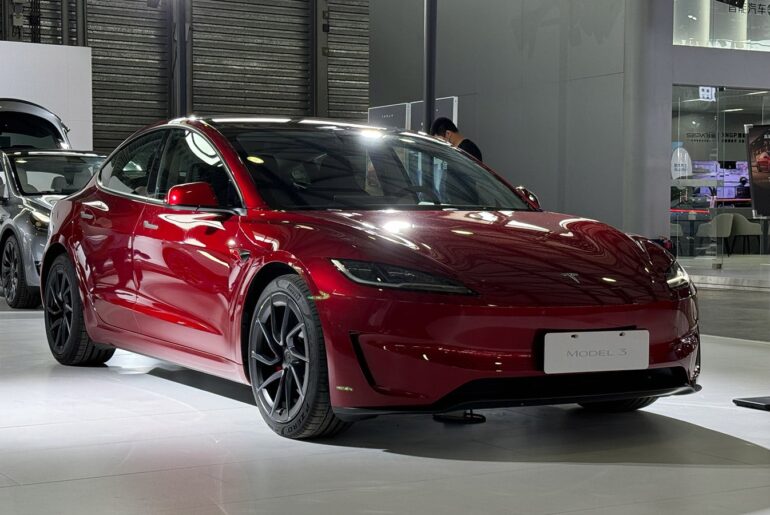
Wood: Well, I would have to say that the opportunities are more in embodied AI, meaning bringing in the physical and the digital together. And so autonomous mobility, we think, will be the biggest revenue generator. It’ll scale the most quickly, to the USD 10 trillion mark, which is quite meaningful in a world where global GDP is about USD 130 trillion. And we think that will happen within the next 5 to 10 years. And, you know, this movement has happened slowly, slowly, and now it’s happening all at once. Elon Musk was talking about autonomous mobility in his masterplan, ten, 12 years ago. And here we are. Finally, he launched this year. So slowly, slowly. And now he’s saying by the end of this year, depending on the regulatory environment, Tesla will be autonomous in 25 to 50% of all of the US major cities. So that’s one. And then the other one is in healthcare. While, we may see the scaling of revenues, the most quickly in, autonomous transportation of all kinds. We think the most profound applications of AI are going to be in healthcare. And, from a regulatory point of view here in the US at least, we’re just strangling the healthcare sector with too much focus on safety, and not enough on efficacy.
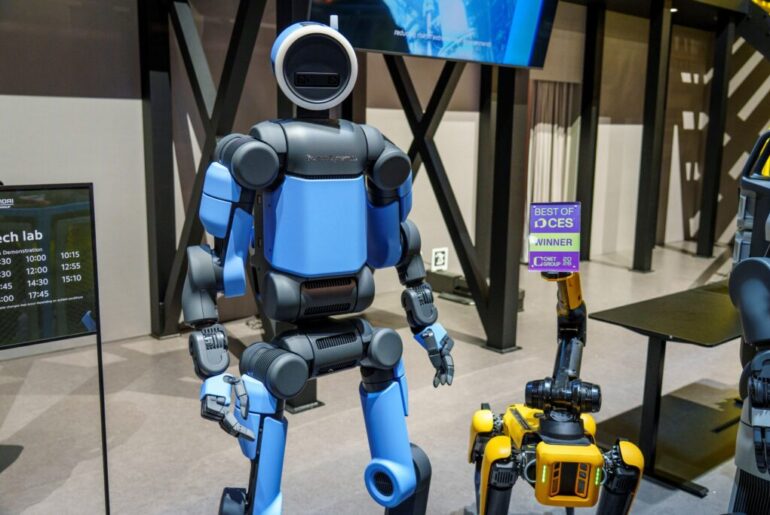
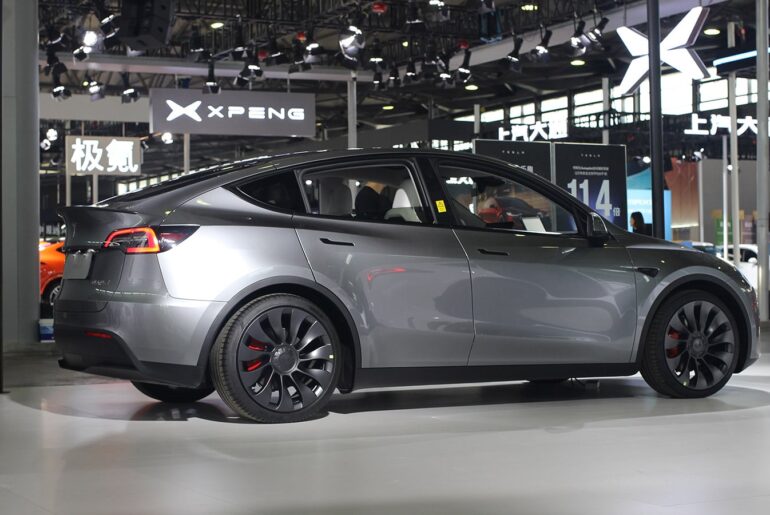
Tesla is in the low USD 400 range per share right now. Our 2029 forecast is USD 2,600. That forecast has nothing for Optimus. We’re beginning to understand that while we were too aggressive on autonomous mobility, we may be too conservative on the humanoid robot opportunity. So, stay tuned for that update.
Cathie WoodTesla Stock Price Prediction: Cathie Wood Sees 6x Gains by 2029
Baselli: As you mentioned, you remain highly bullish on robotics and autonomous mobility. We have to say that adoption has been slower than expected: if we go back in time, just a decade ago, many forecasts stated that autonomous vehicles would be everywhere in the 2020s. Today, of course, is not the case. So, where do you see the biggest constraint, today – technology, regulation, or economics? And you also mentioned Tesla, of course it’s a short leap from robotaxis to Tesla, so what are your expectations in terms of long-term return potential from Tesla?
Wood: Well, we are imprint on Tesla. It’s in the low USD 400 range per share right now. And we are imprint; our 2029 forecast is USD 2,600. That forecast has nothing for Optimus, so humanoid robots. And we’re beginning to understand that while we were too aggressive on autonomous mobility, robotaxis, we may be too conservative on the humanoid robot opportunity. So, stay tuned for that update. The slow, slow, and then all at once is very typical of technologies that really are hard to crack. I think Elon Musk genuinely thought that by the late teens, 2018-19 he would be in there with robotaxis. We had just experienced a massive breakthrough in AI transformer architecture in 2017. It has taken time for Tesla, Elon and team, to perfect the autonomous opportunity with the latest AI breakthroughs. Now we’re there. Now we’re there. And so, we don’t think technology is the problem anymore. We are seeing autonomous vehicles on the road. I can drive around in Saint Petersburg with my current Tesla, full self-driving, and not touch the wheel or the accelerator or the brake, and I can park. So, technology is here. Regulation has to catch up. In the US, we have 50 regulators. Well, more than that in transportation, but 50 State regulators. We think that this government is going to elevate the regulatory regime to federal status. And that is because autonomous vehicles, of course, cross from State to State. So, it should be national transportation regulation.
If we do get that, we believe that Tesla will be in, more than, certainly more than 25%, but probably up to 50% of all the cities in the US, the major cities and beyond. Because, of course, Tesla’s data is worldwide. The roughly 7 to 8 million robots that we all drive have been collecting data for years. I got my first Tesla model 3 in 2018, and it has been collecting data every day and sending it back to Tesla. So, Tesla knows the world’s roads from a data point of view, we think, better than any other auto manufacturer or technology company out there.
The frustration of building data centers on Earth finally took Elon Musk back to first principles. Could we do this in space? You know, there are no regulations in space. We could do this very quickly, much more quickly. And while we don’t think he will have as many gigawatts of computing power up in space as he thinks by the end of the decade, we think he’ll be well on his way by the end of the decade to meaningful computing power.
Cathie WoodElon Musk’s SpaceX-xAI Convergence Strategy
Baselli: Speaking of Elon Musk. A couple of weeks ago there was this record-breaking merger between SpaceX and xAI, two companies both included in the ARK Private Innovation portfolio, a strategy that you recently launched in Europe. What’s your take on this operation? What do you expect from it? And do you see Tesla potentially part of this whole project in the future?
Wood: We began to get the sense that Elon is looking at the convergence among his companies very seriously. Convergence is a word we’ve been using in our Big Ideas, we started in 2017, but the idea of convergence, that word really surfaced within the last five years. And Elon on X said, you know, I think my companies are more convergence candidates than I even appreciated. That’s when we knew that he was thinking carefully about all of the data sources he has that nobody else has. And AI if anything, is a proprietary data project, those with the proprietary data, and the most of it, and the most differentiated are probably going to win. So that’s very big picture.
In terms of SpaceX and xAI, when Elon started talking about orbital data centers, data centers in space, that’s when we got the sense that, this was a real possibility, this convergence, it happened more quickly than we expected. And yes, of course, it begs the question: Will Tesla be next? We think that Elon would like to reward the very patient shareholders who have been holding Tesla for the last several years, with the profitability associated with robotaxis. And so, if Tesla is a part of this convergent strategy, and it could be, we don’t think it will happen for a number of years. I think he’ll want to integrate the space opportunity first. But the frustration of building data centers on Earth finally took Elon Musk back to first principles. Could we do this in space? You know, there are no regulations in space. We could do this very quickly, much more quickly. And while we don’t think he will have as many gigawatts of computing power up in space as he thinks by the end of the decade, we think he’ll be well on his way by the end of the decade to meaningful computing power.
Cathie Wood’s Bitcoin Bull Case
Baselli: Let’s talk about cryptocurrencies, now. Bitcoin has lost roughly 45% since October. The overall impression is that the market narrative around bitcoin has shifted compared to a few years ago, that’s probably because it trades like high-beta tech stock. Do you still consider it a long-term monetary asset? And if so, what is the market misunderstanding?
Wood: Yes. We do believe, and our conviction has increased, that Bitcoin is the first global, digital, private- meaning no government oversight, rules based, most important part of it, monetary system in history. That is a very big idea. Now, what has happened in the last year or so: stablecoins have, have been usurping one of the roles that many of us thought Bitcoin would play. In the emerging markets, people who are living hand to mouth, meaning they don’t have a lot of savings, they would much prefer the dollar and stablecoins are backed pretty much 100%, by dollar or dollar-based assets. And so that is their preferred insurance policy against their own currencies devaluation and the loss of purchasing power in wealth. So, from that point of view, in our long-term forecast, which our bull case for 2030 has been USD 1.5 million, that would have taken USD 200,000 to USD 300,000 off of that price target.
But what else has happened in the last year? We’ve seen gold really go parabolic. And, Bitcoin has not done the same. Well, how can that be? It’s digital gold, we thought. Well, if you look at the correlation between gold and bitcoin you’ll see it’s very low, especially since 2019. Since more traditional investors have become have been getting involved with it. The correlation is 0.14. So almost no correlation. But if you if you zoom out and you look at the longer-term price chart of bitcoin, what you’ll see is gold often leads, and certainly in the last two cycles, bitcoin’s performance. So gold is a leading indicator in at least the last two cycles.
We think the other thing going on is we’re seeing a lot of OGs, selling. Those who were very early on, very early adopters of Bitcoin are selling. Now, why are they selling? Well, according to some of them, you know, Bitcoin has lost the plot to too much traditional finance and financial players are getting involved. And from our point of view all along, and this is in our collaboration with Dr Arthur Laffer – known for the Laffer curve – he has said the more that Bitcoin becomes involved in the traditional financial ecosystem, meaning traditional financial institutions start adopting it, the stronger his conviction will be. That is indeed the new global monetary system I described. So, our conviction has actually gone up as Bitcoin has gone down here.
ARK Invest ETFs: Space, AI, and Genomics Outlook
Baselli: Now, your whole range of actively managed ETFs provides exposure to disruptive innovation, including some niche sectors such as space exploration or genomics. Which part of your portfolios would you most expect to surprise investors on the upside — and which area worries you the most if adoption timelines slip?
Wood: I would say, this is a hard question to answer. But you can tell from price action recently, well, let’s just say in the last year, anything with space and defense tech has had very strong performance. So, the market is beginning to understand how big that opportunity is. And the same thing with AI. So, our AI and robotics fund ARKI. Over the last year or two, that has done exceedingly well. True, it’s had a correction, and from our point of view this is more a “buy the dip” moment. The fund that has been the most challenged, and therefore where we’re seeing the most skepticism is the genomic fund ARKG. And as I mentioned before, we believe that the most profound application of AI will be in healthcare, from the point of view of collapsing the cost and time to discover new drugs. So going from USD 2.4 billion, including failures along the way, down to USD 600 million or USD 700 million during the next five years, and going from 13 years to eight years or less.
Our conviction on bitcoin has actually gone up as it has gone down here.
Cathie WoodCathie Wood on Macro Risk and Wright’s Law
Baselli: Finally, if in 5 years we look back and ARK’s core theses didn’t play out as expected, what do you think the most likely reason will be: timing, regulation, competition, or human behavior? What’s the biggest risk, here?
Wood: The biggest risk is more macro. And, as I think I’ve explained before on your show, our models are focused on something called “Wright’s Law”. And “Wright’s Law” helps us figure out the learning curve associated with each technology: robotics, energy storage, AI itself, the most the biggest catalyst out there, blockchain technology and multi-omics technologies in the live science space. And those learning curves are expressed in cost declines. Those learning curves depend very importantly on unit growth. If we went into a worldwide depression, I think that would, that would delay these technologies. The irony is during a depression, or a serious recession is when many companies are looking for new ways of doing things: faster, cheaper, more creative, more efficient, more productive. And so, the adoption, even though the unit growth dynamics aren’t there, the mindset develops. And so, we usually come out of those periods flying these new technologies too. So, a recession, a bad recession, would slow progress down, but it would not stop it. In another way, it would help evolve a coiled spring so that the end of the recession would be a massive take off in these new technologies.
Baselli: Very interesting. Cathie, thank you so much for your time, I appreciate it. For Morningstar, I’m Valerio Baselli. Thanks for watching.
The author or authors do not own shares in any securities mentioned in this article. Find out about
Morningstar’s editorial policies.