Stellantis, the automaker behind Jeep and other major brands, suffered a staggering $23.8 billion loss in the second half of 2025 after scaling back electric vehicle plans. The company’s stock has plummeted over 30% this year as the industry struggles with slower-than-expected transitions to electric vehicles.
The automotive giant Stellantis announced Thursday it suffered a devastating net loss of 20.1 billion euros ($23.8 billion) during the latter half of 2025, following the company’s decision to pull back from aggressive electric vehicle expansion plans.
The massive financial hit highlights the broader struggles facing automakers worldwide as the transition from traditional gasoline engines to electric vehicles proves more challenging and slower than industry leaders anticipated. Both American and European governments have recently scaled back their electric vehicle mandates.
The company behind popular brands including Jeep and Peugeot recorded negative adjusted operating income of 1.38 billion euros in the second half of last year. These losses fell within the preliminary estimates Stellantis had warned investors about earlier this month.
Despite the losses, the automaker saw its July-December revenue climb 10% compared to the previous year. However, Stellantis recorded a total of 25.4 billion euros in writedowns throughout 2025.
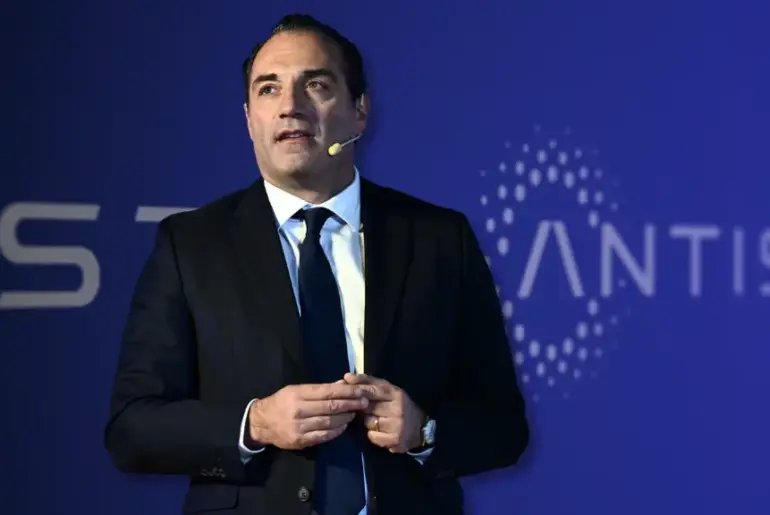
Chief Executive Antonio Filosa acknowledged the results “reflecting the cost of over-estimating the pace of the energy transition,” in a company statement.
The financial turmoil has devastated Stellantis stock prices. Since announcing the multi-billion dollar electric vehicle-related losses on February 6, shares traded in Milan have dropped approximately 20% of their value.
This year alone, the company’s stock has fallen more than 30%, reaching an all-time low of 5.73 euros per share on February 6 – the worst performance since Stellantis formed in January 2021 through the combination of Fiat Chrysler and French automaker PSA.
The writedowns stem not only from electric vehicle miscalculations but also from vehicle quality issues that Filosa blamed on cost-cutting measures implemented under previous CEO Carlos Tavares. The company faces approximately 6.5 billion euros in cash payments, which will be distributed over four years beginning in 2026.
Stellantis maintained its 2026 projections on Thursday, anticipating a mid-single-digit percentage growth in net revenues and a low-single-digit adjusted operating margin. The company doesn’t expect positive industrial free cash flows until 2027.
The automaker confirmed it will skip dividend payments this year.
Stellantis, which has historically relied on North American markets, particularly the United States, as its primary profit source, projects tariff-related costs of 1.6 billion euros this year, an increase from 1.2 billion euros in 2025.