There are strong feelings on both sides around whether new electric cars ought to attract discounts paid for by taxpayers, but the fact is they do, and many savvy motorists may like to take advantage.
The electric car grant, announced in July as part of a £650 million scheme to boost electric vehicle (EV) adoption, offers up to £3,750 off new, eligible electric cars priced at £37,000 or below. But only eight cars qualify for the maximum grant — in a category known as band 1 — at the time of publication, while 39 fall into band 2 and attract a discount of £1,500.
The details of what makes a car band 1 or band 2 are kept under wraps, but the government has explained that providing a manufacturer has applied for individual models to be in the scheme and they qualify as such (minimum battery range and warranties regarding degradation are required, for example), they can be considered.
Scores are then applied for sustainability. First, the carmaker must show evidence that the vehicle has been verified for its green credentials by the independent Science Based Targets initiative, which looks at how much effort the company is making to reduce its carbon footprint.
• Read more expert reviews, news and insights on cars and motoring
Then the government looks at evidence about where the cars and the battery packs are assembled and how clean the energy is in the countries where the factories are located. A score is applied with the largest consideration (70 per cent) given to the location of the battery plant, which it says reflects the relative carbon intensity of the two stages of production.
And with all that we have a final report for each model that we understand even the manufacturer does not see but results in a car being rejected or placed into one of the two bands. And of course the big prize is making it into band 1.
The system has thrown out interesting results. For example, the Renault 5 with the larger 52kWh battery pack makes it into band 1 and therefore gets the maximum £3,750 grant but the same car with the smaller pack is in band 2 and gets a £1,500 discount. That reflects the fact that the larger battery is assembled in France while the smaller one is assembled in China, where the energy mix is dirtier.
That means that if you do buy one of these eight cars you’re not only getting a healthy discount off the list price but are choosing a car at the upper end of the most sustainably produced. So what are the eight cars eligible for the maximum government grant and are they any good? Here’s what you need to know.
Citroën ë-C5 Aircross Long Range
• Priced from £32,935 after grant
• Range Up to 320 miles or 422 miles, depending on the battery size
The ë-C5 Aircross is a family SUV that stays true to the brand’s quirky, comfort-first ethos, prioritising ride quality and personality over sportiness. It has distinctive styling, plush “sofa-like” seats and a relaxed, spacious cabin. On the road the Citroën impresses with an exceptionally smooth ride that rivals more expensive models in some regards, although cabin noise and some cheaper-feeling interior materials remind you of its price point.
• Citroën C5 Aircross review: quirky, comfortable — a true Citroën
Ford E-Tourneo Courier
• Priced from £29,940 after grant
• Range Up to 177 miles
You can’t get around the fact that the Ford E-Tourneo Courier is based on a small van, but vans have come a long way in recent years in terms of ride and handling, and the big benefit for owners is that the E-Tourneo Courier has a Tardis-like interior. The five seats, excellent headroom, generous boot (up to 2,162 litres with the rear seats folded) and square-edged practicality will be perfect for those who value practicality over style, and the tech is modern. Most drivers agree that around town it feels light and manoeuvrable with enough electric punch for urban work and a generally comfortable gait over typical surfaces, but push harder, or hit rougher roads, and you are reminded of its utilitarian underpinnings.
Ford Puma Gen-E
• Price from £26,245 after grant
• Range Up to 259 miles
The electric Puma also makes it into the government’s band 1, no doubt because Ford produces its electric motors — as well as those for the Tourneo and Transit — in the UK, at its Halewood plant in Merseyside (although Puma Gen-E final assembly is in Romania). The maximum grant means the Gen-E undercuts the petrol versions, but if that’s not enough incentive to buy, we named it our Fun Car of the Year at the 2025 Motor Awards because it’s terrific to drive — smooth, comfortable and composed. The range is 259 miles officially (as with all EVs, expect less in the real world), but its packaging remains practical, with clever storage and everyday usability that suits urban and suburban life, and as an affordable all-rounder this is a great choice.
• Ford Puma Gen-E review — Britain’s bestselling car goes electric
Mini Countryman Electric
• Price from £29,255 after grant
• Range Up to 286 miles
Mini’s first electric Countryman isn’t class-leading for practicality but its image-conscious customers don’t care. What it brings is the brand’s charismatic styling, premium interior touches and sharp handling, and it does offer more space than the smaller hatchback model. It’s fairly affordable, and with the electric car grant it becomes quite attractive: for a few grand more than the Puma Gen-E you get a bit more range and a fair bit more street cred. The circular central touchscreen is a bit hard to fathom but it is at least attractive.
Nissan Leaf
• Price from £32,249 after grant
• Range Up to 386 miles
The 2026 Nissan Leaf is built in Sunderland, which means its band 1 status was pretty much a dead cert from the beginning. It retains the roomy, pleasant cabin of the original Leaf that spearheaded the modern electric car revolution in 2010 but it’s a much more attractive design. The driving experience is predictable and likeable rather than thrilling, but its 75kWh battery is good for up to 386 miles officially, which makes this car exceptional value for money.
• Nissan’s woes have not delayed the new Leaf — but what is the road ahead?
Renault 4
• Price from £23,445 after grant
• Range Up to 250 miles
Some western carmakers have realised that the way to fend off the wave of Chinese newcomers is to lean on their heritage, and none more so than Renault. The original R4 was labelled the “blue jeans” car because it could appeal to everyone from farmers to business folk, and was rugged, functional and laid-back yet stylish. The new one is pure electric, and some would argue its 250-mile range means it’s no longer an everyman car, but it’s still affordable, while the retro styling is a crowd-pleaser and the cabin offers more space than the cramped (but arguably more loveable) Renault 5. To drive, the R4 is accomplished and fun, and the joie de vivre is especially strong if you go for the “plein sud” version, which will come with the retractable canvas roof and an optional baguette holder.
• Encore for the Renault 4 — electric revival to counter Chinese cars
Renault 5 (52 kWh)
• Price from £23,945 after grant
• Range Up to 250 miles
Arguably the electric car of the moment, the Renault 5 shows that EVs can be truly joyful. Its modern take on the classic R5 design is spot on, and it’s beautifully engineered for fun handling and peppy acceleration. Again, 250 miles per charge may not suit everyone, and the rear seats are cramped, but there are few new cars that will turn as many heads as this, or bring as many smiles to the driver’s face. The fine details of the band 1 eligibility aren’t known but Renault is making more effort than most to manufacture its models in France and thereby reduce the carbon footprint, including the introduction of new battery manufacturing facilities. This explains why the R5 with the larger battery, assembled in Europe, gets the full discount but the 40kWh version attracts the lesser band 2 grant.
• Renault 5 review: ‘Le Cinq’ goes electric (and gets four stars)
Alpine A290
Alpine A290 at Prescott hillclimb
MALCOLM GRIFFITHS / ALPINE
• Price from £30,245 after grant
• Range 236 miles
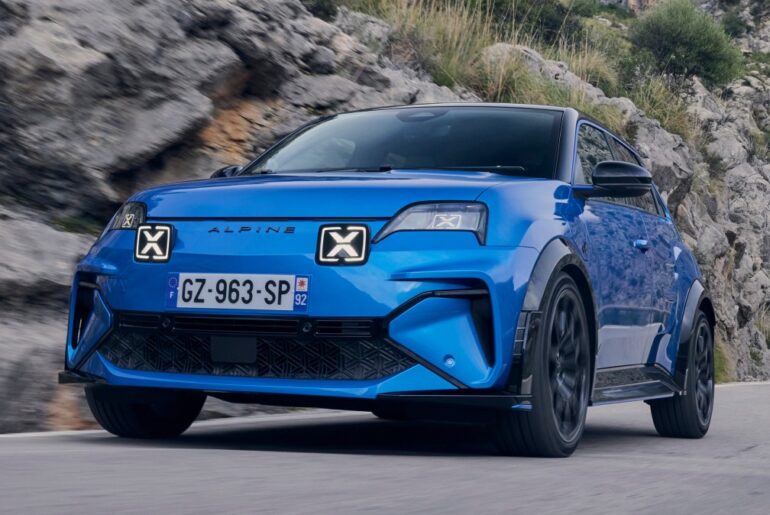
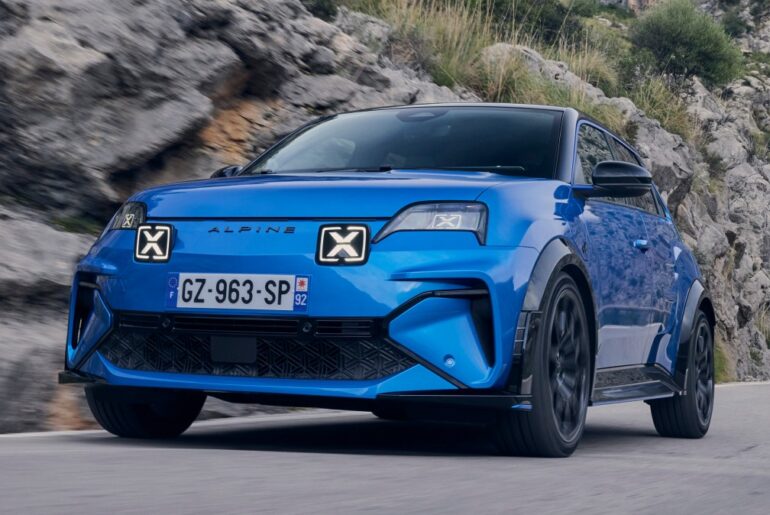
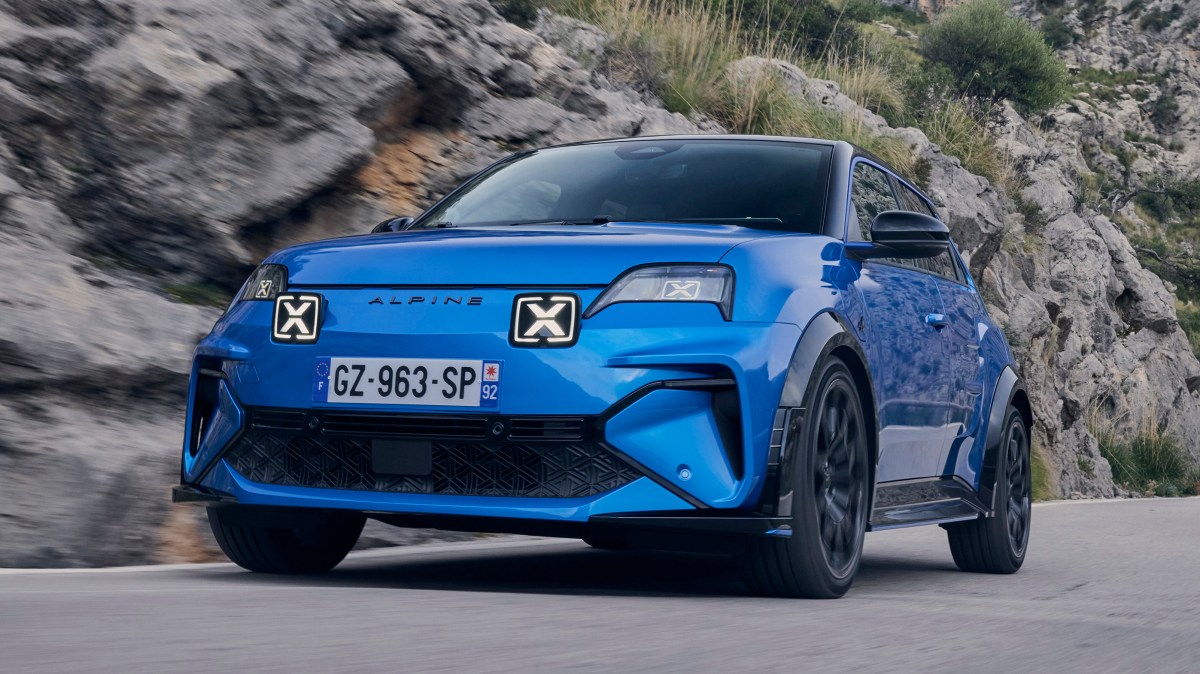
Renault-owned Alpine took the R5 and gave it a sporty makeover to create this little pocket rocket. It gets the uprated e-motor from the larger Mégane E-Tech, resulting in a 0-62mph time for the range-topping GTS version as low as 6.4 seconds. On a country road there are few electric cars that feel as lively as this with the front wheels scrabbling for grip when the accelerator is mashed — it feels mildly unhinged in a delightful way. It suffers from the same cramped interior as the Renault 5, of course, and the larger motor and re-engineered suspension means increased price and less range between charges, but this car is not about long-distance cruising — it’s about the joy of driving and an EV you’ll want to take out just for the sake of it. There aren’t many cars you can say that about these days.
• Scaling new heights: Alpine A290 EV takes on Prescott hillclimb