
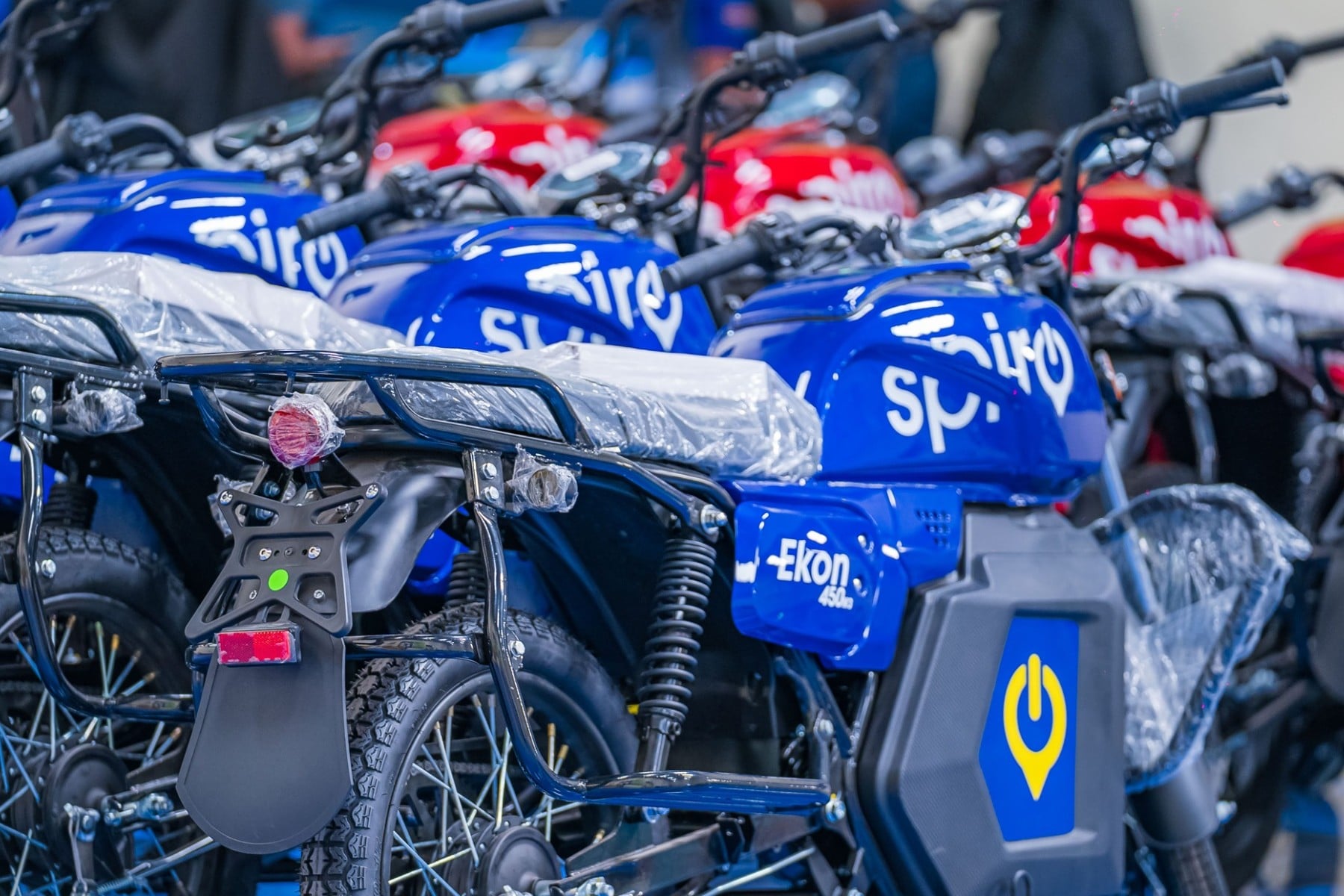
The Dubai-based startup, which operates from the Kenyan capital Nairobi, has secured $50 million in credit facilities from Afreximbank, Nithio, and the Africa Go Green Fund, led by Cyngum Capital. Unlike fresh equity, these funds will support Spiro’s capital-intensive business model, which includes the production of e-motorcycles and battery swap stations, as well as the development of a surrounding ecosystem. In October 2025, Spiro raised $100 million from investors, though it remains unclear how much of this was equity or debt.
“Demand for Spiro’s innovative, industry-leading battery swapping infrastructure continues to grow and is reshaping mobility in Africa by providing reliable, clean transportation options across the continent,” says Kaushik Burman, CEO of Spiro. “With strong financial backing and cutting-edge technology, Spiro is leading Africa’s transition to sustainable mobility. This new funding reinforces our vision of building a robust, scalable energy network tailored for Africa by Africans.”
To date, Spiro operates in six countries: Kenya, Uganda, Rwanda, Nigeria, Benin, and Togo. Additionally, it is conducting pilot projects in Cameroon and Tanzania. The company reports having deployed over 80,000 e-motorcycles, circulated more than 300,000 batteries, performed over 30 million battery swaps, established over 2,500 battery swap stations, and enabled more than one billion CO₂-free kilometres.
Spiro’s business model primarily targets the motorcycle taxi sector, known as Boda Bodas in East Africa. As the high upfront cost of e-motorcycles poses the biggest barrier for such taxi drivers, Spiro offers tailored financing models. These include Lease-to-Own, where the driver initially makes a deposit and gains ownership of the e-motorcycle after paying all instalments. Additionally, Boda Boda drivers do not need to purchase the battery for the e-motorcycle; instead, they can rent it (Battery as a Service) and pay per battery swap (Pay per Swap).
The new capital will support the further expansion of Spiro’s battery swap network in existing and new markets, while advancing the company’s proprietary technology platform. This includes automated battery swapping, fast charging, and the integration of renewable energy sources.
However, Spiro’s understanding of automatic battery exchange stations is completely different from that of electric car manufacturer Nio, for example, where the exchange process is fully automated by a kind of robot system. At Spiro, on the other hand, the automatic replacement stations are simply systems similar to a DHL packing station: the ‘automated’ aspect refers purely to the digital authentication and release process for the lockers containing batteries, which can be removed by the driver and replaced on their electric motorcycle. The driver himself manually removes the old battery and inserts the new one, which weighs approximately 10–15 kg.
In addition, Spiro also offers manned exchange stations in some cities, e.g. at kiosks or petrol stations. Trained personnel carry out the exchange there. A video on LinkedIn shows that in some cases, the driver can even remain seated on their electric motorcycle, like a driver in the pit lane at a Formula 1 race, while the battery is changed in no time at all. This seems to be an exciting solution for stressed motorcycle taxi or delivery service drivers.