
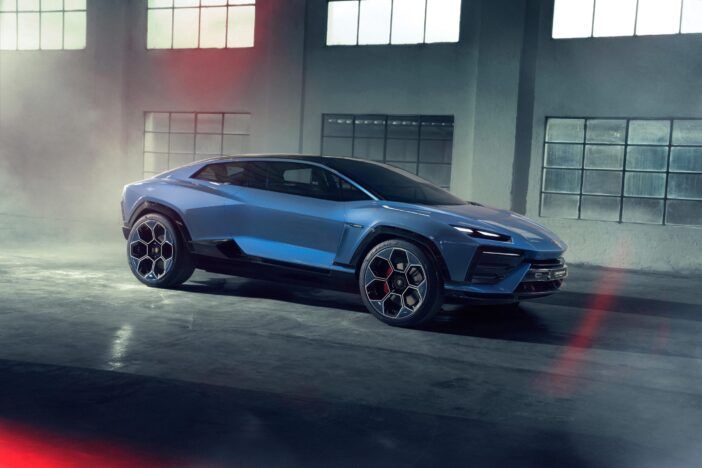
Lamborghini has cancelled plans for its first battery electric vehicle, the Lanzador, citing near-zero buyer demand. CEO Stephan Winkelmann confirms the model will instead launch as a plug-in hybrid, with the entire Lamborghini range set to be PHEV by 2030.
Lamborghini has officially cancelled plans for its first battery electric vehicle (BEV), confirming that the Lanzador concept previewed in 2023 will not enter production as an all-electric model.
The Sant’Agata Bolognese-based supercar maker will instead develop the Lanzador as a plug-in hybrid electric vehicle (PHEV), joining a lineup that already comprises three hybridized models: the Revuelto, Temerario and Urus SE.
According to Stephan Winkelmann, chief executive at Lamborghini, the decision followed more than a year of internal review. “The decision was made after over a year of continuous internal discussion, engaging with customers, dealers, market analysis and global data,” he says.
Winkelmann told The Sunday Times that customer appetite for a fully electric Lamborghini had failed to materialize. He describes the acceptance curve for BEVs in the company’s target market as flattening and “close to zero.”
“Investing heavily in full-EV development when the market and customer base are not ready would be an expensive hobby, and financially irresponsible towards shareholders, customers and to our employees and their families,” he adds.
The chief executive says Lamborghini’s buyers place high value on the sensory experience delivered by internal combustion engines. “EVs, in their current form, struggle to deliver this specific emotional connection,” he explains.
The Lanzador was first shown at the Pebble Beach Concours d’Elegance in August 2023 as a high-riding 2+2 coupe grand tourer with an electric motor on each axle and a combined output exceeding 1,000kW (1,360hp). Originally slated for a 2028 launch, the timeline had already slipped to 2029 before the project was quietly shelved at the end of 2025.
In a formal statement, the company says its original roadmap had envisaged a fully electric Urus by the end of the decade, followed by a fully electric fourth model line. “However, following extensive analysis and ongoing dialogue with dealers and customers, it became clear that the pace of adoption of pure BEV vehicles has slowed considerably, particularly within the luxury super sports segment, where demand remains very limited,” the statement reads.
Lamborghini confirms the next-generation Urus, due in 2029, will now launch as a PHEV, while the fourth model line — derived from the Lanzador — will also debut in plug-in hybrid form. “Plug-in hybrids offer the best of both worlds, combining the agility and low-rev boost of electric battery technology with the emotion and power output of an internal combustion engine,” says Winkelmann.
The company stresses it remains technically capable of producing a BEV. “From a technological perspective, Lamborghini is fully prepared for full electric; however, market readiness within the segment is not yet aligned with this transition,” it states.
Winkelmann has not entirely ruled out a future all-electric model. “Never say never, but only when the time is right. For the foreseeable future, only PHEVs. We will continue to develop electrification because we also need to be ready,” he says.
By 2030, all Lamborghinis will be PHEVs, and the company says it will continue to build internal combustion engines “for as long as possible.” Lamborghini delivered a record 10,747 vehicles worldwide in 2025.
The move comes as several luxury and performance brands reassess their electrification strategies. Porsche is reportedly reconsidering its electric 718 Boxster and Cayman program, Aston Martin has pushed its first EV to the latter part of the decade, and Maserati shelved its electric MC20. Ferrari, however, continues to develop its first BEV, the Luce, which is expected to be revealed this year.