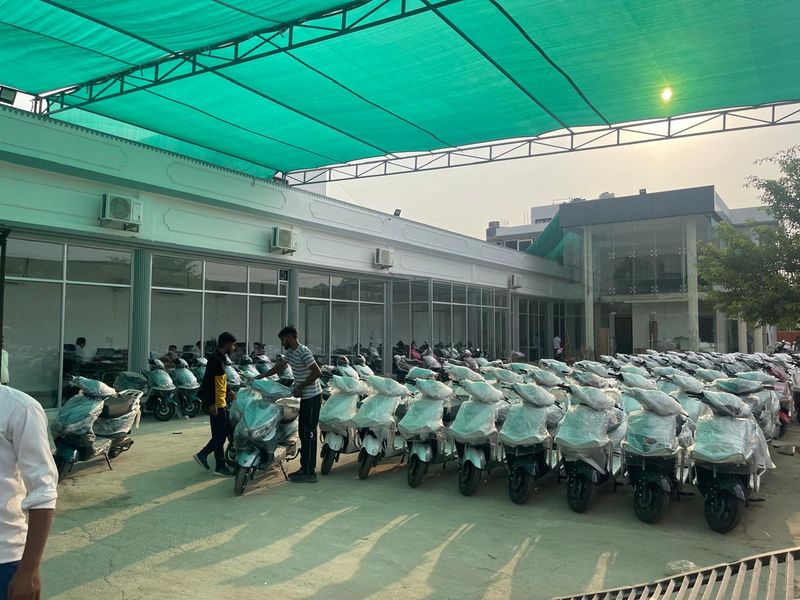
Known for its cotton, wheat and paddy fields, Haryana’s Sirsa district is fast emerging as a manufacturing hub for electric vehicles (EVs), with more than 50 production and assembly units operating within a 150km radius.
The growing cluster is providing jobs to thousands of people and supplying electric two-wheelers across India, industry officials say.
Among the early entrants is Yakuza EV, founded in December 2017 by brothers Nishant Chawla and Deepanshu Chawla.
“When we started, even our relatives and neighbours mocked us. People said this scrap business would not succeed. But we believed in our hard work and skills,” Nishant Chawla said, recalling the early days.
Chawla began his career in 2003 with a motorcycle spare parts business. By 2015, he was looking for new opportunities. After nearly two years of research and planning, the brothers set up their first EV unit in Sirsa.
At the time, consumer awareness of electric vehicles was low. “People took time to trust EVs. But gradually, they realised the savings on fuel and the environmental benefits, and demand started rising,” he said.
Today, Yakuza EV manufactures not only in Sirsa but also in Kolkata, Gwalior and Salem in Tamil Nadu. The company has more than 1,300 dealers nationwide and plans to set up a new 16.5-acre plant in a village near Sirsa.
The company also exports to Nepal and Bangladesh, Chawla said.
India’s EV market has become increasingly competitive, with major brands launching electric two-wheelers backed by aggressive marketing. Chawla said competition was healthy but stressed the importance of understanding customers.
“You grow only when you understand your customers. Pricing and after-sales service are critical,” he said.
He said the company focuses on offering affordable products and resolving customer complaints quickly. It also introduces new designs and improved battery backup at competitive prices.
Many EV components are now manufactured locally in Sirsa, while some parts are still imported, he added.
Industry leaders say the transformation of Sirsa is notable for a district traditionally known for agriculture.
Bimal Bhatia, president of the HSIIDC Industrial Welfare Association and a local businessman, said Sirsa remains classified in a lower industrial category in Haryana and lacks strong government support.
“Sirsa is primarily an agriculture-based region, but young entrepreneurs are trying to do something new,” Bhatia said. “They deserve support, and the government should provide incentives.”
Located about 250 km from Delhi, Sirsa faces higher logistics costs for sourcing raw materials and selling finished products, he said, adding that better policy support could help the district attract more industry.
“With proper backing, Sirsa can create large-scale employment. The people here are hardworking and passionate,” Bhatia said.
As electric mobility gains ground in India, Sirsa’s shift from farm fields to factory floors reflects a broader transformation underway in smaller towns seeking a place in the country’s industrial future.
wuw