
Budimir Jevtic/Shutterstock
Teslas remain one of the favorite car brands among its owners. With the instant torque, sleek design, fewer moving parts, and the promise of lower fuel and maintenance costs, Teslas are really appealing vehicles. And all of the aforementioned reasons make them even more attractive as a smart retirement splurge. After all, a quiet electric vehicle with all the latest technology seems like a good reward for decades of hard work.
Looking at the stats first, buying new vehicles is something that is quite common for retirees. According to S&P Global data, around 50% of new car owners are aged 55 and older, accounting for a disproportionately large share of the vehicle market. However, according to Cox Automotive Analysis of IHS Markit Data, Tesla owners generally skew middle-aged, with 48 being the median age of new Tesla owners in 2025, according to Hedges & Company analytics. Looking further at Cox’s data, it suggests that the age group Teslas are most popular in is 35-44, followed by 25-34, then 45-54. The common retirement ages of 60 and over don’t crop up among these, and that may suggest that these cars don’t make great retirement investments.
Most retirees have a fixed income — from Social Security, pensions, or withdrawals from savings. Teslas, with their higher-than-average collision repair costs, high insurance premiums, depreciation swings, and the rapid pace of EV technology changes, might not make a good car for the golden years. Therefore, a forward-thinking Tesla purchase could become financially and psychologically stressful. It doesn’t mean it’s automatically a bad choice in retirement. But for some buyers, the reality of ownership looks very different from the showroom promise.
1. Depreciation and price volatility
Chris Allan/Shutterstock
As a retiree, when choosing a car, you need to treat it like a long-term financial decision. That means its value has to be stable and predictable. However, Teslas don’t typically fall into those categories, especially in pricing since Tesla has a history of aggressively adjusting new vehicle pricing. A good example was in January 2023, when the company cut U.S. prices on certain Model 3 and Model Y trims by roughly 6% to 20%, according to Reuters. Later in October 2023, additional cuts brought some models down more than 25% year-to-date.
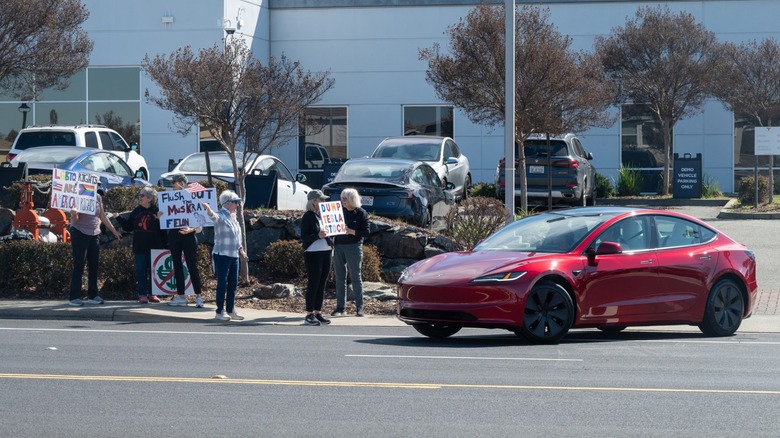
When automakers decide to make such price cuts on new cars, the used market usually follows. If you bought a Tesla and the price changes almost immediately after, you could see the market value of your vehicle drop suddenly. Typically, such big changes in car value take years, but instead, that change happens in a matter of months. It also doesn’t help that CEO Elon Musk’s politics and controversy add another layer of volatility to Tesla cars’ values.
The EV market also generally suffers from steep depreciation. For starters, EV batteries have limited life cycles that make them generally harder to sell down the line compared to many of their combustion car counterparts. Edmunds reported that used EV prices fell 20.5% year over year in Q2 2024 and were down 38.5% compared to their 2022 peak. In Tesla’s case, Edmunds data showed that used 2020-and-newer Teslas had dropped 24.5% from their June 2022 peak by early 2023, which is a steeper decline than the broader used market.
2. Higher-than-average insurance prices
snaptheframe/Shutterstock
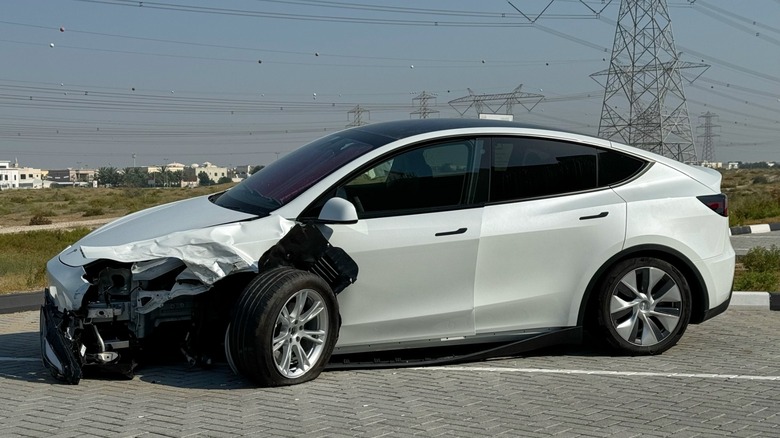
According to ValuePenguin‘s 2026 analysis, the average annual cost to insure a Tesla is $3,947, compared to about $2,496 for the average full-coverage auto policy nationwide. That’s roughly $1,400 more per year or nearly 60% higher, based on those two benchmarks. Bankrate’s model-specific estimates also show the same thing, with the Tesla Model 3 and Model Y frequently landing well above national averages in their data sets, and the Model S Plaid reaching almost double the average.
The reason why Teslas cost so much to insure comes down to repair costs. Data from collision-repair firm Mitchell shows EVs generally have higher average claim severity than comparable gas-powered vehicles, with one 2024 report putting average EV repair costs at about $6,066 compared to $4,703 for internal combustion vehicles. Insurify data points out that the Model X and Model 3 top EV insurance cost rankings, and more broadly, Teslas average about 26% more to insure than comparable vehicles.
Going by the Social Security Administration‘s (SSA) fact sheet, Social Security is a major source of income for people 65 and older, and many beneficiaries receive over 50% of their income from the benefits. So when insurance is well over $1,000 per year above average for a given vehicle and driver profile, that can crowd out other costs more quickly than it would for someone still adding new earnings. And this could be happening at a time in a retiree’s life when insurance is rising again due to age.
3. Expensive repairs and hidden costs
Frank Briend/Shutterstock
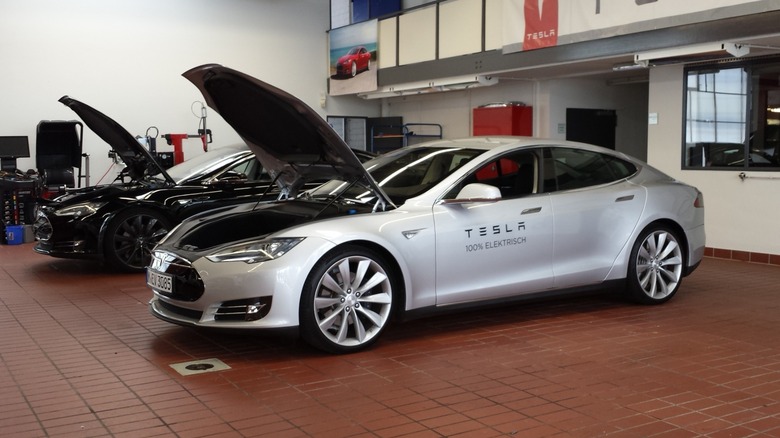
It may seem like Teslas are an obvious choice for lower recurring costs because they don’t need oil changes, regenerative braking can save your brake pads, and using an at-home Tesla charging station typically won’t cost you as much as a full tank of gas. However, as a retiree living on a fixed income, there could be some unpleasant surprises that could sneak up on you.
The first issue ties back to why the insurance is so high on Teslas; repairing them is considerably more expensive than normal. Apart from the fact that these are high-tech software-oriented vehicles, Tesla’s repair rules push you compulsorily toward OEM parts and Tesla’s own repair shops. Which essentially means you won’t be able to price-shop when problems do occur. Not to mention the extra costs of waiting without a car when a common recall or service delay happens.
While most of these car issues should be covered by warranty, there are still edge-case repairs for complex issues that can get very high. For example, Reuters reported an estimate of over $14,000 for a suspension-related repair after one of its investigations. Then, there’s also the low-probability but very expensive chance of replacing an EV battery. According to Recurrent, changing one outside warranty typically ranges from $5,000 to $16,000, generally, but for Tesla, the range is around $15,000 to $22,000.
There are also recurring costs like Tesla’s subscription services and semi-frequent tire changes (due to extra weight and fast acceleration). These recurring payments aren’t catastrophically large bills, but they could surprise you if you assumed a Tesla EV would mean a dramatically lower upkeep.
4. Relatively high upfront purchase price
Jetcityimage/Getty
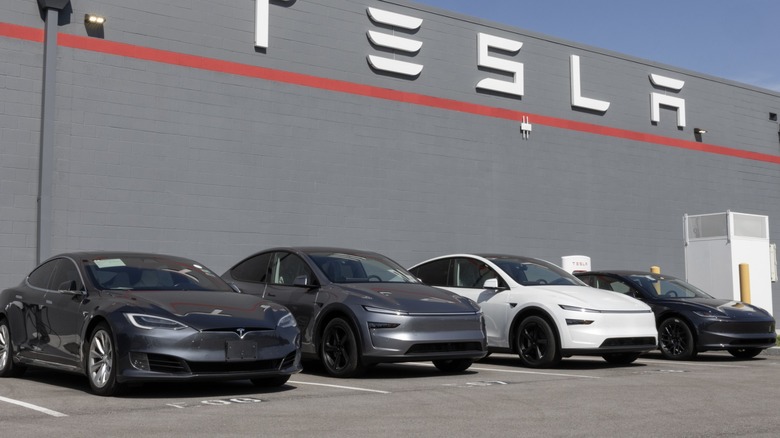
According to Kelley Blue Book, the average transaction price (ATP) for a new Tesla was $52,628 in January 2026, compared to the overall industry average of $49,191. Meanwhile, compact cars, which are a common retiree-friendly segment, averaged $26,939 in late 2025. In contrast, even Tesla’s entry Model 3 starts around $37,000 before taxes and fees.
This steeper upfront cost matters because the average monthly benefit, according to the SSA, is about $2,000 in January 2026. A $52,000 vehicle represents roughly two years of average Social Security income, once again before factoring in taxes, registration, or insurance.
Then there’s also the often-overlooked cost of home charging. You might think that you can just charge publicly, but the Department of Energy reports that most EV charging (64%) happens at single-family homes — for convenience and cost-effectiveness. Tesla’s Wall Connector costs $450, and installation can range from roughly $800 to $3,000, according to EnergySage and Consumer Reports data. That’s additional upfront cash beyond the car itself.
Yes, there are federal EV tax credits that can reduce the price of buying an EV up to $7,500, but IRS rules tie eligibility to income caps and tax liability. That means that not every retiree would benefit equally. For example, the IRS sets income caps for eligibility, and if the credit isn’t transferred at purchase, it’s nonrefundable — meaning it can only reduce taxes you actually owe. So if your federal tax bill is lower than $7,500, you won’t receive the full value of the credit.
5. Tech-oriented and minimalist design removes familiarity and stability
Alexander Shapovalov/Getty
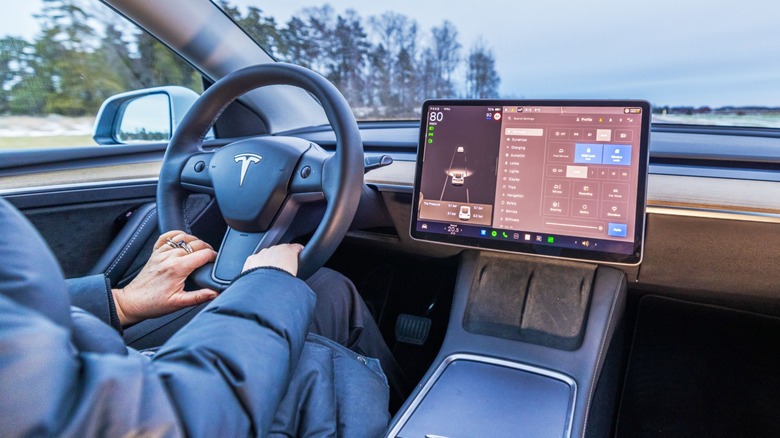
Tesla’s minimalist cabins may look sleek and modern, but they also moved many traditional vehicle controls onto a central touchscreen. Tesla’s own manuals even say that features that are typically handled with physical knobs and buttons in other vehicles are operated through the touchscreen interface. This includes pretty much everything, from climate control to gear selection. Additionally, Tesla vehicles also receive frequent over-the-air software updates that can add or modify features over time, meaning the interface you learn today may not look or function exactly the same months later.
This is all well and good if you’re a tech enthusiast, but it can reduce the sense of familiarity and routine some retirees value. With many retirees also being seniors, the National Highway Traffic Safety Administration (NHTSA) notes that aging can negatively affect how retired seniors interact with these visually demanding vehicle control systems.
Research published in Frontiers in Psychology has found that older drivers take longer to complete infotainment-related tasks and experience a higher workload when interacting with in-vehicle information systems. Meanwhile, AAA research shows drivers ages 55 to 75 spent more time with their eyes off the road when using infotainment systems compared to younger drivers. This is easily one of the major reasons Tesla has remained among the top car brands that retirees instantly regret buying.