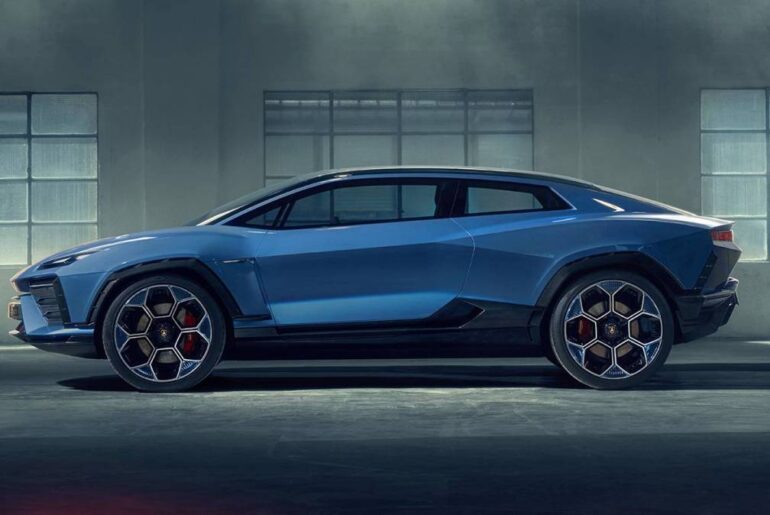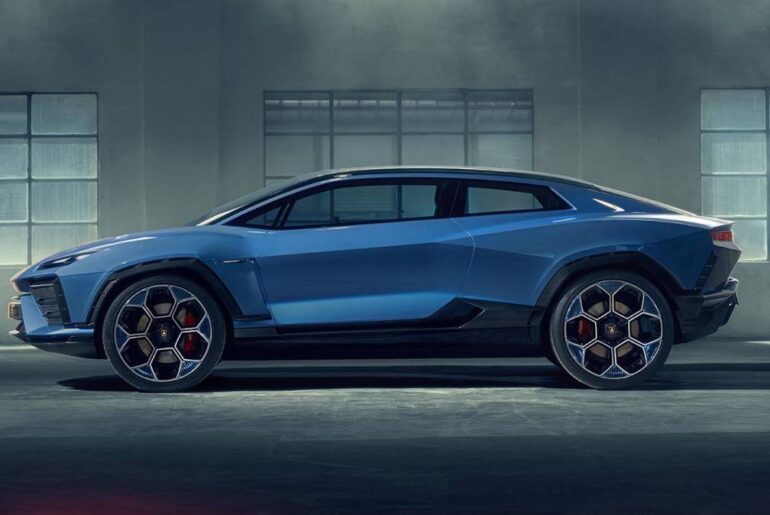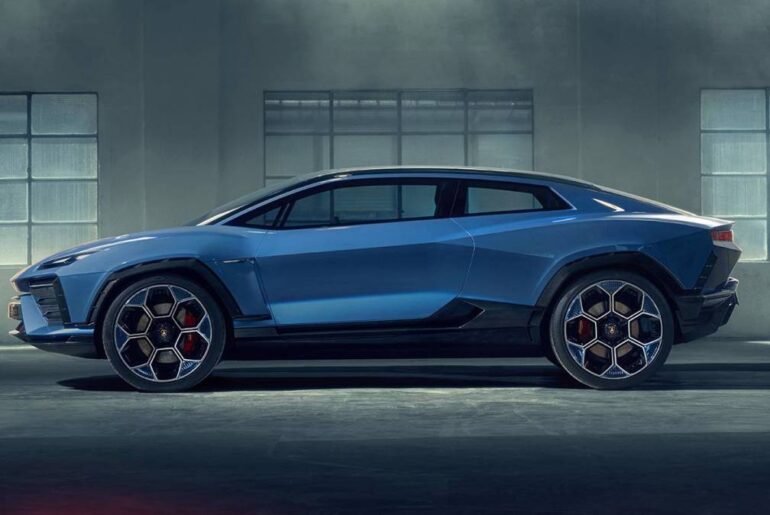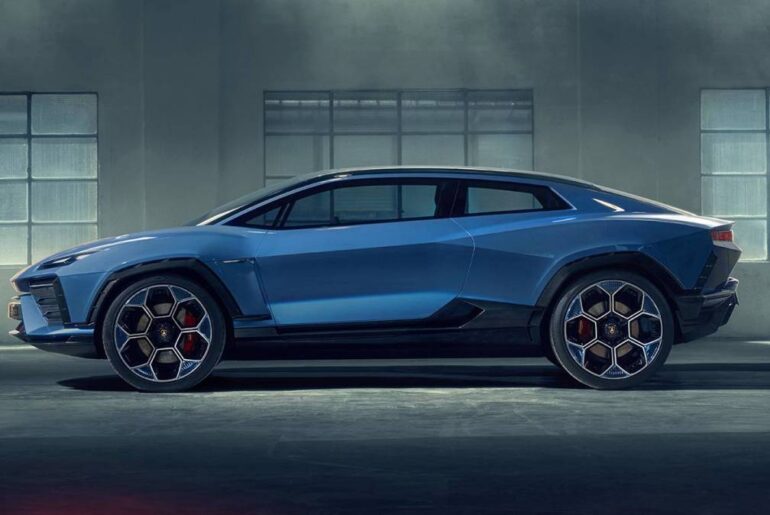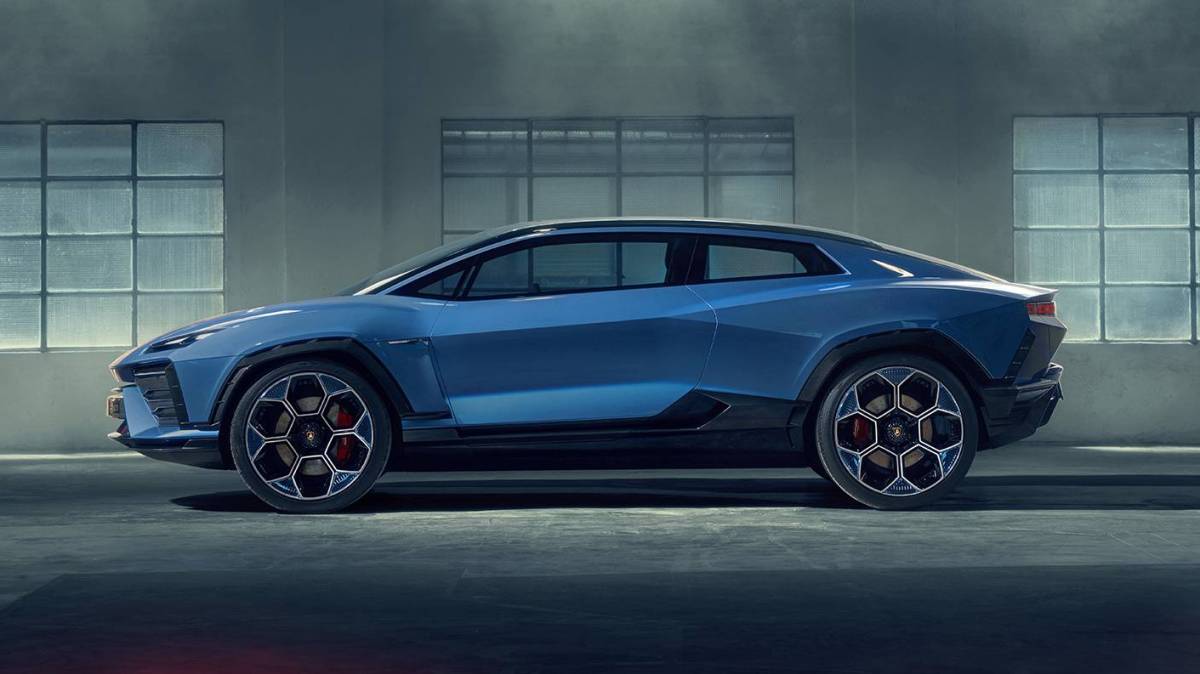
Lamborghini, the supercar maker, has pulled the plug on plans to build electric vehicles (EVs) in the face of collapsing demand among its well-heeled customers.
Chief executive Stephan Winkelmann said EV development risked becoming “an expensive hobby” for the Italian company as he confirmed that a forthcoming all-electric car, named in 2023 as the Lanzador, will no longer join its line-up.
Instead it will be replaced by a plug-in hybrid electric vehicle (PHEV), meaning that by 2030, the company’s range will all be PHEV, said Winkelmann. Lamborghini would continue to build internal combustion engines (ICE) “for as long as possible”, he added.
Winkelmann told The Sunday Times that the “acceptance curve” for battery-powered cars in Lamborghini’s target market was flattening and “close to zero”.
The company’s customers, he said, valued the “emotional experience” of their Lamborghinis — whether design, raw performance or, crucially, the distinctive sound and feedback of the internal combustion engine.
“EVs, in their current form, struggle to deliver this specific emotional connection,” he explained, confirming that noise — or lack of it, remains a crucial selling point in the luxury car market.

EVs, said Stephan Winkelmann, risked being an “expensive hobby” for Lamborghini
YOSHIKAZU TSUNO/GETTY IMAGES
Winkelmann had been agonising over cancelling the Lanzador, the company’s fourth EV project, since the start of 2025, but finally killed it off in secret late last year.
“The decision was made after over a year of continuous internal discussion, engaging with customers, dealers, market analysis and global data,” he said.
“Investing heavily in full-EV development when the market and customer base are not ready would be an expensive hobby, and financially irresponsible towards shareholders, customers [and] to our employees and their families.
“Plug-in hybrids offer the best of both worlds, combining the agility and low-rev boost of electric battery technology with the emotion and power output of an internal combustion engine,” said Winkelmann.
Lamborghini is owned by Audi, which is part of the Volkswagen Group. Its current line-up includes the Urus SUV, priced at about £200,000; the £265,000 Temerario sports car; and the £450,000 Revuelto super sports car. All are PHEVs.

The Lamborghini Revuelto on display at a motor show in Italy in 2023
LAMBORGHINI
The company delivered a record 10,747 cars in 2025, a second successive year of five-figure deliveries. Europe and the Middle East are its biggest markets; it endured a 9.8 per cent decline in the Americas.
Winkelmann said the carmaker needed to be mindful of the younger generation, who consider Lamborghinis to be poster cars and are an influential “fan club”, promoting the vehicles as something to own and be seen in. Buyer age is falling, with more than half of current customers in their thirties and forties, and trending even younger in Asia.
Asked whether there would ever be a Lamborghini EV, Winkelmann said: “Never say never, but only when the time is right. For the foreseeable future, only PHEVs. We will continue to develop electrification because we also need to be ready.
“The times we are living in are fast moving; if you don’t react fast, you risk going out of business or losing momentum. Therefore [we need] a solid financial base to reinvest in the future.”
Lamborghini’s rejection of purely electric vehicles comes as larger carmakers grapple with the costs of making the transition to cleaner technology in the face of lower-than-expected demand for EVs. Earlier this month, Vauxhall and Fiat owner Stellantis took a $26 billion (£19 billion) charge to scrap some fully electric models. In January, General Motors disclosed a $6 billion hit from its EV programme, and in December, Ford made a near-$20 billion write-down on its plans and cancelled an all-electric pick-up truck.
• Is the electric car dream over after the U-turn at Stellantis?
In the UK, the government still plans to phase out petrol and diesel-powered cars by 2030. In the EU, that date is 2035, although it recently watered down the target so that 90 per cent of new cars sold from 2035 will have to be zero-emission by then.
As a small manufacturer, Lamborghini, holds exemptions from UK and EU emissions targets until 2035, and will bid to renew these arrangements. It is lobbying governments, highlighting the technology behind, and negligible environmental impact of, its low-volume vehicles. Winkelmann noted that Lamborghini owners do not rack up many miles — less than 2,000 a year for the supercars, and about 10,000 miles for the Urus.
“We have a big task as an automotive industry,” he said. “Everybody’s speaking about 2035, but there’s a big date which is very dangerous at 2030, due to the emissions [new cars must achieve a 55 per cent reduction in CO2 by this date]. And this is something which is not clear enough, in my opinion, today.”
Not all high-end carmakers are turning their backs on electric powertrains. Rolls-Royce’s Spectre EV, with a starting price of £330,000, is now the second most popular model in the company’s range. Spectre prices overlap with Lamborghini, but usage is so different that wealthy owners are likely to have examples of both marques in their garage.
Feedback from Lamborghini customers suggested that an electric version of the Urus would not be popular. The SUV, launched in 2017, is by far the biggest seller, accounting for about 60 per cent of deliveries. “We couldn’t risk [a Urus EV]. The supercars are a very tiny segment,” Winkelmann said. “Even if the margins of the supercars are higher than on Urus, it’s clear the Urus segment is bigger and more stable.”
Lamborghini had to be careful not to scare buyers off, he added. “To discontinue a purchase like a luxury car is easy because it’s not something you [need to] buy.”