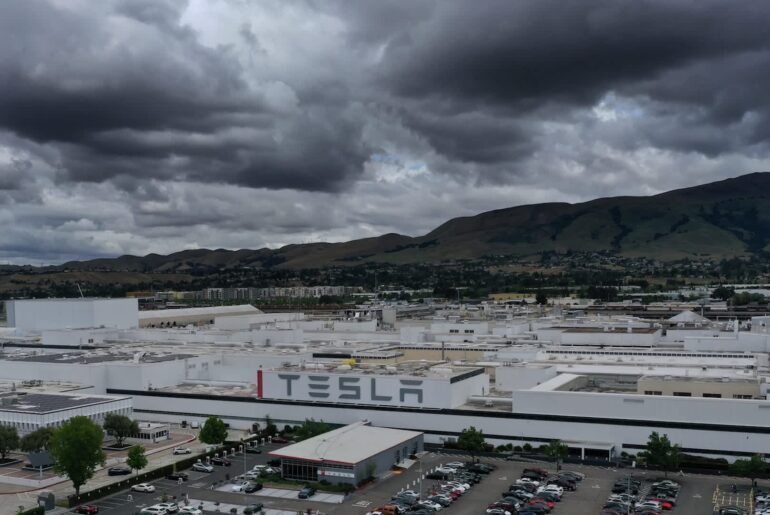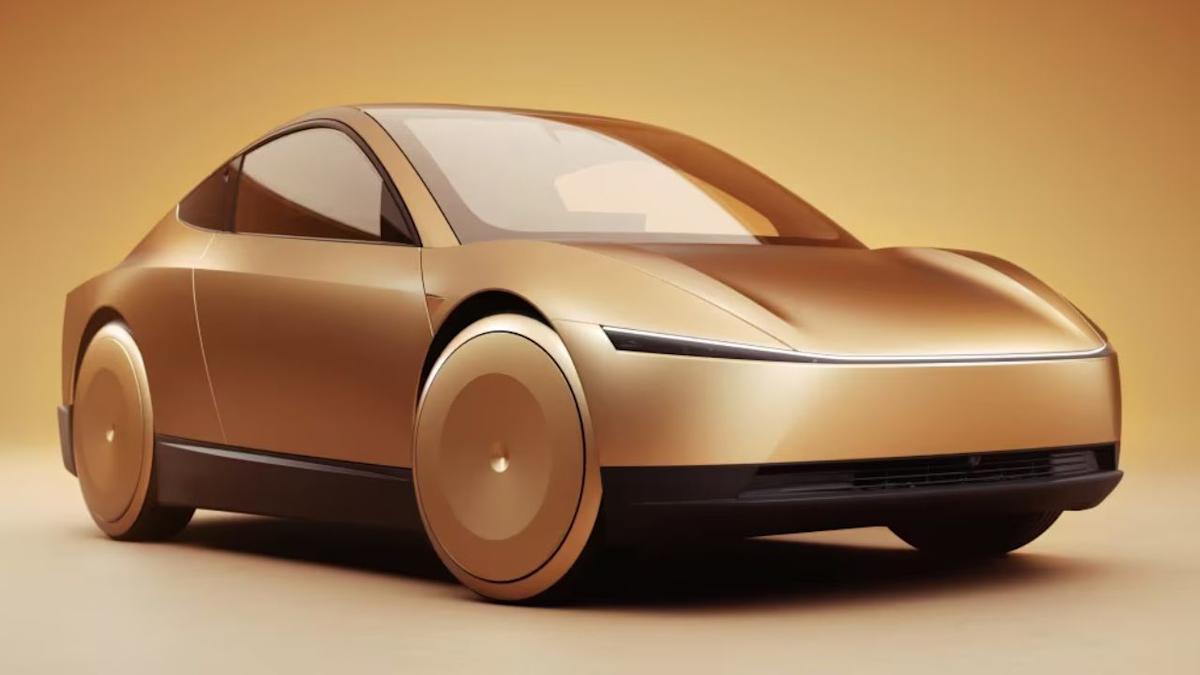
Tesla has officially moved its long-discussed Cybercab project into the production phase. The first unit rolled off the line at Gigafactory Texas, a milestone the company celebrated publicly as the beginning of what could become one of the most radical shifts in modern automotive history.
For Tesla, this is more than just another new model. The Cybercab represents a vehicle designed from the ground up for autonomous mobility, not simply a modified version of an existing car.
A Minimalist Vehicle Without Traditional Controls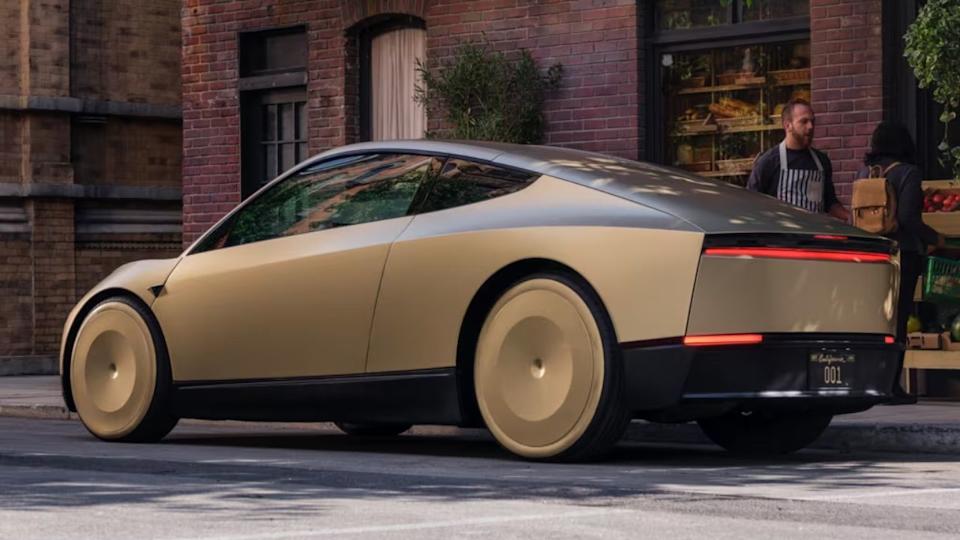
Photo Courtesy: Autorepublika.
The Cybercab is a fully electric, two-seat vehicle built without a steering wheel or pedals. Its interior follows Tesla’s minimal design philosophy, centered around a large touchscreen interface and eliminating conventional driving controls entirely.
Unlike Tesla’s current robotaxi experiments, which rely on modified production vehicles such as the Model Y and still involve human oversight in many situations, the Cybercab is intended to operate without manual intervention. That design decision is also what makes it one of the most controversial automotive projects currently in development.
The absence of physical controls means that everything depends on software. In practical terms, passengers hand over full responsibility to the vehicle’s autonomous system.
Pricing And Operating Cost Ambitions
Elon Musk has repeatedly emphasized affordability as a core goal. Early indications suggest Tesla is aiming for a price around $30,000, positioning Cybercab not as a niche experiment but as a mass market mobility solution.
Tesla’s broader vision focuses on reducing operating costs to roughly $0.20 per mile, factoring in energy, insurance, and depreciation. If achieved, that cost level would dramatically alter the economics of urban transportation and could make autonomous ride services significantly cheaper than traditional ride hailing.
The company expects demand from commercial operators, including ride-hailing platforms, but has also stated that private ownership remains part of the plan.
The Biggest Question: Is the Technology Ready?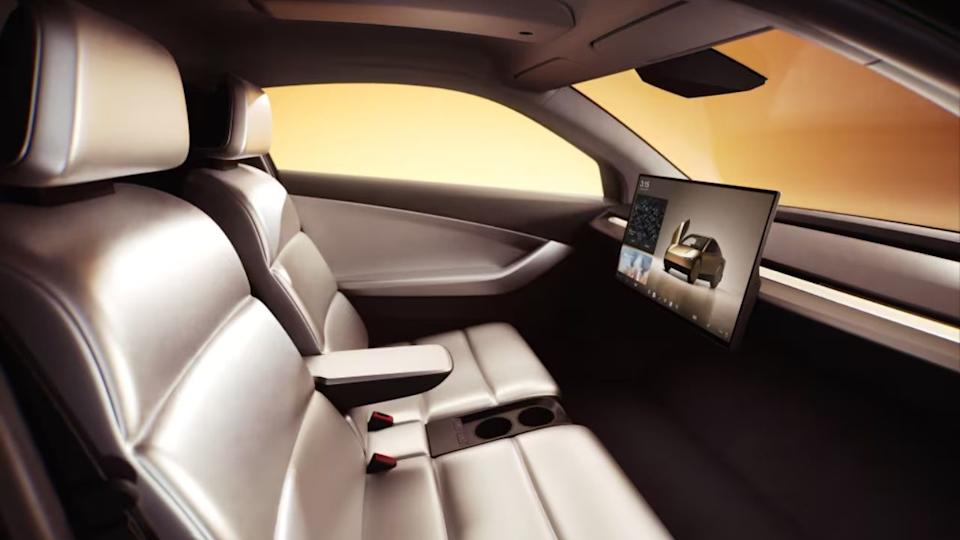
Photo Courtesy: Autorepublika.
While the hardware is now entering production, the larger question remains software maturity.
Tesla’s current Full Self-Driving system, recently rebranded as Full Self-Driving (Supervised), is still categorized as a Level 2 driver assistance system. That means a human driver must remain attentive and ready to take control at all times.
Cybercab, by contrast, assumes full autonomous operation without any human control interface. Moving from assisted driving to complete autonomy represents a massive technological leap, one that no major automaker has yet achieved at a large scale in consumer vehicles.
Tesla has already launched limited autonomous ride testing in Texas, but broader deployment will depend on proving both technical reliability and regulatory compliance.
Production Begins, but Ramp-Up Will Be Slow
Even Tesla acknowledges that early production will be gradual. Industry observers expect initial output to remain limited while the company validates manufacturing processes and software performance.
Reports suggest mass production is targeted to begin later in 2026, but timelines remain uncertain, especially given the unique regulatory challenges of selling a vehicle that lacks traditional driver controls.
Other companies pursuing robotaxi programs, such as Waymo and Zoox, have faced complex approval processes for vehicles without steering wheels, suggesting Tesla may encounter similar hurdles.
A Bold Bet On The Future Of Mobility
Cybercab is arguably Tesla’s boldest project yet. It moves the company beyond electric cars as personal transportation and into the broader idea of transportation as a service.
If Tesla succeeds, Cybercab could redefine what car ownership means, offering transportation without requiring passengers to drive at all. For people who cannot drive, or prefer not to, the concept promises unprecedented independence.
At the same time, critics argue that launching a vehicle fully dependent on unsupervised autonomy before proving the technology at scale is risky. The debate highlights how different this project is from traditional automotive product launches.
A New Era, But With Caution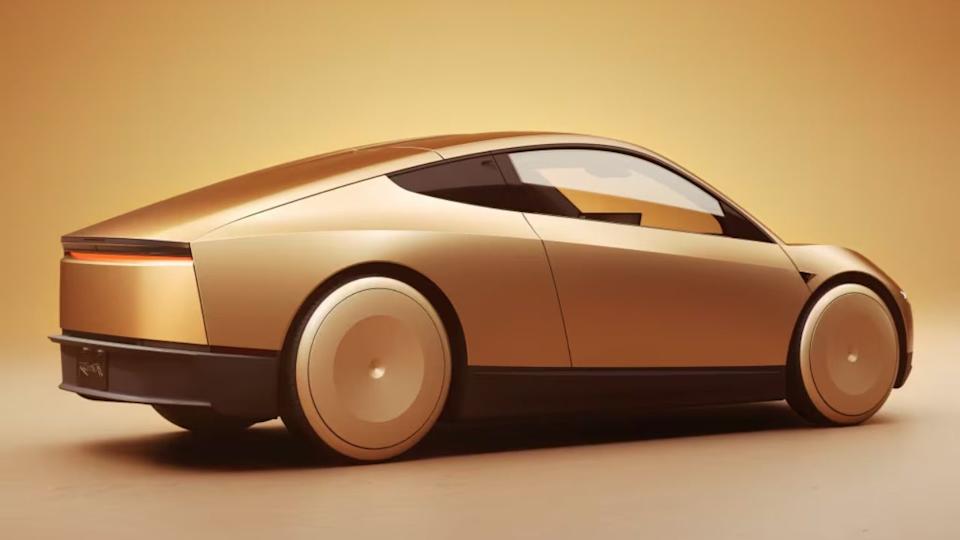
Photo Courtesy: Autorepublika.
Tesla has built its reputation on pushing technological boundaries, and Cybercab fits that pattern perfectly. The first vehicle leaving the production line marks a symbolic step toward a driverless future, but the real challenge lies ahead.
Hardware can be manufactured. The bigger test will be proving that the software is ready for real-world complexity and safety expectations.
For now, the Cybercab stands as a glimpse into how Tesla imagines the next era of mobility. Whether that vision becomes everyday reality will depend on how quickly autonomous technology can earn both regulatory approval and public trust.
This article originally appeared on Autorepublika.com and has been republished with permission by Guessing Headlights. AI-assisted translation was used, followed by human editing and review.
Read More
12 Pickup Trucks That Are Totally Worth the Money
SUVs That Will Last at Least 15 Years (No Problem!)