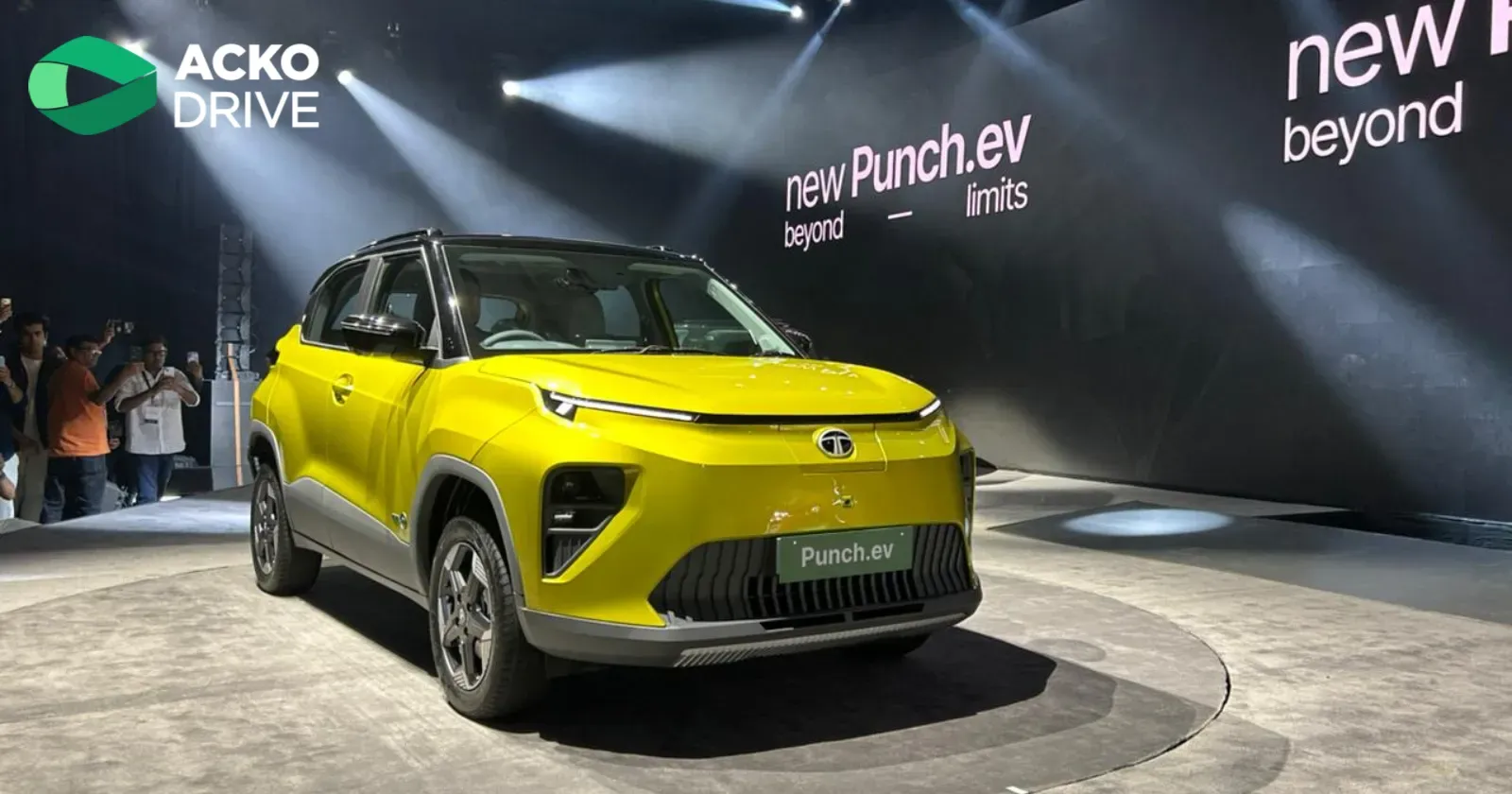
When the Tata Punch EV, Tata Motors’ first model on a pure EV architecture, made its market debut in January 2024, it sported an entry-level introductory price of ₹10.99 lakh. Its refreshed version, launched on Friday, is significantly cheaper at ₹9.69. The entry price drops to ₹6.49 lakh, if the buyer opts for the Battery-as-a-Service (BaaS) option, being offered for the first time by Tata Motors.
Under the BaaS option, the battery EMI comes to as low as ₹2.61 per k.m, for the 30 kWh variant, with a usage cycle of 60 km per day. The lowered price barriers for the entry-level EV is part of Tata Motors’ strategy to build significant volumes in the entry-level EV segment, and in the process also grow that segment. Currently, electric PVs contribute only about 1.6% (50,000 units) of the overall PV market of models priced below ₹12 lakh, which according to Tata Motors is the average price in the overall PV industry.
“We have chosen to rewrite the price-value equation in the entry-level EV segment,” says Shailesh Chandra, MD & CEO, Tata Motors Passenger Vehicles after launching the refreshed Tata Punch EV. Currently, the entry-level EV segment has only three models – Tata Punch, Tata Tiago, and MG Comet. These three models cumulatively sell around 3,000 units a month.
Entry-Level Electric Cars
Prices (Ex-Showroom)
2026 Tata Punch EV
Rs 9.69 Lakh – Rs 12.59 Lakh
MG Comet EV
Rs 7.62 Lakh – Rs 10 Lakh
Tata Tiago EV
Rs 8 Lakh – Rs 11.14 Lakh
Citroen eC3
Rs 12.90 Lakh – Rs 13.53 Lakh
In the PV industry segment of above ₹12 lakh, EV penetration is estimated to be at 10%, while at the overall industry level, it is 4-5%. “EVs are growing in the above ₹15 lakh segment, but most of the overall industry volumes are below ₹12 lakhs. So unless EV penetration goes up in the below ₹12 lakh market, India can never say that we are truly massifying EV,” Vivek Srivatsa, CCO, Tata Motors Commercial Vehicles, tells Acko Drive.
Citing the example of China, the world’s largest EV market, Srivatsa argues that “if you see EV penetration is equal across all price points (in China). And that’s why they are able to mainstream EV so much.”
Cracking the Price-Parity Challenge is Key
Tata Motors, which leads the emerging electric PV market with a share of over 40%, claims that consumers are increasingly seeing EV as another option in the already matured powertrain mix of diesel, petrol, and CNG. Srivatsa says that the just launched refreshed Tata Punch EV is near equal to the AMT variant of the Tata Punch, launched recently. “So customers who have this mindset of going for alternate fuel, not many are looking at EV currently, but with the Punch, we’ll achieve price parity with CNG,” he says.
Falling battery prices, new engineering interventions, product optimisation have helped Tata Motors to bring down the price barrier for the Punch EV. A major intervention was in the propulsion drive of the Punch EV. “We changed the propulsion drive from the current separate motor and separate three-in-one, to a six-in-one combo. So, motor, controller, gearbox, DC-DC, OBC and PDU are all packed into one now,” Anand Kulkarni, Chief Products Officer, Head of HV Programs and Customer Service, Tata Passenger Electric Mobility tells Acko Drive. This new solution helped in savings in terms of space, cost, and weight. “Whatever weight benefit that we had in the drivetrain, we added the capacity on the battery,” says Kulkarni.
Consumer Wants
The 30kWh and 40kWh battery packs in the refreshed Tata Punch EV replace the 25kWh and 35kWh options in the outgoing model, The bigger battery pack variant has a claimed real-world driving range of around 355 kms, and an ARAI (Automotive Research Association of India) certified range of 468 kms.
Srivatsa says that customers are increasingly warming up to EVs, and if the key factors of driving range, ease of charging (charging infra and speed), and battery warranty in an EV are found favourable then it enters the customer’s consideration set of models before purchase.
Wooing first-time car buyers
Currently, 10% of the Tata Punch’s overall sales volume comes from its EV version. With the lowered price barrier, and an enhanced product proposition, Tata Motors is pitching the refreshed Punch EV to the first-time car buyer. Currently, 15-20% of the existing Tata Punch EV’s are first-time car buyers, and about 40-50% are first-time EV buyers.