Support CleanTechnica’s work through a Substack subscription or on Stripe.
Or support our Kickstarter campaign!
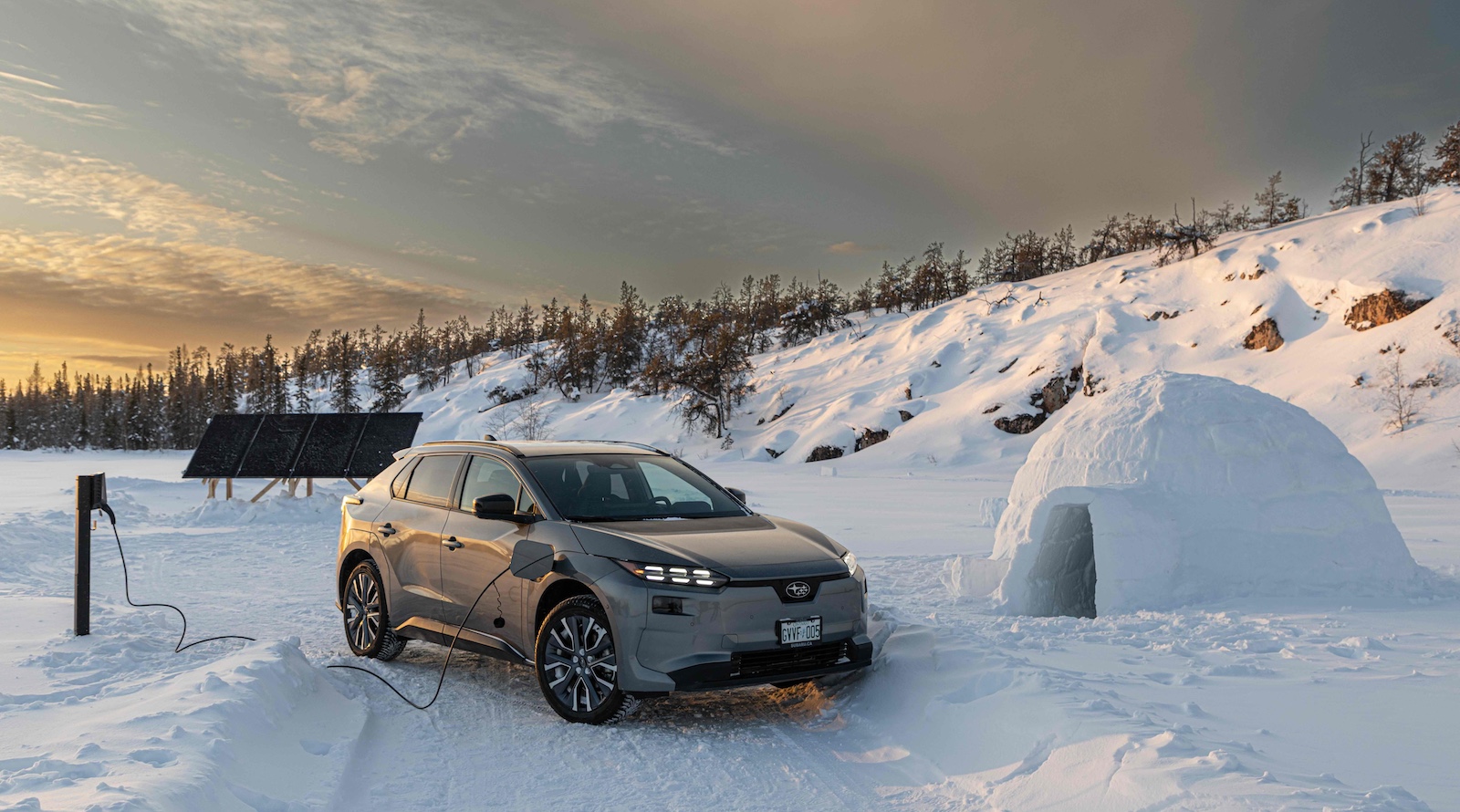
If someone told you off-grid solar power was used to charge an electric Subaru in the sub-Arctic, would you believe it? Well, a pilot project conducted by Easee and Subaru just demonstrated it is possible to use portable solar panels and a portable EV charger to charge an electric Subaru in the sub-Arctic, a place where typically many people may not believe solar power would work.
In fact, some people believe solar panels can only work in hot climates, because somehow they got the idea solar panels convert heat to electricity when they actually convert light to electricity. So, solar panels can generate electricity even in the sub-Arctic. Further, electric vehicles can charge and be driven there.
Adam Dunwoodie, Easee UK, Technical Manager, answered some questions about the pilot for CleanTechnica.
 What is the capacity of the portable solar panels?
455 W x 4 — temporarily installed to demonstrate the principle.
Same question for the battery.
4000 W, Data here: https://uk.ecoflow.com/products/delta-pro-3-portable-power-station?variant=49296152756563
How long did it take to charge the Subaru?
The aim of the project was to demonstrate the principle that solar power, even in the Northern Territories, is sufficient to charge EVs. Even with the temporary setup, it achieved 2.9 kW.
What was the cost of the solar panels, battery and EV charger?
The full off-grid charging system cost £4500, however, in Canada it is a bit cheaper.
Is all that technology used for the charging pilot portable?
Yes. However, for full portability flexible solar panels might be more appropriate.
Can it also be used to charge an electric snowmobile, e-bike, electric ATV or electric motorcycle?
Yes, coupled with the Easee charger, the Type 2 charger can power electric cars, ATVs, motorcycles and snowmobiles.
Do the local indigenous people have a preference for clean, renewable electricity and sustainable transportation because of their environmental ethic, or do they simply want technology that does the job?
They are semi-nomadic so moving without fuel supply challenges would be ideal. They are also environmentally very astute so clean, off-grid energy production and charging suits them very well.
What is happening in Canada’s Arctic and sub-Arctic regions because of climate change?
People who live in the very northern latitudes are seeing the effects of climate change much more rapidly than those in more southern regions. There is that sense that they’re on the front line. They’re seeing extreme events such as flooding and wildfires requiring evacuations and causing people to lose homes. There is certainly an appetite to move away from traditional fossil fuels and a desire to embrace green technology with the building of solar and wind generation. Now we have demonstrated the principle of off-grid solar charging in an extreme climate, the technology can be utilized anywhere.
Support CleanTechnica via Kickstarter
Sign up for CleanTechnica’s Weekly Substack for Zach and Scott’s in-depth analyses and high level summaries, sign up for our daily newsletter, and follow us on Google News!
Advertisement
Have a tip for CleanTechnica? Want to advertise? Want to suggest a guest for our CleanTech Talk podcast? Contact us here.
Sign up for our daily newsletter for 15 new cleantech stories a day. Or sign up for our weekly one on top stories of the week if daily is too frequent.
CleanTechnica uses affiliate links. See our policy here.
CleanTechnica’s Comment Policy