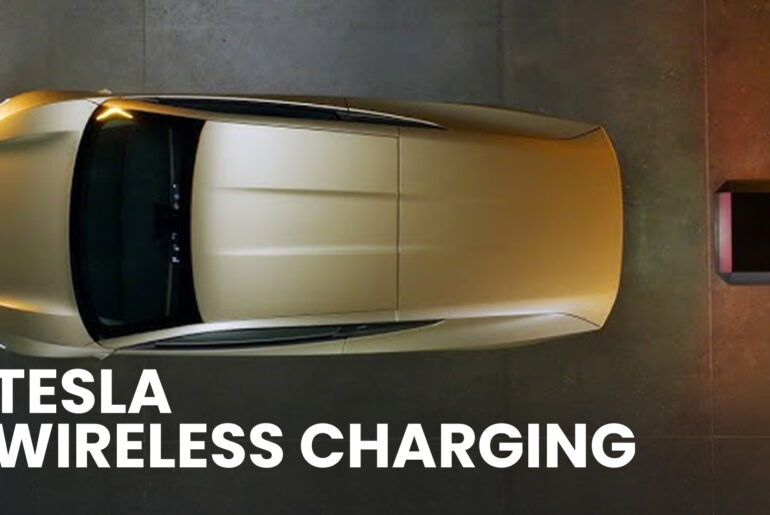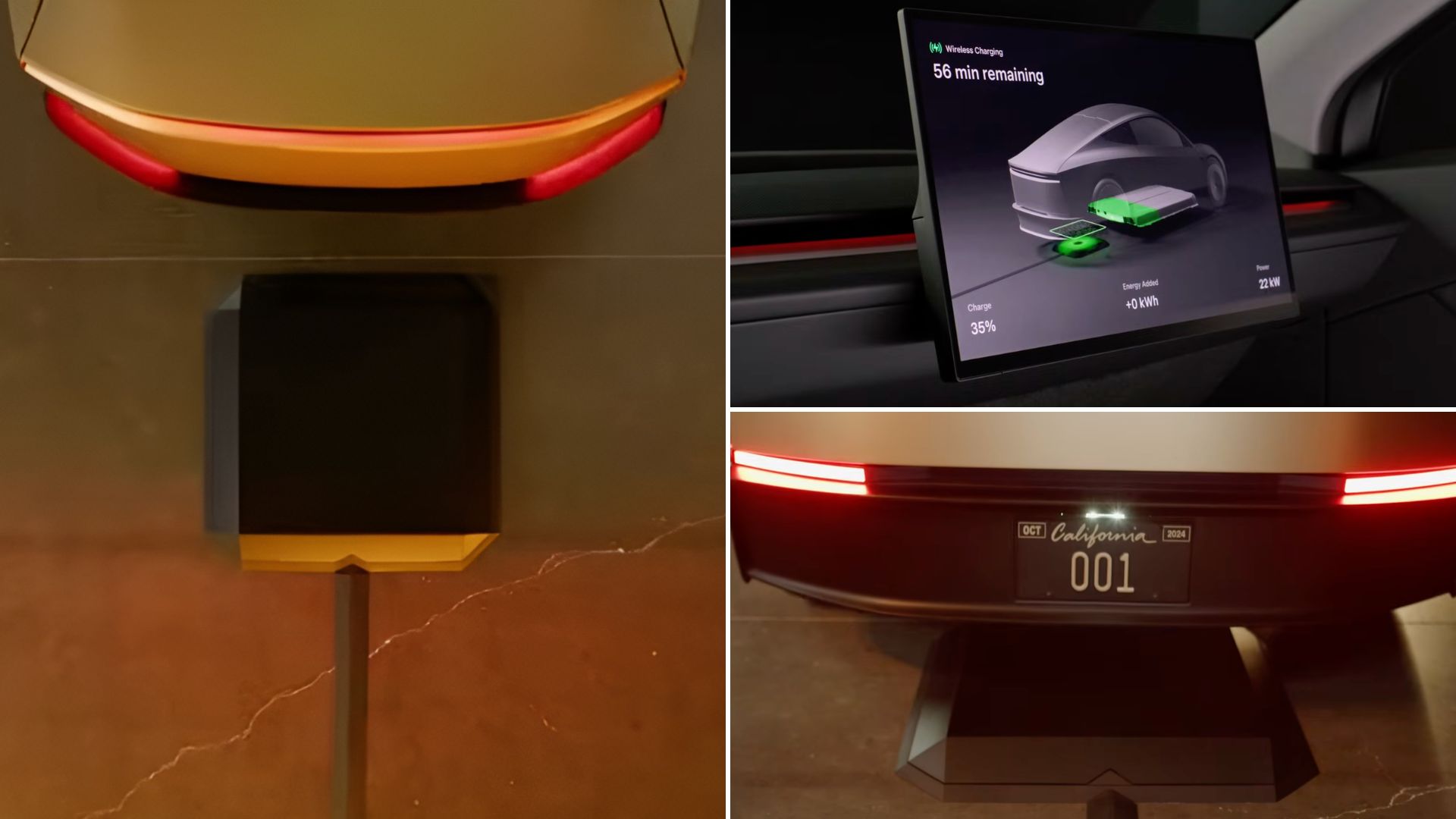
Tesla has secured a key regulatory win as it prepares to roll out its purpose-built robotaxi. The U.S. Federal Communications Commission (FCC) has granted the company a waiver allowing it to use ultra-wideband (UWB) radio technology in a fixed, outdoor wireless charging system designed for its upcoming Cybercab.
The approval, issued February 18, 2026, waives two FCC rules that normally require UWB devices to be handheld and prohibit antennas mounted on outdoor fixed infrastructure. Tesla needed the exception because its wireless charging system uses a ground-level pad that may be installed outdoors to communicate with a vehicle during parking and alignment.
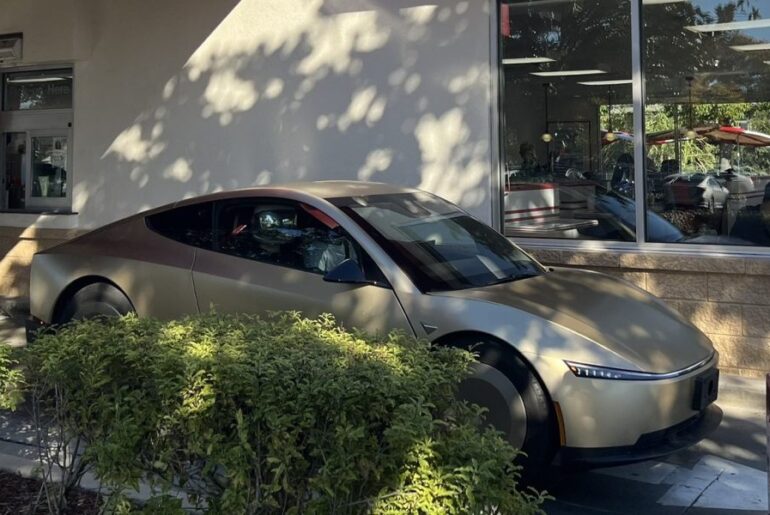
The decision clears an important regulatory hurdle as Tesla moves closer to commercial production of the Cybercab, the first of which recently rolled off the production line at the company’s Gigafactory in Texas. The autonomous two-passenger vehicle, first unveiled in October 2024, is expected to enter broader production ahead of a planned 2027 availability target, with pricing projected at around $30,000.
How Tesla’s UWB charging positioning system works
According to the FCC order, Tesla’s system uses impulse-based UWB radios installed both in the vehicle and in a ground charging pad to enable short-range, peer-to-peer communication. The system is designed to ensure precise vehicle positioning before wireless power transfer begins.
Before UWB activates, the vehicle first establishes a Bluetooth Low Energy connection with the charging pad. Only after that link is verified does the UWB system briefly transmit positioning signals. Once the vehicle is properly aligned over the pad, the UWB session terminates.
The FCC noted that the signals are extremely low-power, confined to the 7.7–8.3 GHz band, and operate for very short durations. Typically under 150 milliseconds per localization sequence. The system also transmits only when sending information to an associated receiver, and communications are limited to a single vehicle and pad at a time.
UWB technology is widely used for short-range precision tracking because it transmits over a very wide spectrum at very low power levels. It has become common on smartphones to support spatial awareness features, secure digital car keys, indoor location tracking, and industrial positioning systems. Its high timing accuracy allows devices to measure distance precisely while minimizing interference with other radio services.
The FCC concluded that Tesla’s implementation would not create a wide-area communication system, a key concern behind the original restrictions on outdoor fixed UWB infrastructure. However, the waiver includes operational limits and coordination requirements near sensitive federal and radio astronomy sites.
A critical piece of Tesla’s robotaxi strategy
The Cybercab represents a departure from Tesla’s existing consumer lineup. It is a two-door, steering-wheel-free vehicle designed exclusively for fully autonomous operation. Tesla has positioned the Cybercab as a scalable, lower-cost entry point into its robotaxi network.
The $30,000 projected price point, alongside wireless charging infrastructure, suggests an ecosystem designed for high fleet utilization with minimal human intervention.
Wireless charging, combined with autonomous navigation, could allow robotaxis to reposition and recharge without manual plug-in operations, a capability that may prove essential for round-the-clock fleet deployment. While further regulatory approvals will be required for fully driverless commercial operations across jurisdictions, the FCC waiver is a step towards enabling the technical infrastructure behind that vision.