

Industry average rises to 204 PP100, highest since 2022 redesign.Plug-in hybrids record 281 PP100, highest among powertrain types.Lexus and Buick lead premium and mass-market dependability rankings.
Long-term vehicle dependability in the United States has reached its lowest level since the study methodology was revised in 2022, according to the 2026 Vehicle Dependability Study released by J.D. Power.
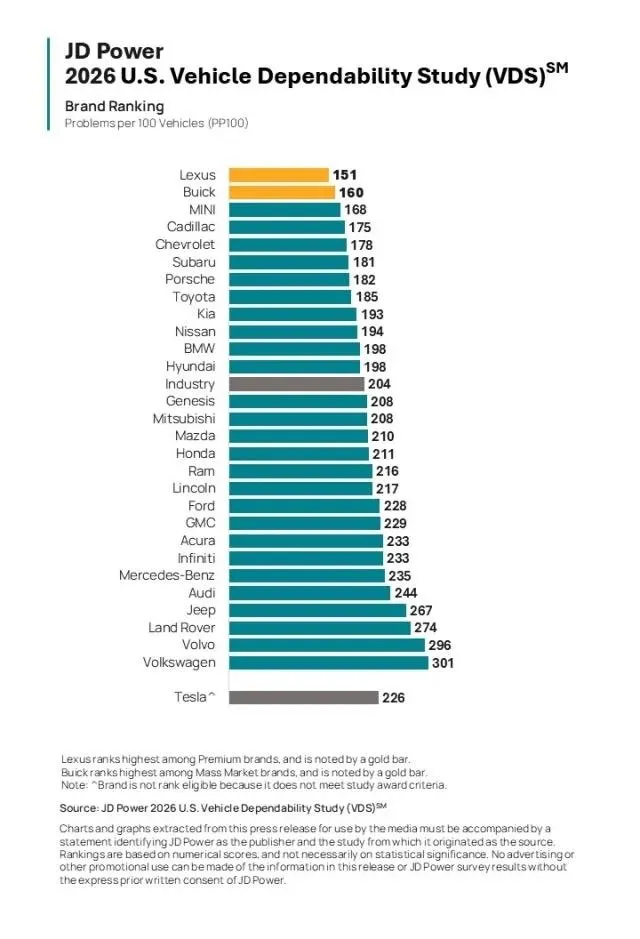
The industry average rose to 204 problems per 100 vehicles (PP100), up two PP100 from 2025. Lower scores indicate better quality. The findings are based on responses from 33,268 original owners of 2023 model-year vehicles after three years in service. The survey was conducted between December 2024 and November 2025.
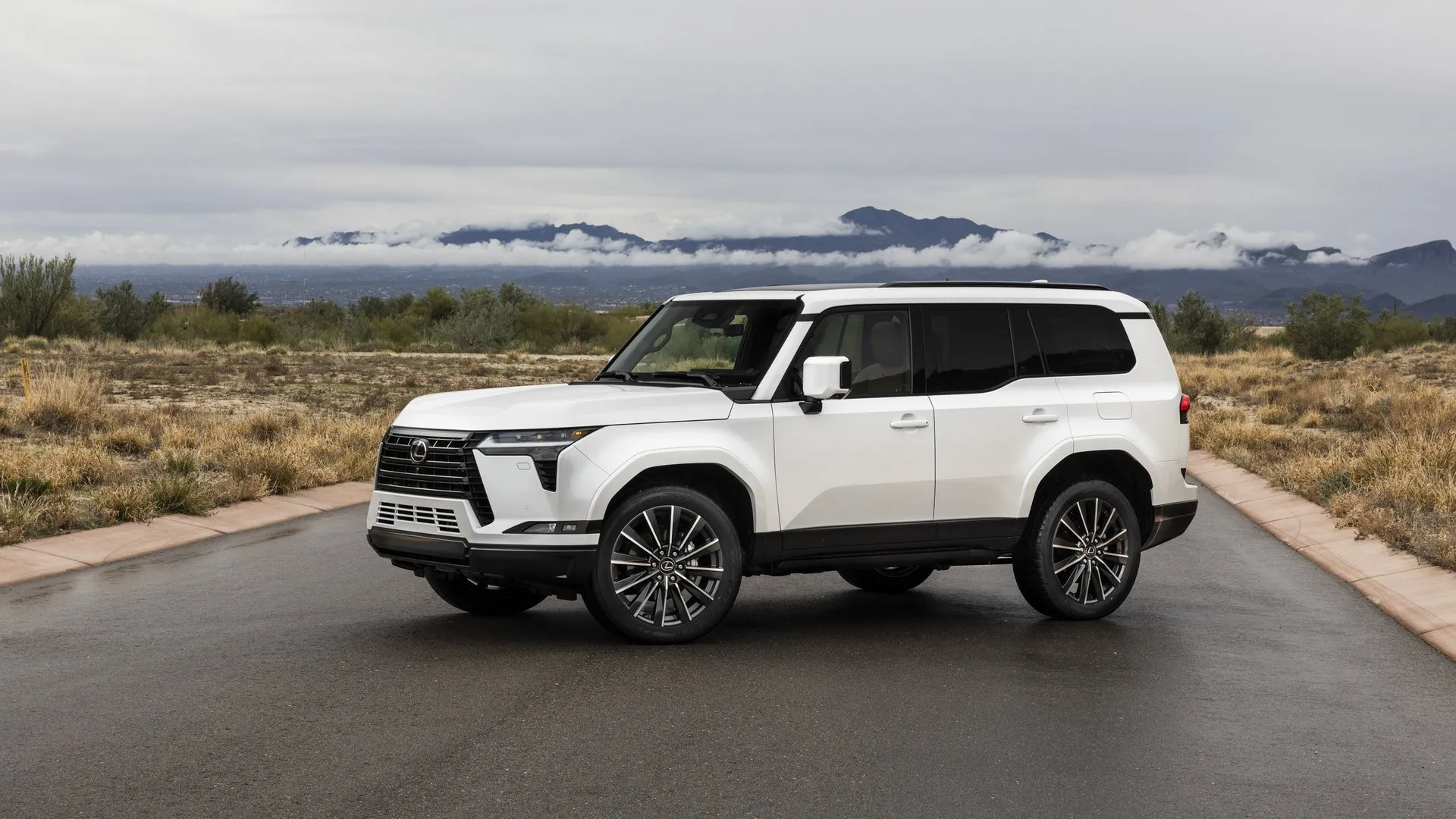 Lexus GX 550 | Photo: Lexus
Infotainment systems generated the highest complaint rate at 56.7 PP100. Exterior-related issues ranked second at 27.5 PP100. Across the nine study categories, technology-related frustrations continued to influence owners’ perceptions more than mechanical component issues.
Mobile phone connectivity remains the most persistent concern. Android Auto and Apple CarPlay integration recorded 8.9 PP100, marking the third consecutive year as the industry’s top reported issue. Built-in Bluetooth systems (5.5 PP100), wireless charging pads (5.1 PP100), and OEM mobile app connectivity (4.7 PP100) further infotainment-related dissatisfaction. Combined, these account for 24.2 PP100, or nearly half of all infotainment complaints.
Software updates are now routine for many drivers, but satisfaction remains limited. Forty percent of owners reported receiving a software update within the past year. Of those, 63% were delivered over the air. Only 27% said the update improved the vehicle, while 58% noticed no meaningful change. Vehicles receiving over-the-air updates recorded a 2.5 PP100 increase in problems, representing nearly a 14% rise.
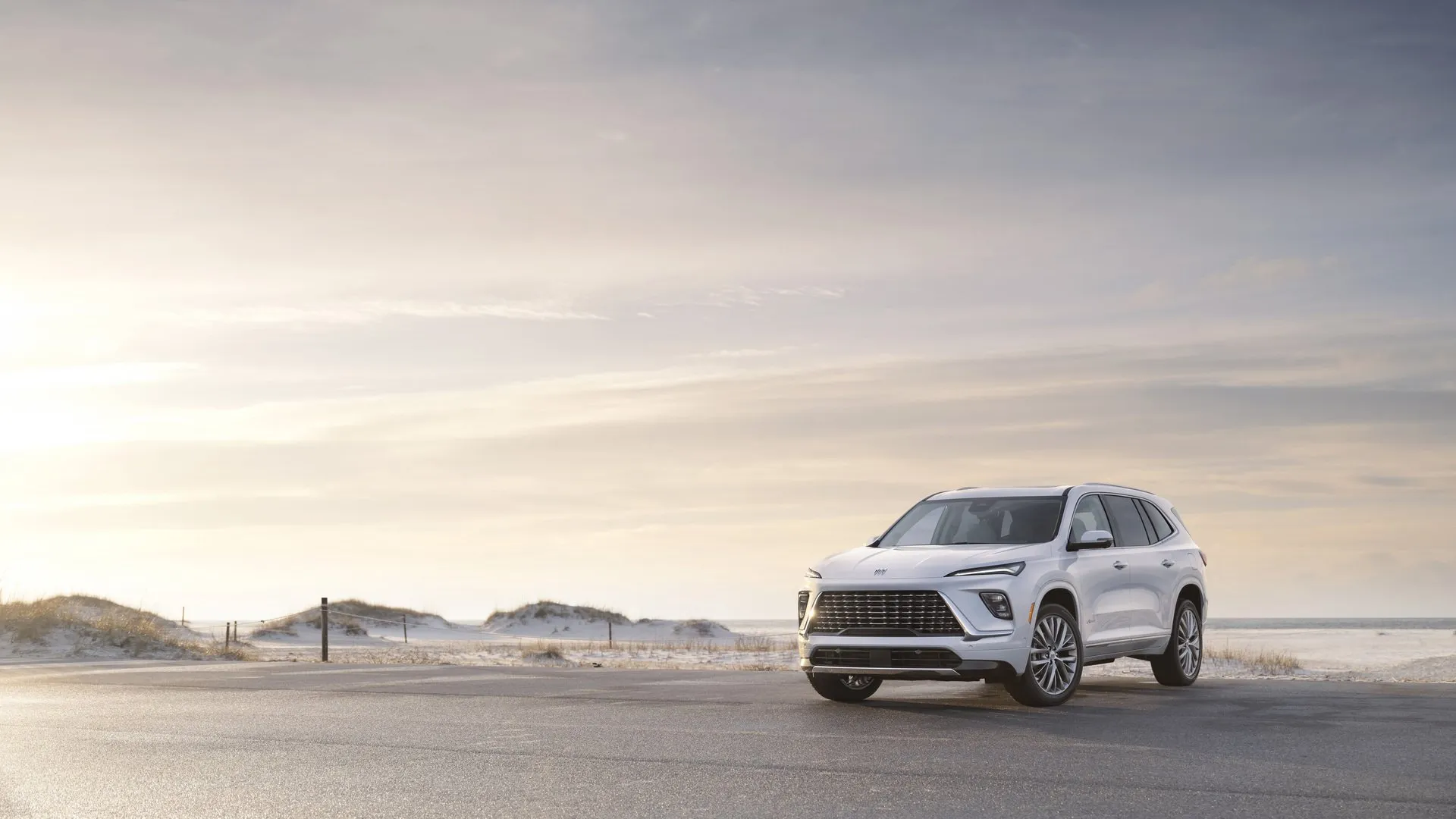 Buick Enclave | Photo: Buick
Premium brands posted a notable year-over-year decline. The premium segment averaged 217 PP100, up eight points from 2025 and 17 PP100 higher than mass-market brands. Premium vehicles underperformed in seven of nine categories, particularly in features, controls and displays, and driving experience. Only powertrain and seat-related categories showed stronger results for premium models.
Electrified powertrains also recorded elevated problem rates. Plug-in hybrid electric vehicles averaged 281 PP100, rising 39 points year over year—the highest among all propulsion types. Battery-electric vehicles increased by 14 PP100 to 237, while conventional hybrids rose by 14 PP100 to 213. Gasoline-powered vehicles improved slightly, declining two PP100 to 198, the lowest among all powertrains studied.
Among premium brands, Lexus ranked highest for the fourth consecutive year with a score of 151 PP100. Cadillac followed at 175 PP100, and Porsche placed third at 182 PP100.
 JD Power Awards | Photo: JD Power
In the mass-market segment, Buick led for a second straight year with 160 PP100. MINI ranked second at 168 PP100, while Chevrolet finished third at 178 PP100.
At the model level, Toyota secured the most awards, including the top overall vehicle, the Lexus IS. Additional award recipients included the Lexus UX, Lexus GX, Toyota Corolla, Toyota Camry, Toyota Tacoma, Toyota Sienna, and Toyota 4Runner.
General Motors Company earned four model-level awards for the Buick Enclave, Cadillac XT6, Chevrolet Equinox, and Chevrolet Tahoe.
Now in its 37th year, the study evaluates 184 specific problem areas across climate, driving assistance, driving experience, exterior, features and controls, infotainment, interior, powertrain, and seats.