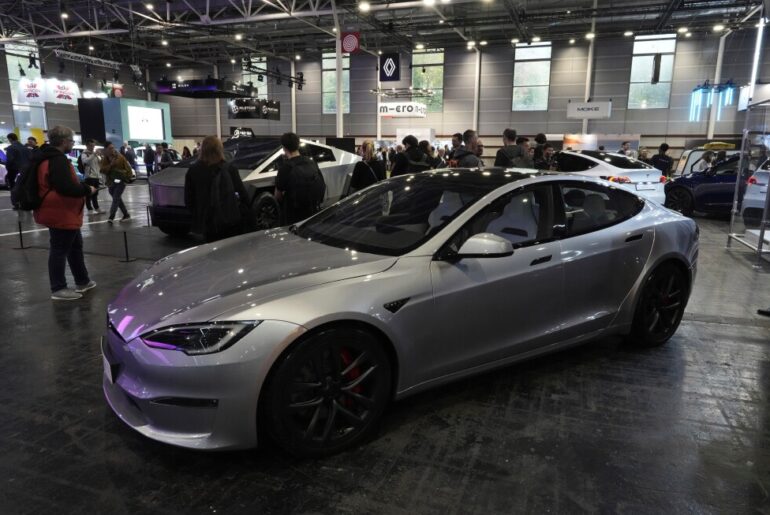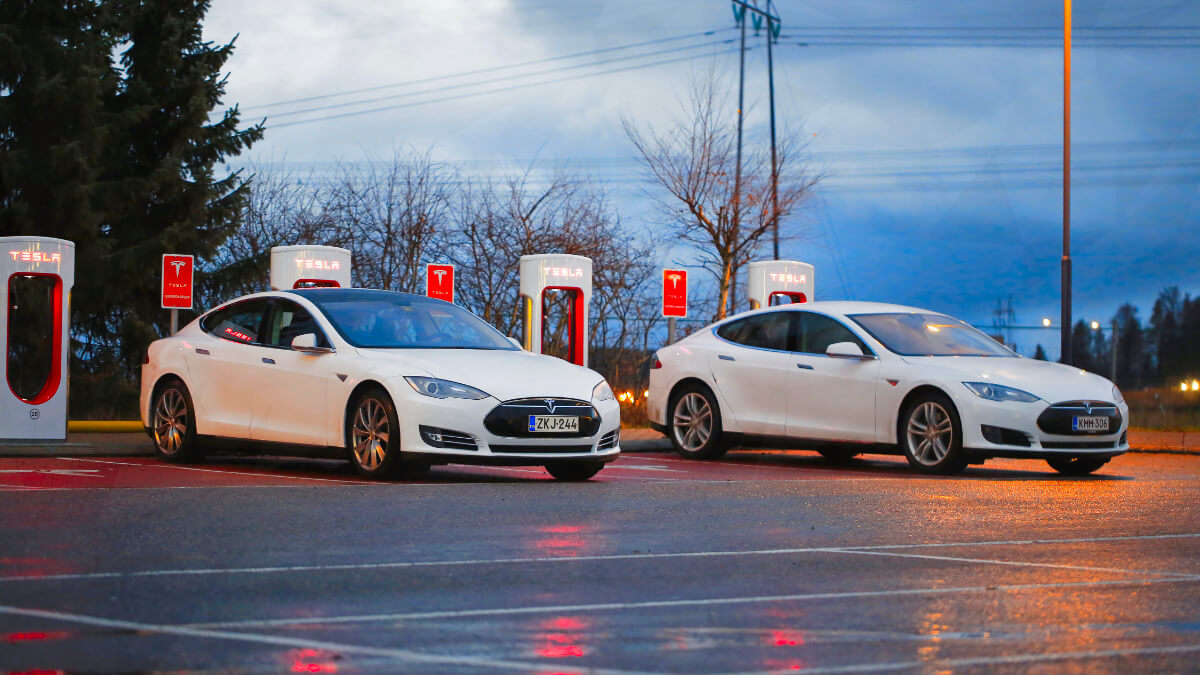
A proposed class action lawsuit alleges that tens of thousands of 2023-present Tesla Model S vehicles are defectively designed with flush-mounted electronic exterior and interior door handles that cannot be opened when the car’s high-voltage battery loses power.
The 36-page Tesla lawsuit charges that the electric vehicle’s electronically activated door handle design renders the Model S “not reasonably escapable and not reasonably rescuable” in the event of a collision that causes a loss of low-voltage power, or an emergency system shutdown, particularly for drivers and passengers attempting to exit the rear of the vehicle.
Should a Model S lose power, the exterior door handles will fail to extend and actuate, meaning the doors cannot be opened from the outside, and the interior door handle latches will also fail to actuate, the suit says.
Importantly, the complaint highlights that the Model S interior rear door handles do not have the same readily accessible manual emergency release mechanism as the interior front door handles. Should a Tesla Model S lose power, the case says, the rear interior door handles can only be opened manually by folding back the carpet below the rear seats to expose the mechanical release cable, which the filing argues is “not reasonably discoverable or usable by an average occupant under emergency conditions.”
Despite a litany of complaints from drivers—and numerous instances of occupants becoming trapped inside the vehicles at issue—Tesla has done nothing to prevent the problem or fix the Model S door handle design, or warn consumers at the time of purchase or lease, the class action lawsuit says.
The suit also contends that 2023-present Tesla Model S vehicles are worth less than consumers paid due to the door handle problems.
Emergency rear door handle release is not easily accessible, class action says
The suit states that although the Tesla Model S front interior doors have a “readily accessible” manual emergency release mechanism, the rear interior doors can be manually released only by a mechanical cable hidden beneath the carpet under the back seats. According to the case, the “no power” procedure to utilize the rear interior door handles has remained the same for the Model S for more than a decade—folding back the carpet below the rear seats to expose the release cable and then pulling the cable toward the center of the car.
However, the class action contends that this design is inherently flawed and potentially dangerous, given that the cables are “not reasonably discoverable” by an average passenger, especially during the panic and stress of an emergency. A passenger would need to be “intimately familiar” with the Model S design to find the emergency release for the rear interior door handles, the case asserts.
“Even though there is a hidden cable underneath the rear seat carpet, if the passenger is unaware of it, [is] unable or does not know how to pull that emergency manual release, there is no way to quickly enter the vehicle from the outside in the instance of a battery failure other than breaking the windows,” the filing stresses.
Additionally, the allegedly defective Tesla door handles pose a significantly higher safety risk for pets, children, the elderly, and individuals with disabilities who may not be able to locate or use the cable, the filing states.
Lawsuit says Tesla failed to warn consumers of door handle defect
The lawsuit contends that Tesla has misled and concealed the door handle design defect from consumers, when the material information should have been “conspicuously” provided through advertising and marketing campaigns, information stickers, placards, or brochures, dealership personnel, social media, and a “full and complete disclosure” through a recall of the affected vehicles.
To add insult to injury, the case goes on, Tesla has “distorted” the value of its vehicles by misrepresenting them as suitable for everyday use, despite the significant safety risks posed by the defective door handles. Per the complaint, every individual who purchased a Tesla Model S from 2023 onward received a vehicle at a higher price and with a markedly lower value than what they were led to believe.
Who is covered by the Tesla Model S lawsuit?
The Tesla Model S class action lawsuit seeks to represent all California residents who purchased and still own, or lease/leased, at least one 2023-2026 model year Tesla Model S vehicle.
How do I sign up for the Tesla door handle lawsuit?
Generally, you don’t need to do anything to join or sign up for a class action lawsuit when it is initially filed. Should the case be resolved with a class action settlement, settlement class members will typically receive written notice of the deal via mail and/or email with instructions on any next steps and details about their legal rights.
Please keep in mind that some class action lawsuits take years to settle.
If you’ve purchased or leased a 2023-2026 Tesla Model S, or just want to stay informed about class action lawsuit and class action settlement news, sign up for ClassAction.org’s free weekly newsletter.
Check out ClassAction.org’s lawsuit list for the latest top class action lawsuits.