IN A NUTSHELL
🔎 Exploring the impact of electric vehicles on energy demand: authoritative analyses conclude electrification will shift load to the power sector, concentrate demand at residential and fast‑charging hubs, and make targeted grid upgrades unavoidable to prevent local congestion.
⚡ Rapid battery and vehicle-cost trends strengthen the argument for rapid uptake: steep declines in pack prices (industry estimates near $115/kWh) lower total cost of ownership and boost the business case for zero‑emission trucks and buses.
🏗️ Infrastructure and operational choices decide whether adoption sticks: prioritizing reliable public charging, depot charging and managed charging for fleets, and investments that address charger uptime and user experience will be decisive.
🏛️ Policy, supply chains and lifecycle governance shape outcomes: coherent standards and incentives, scaled domestic battery manufacturing, and robust recycling and reuse frameworks are required to secure supplies, lower lifecycle emissions and protect equity.
Electric vehicles are redefining the contours of national energy demand, forcing utilities, policymakers and automakers to confront a fast-moving transition. Falling battery costs and expanding model availability have made electrified transport economically viable, yet the shift reshapes load patterns and concentrates demand at key locations. Rapid adoption strains distribution networks and exposes shortfalls in charging infrastructure, while uneven policy landscapes and supply-chain bottlenecks complicate deployment. The result is not only higher electricity consumption but a demand for new operational paradigms: managed charging, smart rates, and vehicle-to-grid services that can turn fleets into grid assets. At the same time, materials constraints and recycling gaps threaten the sustainability gains of electrification unless industrial policy and investment follow. Framing the debate as a simple move from liquid fuel to kilowatt-hours misses the point; the real issue is integrating mobility, power systems and markets so that electrification reduces emissions, lowers costs and enhances resilience. This report examines how those trade-offs are playing out and why decisions made today will shape electricity systems for decades.
Electrification and electricity demand
The shift to electric vehicles (EVs) is often framed as a shock to power systems, but evidence and modeling show a more nuanced trajectory. Projections from energy research groups and national laboratories indicate that additional electricity demand from passenger and commercial EV fleets will be substantial, yet manageable if policymakers and utilities act strategically. Uncoordinated charging will increase peak loads and distribution stress, but managed charging strategies and targeted investments can keep system costs and emissions in check.
Recent technical assessments, such as county-level charging-load projections from the National Renewable Energy Laboratory, underline that the spatial and temporal distribution of charging matters more than headline volume. The NREL analysis (available at docs.nrel.gov) demonstrates that early EV growth concentrates demand in particular neighborhoods and workplace clusters, which creates local transformer and feeder challenges before bulk generation becomes the limiting factor.
At the same time, policy briefs and science notes argue that the net demand impact depends on adoption pathways, vehicle types and charging behavior. For a digestible policy perspective see the Most Policy Initiative science note (mostpolicyinitiative.org), which explains why electrification raises system energy use but also creates opportunities to optimize load shape. If charging is incentivized off-peak and combined with distributed renewables, EVs can increase load factors and reduce average system costs. Congressional and agency reports underscore this point; the Department of Energy’s assessments of grid impacts (see Congressional Report: EV Grid Impacts) caution that planning must align generation, transmission and distribution upgrades with anticipated EV deployment to avoid costly retrofits later.
Therefore, the argument is clear: EV-driven demand growth is real but predictable. The policy choice is binary — invest early in managed charging, transformers and smart meters, or accept higher long-term costs and reliability risks. That is an avoidable policy failure, not an engineering inevitability.
Charging infrastructure and public confidence
Charging infrastructure is the visible battleground for EV acceptance. Consumers respond to reliability, convenience and experience; surveys and market studies repeatedly show that public charging performance and availability strongly influence purchase decisions. Public charging reliability problems—broken DC fast chargers, long waits, and confusing payment systems—erode consumer confidence and slow adoption.
Charging is not only a hardware deployment challenge; it is an operational and customer-experience problem. Reports from industry analysts and driver surveys highlight that fast-charger uptime, location density and consistent user interfaces are decisive. Recent work by market researchers and consultancies documents how large corporate operators — for example, major automaker alliances and platform providers — are shaping expectations by building coordinated charging networks; coverage of strategic moves such as the Ford–Volkswagen cooperation illustrates how automakers are trying to normalize standards and scale deployment (see Ford and Volkswagen sign electric car deal).
Public investment, private deployment and regulatory alignment all must converge. Policymakers should prioritize corridors, curbside charging for people without off-street parking, and reliability metrics for public DC fast charging. Network uptime targets and interoperable payment systems should be contractual requirements for publicly funded deployments. Evidence also shows that targeted investments in freight and fleet depots—where charging can be concentrated and controlled—yield outsized benefits for commercial electrification and public perception.
Finally, technological and business-model innovations — from wireless charging trials to mobile charging services — will diversify options. Peer-reviewed and industry sources weigh trade-offs: dynamic wireless pilots can reduce friction but require new standards, while battery-swap models scale rapidly in some markets but need different supply-chain architectures. Addressing the practical frustrations of drivers is a precondition for mainstreaming EVs; otherwise the promise of decarbonized transport will stall at the curb.
Heavy-duty electrification and depot charging
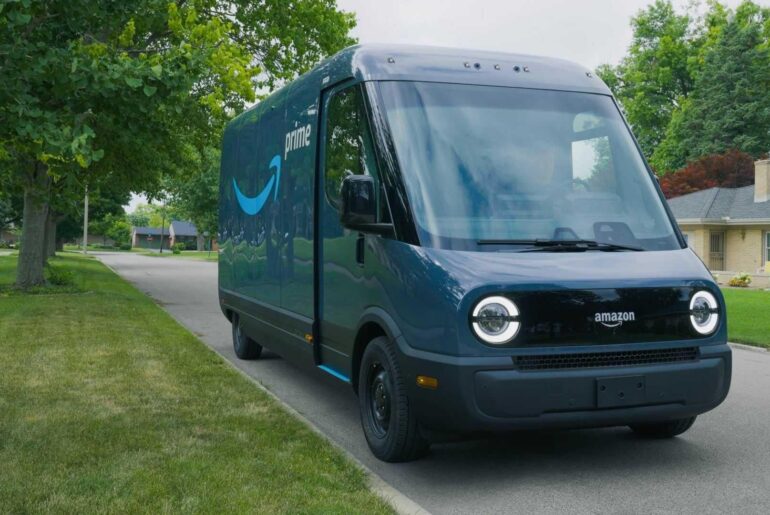
Electrifying buses, delivery vans and heavy trucks changes the energy equation. These vehicles concentrate energy use and charging events in depots and terminals, which creates opportunities for optimized operations — but also concentrated demands that stress local distribution networks. Researchers and industry groups argue that properly designed depot charging programs can decarbonize freight with lower system cost than distributed fast charging, because charging can be managed, scheduled and co-located with on-site storage and generation.
Depot electrification is both a technological and logistical transformation: it shifts the problem from random roadside charging to planned, high-power, grid-connected infrastructure at specific nodes. Studies on heavy-duty electrification emphasize the role of charger power, transformer upgrades, and load management. Modeling shows that when fleets adopt off-peak charging, integrate on-site solar or batteries, and stagger charging start times, distribution impacts are minimized and valuable grid services can be delivered.
Empirical market updates from CALSTART and industry pilots illustrate progress and pitfalls. Fleet deployments show that total cost of ownership for electric buses and last-mile trucks is approaching parity with diesel in many settings, particularly when maintenance savings and fuel-price volatility are considered. Yet electrification demands investments in high-power chargers and often requires utility-led upgrades. Failing to coordinate utility planning with fleet depot siting risks long lead times and cost overruns.
Policy interventions matter: grant programs, time-of-use rates and vehicle procurement rules can rapidly accelerate depot electrification. At the same time, manufacturers are developing higher-energy-density batteries and modular charging solutions to meet operational requirements. Electrifying heavy-duty vehicles will transform local electricity demand profiles, but it also offers one of the clearest pathways to achieving measurable urban air-quality and climate gains.
Battery technology, supply chains and lifecycle
Battery performance and supply chains determine both the pace of EV adoption and the scale of the energy transition. Rapid declines in lithium-ion pack prices have catalyzed adoption, while breakthroughs in cell chemistry and manufacturing promise further gains. Industry reporting and peer-reviewed studies highlight a mix of optimism and caution: novel anode materials and cell designs can dramatically cut charging times and extend range, but they also raise questions about environmental impacts and material sourcing.
Technological breakthroughs attract headlines — for example optimistic reporting on new anodes that could deliver 300 miles in minutes — yet every acceleration in performance must be scrutinized for lifecycle and supply-chain consequences. Coverage of such advances (see reporting on new anode claims at energy-reporters) captures the tension between performance and sustainability. At the same time, the industry is seeing diversity in chemistry: lithium-iron-phosphate (LFP) adoption is rising for cost-sensitive segments, while nickel-rich chemistries target higher energy density.
Supply-chain resilience is a strategic concern. National strategies, investment flows and industrial policy are reshaping manufacturing geography. Policymakers in North America and Europe emphasize domestic capacity, recycling and regulatory frameworks to secure critical minerals and battery processing. Academic studies and policy reports argue that recycling and second-life uses must scale alongside manufacturing to avoid material bottlenecks and environmental burdens.
Meanwhile, real-world achievements — from Chinese makers pushing range records to collaborative OEM deals — show how competitive dynamics accelerate R&D and production. Reports of extreme-range breakthroughs (for instance, media on recent Chinese range and charging claims) should be evaluated against peer-reviewed lifecycle studies and real-world testing. Battery advances will keep lowering costs, but long-term sustainability depends on supply-chain strategy, effective recycling, and honest accounting of environmental trade-offs.
Grid integration, managed charging and vehicle-to-grid potential
Integrating millions of EVs into electricity systems is an operational challenge and an economic opportunity. Managed charging and vehicle-to-grid (V2G) technologies can transform EVs from passive loads into flexible resources, providing balancing services, reducing curtailment of renewables, and improving resilience. Energy-system analyses show that coordinated charging can lower system peak, reduce wholesale prices and defer distribution upgrades when deployed at scale.
Managed charging is not hypothetical; it is already delivering value in pilots and utility programs worldwide. The strategic steps are clear: deploy smart chargers, incentivize off-peak charging through tariffs, and develop market mechanisms that reward flexibility. Federal strategy documents and lab studies make the technical and economic case for managed charging — and emphasize the need for interoperable standards and consumer protections.
Vehicle-to-grid adds another layer. While V2G raises battery-wear concerns, recent empirical work and economic models suggest that aggregated V2G can be remunerative for owners and provide grid-scale services if compensation covers degradation and convenience costs. Social and behavioral research shows that user engagement and simple, transparent incentives are prerequisites for broad participation.
Charging modes and relative grid impacts
Charging mode
Typical power
System impact
Level 1 (home)
~1.4 kW
Low per-vehicle; aggregated overnight load manageable with smart tariffs
Level 2 (public/residential)
3–11 kW
Moderate; timing matters, benefits from managed start times
DC fast
50–350+ kW
High local impact; needs site upgrades and reliability standards
V2G
Bidirectional, often 3–20 kW per vehicle
Potential system value via aggregation, contingent on compensation for battery use
Policy and market design must align: time-varying prices, aggregator access to markets, and consumer-friendly interfaces will determine whether EVs are a grid burden or an asset. What regulators and utilities choose now — permissive markets for managed charging and clear rules for V2G compensation — will decide whether electrification reduces system costs or merely shifts burdens.
Key Takeaways on the Impact of Electric Vehicles on Energy Demand
The rise of electric vehicles (EVs) is unambiguously shifting transportation energy consumption from liquid fuels to electricity, creating a sustained uplift in energy demand. This shift is not merely incremental: light-, medium- and heavy-duty electrification together imply a structural change in load profiles and peak requirements. Yet the evidence suggests that higher demand is not an inevitable system stressor; instead, it is a policy and planning challenge. With falling battery costs and accelerating fleet deployment, electrification becomes economically feasible, but only if accompanied by deliberate investments in charging infrastructure and grid modernization.
Managing where and when EVs charge is central to avoiding costly network reinforcement. Strategies such as managed charging, depot-level planning for commercial fleets, and vehicle-to-grid (V2G) services can convert additional demand into a flexible resource that reduces peak strain and integrates variable renewables. Empirical studies and operational pilots show that smart control and aggregator participation materially lower system costs and can even reduce consumer rates when scaled, so arguments that electrification necessarily escalates electricity costs are short-sighted.
Supply-chain and lifecycle factors complicate the calculus: raw-material constraints, battery recycling, and manufacturing geography affect resilience and the environmental footprint of electrification. Industrial policy, targeted incentives, and standards for recycled content and battery sustainability will determine whether EV deployment delivers net decarbonization. Equity also matters—without subsidized access to home and public charging, adoption will concentrate and leave marginalized communities behind.
Arguably, increased electricity demand from EVs should be framed as an opportunity for decarbonization rather than a problem. Coordinated policy, investments in grid flexibility, expansion of reliable public fast-charging, and domestic battery value-chain development can align load growth with renewable supply and resilience goals. Failure to act will invite bottlenecks and distributional harms; acting decisively turns transport electrification into a scalable lever for a cleaner, more affordable energy system.
FAQ: Examining How Electric Vehicles Reshape Energy Demand
Q: What is the overall impact of electric vehicles on national electricity demand?
A: The rise of EVs undeniably raises electricity demand, but the impact is both predictable and manageable: most additional load occurs during predictable hours, enabling planning and investment to absorb growth without catastrophic grid failure. With falling battery pack costs and accelerating vehicle deployment, planners must treat EVs as a long-term, sizeable new load rather than an unpredictable shock.
Q: Will widespread EV charging overload local distribution networks?
A: Uncoordinated charging can stress distribution transformers and cause congestion, but evidence shows targeted investments and operational solutions — especially managed charging and time-of-use rates — prevent most overloads. The debate is not whether the grid can supply EVs but how to prioritize upgrades versus smart operational changes that unlock capacity without heavy capital spending.
Q: How much new charging infrastructure is required, and where should it be prioritized?
A: Substantial expansion of both residential and public infrastructure is required, with priority where people live, work, and fleets operate. The strategic choice is to prioritize reliable depot charging for commercial fleets and abundant residential access in multi-unit dwellings, because these investments deliver the highest utilization and largest emissions reductions per dollar spent.
Q: Do EVs actually reduce greenhouse gas emissions when you count production and electricity generation?
A: Yes: on a life-cycle basis EVs typically cut emissions compared with internal-combustion vehicles, and their advantage increases as grids decarbonize. Manufacturing and battery material impacts are real, so policy must combine clean electricity rollout, cleaner manufacturing, and improved battery recycling to maximize net climate benefits.
Q: What about electrifying heavy-duty transport — trucks and buses?
A: Electrification of buses, delivery vans and many regional trucks is feasible and already scaling where depot charging and megawatt-class chargers are deployed. These vehicles present larger grid impacts and require coordinated planning, but declining battery costs and successful fleet pilots demonstrate that heavy-duty electrification is a practical next frontier, not an unattainable ideal.
Q: Can EVs become assets to the grid rather than merely loads?
A: Yes. Through vehicle-to-grid (V2G) and aggregated managed charging, EVs can provide frequency regulation, peak shaving, and resilience services. Concerns about battery degradation exist, but recent analyses indicate many services can be delivered with limited extra wear; policy and compensation frameworks should reflect the value EVs provide to the power system.
Q: How do battery costs and supply chains shape the pace of electrification?
A: Rapid declines in battery pack prices have been the single most powerful driver of EV adoption; as prices approach parity, adoption accelerates. However, constrained supplies of critical materials, concentrated manufacturing, and recycling shortfalls can slow or distort adoption unless addressed by targeted industrial policy, diversified sourcing, and scaling of recycling and second-life markets.
Q: Are there distributional or equity risks as EVs scale?
A: Absolutely. Access to home charging, allocation of rebates, and placement of public chargers can advantage wealthier or better-served communities. If policymakers and utilities do not intentionally direct resources toward multi-unit housing, underserved neighborhoods, and fleet conversions in disadvantaged areas, the transition will deepen inequities rather than reduce them.
Q: Which policies most effectively accelerate benefits while limiting harms?
A: Policies that combine clear vehicle standards, targeted incentives for fleets and disadvantaged communities, funding for charging infrastructure, and support for local grid upgrades yield the best outcomes. Regulatory certainty is also crucial: inconsistent signals deter private investment and slow deployment, whereas well-aligned mandates and incentives mobilize manufacturing and charging deployment simultaneously.
Q: What operational strategies should utilities and fleet operators adopt now?
A: Operators should prioritize smart charging, time-of-use pricing, fleet energy management, and coordination with distribution planners. Investing in pilot projects for high-power depot chargers, aggregator relationships, and grid-interactive charging systems will unlock value and prevent costly retrofits later; the choice to act proactively is both fiscally and operationally superior to reactive upgrade cycles.