Automakers took a big gamble on EVs and lost big, to the tune of $50 billion.
Carmakers are scrambling to rejuggle product plans and production lines.There are still many EVs available to buy, with 72 models on sale in the US.
It sure seemed like electric cars were going to be the next big thing. So automakers gambled big on them, rejiggering production lines and product plans to address what “everyone” thought would be a massive shift to electric power and the end of the gasoline age.
But while there is still a demand for electric cars—somewhere between 7% and 10% of the market in the US—and while markets outside the US are sporting a much higher demand for EVs, particularly China and to a somewhat lesser extend Europe, customers in the US appear to still largely want good old gasoline, environment be damned.
Related Story
Evidence the massive write-downs of investments in EV factory capacity, vehicle programs, and battery manufacturing that have strained the balance sheets of GM, Ford, Stellantis, and Honda in recent months, as reported by industry trade journal Automotive News.
Those losses, or “charges” as they’re listed in business parlance, total $50 billion, ranging from what is expected to be $1.9 billion by the end of March for Honda to a whopping $26 billion for Stellantis, the latter which didn’t specify how much of what it called a “reset of its business” was EV-related.
Carmakers aren’t abandoning EVs altogether, there’s still a market for them, it’s just nowhere near the total takeover they thought it would be.
Dodge
Automakers were driven by what they saw as increasing government demands for zero-emission vehicles, as well as increasingly impressive electric offerings from China (which still doesn’t have a real presence in the US), combined with what looked like increasing market share gobbled up by Tesla and, to a lesser extend, Rivian and Lucid.
But the high cost of EVs, the very real range anxiety drivers feel on longer trips, and the lack of a viable infrastructure charging network—and for some just the fear of change— meant the number of buyers who committed to EVs when it came time to sign on the dotted line were fewer than one in 10.
Losing the Buzz
Buyers registered 1.3 million EVs out of over 16 million light vehicles sold in the US in 2025, for a 7.8% share of the market, a figure that was down for the first time from 8% in 2024, according to S&P Global Mobility data reported by Automotive News.
Here are the biggest hits:
GM took more than $7 billion in EV-related charges for 2025, and in January said it expects to take a lesser amount in such charges this year, according to Automotive News. The automaker canceled its Chevrolet BrightDrop electric commercial van and repurposed a planned electric pickup plant near Detroit to instead build gasoline trucks. The Chevy Bolt EV, which peaked at over 62,000 sales in 2023, will be canceled in 2027. The Bolt faced a massive recall due to battery problems in 2020-2021.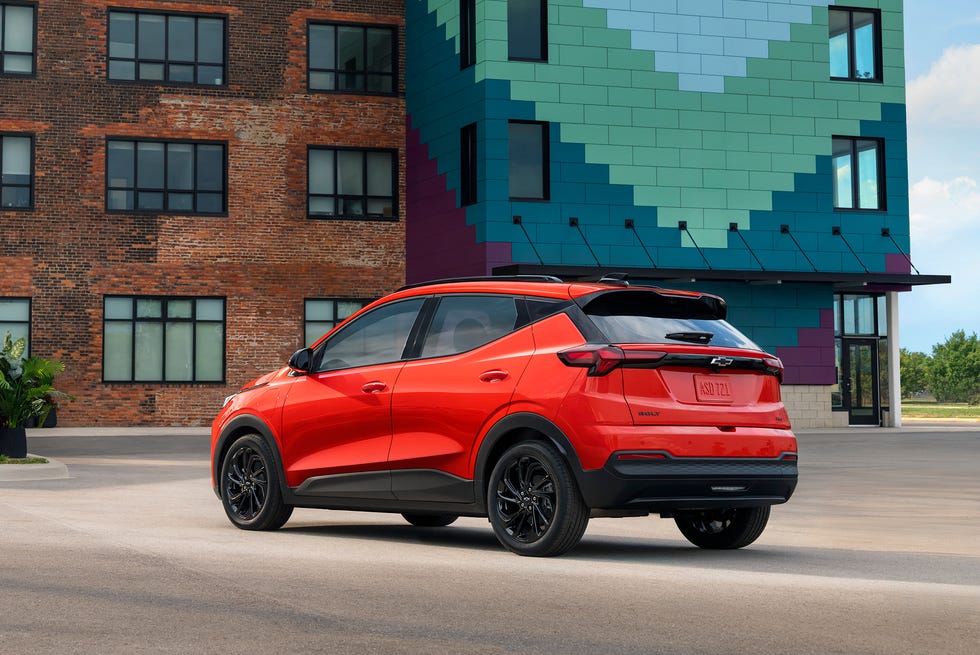 Chevrolet
2027 Chevy Bolt EV.
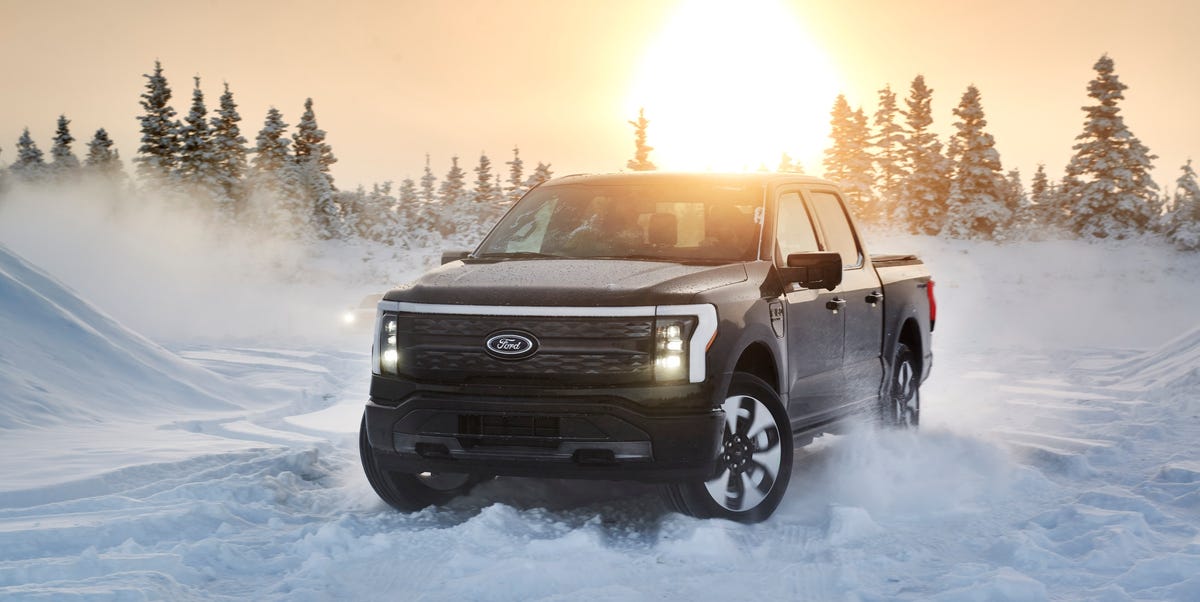
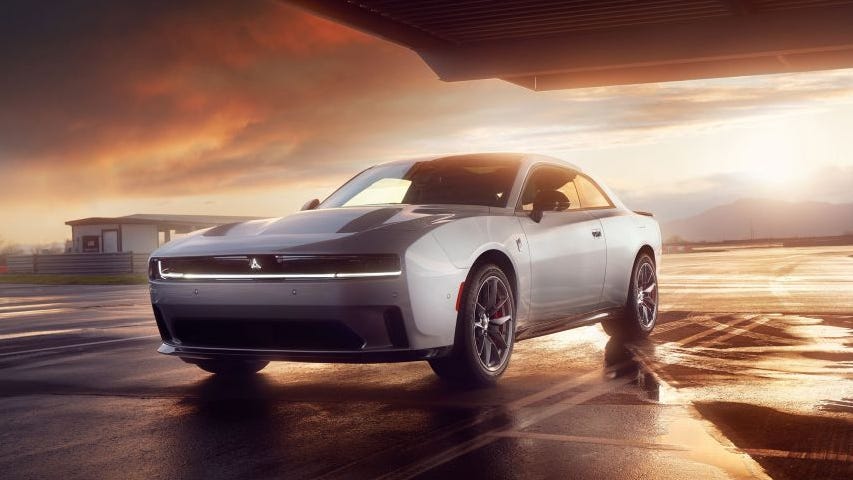
Ford will have posted almost $21 billion in charges through 2027, and canceled its all-electric F-150 Lightning in December.Stellantis, parent company of Chrysler, Dodge, Ram, et al., previewed $26 billion in charges February 6 ahead of releasing its full 2025 financial results later in the month, Automotive News said. The charges include $17.5 billion for canceled vehicle programs and platform impairments and $2.5 billion for reworking its EV supply chain. Most of the losses occurred in the US, while Europe continues to regulate emissions and will support a migration to electric vehicles. The US government seems to be eliminating most government incentive programs, adding to the changes in product offerings.Honda on February 10 said its EV write-offs tallied $1.7 billion in the nine months ended December 31 and likely will grow by the end of its fiscal year in March. Honda said it is negotiating compensation for GM as it winds down the Honda Prologue and Acura ZDX EV programs the two automakers co-developed.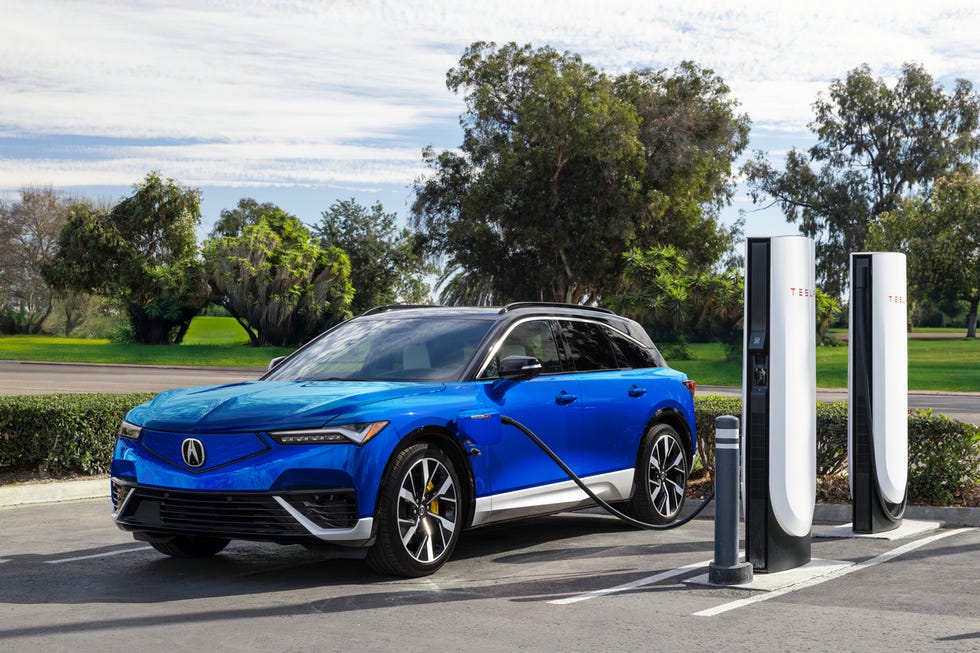 Acura
Acura
The Acura ZDX went away after just one model year.
This doesn’t mean carmakers in the US are abandoning electric vehicles altogether. Here are the 2026 EVs available for sale in the US:
Audi A6 e-tron, e-tron GT, Q4 e-tron, Q6 e-tron BMW i4, i5, i7, iXCadillac Optiq, Lyriq, Vistiq, Escalade IQ, CelestiqChevrolet Bolt EV, Equinox EV, Blazer EV, Silverado EVFiat 500eFord Mustang Mach-E, E-TransitGenesis GV60, Electrified GV70GMC Hummer EV Pickup, EV SUV, Sierra EVHonda PrologueHyundai Kona Electric, Ioniqs 5, Ioniq 6, Ioniq 9Jeep Wagoneer S, ReconKia EV6, EV9, Niro EVLexus RZLotus EletreLucid Air, GravityMaserati GranTurismo, GranCabrio Folgore, Grecale FolgoreMercedes-Benz EQE, EQE SUV, EQS, EQS SUV, eSprinter, G580 with EQ TechnologyMini Countryman ElectricNissan LeafPolestar 3, 4Porsche Macan Electric, TaycanRam ProMaster EVRivian R1S, R1T, Commercial VanRolls-Royce SpectreSubaru SolterraTesla Cybertruck, Models S, 3, X, YToyota bZVinFast VF8, VF9Volkswagen ID.4, ID.BuzzVolvo EX30, EX40, EX90
So, despite the big hit EVs have taken recently, there are over 70 of them listed above, for sale in the US. They are still in showrooms and you can still buy them. We recommend the Taycan or Spectre, but feel free to choose.

Mark Vaughn grew up in a Ford family and spent many hours holding a trouble light over a straight-six miraculously fed by a single-barrel carburetor while his father cursed the Blue Oval, all its products and everyone who ever worked there. This was his introduction to objective automotive criticism. He started writing for City News Service in Los Angeles, then moved to Europe and became editor of a car magazine called, creatively, Auto. He decided Auto should cover Formula 1, sports prototypes and touring cars—no one stopped him! From there he interviewed with Autoweek at the 1989 Frankfurt motor show and has been with us ever since.