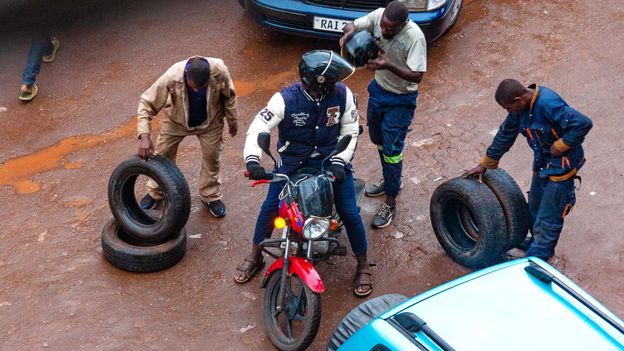
“Depending on what the grid mix is [the proportionate shares of a power grid’s energy sources], our e-bikes eliminate 75% to 100% emissions of greenhouse gases every year,” he says. A 100% cut would require an entirely renewable energy system, but still, Ampersand says the 2,750 bikes it currently has in the country curb about 7,000 tonnes of emissions a year.
A Rwandan government official who spoke to the BBC confirmed these figures. “As of March 2024, Rwanda has about 4,800 electric motorcycles in operation,” the official says. “According to the global average, each bike can cut down 2.6 tonnes of carbon dioxide every year, but the reduction can differ based on renewable energy in the grid.” Though the government hasn’t quantified the related overall carbon emissions, replacing gas motorcycles is already reaping climate benefits for the East African country.
The startups are also helping to cut down costs for both taxi motorcycles and delivery companies, the primary target market for these products. “I can confirm that an e-bike sells for about the same price as a traditional gas-powered bike on average [about £880, or $1,168] without the battery. But recharging them takes less than half of the cost of purchasing fuel for the same distances,” Kama says. To reduce the upfront cost, riders can choose to retrofit old gas-powered bikes with an electric engine, apply for loans or rent batteries. Renting is becoming the most popular option, he adds.
“A lot of the finance providers offer cheap credit to purchases of our electric motorbikes because we separate the cost of the battery. It works on a pay-as-you-go basis,” Whale says. “The net result is that the customers end up enjoying lower interest rates and the cost of the bike ends up being the same or even cheaper than the conventional petrol bike.” Ampersand says its riders save about $400 to $750 (about £305 to £572) yearly on their e-bikes.
Rwanda’s power distribution problem
Africa has never been at the forefront of stable electricity distribution, yet some countries are recording more progress than others, particularly in East Africa. In Rwanda, concerted efforts by the government have seen a consistent rise in power distribution across the country over the past decade, though promised developments don’t always match reality.