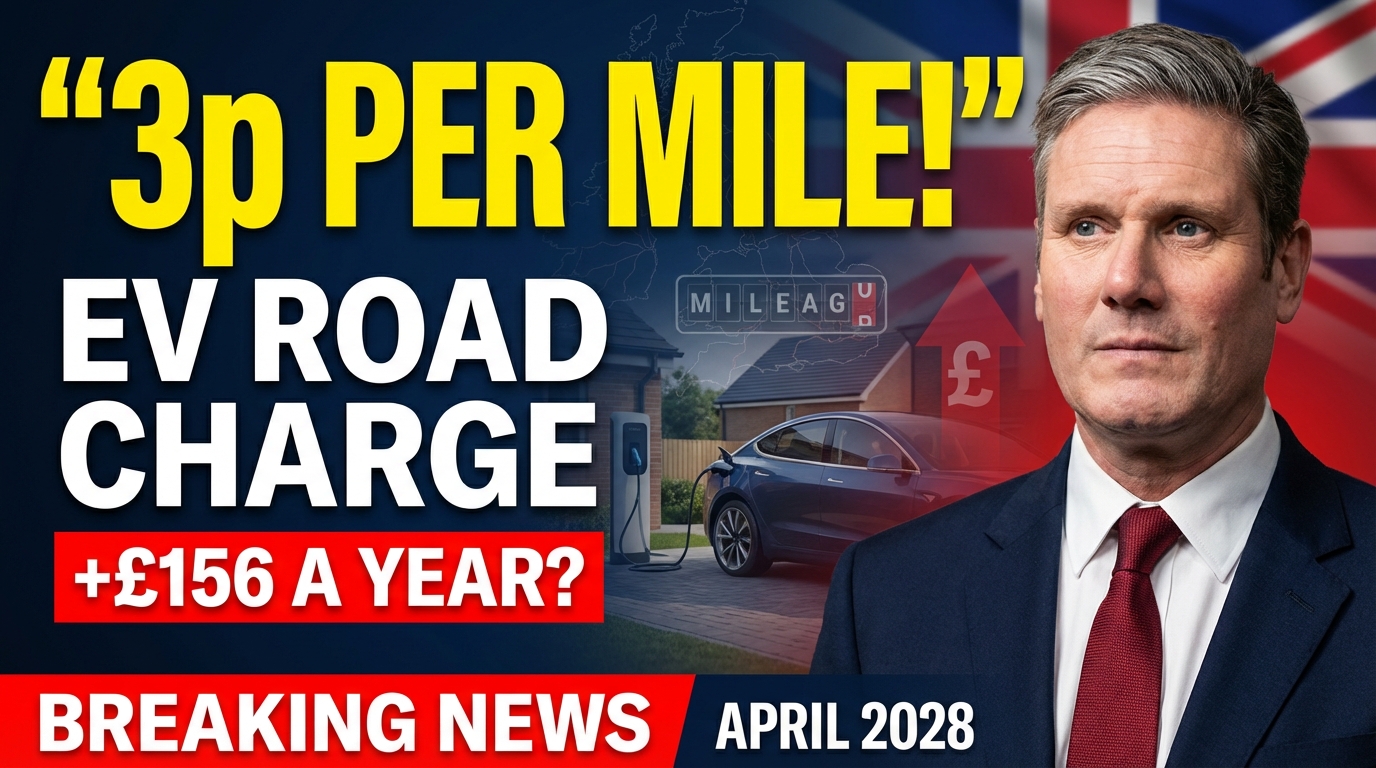
A proposed 3p-per-mile charge for electric vehicles could see some drivers paying an additional £156.51 per year when the scheme is introduced in April 2028, according to new analysis of government data.
The research, conducted by The Electric Car Scheme, suggests that drivers in rural areas and certain regions will face higher annual costs than those in major urban centres. The findings highlight how a flat-rate road pricing model may affect households differently depending on where they live and how far they travel.
Charge
Under the proposed system, electric vehicle drivers would pay 3 pence for every mile driven. The policy aims to replace fuel duty revenue as more motorists transition from petrol and diesel vehicles to electric cars.
While the rate appears modest, total annual costs vary significantly based on driving patterns. Rural residents, who often travel longer distances due to limited public transport, would typically incur higher charges.
For example, drivers in smaller rural areas near major towns and cities would pay an average of £156.51 per year. By contrast, urban drivers near major towns would pay around £76.02 annually.
Rural Impact
The analysis indicates that rural communities are likely to bear a greater financial burden under the scheme. Travel distances tend to be longer, and reliance on private vehicles is higher where bus and rail networks are less accessible.
Average annual costs by area type are shown below:
Area TypeAnnual CostSmaller Rural (near town/city)£156.51Smaller Rural (further away)£143.01Larger Rural (further away)£140.13Larger Rural (near town/city)£128.37Urban (further away)£96.69Urban (near town/city)£76.02
The data suggests that those living in smaller rural areas near major towns would pay more than double the annual amount faced by urban drivers close to city centres.
Regional Impact
There is also notable variation between UK regions. Drivers in the South West are projected to pay the highest average annual amount at £110.25. The East Midlands and East of England follow closely.
London drivers, by contrast, would pay the lowest average annual cost at £33.09, reflecting shorter average journeys and wider public transport availability.
Regional averages are outlined below:
RegionAnnual CostSouth West£110.25East Midlands£105.09East of England£104.55South East£98.85Yorkshire and the Humber£98.82West Midlands£97.14North West£83.79North East£82.20London£33.09
Drivers in the North East and North West would pay less than many other regions but still more than double the average cost faced by London motorists.
Industry View
Thom Groot, chief executive of The Electric Car Scheme, said the findings raise questions about fairness and policy design.
He noted that with nearly two million electric vehicles currently on UK roads and numbers expected to more than triple by 2028, the proposed scheme must address concerns around privacy, regional fairness and public acceptance.
He argued that encouraging EV uptake requires financial incentives rather than additional charges. However, he also maintained that even with the proposed road pricing, electric vehicles are likely to remain cheaper to run than petrol and diesel cars.
Policy Context
The proposed pay-per-mile model reflects a broader policy challenge. As fuel duty revenues decline due to the shift toward electric vehicles, the government is exploring alternative ways to fund road infrastructure and transport services.
A flat national rate offers administrative simplicity but may produce uneven effects. Drivers in rural areas often have fewer alternatives to car travel, making distance-based charging potentially more burdensome for those communities.
At the same time, electric vehicles continue to offer lower maintenance and fuel costs compared with conventional cars. Industry representatives argue that, even with road pricing, EVs remain a cost-effective and environmentally beneficial choice.
Outlook
The 3p-per-mile charge is not due to take effect until April 2028, leaving time for consultation and potential adjustments. Policymakers may face pressure to consider regional or rural adjustments to address disparities highlighted by the analysis.
For now, prospective car buyers may weigh long-term running costs alongside environmental considerations and evolving tax policies. While the proposed charge could increase annual expenses for some drivers, the overall financial picture for electric vehicle ownership will depend on mileage, location and broader transport policy developments.
FAQsWhen does the 3p charge start?Who pays the most?
Drivers in smaller rural areas.
Is it only for EV drivers?
Yes, the proposal targets EVs.