The automotive powerhouse that is China looks set to ban yet another controversial car technology, this time putting ‘yoke’ steering wheels in its sights.
As reported by Chinese publication Autohome, China’s Ministry of Industry and Information Technology (MIIT) has drafted new legislation which would effectively make yokes impossible to comply with vehicle safety regulations.
According to the new proposal, steering wheels would need to be tested for the driver’s head impacting them at 10 points around the wheel, such as the “midpoint of the weakest area” and the “midpoint of the shortest unsupported area”, Autohome reports.
Given yoke-style wheels do not have these – as they are effectively “missing” the top portion – they would almost certainly be non-compliant with the proposed regulations.
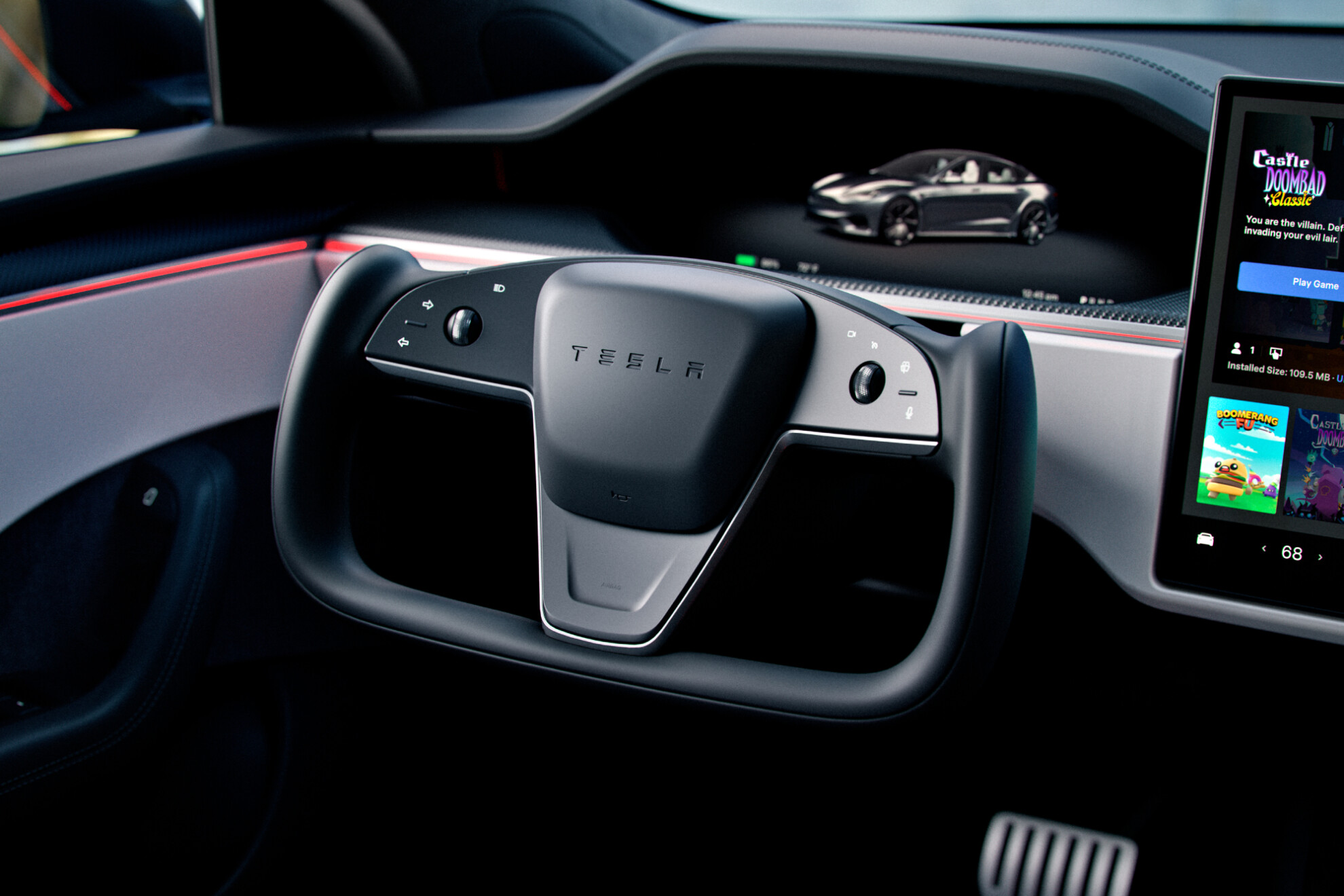
 Tesla Model S fitted with a ‘yoke’
Autohome reports approximately 46 per cent of driver injuries in crashes are due to steering mechanism impacts, adding the yoke’s open-top structure presents a higher likelihood of a driver’s head hitting the steering column or dashboard.
The new regulations are reportedly due to come into effect from January 1, 2027, though it’s unlikely to impact many vehicles already on sale, as the yoke has so far had relatively limited use.
In China, the IM Motors LS6 and LS7 – from MG’s parent company SAIC – can be ordered with yokes.
Overseas, the oddly designed steering wheel was first introduced in the Tesla Model Y, however the EV specialist copped criticism for simply fitting the oddly designed wheel to its existing steering system, meaning drivers would awkwardly have to reposition their hands when rotating the control.
You’ve got to be yoking: Lexus thinks this will reignite EV demand
Other yoke-equipped vehicles such as the Lexus RZ600e F Sport Performance are fitted with a steer-by-wire system, which features a far quicker and adaptive steering ratio.
China’s reported move to ban yoke-style steering wheels comes after the MIIT earlier this month set new requirements which dictate EVs sold in the nation will need to have mechanical releases both inside and outside the doors, rather than hidden handles powered by electric motors.
As opposed to the yoke ban, the door handle change has been made reactively, after a handful of crashes which reportedly led to occupants being trapped inside their vehicles, resulting in fire-induced fatalities.
All new cars sold in China from January 1, 2027 will need to comply with the regulations, however those which have already been approved for sale have a grace period until January 1, 2029 to become compliant.