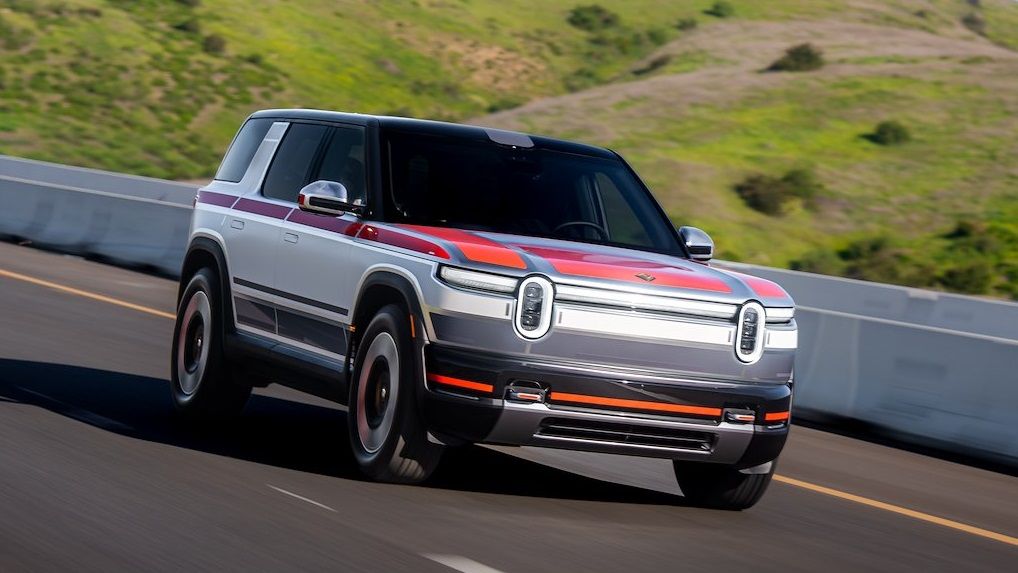
Rivian announced this week that its more affordable R2 model, a mid-sized SUV, will enter the US market in Q2 2026. The company plans to release specs and pricing of the R2 on March 12.
It’s a good time to review what we know so far and what to expect regarding charging the new Rivian.
Rivian R2
Versions
The first variant of the Rivian R2 will be a dual-motor, all-wheel-drive (AWD) version. The company also plans a single-motor, rear-wheel-drive (RWD) version and a sporty Tri-Motor (two motors at the rear and one at the front).
The regular AWD version delivers a peak power output of nearly 500 kW and is expected to accelerate from 0 to 60 mph in 3.6 seconds. The Tri-Motor will be even quicker:
RWD (single-motor)
AWD (dual-motor): 0-60 mph in 3.6 seconds
AWD (Tri-Motor): 0-60 mph in under 3 seconds
The R2 is expected to have decent off-road capabilities. The manufacturer underlines 9.6 inches of ground clearance.
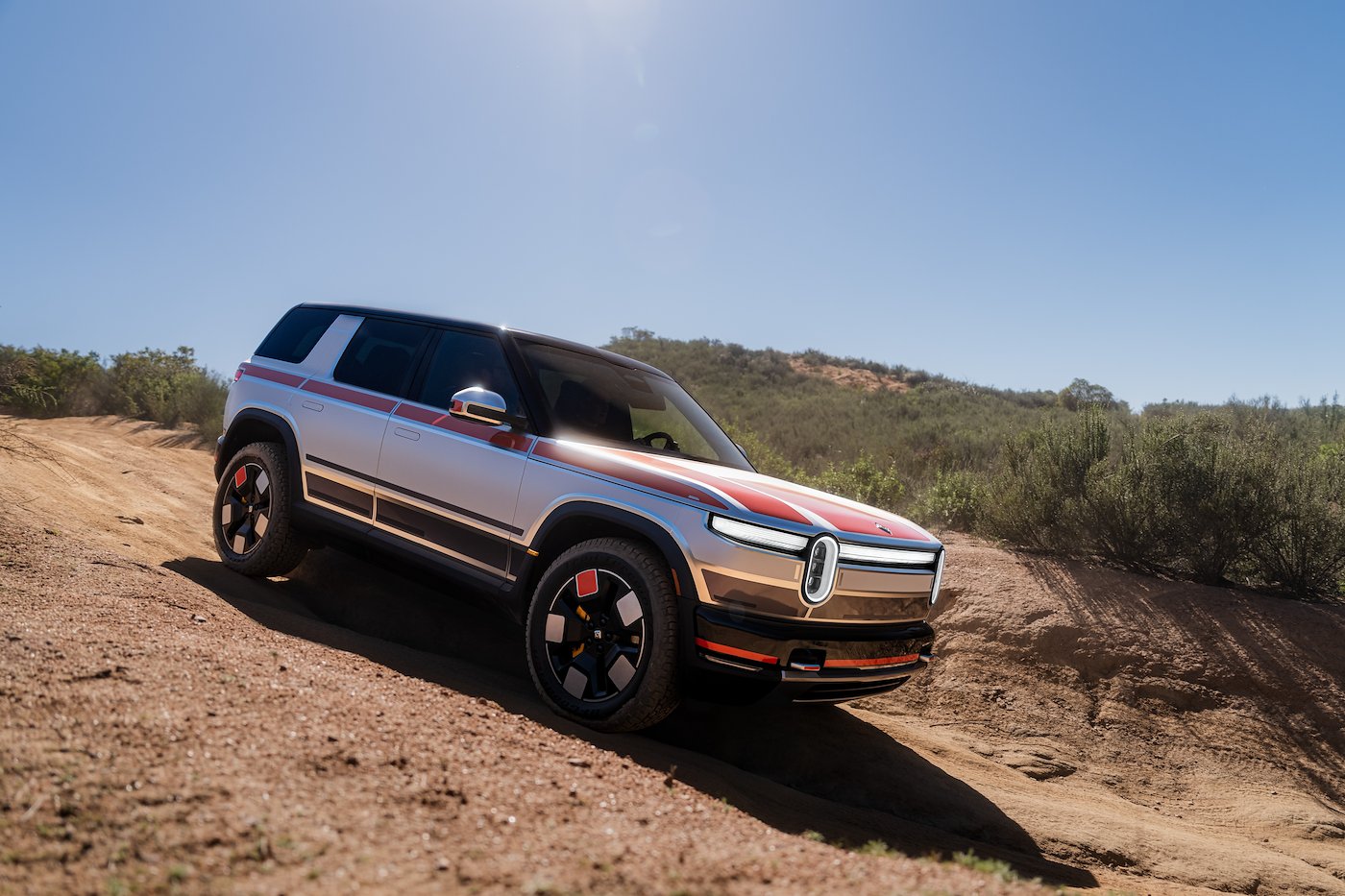
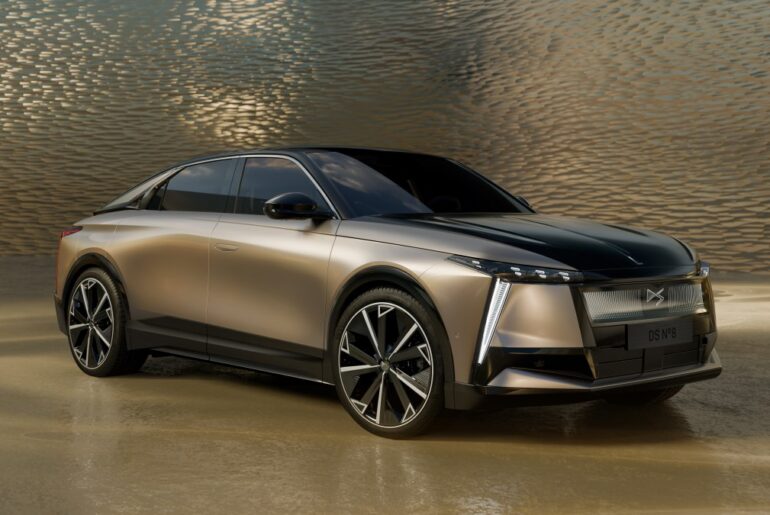
Rivian R2: pre-production version. (Image credit: Rivian)
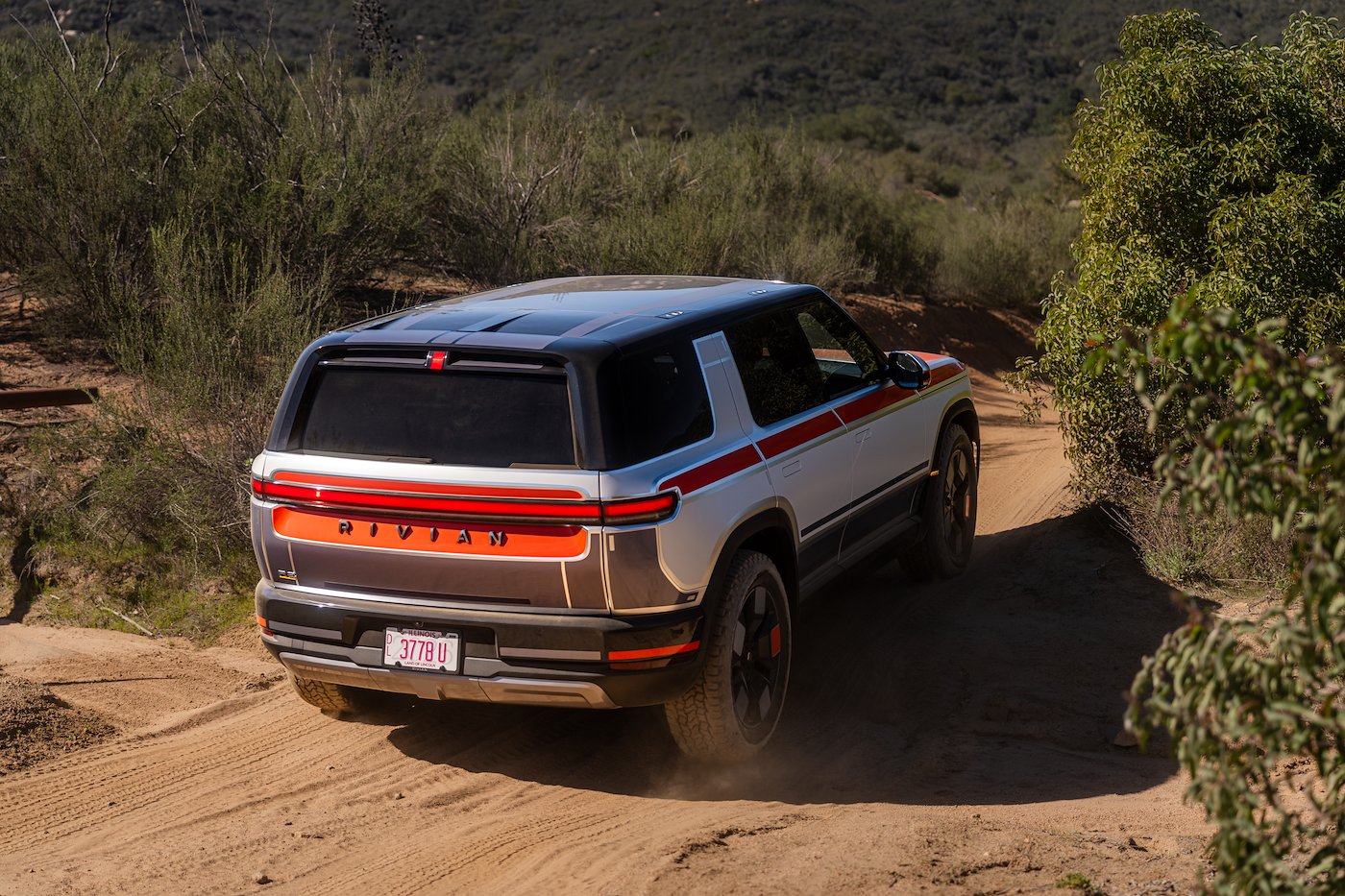
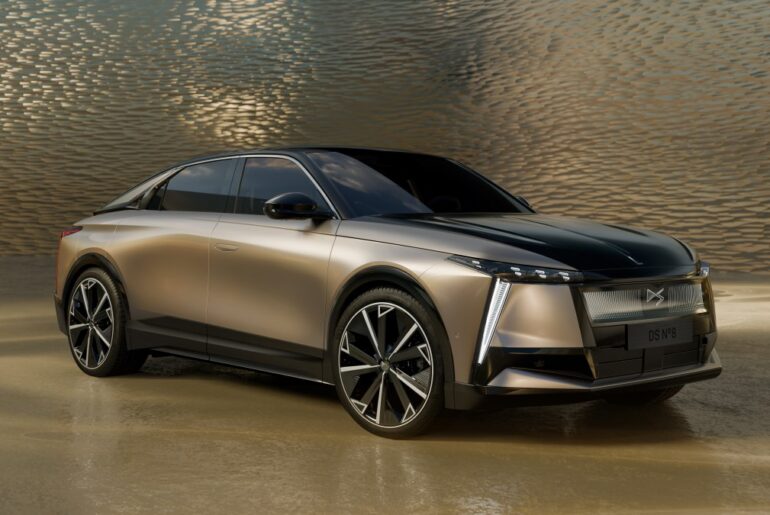
Rivian R2: pre-production version. (Image credit: Rivian)
Battery and Range
The R2 is the first Rivian EV equipped with new, 4695-type cylindrical battery cells (46 mm in diameter and 95 mm in height). A single structural battery pack comprised of three large modules, each with 256 cells (768 cells total).
The pack capacity has not yet been confirmed, but some estimate 94 kWh (assuming 34 Ah and 3.6 volts per cell). There might also be other pack sizes (specifically, a smaller one).
Rivian estimates the Rivian R2 AWD will have a range of over 300 miles.
Our R2 battery pack is made up of three large modules that have 256 cells each for a total of 768 cells per pack. The pack is a structural part of the body and the top of the pack is also a portion of the floor of the vehicle. I love how this type of part consolidation… pic.twitter.com/5dRdOqr9bS
— RJ Scaringe (@RJScaringe) April 7, 2025
Charging
Charging Port
The R2 features a NACS (SAE J3400) charging inlet for AC and DC charging, just like the latest versions of the R1 models (2026 R1S and 2026 R1T).
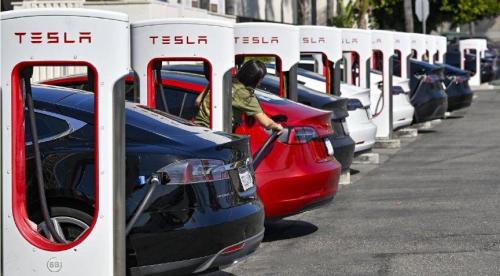
This means the model can directly access NACS charging points (AC or DC), including Superchargers. We already saw Rivian R2 prototypes testing at Tesla Superchargers to ensure compatibility.
Access to CCS1 DC fast chargers is possible through a CCS1-to-NACS adapter. Similarly, the car can use SAE J1772 AC charging points with an AC adapter (J1772-to-NACS).
The charging port is located on the rear-left (driver’s side), as Rivian moved it from the original rear-right (passenger’s side) position.
Simultaneously, Rivian is adding NACS (SAE J3400) charging connectors to its Rivian Adventure Network (RAN).
AC Charging
The onboard charger’s power and charging time have not yet been announced.
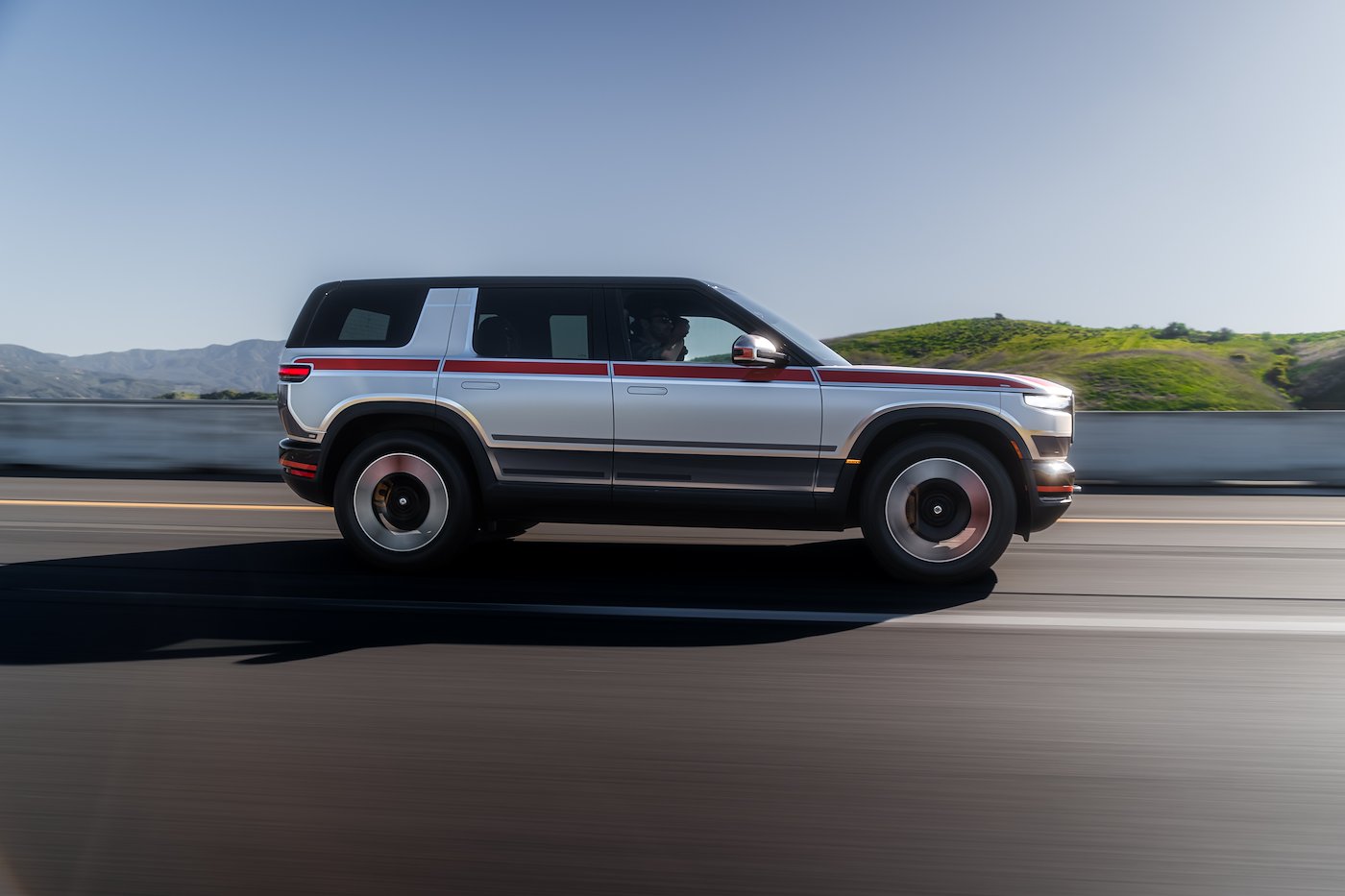
Rivian R2: pre-production version. (Image credit: Rivian)
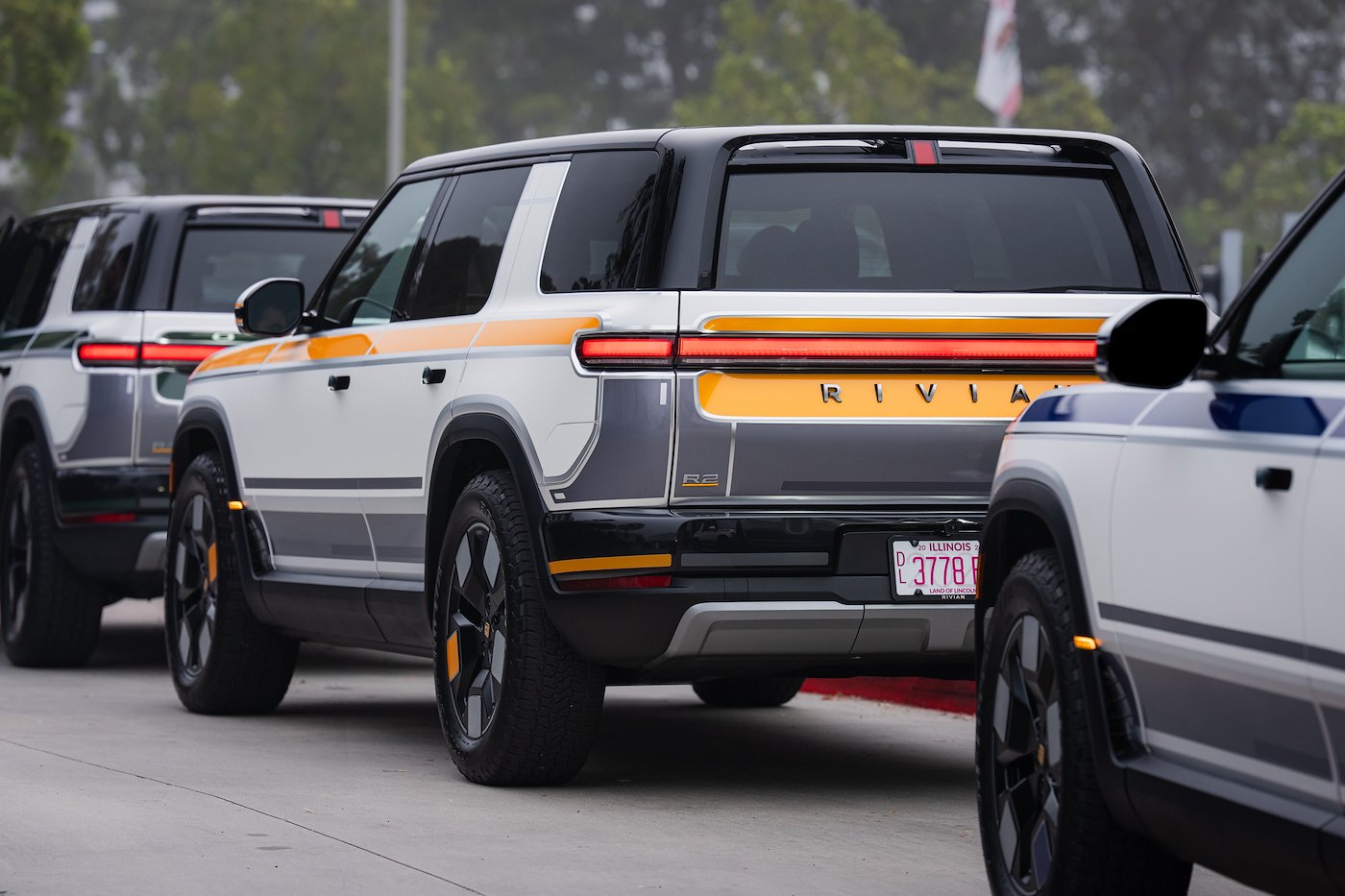
Rivian R2: pre-production version. (Image credit: Rivian)
DC Fast Charging
Rivian’s latest update on the R2 model reiterates that DC fast charging from 10% to 80% state of charge (SOC) takes approximately 30 minutes.
Assuming a 300+ mile range, one could replenish 210+ miles in half an hour at an average rate of 7+ miles/minute.
That’s similar to the rate of the newly announced Toyota Highlander. The question is if it’s fast enough for a premium EV like the Rivian R2. A result of at least 10 miles/minute would be much better, but it would require cutting the 10-80% SOC time to 20 minutes.
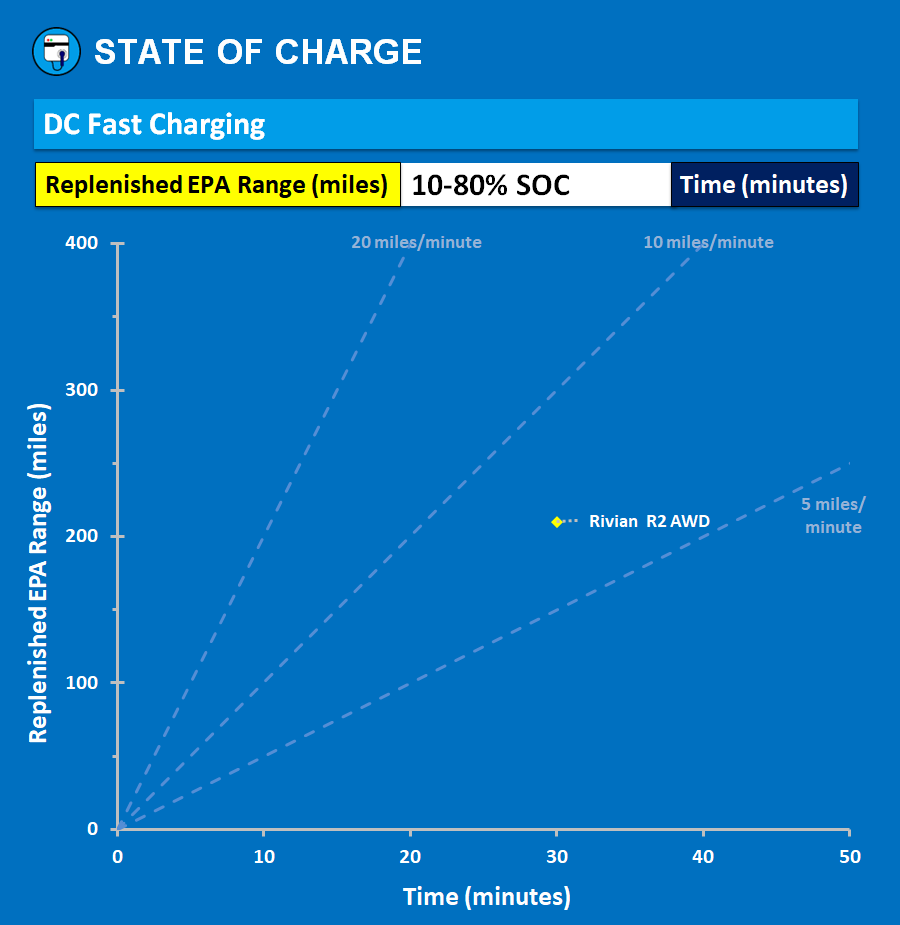
Rivian R2 AWD: Range replenishment rate during DC fast charging from 10% to 80% SOC. (Image credit: State Of Charge)
Pricing
Pricing for the R2 will be announced on March 12, 2026. The base entry-level RWD version is promised to start at around $45,000. The initial AWD version might be closer to $60,000.