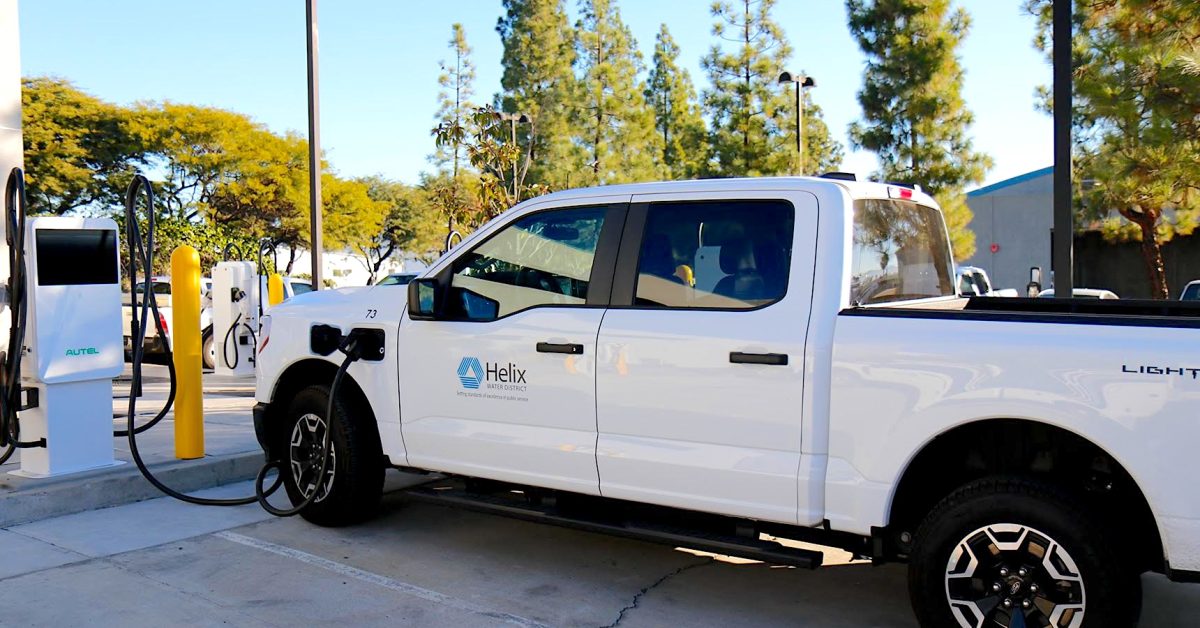
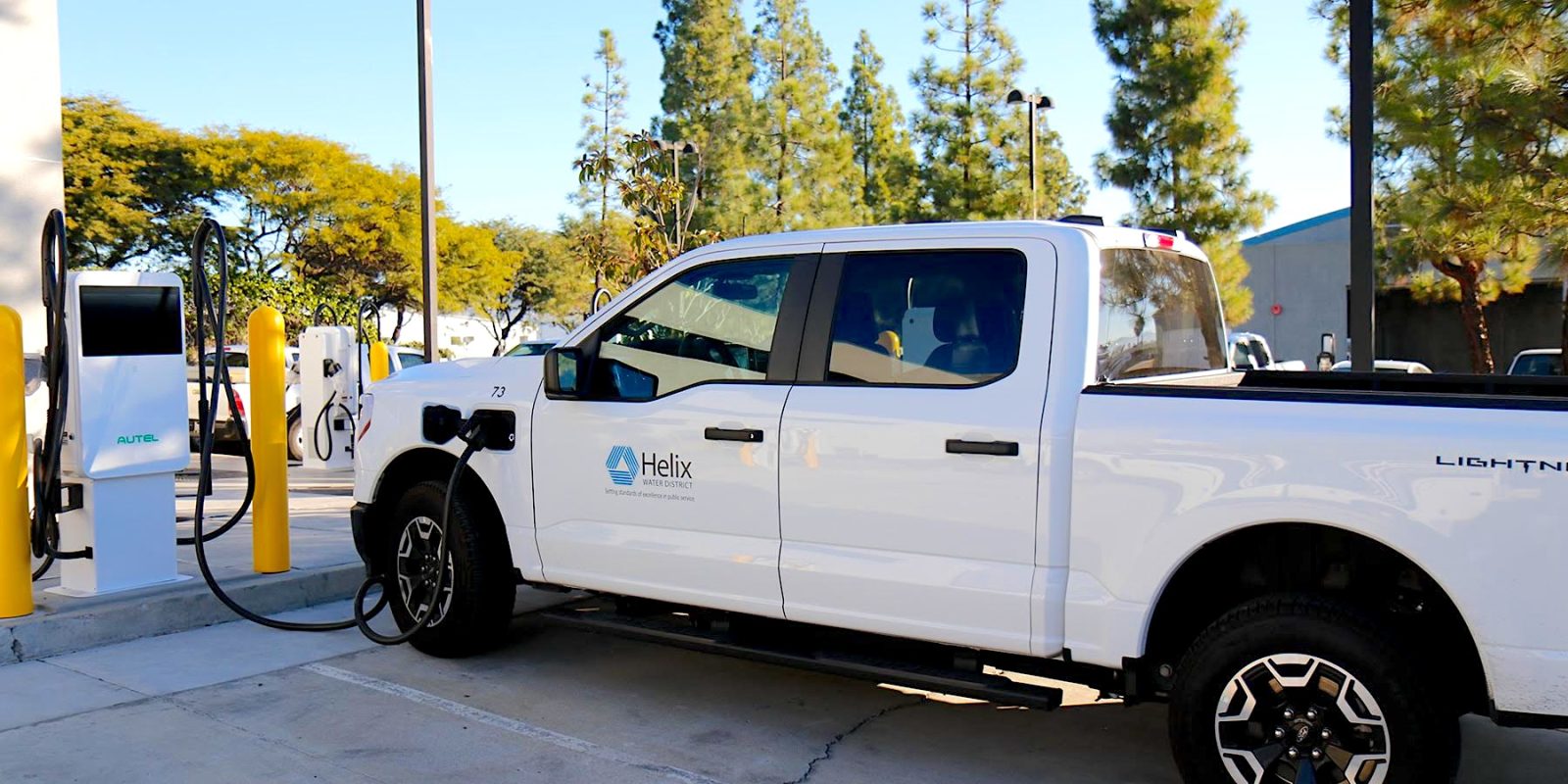
Located at Helix water district’s operations center in El Cajon, California, the project supports the district’s full transition to zero-emission vehicles while maintaining the reliability required of a mission-critical public utility. To keep it all running smoothly, the district has deployed Better Fleet’s advanced managed charging software solution – and we’ve got the company’s CEO, Dan Hilson, to walk us through it.
Once the site is fully complete, the site will deliver nearly 6 MW of total EV charging capacity, enabling large-scale fleet electrification without compromising operational readiness. That’s good, because the Helix water district charging depot will also be supporting charging efforts for other emergency and critical service vehicles across the county, extending its role as a shared resilience asset for essential public services.
That secondary mission won’t seem so secondary to the people dependent on any first responder vehicles getting charged up at the Helix water site, so I reached out to Better Fleet to try and understand what made their system really tick. To their credit, they didn’t just respond – CEO Dan Hilson took the time to answer a lengthy list of questions in complete, thoughtful paragraphs.
I’ve removed the pleasantries and back-and-forth, and boiled it down to the Q&A. Check it out, below, then let us know if you think of Better Fleet’s built a better mouse trap charging solution in the comments.
Advertisement – scroll for more content
Better Fleet Q&A
 Reporting software; via Better Fleet.
Q1. Helix Water District is calling this one of the most advanced utility EV depots in the country. From your perspective, what actually makes this site different from a typical fleet charging depot?
What sets this site apart is that it’s designed from day one as a 100% electric depot for mission-critical infrastructure, and they’re dealing with a mix of medium-duty and heavy-duty vehicles, which adds to the complexity. On top of that, some of the vehicles are not typical electric vehicles with a single plug charging a single vehicle battery. Instead, they are dealing with vehicles that also support additional ancillary equipment such as cranes, so they might have two different charging plugs to serve different batteries, and it’s critical that their software system recognizes and can handle that challenge.
Helix’s fleet supports essential water services for hundreds of thousands of residents, so vehicle readiness is non-negotiable. The depot is built entirely around DC fast charging, enabling plug-and-charge capabilities that are somewhat limited on Level 2 chargers and allowing vehicles to turn around quickly when needed. SDG&E was involved early in the planning process and supported necessary grid upgrades through funding and grant programs. Looking ahead, the site is designed to integrate with backup power and resiliency infrastructure and to operate as a regional charging hub for neighboring emergency and critical service fleets.
Q2. BetterFleet’s platform is described as the “primary operating layer” for the depot. Practically speaking, what does that mean for a fleet manager today?
Being the primary operating layer means BetterFleet is the system fleet managers use day to day to see and run what’s happening across the depot and ensure the right vehicles are prioritized for charging when needed. In real time, they can see the state of charge and readiness of every vehicle, understand which vehicles are ready to be dispatched at any given moment, and monitor the status of chargers and charging sessions as conditions change. Vehicle prioritization is critically important for this deployment, so they require a system that can react accordingly when one vehicle is of critical importance and must be prioritized over others. This also means that it’s important to have the most accuracy possible in knowing how much longer a vehicle has until it reaches a certain level of charge, and BetterFleet’s AI capabilities in predicting time to charge are crucial, since mistakes can be costly for a mission-critical fleet.
At the same time, the platform actively manages the depot’s overall energy consumption to stay within safe limits and minimize power spikes while prioritizing operational readiness. The system also provides a live depot view, showing available parking and charging locations and helping operators manage vehicle movement and space as the depot fills and turns over throughout the day. The platform also supports active incident management by continuously monitoring charger errors and faults, reporting issues in real time, and providing the visibility and context operators need to troubleshoot quickly before minor issues escalate or affect fleet availability.
To enable interfleet charging, Helix also required a system that could handle 3rd party charging and be able to prioritize and manage billing accordingly.
Q3. Load management and smart charging get mentioned a lot in fleet and utility conversations. What’s the real-world value and how does BetterFleet help?
Load management and smart charging deliver value in two very practical ways: cost control and operational readiness. On the energy side, unmanaged charging can create large demand spikes that drive up demand charges, which often make up the majority of a depot’s electricity bill and can strain the grid. Smart charging keeps site load within safe limits, smooths peaks, and reduces those costs. Just as importantly for fleets, it ensures vehicles are actually ready when needed. No fleet wants to send a vehicle out on an urgent job only to find it undercharged, or worse, have a vehicle run out of charge mid-route. BetterFleet balances power across vehicles so the right ones get charged at the right time, keeping fleets reliable, ready, and cost-efficient.
Q4. Security and offline operation are called out as key features. Why do those matter so much more for public utility fleets compared to a commercial fleet?
For public utility fleets, charging systems support essential services and can’t afford downtime or loss of control. Strong security protects sensitive infrastructure and operational data, while offline operation ensures charging can continue safely if communications are disrupted. Unlike commercial fleets that may be able to delay or reschedule charging, utilities must keep vehicles ready during outages, emergencies, and extreme events. It’s imperative to have a charge management system that is built to maintain safe, reliable charging under these conditions so critical services can continue when they’re needed most.
Q5. The site is designed to support emergency and critical service vehicles beyond Helix’ own fleet. How important is that “shared resilience asset” concept, especially in light of last week’s winter storms?
Resilience isn’t just about having enough chargers, it’s about being able to shift how the depot operates on the worst day of the year. Most days, you could say fleets can run on a mode akin to autopilot, but during a major event, like an earthquake that disrupts water distribution, operations move into a fully controlled mode. Crews mobilize immediately, vehicles return to the depot between urgent assignments, and charging priorities change in real time. A system with integrated dispatch and charging allows operators to actively manage power, vehicle readiness, and space under these conditions, ensuring critical vehicles stay available when demand is highest and normal procedures no longer apply.
Shared resilience is also critical for public agencies, especially during extreme weather and emergency events. When storms or outages occur, the ability for multiple emergency and critical service fleets to access reliable charging can make a real difference in response time and continuity of service. In real terms, it’s the difference between an emergency crew arriving to a depot during a storm and finding a reliable place to charge, versus discovering the chargers are unavailable or overwhelmed when they’re needed most. Designing depots to support more than one fleet increases regional resilience, reduces single points of failure, and ensures critical vehicles can stay operational when conditions are unpredictable and demand is highest.
Q6. You’ve deployed fleet charging systems with transit agencies and utilities around the world. Are US utilities and fleets approaching electrification differently, or are the EV pain points more universal than I think?
Many of the core pain points are universal, including limited power, aging infrastructure, and facilities that were never designed for large electrical loads. However, what we often see being done differently in the US is a stronger desire to fully de-risk electrification early, which can lead to conservative decisions like overbuilding charging or oversizing grid upgrades. While that approach aims to ensure reliability, it can drive up costs and project lead times unnecessarily. The fleets that succeed focus on managing power and operations intelligently, rather than relying on excess infrastructure to solve operational challenges.
Q7. For utilities watching this project from the sidelines, what’s the first mistake they’re most likely to make if they try to replicate it WITHOUT calling BetterFleet?
A common mistake is overbuilding and overspending on charging infrastructure because charging is treated as a hardware problem instead of an operational one. Without proper load management and charging strategy, utilities often overestimate grid upgrades, install more chargers than they need, and lock themselves into higher energy and demand costs. Just as importantly, systems that don’t truly understand how a fleet operates fail to prioritize vehicle readiness and dispatch needs, which is what actually matters day to day. The result is higher capital costs, higher energy bills, and a depot that still struggles to keep the right vehicles ready when they’re needed.
Q8. Last question – when you look into the future, whether that’s 5 or 10 or 15 years out, what aspect of fleet electrification today do you think we’ll look back on and say, “I can’t believe we used to do it that way!”?
Early electrification often treated charging as a static problem: plug in every vehicle and size everything for the worst case. Over time, fleets will realize that smart charging, shared infrastructure, and operational scheduling make that approach unnecessary and expensive. The future is about managing power and readiness intelligently, not matching chargers to vehicles one for one.
Original content from Electrek, with special thanks to Dan Hilson.

If you’re considering going solar, it’s always a good idea to get quotes from a few installers. To make sure you find a trusted, reliable solar installer near you that offers competitive pricing, check out EnergySage, a free service that makes it easy for you to go solar. It has hundreds of pre-vetted solar installers competing for your business, ensuring you get high-quality solutions and save 20-30% compared to going it alone. Plus, it’s free to use, and you won’t get sales calls until you select an installer and share your phone number with them.
Your personalized solar quotes are easy to compare online and you’ll get access to unbiased Energy Advisors to help you every step of the way. Get started here.


FTC: We use income earning auto affiliate links. More.