
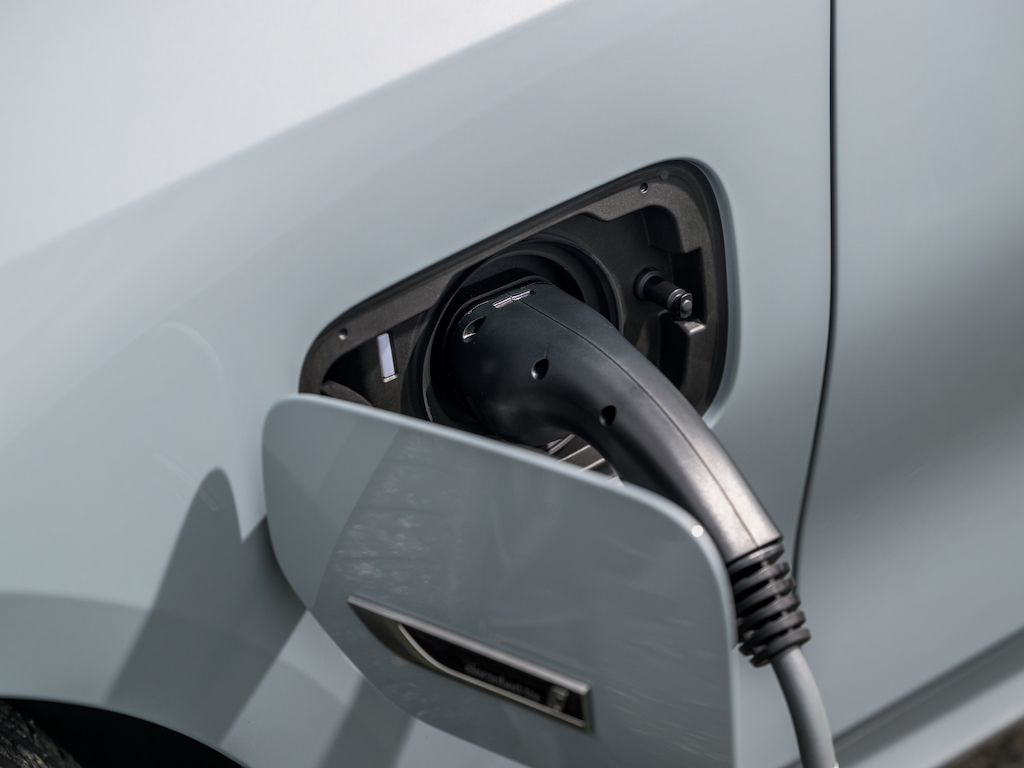
The BVRLA has published a new factsheet, covering the easement to mitigate increasing tax liabilities of plug-in hybrid vehicle (PHEV) company cars.
There is no change for lower-emission PHEVs under the new tax easement
As announced in the Autumn Budget, the Government is introducing a temporary easement to mitigate the increasing Benefit-in-Kind (BiK) tax liabilities of PHEV company cars due to new emission standards.
The new measure seeks to ensure consistency in the tax treatment of company cars across the UK by helping to offset the impact of updated emission standards on PHEVs.
The measure relates to the European Union’s new Euro 6e-Bis regulation that came into force across the EU and in Northern Ireland as of January 2025 and is due to kick in for Britain from April 2026.
The stricter testing regime changes how vehicle CO2 ratings are calculated, with some PHEV models seeing their figures double, which would have potentially led to ‘cliff-edge’ tax rises for drivers’ BiK tax bills but could also have led to problems for salary sacrifice schemes, capital allowances and 100% corporation tax relief.
Following the Budget, the Government has now published the Finance Bill, setting out how the PHEV BiK easement will work.
PHEVs first registered and made available from 1 January 2025 to 5 April 2028, under any emission standard other than Euro 6d-ISC-FCM or Euro 6e, (generally this will mean Euro 6e-BIS-FCM and subsequent emission standards), have a deemed CO2 emission of 1g/km. This means that the BiK percentage for these vehicles will be based not on the CO2 emissions but only on the electric mileage range.
Any PHEV with CO2 emissions up to 50g/km, enjoyed lower BiK rates based on electric mileage range even before the easement, so there is no change for the lower-emission PHEVs.
The easement will apply retrospectively from 1 January 2025 to 5 April 2028. Transitional arrangements will apply to certain PHEVs until 5 April 2031.
The easement should mean that PHEVs registered in Northern Ireland or Britain will have the same tax treatment for employment tax purposes (company car tax, salary sacrifice OpRA and fuel benefit). However, the easement has no impact on the CO2 values used for any other taxes, such as VED, capital allowances, corporation tax disallowance for leased vehicles or VAT on fuel for private use.
The easement applies retrospectively, so some drivers may have overpaid BiK. The legislation is not in force yet, so any drivers claiming back overpaid BiK from 1 January 2025 will need to wait for Royal Assent.
The BVRLA said the easement is as simple as HMRC and HM Treasury could make it, which is something that the association has been working hard to achieve. It also thanked members for their input.
The BVRLA’s factsheet, including qualifying criteria and further practical considerations, is online here.