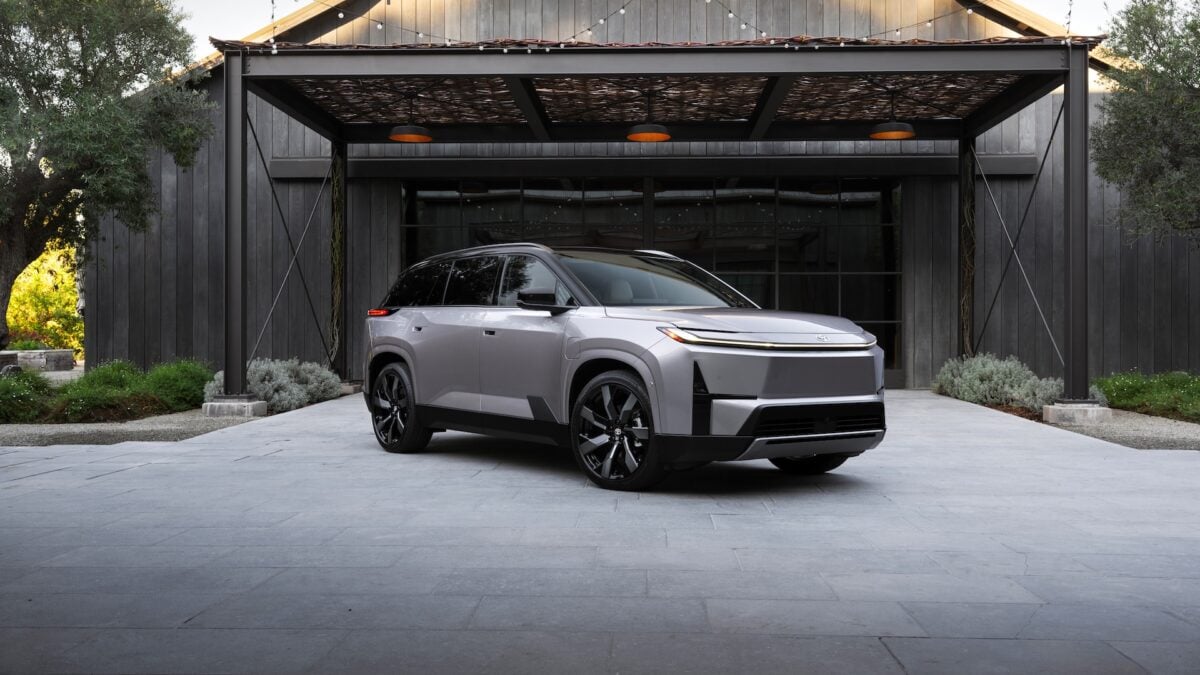
Toyota is probably the most American automaker now, given how many of its best-selling models are made and mostly sold in the U.S., and how much they’re part of the country’s landscape. The typical American taxi hasn’t been a Ford Crown Victoria for many years, and the typical suburban American family car isn’t a car; it’s probably a Highlander or something like it. Which makes it all the more significant that the Toyota Highlander is going all-electric.
The 2027 Toyota Highlander was revealed Tuesday in California, and even though it doesn’t look totally unlike the company’s recent American offerings, it’s very different underneath. It’s even a departure from Toyota’s existing EV offerings like the bZ SUV (formerly the less-clearly named bZ4X) and new bZ Woodland and C-HR.
Toyota’s had a somewhat recent habit of going all-in on hybrids for its popular models, as the Camry did in 2025 and the RAV4 in 2026, and of course, there’s still the Prius that’s always been a hybrid. The Highlander is a different story, though, since it’s taking a 25-year-old gas or hybrid-powered name and going all-in on fully electric instead, and there’s logic to the madness.
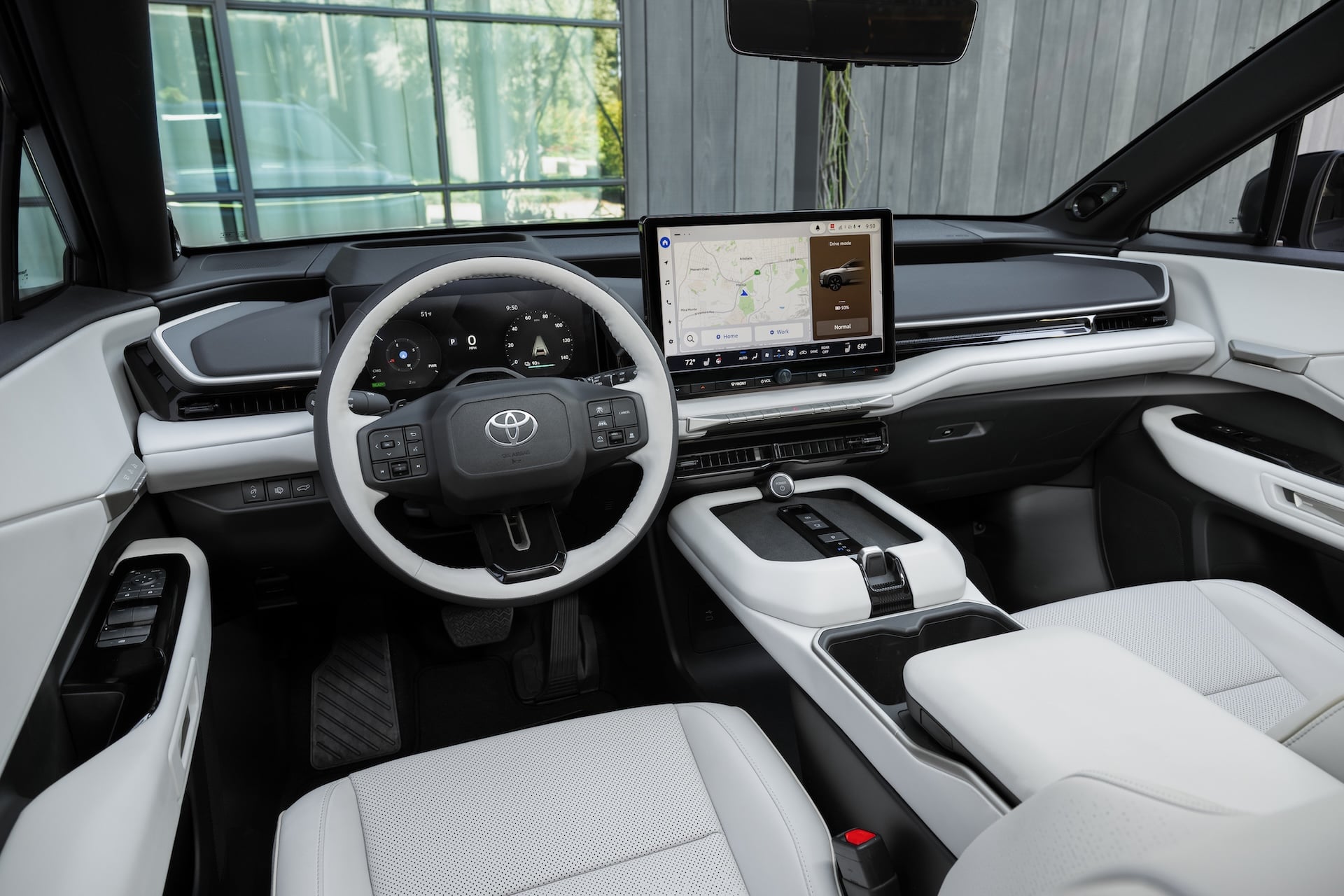 The interior of the 2027 Highlander. © Toyota
In 2024, Toyota introduced the Grand Highlander, which basically used the same engines as the regular Highlander but was larger, and most people bought that instead of the old model. The company was already planning a three-row EV SUV for North America, too. Given that there were too many things called “Highlander” at Toyota dealerships, this was an easy fix. And if you still want a gas-powered engine in a sea of other gas-powered seven-seat SUVs, they’ll still happily sell you a Grand Highlander.
For the 2027 Highlander, though, Toyota picked a battery pack made from its new battery facility in North Carolina, and the car is made at an existing plant in Kentucky. Two base models get a 77-kWh battery, and a single-motor version gets 221 horsepower, but most use a 95.8-kWh pack that the company estimates is good for up to 320 miles on a single charge, and all dual-motor, all-wheel drive versions get 338 horsepower. A Tesla-style NACS charging port for DC fast charging from 10-80% in as little as 30 minutes is built in, and the Highlander will be Toyota’s first EV with Vehicle-to-Load for home power backup—or tailgating, if that’s the bigger priority at the time.
Most versions will have six seats over three rows, although one model will be offered with seven-passenger capability; the footprint is similar to the old combustion-engined model. There’s an updated infotainment system using AT&T’s 5G connectivity and, of course, an updated voice assistant that still forces you to prompt it with, “Hey, Toyota!” A Drive Recorder, described by Toyota as something like a dashcam, is standard and can capture 20-second clips.
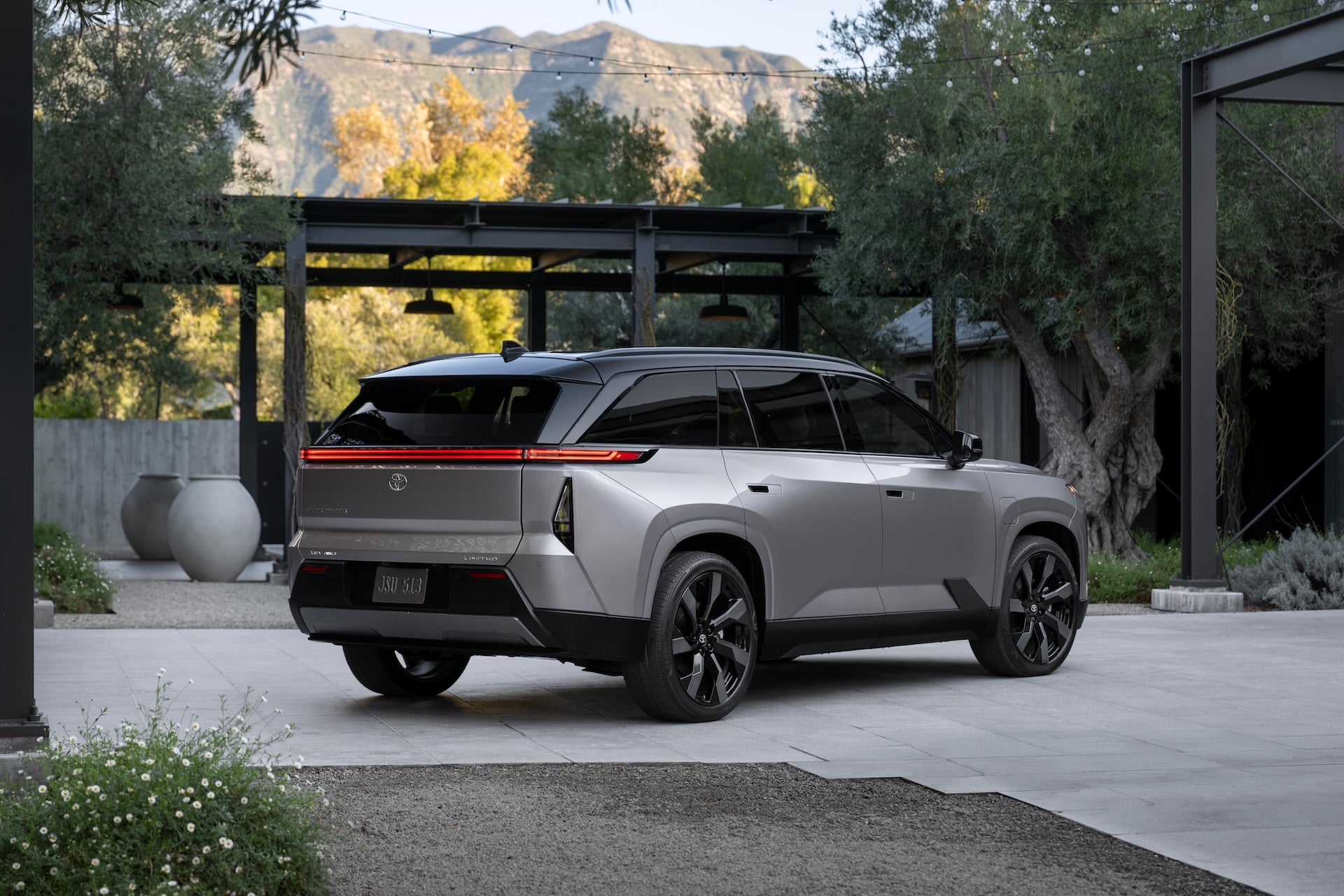 The back of the 2027 Highlander. © Toyota
While it was unlikely Toyota would quickly abandon a vehicle that was mostly finished just because it would miss out on the $7,500 federal tax credit (and likely qualify for all of it given its domestic content), it’s facing an uphill battle that direct rivals like the Hyundai Ioniq 9 and Kia EV9 have: maybe people who want six or seven seats in a car of this size aren’t ready for it to be all-electric.
Kia EV9 sales were fairly strong in 2024, its first full year on sale, with about 22,000 sold before sales fell by nearly a third in 2025 despite production shifting from South Korea to the U.S. The Hyundai Ioniq 9, which didn’t go on sale until May 2025, managed about 5,200 sales last year, and while sales picked up slightly in January, the $60,000 SUV has only broken 1,000 sales in a month a handful of times.
And those were supposed to be mainstream sellers, not like the troubled Volvo EX90 (4,000 sold last year) or the Cadillac Vistiq (about 8,000 sold), or the highly anticipated Volkswagen ID Buzz van that managed more than 6,000 in U.S. sales in 2025 but still left its company with a backlog of inventory so big that it’s on hiatus for 2026 with a promise of a 2027 model going on sale sometime during this year. And the three-row Tesla Model X will be completely dead soon, although it was old, slow-selling, and nobody who had to sit in the back liked the doors anyway.
Taxi drivers will likely stick to the Grand Highlander Hybrid given its proven engine, still somewhat decent fuel economy, and likely far lower upfront costs. There’s a good chance Uber and Lyft drivers will do the same, given the former’s reported pullback on incentives for drivers going electric.
And Toyota’s hybrid strength will probably be enough to convince a lot of private consumers who still flock to gas-powered, large three-row SUVs in their suburban communities to stick with a gas or hybrid-powered Grand Highlander over this new, practical, and promising Highlander EV.
Because if new vehicle costs stay high, employment and economic uncertainty persist, and electric vehicle charging infrastructure development stagnates, most people who envision taking vehicles of this type on the great American road trip aren’t likely to change their well-honed habits by the time this electric Highlander goes on sale at the end of 2026.