
Adventtr/Getty Images
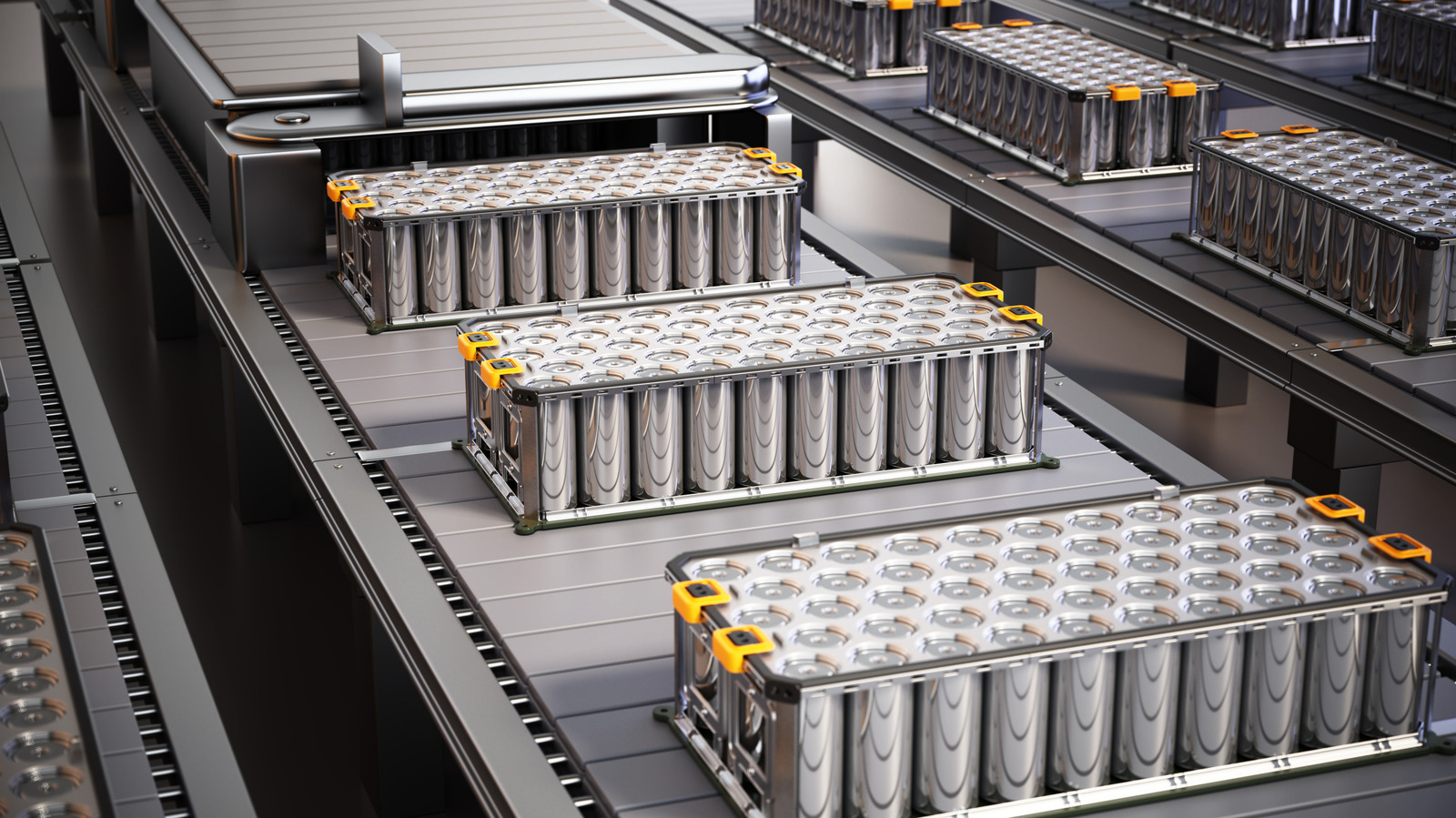
The electric vehicle (EV) market may be about to explode with some really cool news. Now, off the cuff, that sounds like a very broad statement to make. However, a series of breakthroughs by Chinese firm CATL and researchers alike may be about to change everything about EV batteries for good. That’s because big changes could help bring one of the best lithium-ion battery alternatives to a feasible market scale. See, this alternative battery type has been hanging around the edges of the EV market for years, however, the overall density of the batteries that could be created, as well as their slower charging speed, was too high to make it realistically work on electric cars, as the extra weight dragged down the vehicle’s range.
If you’ve been following the EV market the past few years, then you probably already know about sodium-ion batteries and the myriad of benefits they could offer the EV market. That is because while they have historically been heavier than lithium-ion batteries, they are actually cheaper to manufacture and contain components that are far less flammable, reducing the risk of fires breaking out and staying active for hours in the battery systems for popular EVs. There are just a few major problems that have kept them from really taking off, and that’s the overall weight of the batteries, as well as how quickly they can charge.
Solving the charging speed problem
Anan Sukprakon/Getty Images
Unlike lithium-ion batteries, which use graphite — a relatively light material — sodium-ion batteries rely on hard carbon, as graphite can’t store sodium. Because of hard carbon’s crystalline structure — and how well it holds sodium — it should be great for fast-charging. However, when manufacturing these batteries, there have been issues that inhibit the capacity when they are forming the anode, making charging the batteries much slower than they should be.
Because of these issues, researchers could never figure out how to prove the theoretical charging speeds of sodium-ion batteries was actually achievable. However, they have made a major breakthrough. According to a new study published at the end of 2025, researchers discovered that they could overcome the hurdle of charging sodium-ion batteries — which they say was essentially because of a “traffic jam” in how the ions moved into the particles of hard carbon. To do this, they mixed hard carbon with aluminum oxide, which is considered a “chemically inactive material.” When utilized in the anode, this allowed the ions to travel freely into the hard carbon without there being any kind of bottlenecks.
With the bottleneck solved, the results of this study could help companies like CATL — which have been making steady progress on scaling sodium-ion batteries to market levels — improve how these batteries work as a whole. By addressing the slower charging issues, they can now focus on figure out how to make these batteries less dense and thus allow them to weigh far less when being installed in electric vehicles and other applications.
Will sodium-ion batteries replace lithium-ion?
Sweetbunfactory/Getty Images
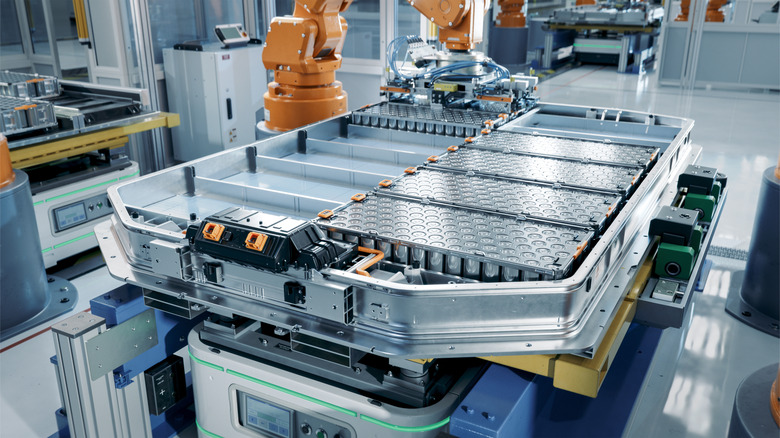
The EV battery market has changed drastically over the years, from the arrival of the worlds’ first EV solid state battery to new battery designs that make them lighter. For sodium-ion, the biggest question is whether or not it is going to eventually replace lithium-ion. The answer here is, probably not, no. That’s because while sodium-ion batteries are becoming more viable — especially thanks to CATL’s new Naxtra batteries and it’s push in the EV market as a whole — they still don’t outperform lithium-ion completely.
Yes, researchers have figured out how to deal with the bottleneck that sodium-ion batteries run into when charging, but that solution has yet to be scaled up to a commercial level. As such, some believe that the future of battery technology is not one of domination, but one where each type of battery is utilized in the areas where it makes the most sense. This means that sodium-ion batteries could be utilized where they are needed to provide safer, more reliable power solutions, while lithium-ion would still be used in the places that it makes sense for them to appear. This might end up being a hybrid system of some kind, or perhaps different vehicles will just have different types of batteries.
No matter how you break it down, though, the future of sodium-ion batteries is no longer a huge question mark of “will it ever be viable,” as companies like CATL and research like this new study have now proven that they can be. In the meantime, outside the realm of sodium-ion batteries, researchers have also been using AI to look for lithium replacements.