Construction is advancing at Scout Motors’ $3B EV plant in Blythewood, with more than 500 hired so far and thousands of jobs planned.
BLYTHEWOOD, S.C. — Construction is moving forward on the massive Scout Motors electric vehicle plant in Blythewood, and company leaders say hiring is already underway.
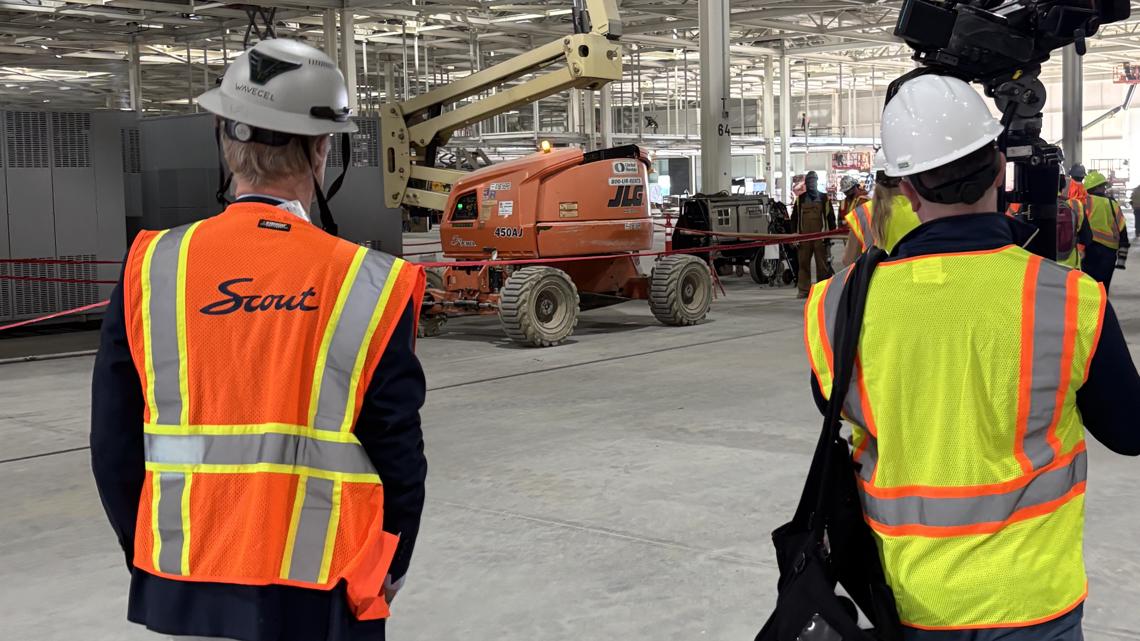
News19 toured the roughly $3 billion site this week, where crews are transforming about 1,600 acres into a full manufacturing campus. When completed, the facility will produce fully electric vehicles and include multiple buildings, new roads, parking areas, a visitor welcome center and even a fire station.
Right now, much of the work is happening inside the buildings.
“Really what you’re going to see now is a lot of HVAC systems going in,” Scout Motors CEO Scott Keogh said. “You see a lot of the interior work happening and some employees will start to be working on the site as soon as the end of this month in March. This is a magical moment. This is when thousands of parts come from across South Carolina.”
Keogh said the progress is especially noticeable compared to just months ago.
“You look at the condition of the soil on the exterior of the buildings and you say, ‘Wow, there’s water there and there’s a lot of mud.’ Seven months ago, that was the floor of the assembly and finish building,” Keogh said. “Once you walk in and you see where its current state is versus where it was seven months ago, night and day.” The buildings stand about 40 feet tall and will eventually house a body shop, assembly line, testing areas and a water testing pit designed to ensure vehicles are sealed properly.
Company leaders say jobs are a major part of the project. More than 500 people have already been hired, with a goal of around 4,000 employees once the plant is fully operational.
“These are great paying jobs, with competitive wages, great benefits, as well as a career path and a career opportunity for growth,” said Clarice Henderson, Scout Motors vice president of human resources. “All in an environment where you’re respected and valued.”
Production vehicles are not expected to roll out until late 2027 or early 2028, but Keogh said seeing the site in person makes the project feel real.
“There’s one thing to have a PowerPoint slide, there’s one thing to have a dream and a vision, and here you can see it come to life,” he said.