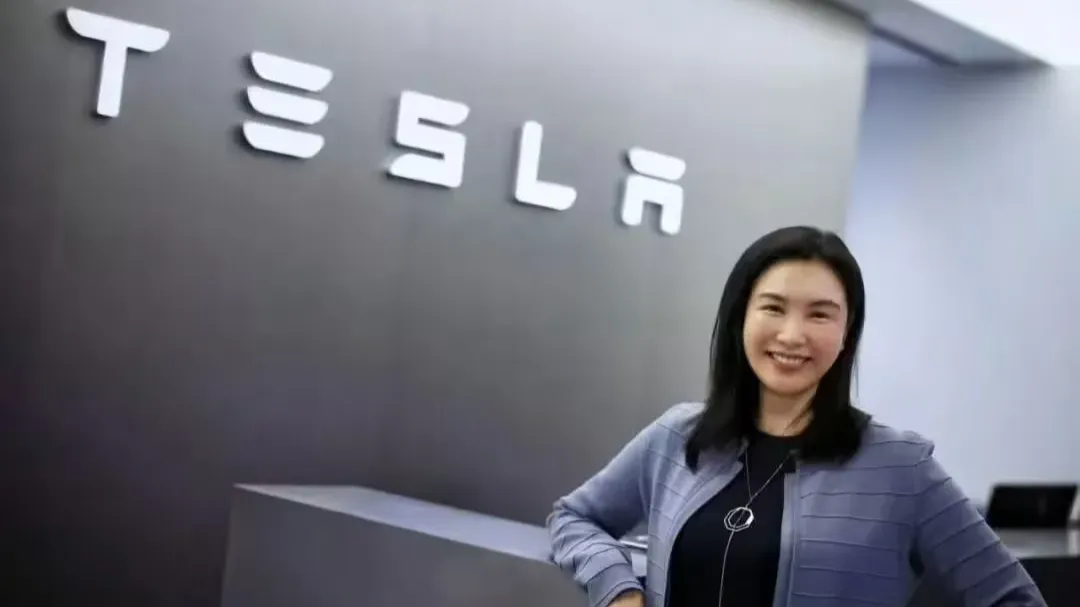
Tesla (NASDAQ: TSLA) plans to increase investment in artificial intelligence, robotics and energy infrastructure in China in 2026, as part of a broader strategy to reposition the company beyond electric vehicles, according to statements by Global Vice President Tao Lin at media briefings in Beijing in early February.
Speaking at a February 7, 2026 media event, Tao said Tesla will expand AI hardware and software investment in China and deepen its focus on energy systems. The company has already established a local AI training center in China to support localized optimization of its assisted driving systems.
Globally, Tesla expects capital expenditures in 2026 to exceed USD 20 billion, equivalent to approximately 138.8 billion CNY. Tao said the spending will focus on AI computing power, humanoid robot factories, mass production of Tesla’s autonomous Cybercab vehicle, energy storage and manufacturing, charging networks, and battery factories.
Advertisement – Continue scrolling for more
Tao said Tesla no longer considers itself solely an electric vehicle manufacturer, but rather a technology company centered on AI, robotics and energy systems. Vehicles remain a core hardware platform for AI, she said, but Tesla’s long-term strategy now also includes humanoid robots and a global energy network.
In China, Tesla has invested independently in an AI training center to support local training for assisted driving and AI applications. Tao did not disclose the center’s computing scale but said it currently meets Tesla’s operational needs. She also said Tesla is actively preparing for assisted driving deployment in China but did not provide a specific timeline.
Tao said Tesla complies with Chinese data security regulations and that assisted driving systems do not require data to be transferred outside China. Training for China-specific scenarios is conducted locally.
Advertisement – Continue scrolling for more
Addressing recent reports that Elon Musk’s team visited China to review supply chains, Tao said the visit was likely unrelated to Tesla and may have involved SpaceX or other projects. Tesla continues to source globally, selecting suppliers based on cost, stability and delivery speed, she said.
In a separate February 6, 2026 interview with Phoenix Technology, Tao outlined Tesla’s approach to China’s highly competitive EV market, where domestic and foreign automakers are expanding model lineups and adopting new charging architectures. Tao said Tesla has deliberately streamlined its vehicle portfolio and focused capital on computing, robotics and energy rather than expanding SKUs.
She said Tesla rejects what it views as short-term “pseudo-demands,” including rapid expansion of model variants, emphasis on third-row seating configurations, and rushed deployment of 800V high-voltage charging systems. Tao said Tesla prioritizes integrated system performance over individual specification benchmarks.
Advertisement – Continue scrolling for more
Tesla’s vehicle deliveries fluctuated in 2025 due to production line transitions related to the Model Y refresh, Tao said. Four factories underwent line changes, limiting full-capacity output. Despite these changes, Tesla’s Shanghai Gigafactory delivered more than 850,000 vehicles in the second half of 2025 while transitioning production for the Model Y L.
On charging infrastructure, Tao said Tesla has the technical capability to deploy 800V systems but has chosen not to fully adopt the platform due to infrastructure compatibility. Tesla’s V3 and V4 Superchargers combined with Tesla’s battery management system can add up to 320 kilometers (about 200 miles) of range in 15 minutes, which Tao said represents a balanced charging experience under current conditions.
Tao confirmed that Tesla’s 4680 battery dry electrode manufacturing process has entered mass production. The process is intended to reduce battery costs and improve performance. Tesla invested in related factory and process development years in advance, she said.
Advertisement – Continue scrolling for more
Tesla has also continued to expand software functionality through over-the-air updates. Over the past four years, Tesla has deployed 58 OTA updates, adding more than 105 major features. Tao said Tesla develops its powertrain, chassis, thermal management, battery management, assisted driving and active safety systems in-house, enabling long-term system integration.
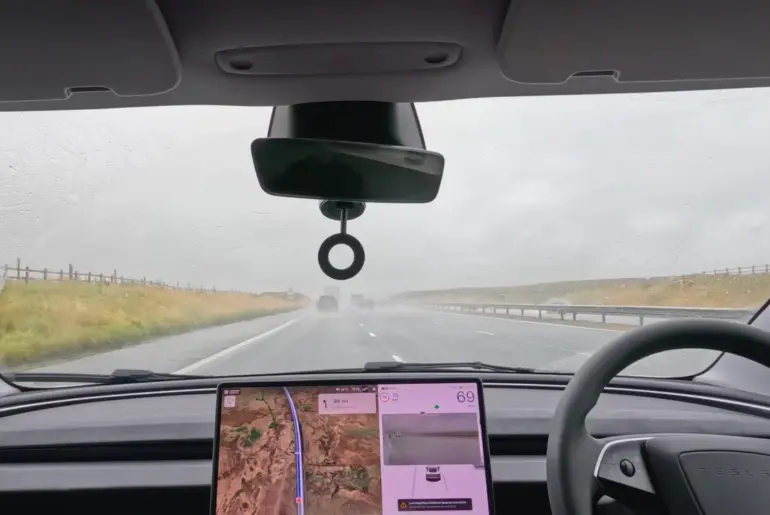
As of February 2026, Tesla’s Full Self-Driving (FSD) system has accumulated more than 12 billion kilometers (7.5 billion miles) of global driving data. Tao said Tesla’s vision-based, end-to-end neural network approach allows systems trained in the United States to generalize globally, with only limited local tuning required for China-specific traffic signals and signage.
Tao said Tesla is open to licensing its autonomous driving system to other automakers in the future, though no partnerships have been announced. She said autonomous driving development requires tens of billions of dollars in investment and large-scale data, limiting the number of companies capable of developing full systems independently.
Advertisement – Continue scrolling for more
Tesla is also advancing its Robotaxi business, centered on the Cybercab, a purpose-built autonomous vehicle with no steering wheel. Tao said the Cybercab is designed for cost efficiency using new alloy materials and modular manufacturing.
Robotaxi testing is currently limited to select regions, including Texas and the San Francisco Bay Area. Tao said Tesla is proceeding cautiously, focusing on system validation before broader deployment.
Tesla also plans to begin mass production of its humanoid robot, Optimus, in 2026. Tao said one of the main technical challenges remains development of dexterous robotic hands. Tesla’s upcoming third-generation robot will focus on tactile sensing and joint flexibility.
Advertisement – Continue scrolling for more
Tao said Tesla has had to build much of the humanoid robot supply chain from scratch, relying on in-house development and global sourcing. She compared the effort to early automotive supply chain development and said mass production could help establish an initial global humanoid robotics supply ecosystem.
Tao said Tesla’s long-term strategy integrates solar, energy storage, autonomous driving and humanoid robotics to address energy supply, mobility costs and labor constraints. Vehicles will remain important AI platforms, she said, but Tesla’s focus extends beyond traditional automotive manufacturing.
Conversion rate: 1 USD = 6.939 CNY as of February 7, 2026
Advertisement – Continue scrolling for more