Breadcrumb Trail Links
Electric vehicles don’t sell here unless they are subsidized and a weak EV market in the U.S. causes additional economic damage in Canada
Get the latest from Lorrie Goldstein straight to your inbox Sign Up
Published Feb 07, 2026 • Last updated 11 minutes ago • 4 minute read
You can save this article by registering for free here. Or sign-in if you have an account.
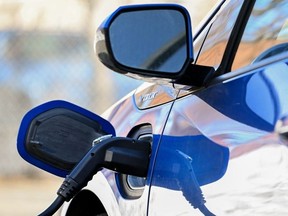 An electric vehicle at a charging station in Montreal. Photo by Graham Hughes /BloombergArticle content
For heaven’s sake, can we just admit the painfully obvious point that Canada’s federal and provincial governments committed a massive strategic blunder when they went whole hog into subsidizing the production and sale of EV vehicles and batteries?
Advertisement 2
This advertisement has not loaded yet, but your article continues below.

THIS CONTENT IS RESERVED FOR SUBSCRIBERS ONLY
Subscribe now to read the latest news in your city and across Canada.
Unlimited online access to articles from across Canada with one account.Get exclusive access to the Toronto Sun ePaper, an electronic replica of the print edition that you can share, download and comment on.Enjoy insights and behind-the-scenes analysis from our award-winning journalists.Support local journalists and the next generation of journalists.Daily puzzles including the New York Times Crossword.
SUBSCRIBE TO UNLOCK MORE ARTICLES
Subscribe now to read the latest news in your city and across Canada.
Unlimited online access to articles from across Canada with one account.Get exclusive access to the Toronto Sun ePaper, an electronic replica of the print edition that you can share, download and comment on.Enjoy insights and behind-the-scenes analysis from our award-winning journalists.Support local journalists and the next generation of journalists.Daily puzzles including the New York Times Crossword.
REGISTER / SIGN IN TO UNLOCK MORE ARTICLES
Create an account or sign in to continue with your reading experience.
Access articles from across Canada with one account.Share your thoughts and join the conversation in the comments.Enjoy additional articles per month.Get email updates from your favourite authors.
THIS ARTICLE IS FREE TO READ REGISTER TO UNLOCK.
Create an account or sign in to continue with your reading experience.
Access articles from across Canada with one accountShare your thoughts and join the conversation in the commentsEnjoy additional articles per monthGet email updates from your favourite authors
Article content
True, Prime Minister Mark Carney made the right decision last week to abandon the impossible-to-achieve EV mandates of his predecessor, Justin Trudeau, that would have started this year requiring 20% of all new cars sold in Canada to be EVs, rising to 60% in 2030 and 100% in 2035.
Article content
Article content
But his revival of the Trudeau-era cash incentives of up to $5,000 for EV buyers, plus billions of dollars in additional support for Canada’s struggling auto sector, underscores a simple reality.
That is that EVs in Canada and the U.S. aren’t selling unless all taxpayers subsidize the cost of the small minority of consumers who buy them.
Meanwhile, EV and EV battery manufacturers are recording multi-billion-dollar losses and abandoning or delaying projects, many subsidized by the feds and the provinces.
On Friday, Stellantis bailed out of its joint EV battery NextStar Energy project in Windsor – selling off its 49% stake to majority partner, South Korean-based LG Energy Solution for a nominal $100.

Your Midday Sun
Thanks for signing up!
Article content
Advertisement 3
This advertisement has not loaded yet, but your article continues below.
Article content
RECOMMENDED VIDEO
We apologize, but this video has failed to load.
Play Video
Stellantis’ shares dropped 24% on the New York Stock Exchange, to their lowest level in the company’s four-year history, as it simultaneously announced a US$26.5-billion write-down on its EV investments.
“The charges announced today largely reflect the cost of overestimating the pace of the energy transition that distanced us from many car buyers’ real-world needs, means and desires,” CEO Antonio Filosa said in a statement, reported by Reuters.
“The reset we have announced today is part of the decisive process we started in 2025, to once again make our customers and their preferences our guiding star.”
According to the parliamentary budget office, the Justin Trudeau government and the Doug Ford Ontario government earmarked up to $15 billion of taxpayers’ money in incentives for this $5-billion plant, which was completed last year and remains in operation.
While most of the money in government support hinges on the production of EV batteries, meaning it hasn’t yet been paid out, Stellantis’ massive climbdown on EVs is yet another illustration of the problem when governments try to determine winners and losers in the marketplace.
Advertisement 4
This advertisement has not loaded yet, but your article continues below.
Article content
Last month, GM, also subsidized by the federal and Ontario governments, announced a US$6-billion write-down on its EV operations, warning it may post additional EV-related loses later this year.
Read More

Stellantis selling stake in Windsor battery plant

GOLDSTEIN: How Canada’s electric vehicle dream became a nightmare

LILLEY: Carney says China more reliable than U.S. as he touts EV deal
In December, Ford announced a US$19.5 billion write-down on EV production lines after years of trying and failing to make them profitable, saying it would shift its focus to gas-powered and hybrid vehicles.
“It didn’t make sense to keep plowing billions into products that we knew would not make money,” Jim Farley, Ford’s chief executive, told Bloomberg TV. “We had to make this choice.”
In Canada, according to a 2024 report by the Parliamentary Budget Officer, federal and provincial governments earmarked up to $52.5 billion ($31.4 billion from the feds and $21.1 billion from the provinces) to subsidize 13 major EV projects, compared to a $46.1 billion investment from the companies involved.
Advertisement 5
This advertisement has not loaded yet, but your article continues below.
Article content
Many of these projects have now been downsized, delayed, or cancelled – in one case because of a bankruptcy – due to poor EV sales, contributing to the layoffs of thousands of workers.
The financial losses to the federal and provincial governments aren’t yet in the billions of dollars because most of the government support is tied to production quotas.
That said, the feds are launching legal action to recover “hundreds of millions” of dollars from Stellantis and GM, according to Industry Minister Melanie Joly, for reducing or cancelling planned projects for which they received government support.
Some legal experts have expressed skepticism about the chances of these lawsuits succeeding.
RECOMMENDED VIDEO
We apologize, but this video has failed to load.
Play Video
Meanwhile, the Quebec government is attempting to recover $260 million it invested in the now-bankrupt North American branch of Swedish EV battery manufacturer Northvolt.
Defenders of EVs argue that Canada and the U.S. are outliers because globally EV sales are soaring, with China producing more advanced and less expensive EVs compared to their North American competitors, plus the negative economic impact of U.S. President Donald Trump’s auto tariffs.
Advertisement 6
This advertisement has not loaded yet, but your article continues below.
Article content
They also argue EV sales in Canada and the U.S. dropped after both countries ended incentive programs that subsidize the cost of EVs to car buyers – which Carney has now revived for Canada.
But that’s precisely the point. EVs don’t sell here unless they are subsidized and a weak EV market in the U.S. causes additional economic damage in Canada because of the integration of the Canadian and U.S. auto sectors.
Without those subsidies, EVs and plug-in hybrids in Canada last year recorded fewer sales combined than gas/electric hybrids, which do not require charging and have never been included in government subsidy programs.
According to a December article in Motor Illustrated based on data from the third quarter of 2025, gas/electric hybrids accounted for 12.4% of passenger vehicle registrations in Canada, compared to only 5.5% for EVs and 3.8% for plug-in hybrids.
Despite all the hype about EVs, conventional gasoline-powered vehicles continued to dominate the Canadian market, representing 73.8% of all models sold, up from 70.2% in 2024.
Article content
Share this article in your social network