The record €22 billion in write-offs and provisions for future losses is an extraordinary admission of just how badly Stellantis, a European-based carmaking company, misread the American market.
Is the electric dream in the US dead? Of course not, it is the home of Elon Musk and the Tesla electric car, which has changed the industry for ever. But the electric dream has certainly hit a roadblock. That should come as no surprise to anyone following the proclamations and drill-baby-drill policy changes enforced by a Trump administration undoing the zero-emissions advances of the Biden years.
Perhaps the main surprise in Stellantis markedly changing tack by bringing back gas-guzzlers and killing electric vehicle programmes is that it has taken it so long to come to that conclusion. Its US sales crisis and backed-up unsold inventory has been well documented.
• Vauxhall owner takes €22bn hit from U-turn on electric cars
It may have been finally emboldened to act by the decision in December of Ford to announce its own electric U-turn with writedowns and provisions of $19.5 billion and an end to its flagship foray into zero-emissions heavier duty vehicles with the scrapping of the F-150 Lightning pickup truck.
Just last month General Motors said it would be taking charges of up to $7 billion on its electric car programmes and pivoting some of its models back to being fuelled by petrol.
The US arm of Stellantis is Chrysler, the other member of America’s historical big three carmakers.
It was always going to be a tough ask, especially for an Amsterdam and Paris-based parent like Stellantis, to persuade Americans that their Jeep and Ram pickup trucks needed to go electric.
• UK car output at its lowest in 70 years, but there is a spark of hope
Stellantis now appears to have abandoned its greenwashing rhetoric around the ethical necessity and responsibility for the automotive industry to address climate change. Instead it is posing as the electric refusenik’s friend, stating it is “a beacon for freedom of choice” prioritising “the real-world preferences of its customers”.
Its change in strategy has come with a three-word slogan beloved of political agitators and designed to rally support for its stand against the regulators: demand not command. That translates as a reprioritisation by Stellantis to making vehicles it can sell rather than following political net-zero policies to decarbonise road transport. The change in strategy is one pitched very much at its US audience and aligning itself with the America-first White House.
What it means in Europe, far more advanced, certainly in western and northern Europe, in its acceptance of electric cars, is another matter. There is no doubt the Stellantis rhetoric is pitched at Brussels as it hopes to rally other carmakers in keeping up the pressure on the Eurocrats to relax the decarbonisation timelines, a battle that it is already winning.

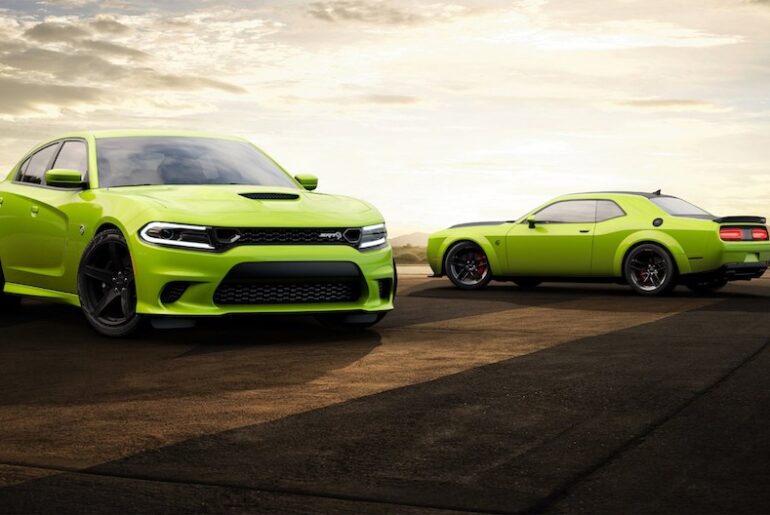
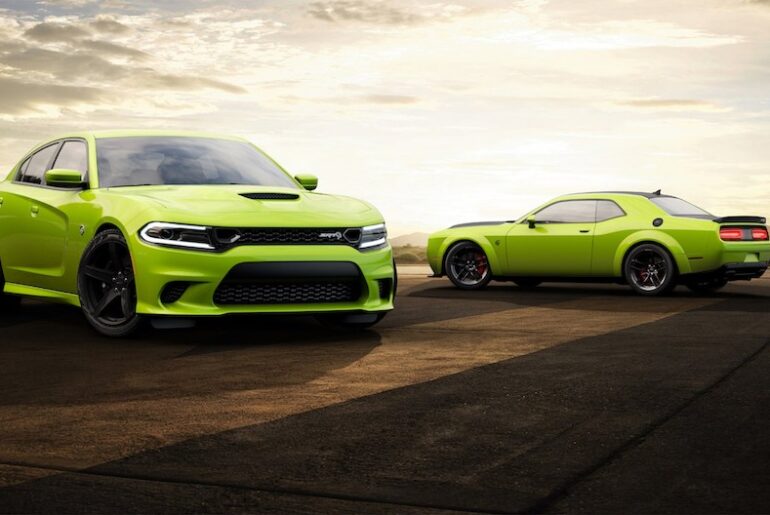
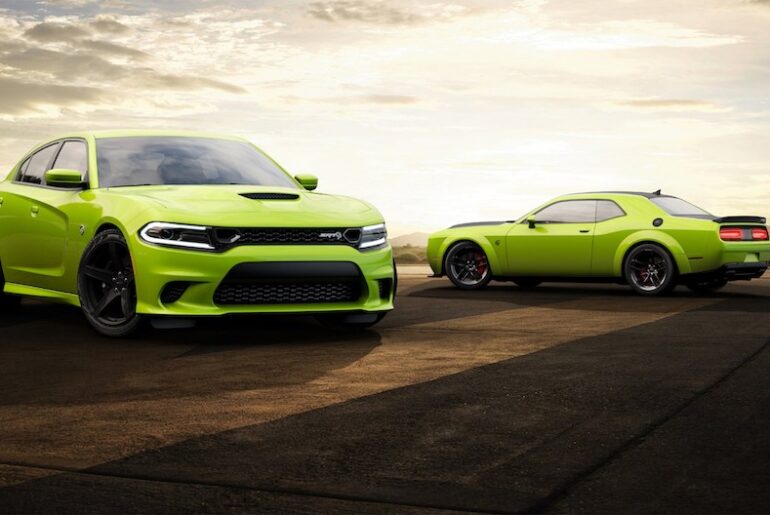
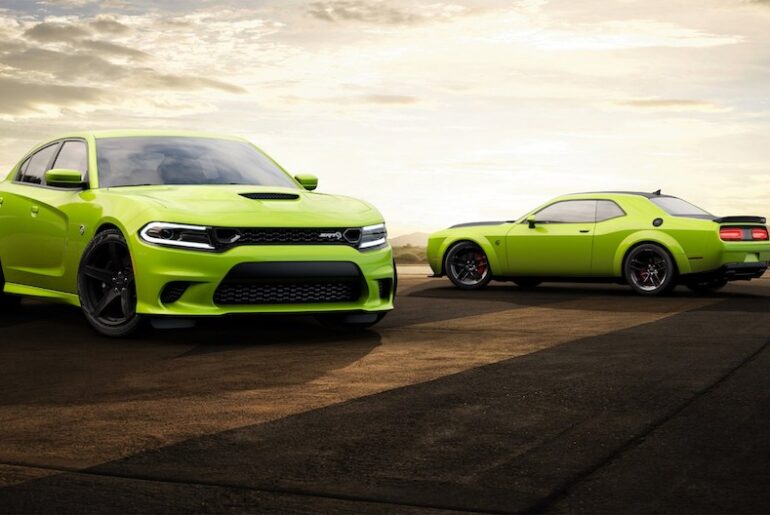
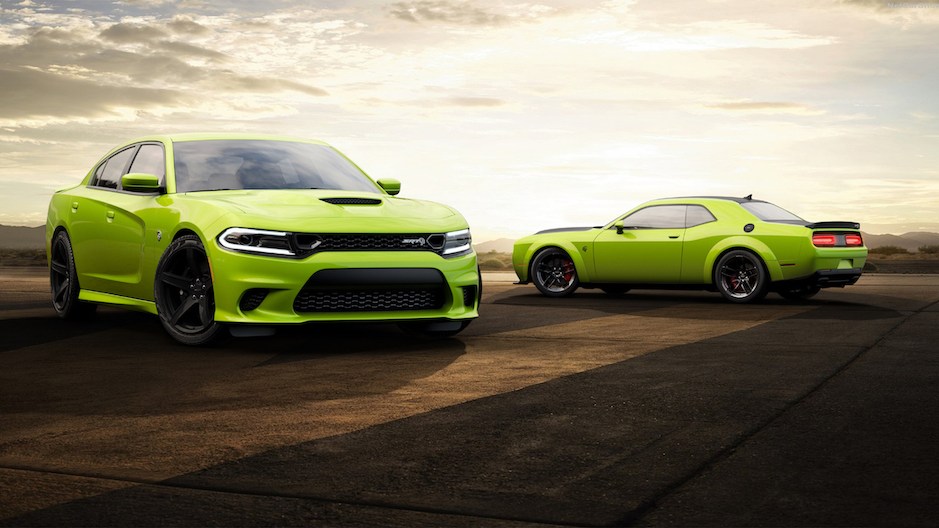
Back to the future: big V8 petrol engines, such as the 6.4-litre example in this Dodge Challenger SRT 392, are returning
FCA US LLC
• Is now the time to buy an electric car?
Yet it is worth remembering that the acceleration toward zero-emissions motoring was as a result of the automotive industry’s own sins.
A decade ago the industry was mapping a path to a lower emissions future with heavy investment in cleaner, greener diesel and petrol engines, a journey or halfway house, if you will, to a transition to electrified and zero emissions vehicles somewhere down the road.
That all ended with dieselgate when Volkswagen and others were found to be cheating emissions testers, gulling regulators into believing their engines were less polluting and more fuel efficient than they actually were.
The response of legislators was retribution and a new aggressive road map to a fully electrified new vehicles fleet, with the extinction of the internal combustion engine, at least for passenger cars, from 2030. The industry grumbled but accepted its penance. Almost every legacy car manufacturer came up with ambitious plans to hit that target.
• Chinese newcomer BYD overtakes Britain’s established car brands
Significantly stalled by the supply chain and revenue dislocations of the Covid-19 pandemic, almost every legacy carmaker has rowed back on those ambitions, some to the extent that their earlier promises are not worth the paper they were written on.
Yet Stellantis is already well on the electric transition path in Europe. One in five of the cars it sells in Britain is fully electric, pretty much in line with the figures across the industry, a little behind its European peers but well ahead, for instance, of the Japanese car companies. The Peugeot e-208 and Citroen e-C3, effectively the same car differently styled, are among the top five bestselling electric cars in their class in Europe.
And, believing it knows which way the wind is blowing, Stellantis has signed a groundbreaking accord with the Chinese electric carmaker Leapmotor to not only bring smaller, more affordable zero-emissions vehicles to Europe but to build them here too.
As for the impact on the UK, Stellantis has already significantly withdrawn from a country where Vauxhall was, but no longer is, a multi-decade bestselling brand.
Piqued by British voters’ decision to withdraw from the European Union and what that would mean for its pan-Europe supply chains and production of the Vauxhall Astra at Ellesmere Port in Cheshire and the Vivaro van in Luton, Bedfordshire, Stellantis then found itself in a full-blown dispute with the UK government.
It took the decision to end production of the Astra and instead convert Ellesmere Port into a plant producing smaller electric vans — and taking tens of millions of British taxpayers’ money to do so.
When it failed to win derogations for its UK industrial presence from ministers in the zero-emissions vehicle mandate, which forces manufacturers to sell more electric vehicles, it took the decision to close the Luton commercial vehicle factory. The move was condemned by trade unions as a piece of historic industrial vandalism.
Asked what the strategic reset of Stellantis will mean for its residual UK manufacturing presence — albeit one that it trumpets as its only dedicated electric vehicle plant — a spokesman for the company said: “No change for Ellesmere Port.”